

Axinidris denticulata
- Scientific Name
- Axinidris denticulata
- Tribe
- Tapinomini
- Subfamily
- Dolichoderinae
- Author
- Wheeler, 1922
- Distribution
- Found in 2 countries
Axinidris denticulata Overview
Axinidris denticulata is an ant species of the genus Axinidris. It is primarily documented in 2 countries , including Congo, Democratic Republic of the, South Africa. Detailed taxonomic data and occurrence records can be further explored via authoritative databases such as AntWeb or the Global Biodiversity Information Facility (GBIF).
Axinidris denticulata
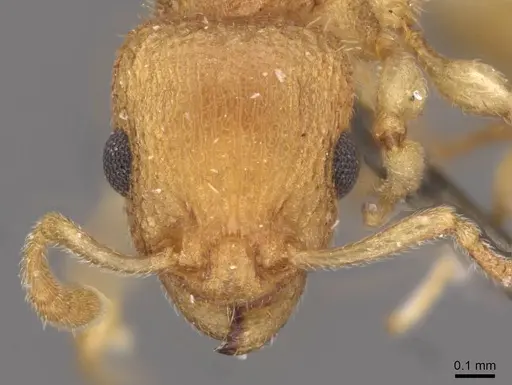
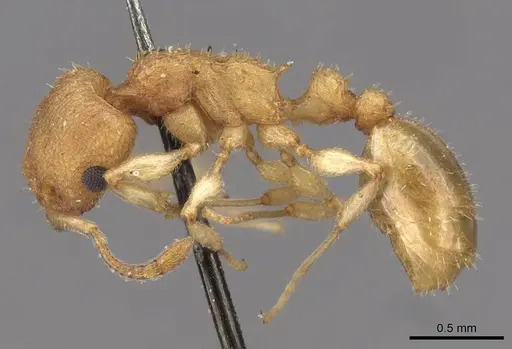
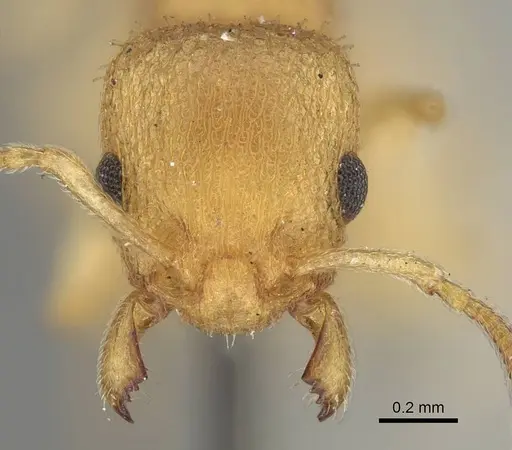
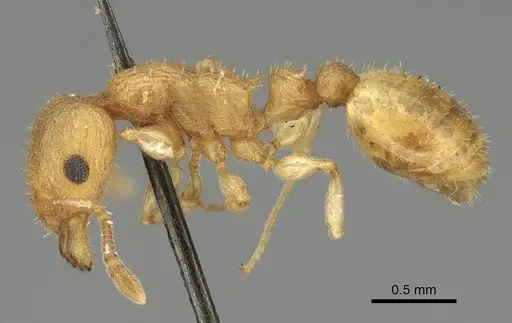
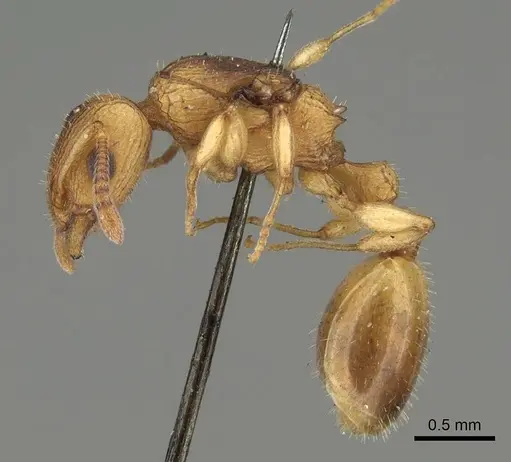
Axinidris denticulata is one of the rarest ants on Earth. Known from only three specimens collected in the Democratic Republic of Congo, this tiny reddish-brown species remains virtually unknown to science. Workers measure just 2-3mm in total length with heads barely 0.7mm wide, sporting yellow legs and distinctive backward-pointing propodeal spines [1][2]. The few specimens ever found came from inside the swollen stems of Cuviera plants, specialized ant plants with hollow domatia, and from rotting firewood in the Congo rainforest [3][2].
Remarkably, no queen has ever been discovered for this species, and no living colony has been observed in the wild or captivity [2]. The type specimens were collected over a century ago between Lukolela and Basoko, with one specimen found sharing its Cuviera plant home with Tetramorium meressei ants [3]. Today, the species exists only as preserved specimens in museum collections, making it unavailable and impractical for antkeeping.
Quick Summary
- Difficulty: Expert (Species Unavailable)
- Origin & Habitat: Democratic Republic of Congo and Nigeria, lowland rainforest, specifically inside swollen stems of Cuviera plants (domatia) and rotting firewood [3][4][2].
- Colony Type: Unknown, only worker specimens exist, queens and colony structure never observed [2].
- Size & Growth:
- Queen: Unknown, no queen specimens known [2].
- Worker: Approximately 2-3mm total length, head width 0.71mm, head length 0.79mm [1].
- Colony: Unknown.
- Growth: Unknown.
- Development: Unknown. (No developmental data exists for this species. As a tropical Dolichoderine ant, development might occur in 6-10 weeks at warm temperatures, but this is purely speculative.)
- Antkeeping:
- Temperature: Unknown, likely warm tropical conditions (24-28°C) based on Congo rainforest habitat, but unconfirmed [4].
- Humidity: Unknown, likely high humidity based on rainforest habitat and plant domatia nesting [2].
- Diapause: Unknown, tropical species typically do not require hibernation.
- Nesting: In nature: hollow domatia of Cuviera plants and rotting wood [2]. No captive nesting protocols exist.
- Behavior: Unknown, insufficient observational data exists. Based on their tiny size, escape prevention would be extremely challenging if specimens were available [1][2].
- Common Issues: species is not available in the pet trade, only three museum specimens exist worldwide., no captive care protocols exist due to complete lack of biological data on living colonies., cannot be legally or ethically sourced, all known specimens are historical museum collections from 1922., tiny worker size (under 3mm) would require specialized equipment impossible to prepare without living specimens.
Historical Rarity and Type Specimens
Axinidris denticulata represents one of the most extreme cases of rarity in ant taxonomy. The species was originally described as Axinidris denticulata by Wheeler in 1922 based on just two workers collected from firewood in the Belgian Congo [3]. A third specimen was later examined from the swollen stems of a Cuviera plant at Masaki [2]. In 1991,Shattuck designated one specimen as the lectotype, noting that the remaining paralectotypes were so covered in mold they were nearly useless for study [2].
Today, these three specimens housed at Harvard's Museum of Comparative Zoology and the American Museum of Natural History represent the entire known population of the species [2]. No additional collections have been made in over a century despite surveys in the Democratic Republic of Congo [4]. This extreme scarcity means basic biological facts, such as colony size, queen morphology, and even the species' current conservation status, remain complete mysteries.
Natural Habitat and Plant Associations
The existing specimens reveal a fascinating but fragmentary natural history. Two workers came from rotting firewood, while the third was collected from the domatia (hollow swellings) of Cuviera plants, likely C. angolensis, at Masaki between Masisi and Walikale [2]. These Cuviera plants are classic ant plants that provide hollow stems for ant colonies in exchange for protection.
Notably, Wheeler recorded that the Cuviera specimen was collected alongside Tetramorium meressei, with other swellings on the same plant occupied by the Axinidris [2]. This suggests A. denticulata might be a specialist inhabitant of these plant domatia, possibly sharing plants with other ant species or competing for these specialized nesting sites. The collection localities in the Democratic Republic of Congo place this species in lowland tropical rainforest habitats [4].
Morphology and Identification
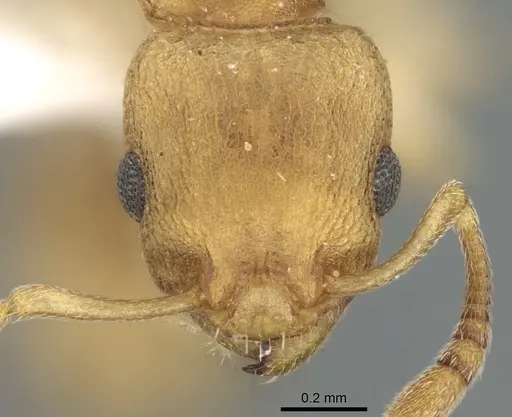
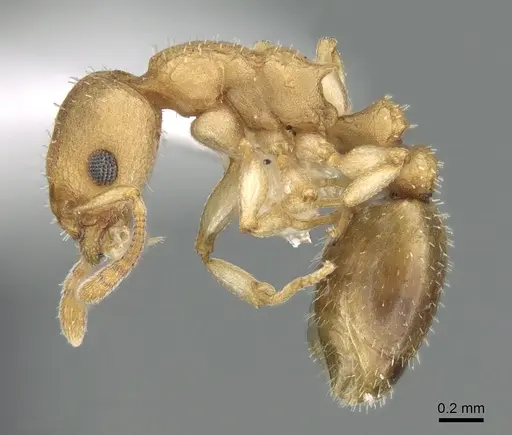
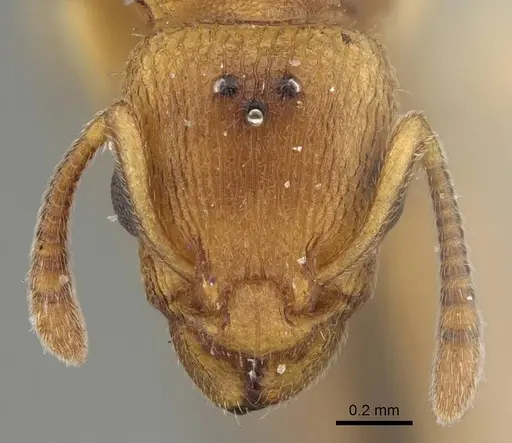
Based on Shattuck's 1991 redescription and Snelling's 2007 review, workers of A. denticulata are immediately recognizable among Axinidris by their small size and specific hair patterns [1][2]. The workers have heads that are smooth posteriorly but weakly textured anteriorly with scattered shallow punctures. Their antennal scapes lack erect hairs, while the pronotum bears erect hairs, a combination that helps distinguish them from similar species like Axinidris kinoin [1].
The propodeal spines point directly backward with flat outer surfaces, and the medial carina (a ridge on the back of the thorax) is rounded in profile [1]. Body color is reddish-brown with lighter mandibles and scapes, and distinctly yellow tarsi (foot segments) [2]. Measurements from the single measurable specimen show a head width of 0.71mm and head length of 0.79mm, making these among the smallest ants in the genus [1].
Why This Species Cannot Be Kept
Unlike most caresheet species, Axinidris denticulata is completely unavailable to antkeepers. The species exists only as three historical specimens collected in 1922 [3][2]. No living populations have been located in modern surveys, and the species may potentially be extinct or simply extremely rare and localized [4].
Even if living colonies were discovered, the lack of any biological data, including unknown queen morphology, unconfirmed diet preferences, and no information on colony founding behavior, would make captive rearing impossible without extensive scientific study first. Additionally, as an Afrotropical species with no introduced populations, keeping A. denticulata would require permits under international wildlife trade regulations, and releasing them outside their native range would be unethical and potentially illegal.
Frequently Asked Questions
Can I keep Axinidris denticulata as a pet?
No. This species is not available in the pet trade. Only three specimens exist in museum collections, collected in 1922. No living colonies have ever been found or kept in captivity.
Where can I buy Axinidris denticulata?
You cannot buy this species. The only known specimens are preserved in the Museum of Comparative Zoology (Harvard) and the American Museum of Natural History. The species has not been collected alive in over 100 years.
What do Axinidris denticulata eat?
Their diet is unknown. As members of the subfamily Dolichoderinae, they likely consume honeydew and small prey like related genera, but no feeding observations exist.
How big do Axinidris denticulata colonies get?
Colony size is unknown. Only three individual workers have ever been collected, and no queen or nest has been observed.
Do Axinidris denticulata need a queen?
Like all ant species, they require a queen to reproduce, but no queen has ever been found or described for this species. Only the worker caste is known to science.
What is the natural habitat of Axinidris denticulata?
They are known from the Democratic Republic of Congo, specifically from between Lukolela and Basoko, and from Masaki. They were found in rotting firewood and inside the hollow stems (domatia) of Cuviera plants in lowland rainforest.
Are Axinidris denticulata dangerous?
There is no data on their sting or bite. As tiny ants (under 3mm), they likely cannot penetrate human skin, but this is unconfirmed.
How long does Axinidris denticulata live?
Lifespan is unknown. No developmental or longevity data exists for this species.
References

This caresheet is licensed under CC BY-SA 4.0 .
CASENT0906197
View on AntWeb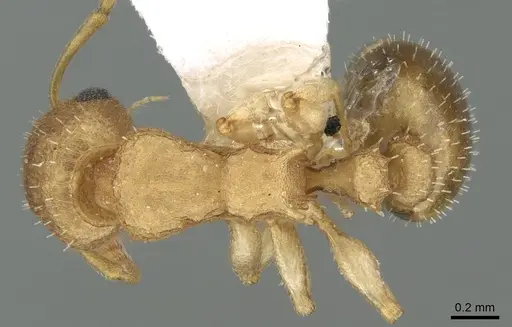
CASENT0908992
View on AntWeb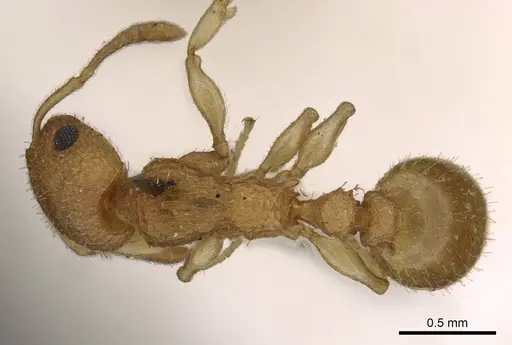
CASENT0914923
View on AntWeb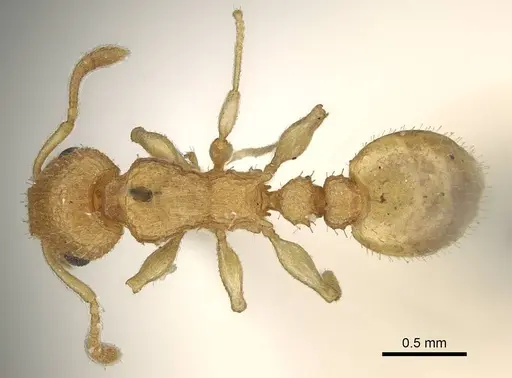
CASENT0914924
View on AntWeb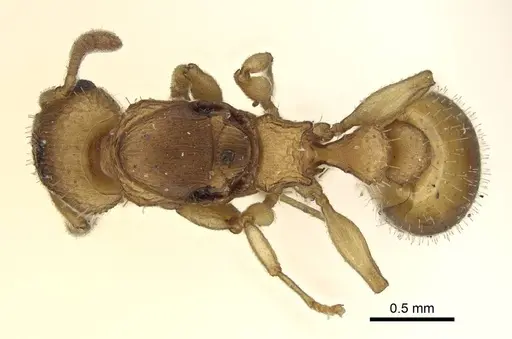
Literature
Loading...Loading products...