

Atta robusta
- Scientific Name
- Atta robusta
- Tribe
- Attini
- Subfamily
- Myrmicinae
- Author
- Borgmeier, 1939
- Distribution
- Found in 1 countries
Atta robusta Overview
Atta robusta is an ant species of the genus Atta. It is primarily documented in 1 countries , including Brazil. Detailed taxonomic data and occurrence records can be further explored via authoritative databases such as AntWeb or the Global Biodiversity Information Facility (GBIF).
Atta robusta
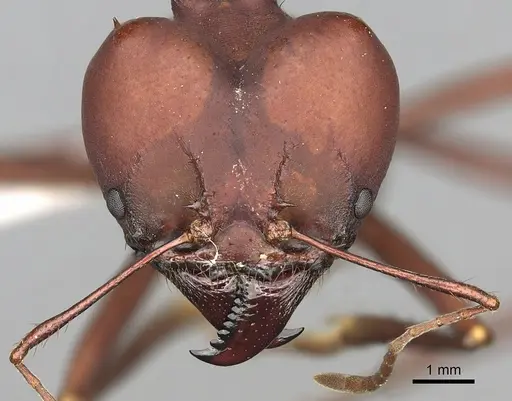
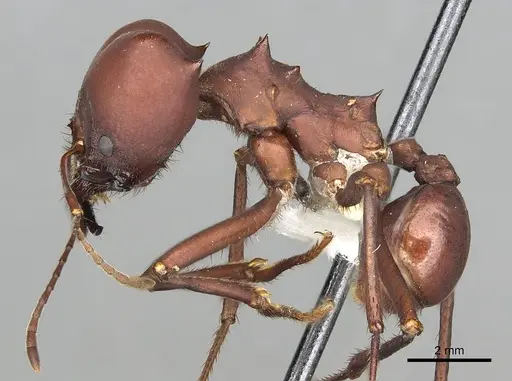
Atta robusta, known locally as saúva-preta, is a leafcutter ant found only in the restinga ecosystem, sandy coastal vegetation, along the Brazilian coast from Espírito Santo to Rio de Janeiro [1][2]. Workers range dramatically in size, with head capsules measuring 0.95 mm to 5.62 mm across five distinct size classes [3]. They build shallow, sprawling nests in sandy soil under vegetation cover, creating crater-shaped mounds that can spread over 200 square meters [4][2].
This species grows an obligate fungus garden that requires fresh plant material to survive, and they feed this fungus with leaves from over 30 different plant species as well as fruits and seeds [5]. They are listed as threatened on Brazil's National List of Endangered Species due to coastal development and chemical control campaigns that destroy their limited habitat [1][6].
Quick Summary
- Difficulty: Expert
- Origin & Habitat: Endemic to the restinga ecosystem (coastal sand dune vegetation) of Rio de Janeiro and Espírito Santo states, Brazil [1][2][7].
- Colony Type: Single-queen (monogyne) colonies that grow to medium size [1].
- Colony: Monogyne
- Founding: Claustral
- Size & Growth:
- Queen: Unknown, based on typical Atta patterns, likely 20-25 mm.
- Worker: Head capsule width 0.95-5.62 mm, highly polymorphic [3].
- Colony: Medium-sized adult colonies (exact worker count unconfirmed) [1].
- Growth: Moderate.
- Development: Unconfirmed, estimated 6-10 weeks based on Atta genus patterns at 25-28°C. (Fungus garden establishment is critical for colony survival.)
- Antkeeping:
- Temperature: Warm and stable, approximately 24-28°C based on restinga climate where soil temperatures exceed 30°C in open areas [2].
- Humidity: High humidity (60-80%) with consistently moist nest material, the fungus garden requires stable moisture and temperature [4][2].
- Diapause: No, this is a tropical species that remains active year-round [8].
- Nesting: Sandy soil required, in nature they build superficial, spread-out nests under vegetation cover [4][1].
- Behavior: Workers show strong size variation and divide tasks based on size and mandible wear, larger workers cut hard materials like cactus pads while smaller workers transport pieces [5]. Foraging trails extend up to 500 meters [5]. Workers defend against phorid fly parasitoids by attacking them or dropping their loads and retreating [4].
- Common Issues: fungus garden collapse if humidity or temperature fluctuates., requires constant supply of fresh broad-leaved plants (dicots), the colony will starve without daily fresh vegetation., endangered status makes wild collection legally restricted and ecologically harmful., shallow nest architecture in nature may not suit standard deep formicaria designs.
Nest Preferences and Soil Requirements
In nature, Atta robusta builds superficial, sprawling nests in sandy soil with crater-shaped mounds covering over 200 square meters [4]. They locate nests under vegetation cover to maintain the stable temperature and humidity their fungus gardens need [2][4]. The initial nest chamber sits only 8.5-18 cm deep [2]. In captivity, you must provide a deep sandy nest material or a naturalistic setup with a sand-soil mixture that allows for horizontal expansion. Avoid tall, narrow formicaria, instead use wide, shallow containers with multiple chambers. Keep the nest material consistently moist but not waterlogged, as the fungus dies if it dries out or floods.
Feeding and Fungus Cultivation
These ants are obligate fungus-growers. They collect fresh dicotyledonous (broad-leaved) plants, fruits, seeds, and flowers to feed their symbiotic fungus [5][3]. In nature, they use over 30 plant species, including cactus cladodes and Schinus terebinthifolius leaves [5]. You must provide fresh, clean plant material daily, avoid plants treated with pesticides or fertilizers. Rinse leaves thoroughly before offering them. The fungus garden requires constant care, if it turns gray, smells bad, or stops growing, the colony is in danger. Remove old plant material before it molds.
Worker Polymorphism and Task Allocation
Workers fall into five size classes based on head capsule width, ranging from 0.95 mm to 5.62 mm [3][5]. Task division depends on what they are foraging. When cutting cactus pads, larger workers (head width over 2.2 mm) do the cutting while smaller workers transport the pieces [5]. When foraging on aroeira (Schinus terebinthifolius), workers of all sizes perform all tasks [5]. Mandible wear also influences jobs, workers with sharp teeth cut, while worn-teeth workers carry [5].
Temperature and Humidity Requirements
These ants come from warm coastal restingas where temperatures at 30 cm depth can exceed 30°C in open areas [2]. Keep your colony at 24-28°C with minimal fluctuation. Sudden temperature drops kill the fungus garden. Maintain high humidity (60-80%) in the nest area by keeping the soil damp but not soggy. Use a heating cable on one side of the nest to create a gradient, but ensure the fungus chamber stays in the stable warm zone.
Conservation and Legal Status
Atta robusta is listed as threatened on Brazil's National List of Endangered Species and appears in the IUCN Red List as vulnerable [1][6][2]. Coastal development, vegetation removal, and chemical control campaigns have destroyed much of their habitat [1]. Do not collect wild colonies. Captive breeding should only occur within Brazil under proper permits, and you must never release these ants outside their native range.
Frequently Asked Questions
Can I keep Atta robusta in a test tube?
No. These ants need space for a fungus garden and foraging areas. Test tubes are too small and cannot maintain the fungus culture they require to survive.
What do Atta robusta eat?
They eat fungus that they cultivate themselves. You must feed the fungus fresh dicotyledonous (broad-leaved) plants, fruits, and seeds. Provide clean, pesticide-free plant material daily.
How long until Atta robusta gets first workers?
The exact timeline is unconfirmed for this species. Based on other Atta species, expect approximately 6-10 weeks from egg to worker at 25-28°C, but this depends entirely on fungus garden health.
Do Atta robusta need hibernation?
No. These ants come from tropical Brazil and remain active year-round. They do not need a winter rest period.
Are Atta robusta endangered?
Yes. They are listed as vulnerable on the IUCN Red List and appear on Brazil's official threatened species list due to habitat destruction in their limited coastal range.
Can I collect Atta robusta from the wild?
No. Collecting them is likely illegal under Brazilian law and is ecologically harmful given their threatened status and limited distribution. Only obtain colonies through legal captive breeding programs within Brazil.
What temperature do Atta robusta need?
Keep them warm and stable at approximately 24-28°C. Avoid temperature drops below 20°C, as this can damage their fungus garden.
How big do Atta robusta colonies get?
They produce medium-sized adult colonies. The exact worker count is unconfirmed in research, but they do not reach the massive sizes of some other leafcutter ants like Atta cephalotes.
Why are my Atta robusta dying?
Common causes include fungus garden failure from incorrect humidity or temperature, pesticide-contaminated food plants, or starvation from lack of fresh vegetation. Check that your fungus garden is white and fluffy, not gray or moldy.
Can I keep multiple Atta robusta queens together?
No. Atta robusta forms single-queen colonies. Queens will fight, and only one should be kept per nest.
References

This caresheet is licensed under CC BY-SA 4.0 .
CASENT0281781
View on AntWeb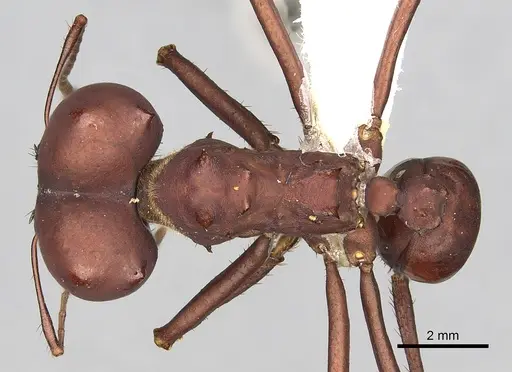
Literature
Loading...Loading products...