

Apterostigma reburrum
- Scientific Name
- Apterostigma reburrum
- Tribe
- Attini
- Subfamily
- Myrmicinae
- Author
- Lattke, 1997
- Distribution
- Found in 2 countries
Apterostigma reburrum Overview
Apterostigma reburrum is an ant species of the genus Apterostigma. It is primarily documented in 2 countries , including Colombia, French Guiana. Detailed taxonomic data and occurrence records can be further explored via authoritative databases such as AntWeb or the Global Biodiversity Information Facility (GBIF).
Apterostigma reburrum
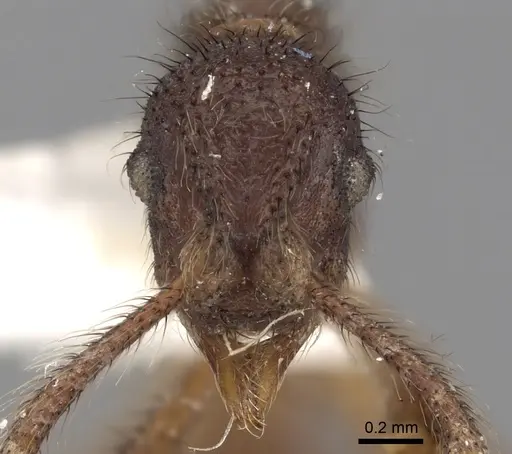
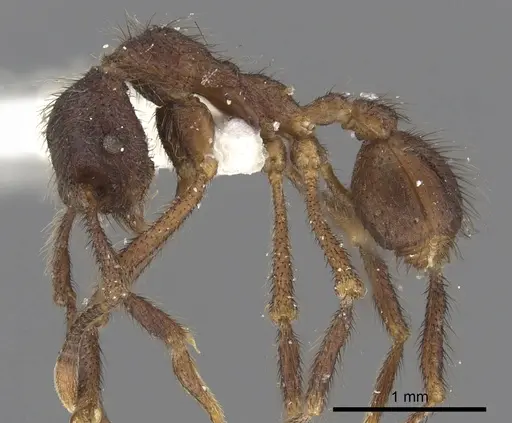
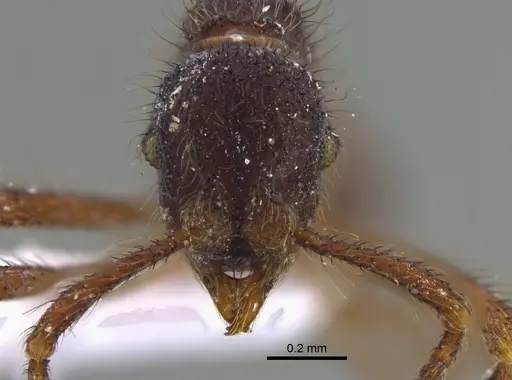
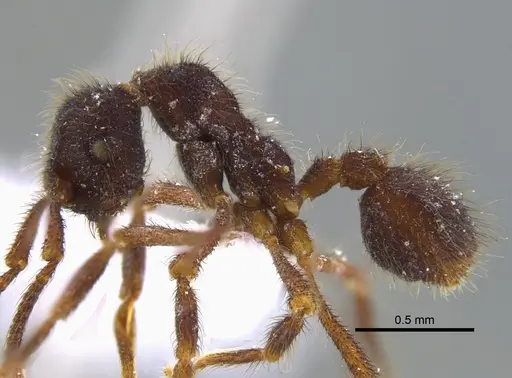
Apterostigma reburrum is a small fungus-growing ant from the Neotropical forests of Colombia and French Guiana. You can identify workers by their distinctive subocular prominence, a bump below the eye that stands taller than the eye itself when you look at the head from the front, along with thick semi-erect hairs covering the body and a short neck without ridges [1][2]. They inhabit tropical forests from lowland areas up to around 1000 meters elevation [1][3]. As members of the Attini tribe, they cultivate fungal gardens for food rather than hunting or scavenging like most ants, making them specialized fungus farmers that require dedicated care in captivity [2].
These ants represent the 'lower attine' group of fungus-growers, meaning they cultivate their gardens on insect frass, decaying plant matter, and other organic debris rather than fresh leaves. This specific ecological role makes them fascinating but challenging captives, as you must maintain a living fungus garden to keep the colony alive. Their disjunct distribution between Colombia and French Guiana suggests they may be more widespread across northern South America than currently documented [1].
Quick Summary
- Difficulty: Expert
- Origin & Habitat: Tropical forests of Colombia (Antioquia, Valle del Cauca, and San Andres Island) and French Guiana, found at elevations from 35m to 1045m [1][3].
- Colony Type: Unknown, likely single-queen based on typical Apterostigma patterns, but unconfirmed for this species.
- Size & Growth:
- Queen: Estimated 5-7mm based on typical Apterostigma patterns, exact size unconfirmed.
- Worker: Estimated 3-5mm based on typical Apterostigma patterns, exact size unconfirmed.
- Colony: Likely small to moderate, under 200 workers based on related fungus-growing ants.
- Growth: Slow
- Development: Unknown, likely 8-12 weeks based on related Attini species at 25°C. (Fungus-growing ants typically develop slowly, first workers (nanitics) may emerge slightly faster but smaller than subsequent workers.)
- Antkeeping:
- Temperature: Keep at 24-26°C (estimated for tropical lowland/montane species). Use a heating cable on one side of the nest to create a gentle gradient, placing the heat source on top to avoid water evaporation issues.
- Humidity: High humidity essential, maintain 70-80% relative humidity with damp but not waterlogged substrate. The fungus garden must stay moist, if it dries out, the colony will starve.
- Diapause: Likely not required, tropical species typically do not hibernate. A slight cooling to 20-22°C during the dry season may occur naturally, but full diapause is unnecessary.
- Nesting: Naturalistic setup required with a dedicated fungus garden chamber. Use a container with soil or plaster and provide space for the fungus garden, or use a specialized fungus-growing ant nest design with controlled humidity.
- Behavior: Slow-moving and cryptic, spending most of their time tending the fungus garden. They are not aggressive and pose minimal escape risk due to their small size, though they can climb smooth surfaces. Workers are dedicated gardeners, constantly manipulating the fungus substrate and removing contaminants.
- Common Issues: fungus garden collapse from incorrect humidity, too wet causes mold, too dry kills the fungus., mold contamination can wipe out the entire fungus garden and starve the colony., wild-caught colonies often carry parasitic mites that can overwhelm the ants., slow growth leads to overfeeding attempts by impatient keepers, which contaminates the fungus., obtaining founding queens is extremely difficult as they are rarely available in the ant trade.
Fungus Garden Maintenance
The fungus garden is the heart of your Apterostigma reburrum colony. Unlike most ants that eat insects or sugar water directly, these ants eat fungus that grows on organic matter they collect. You must provide appropriate substrate, typically insect frass (pre-digested insect waste), decaying plant matter, or dried leaves that the ants can process into fungus food.
Maintain the garden in a dedicated chamber with excellent humidity control. The substrate should feel damp but not soggy, think of a wrung-out sponge. If water pools in the garden, mold will grow and kill the fungus. If it dries out, the fungus dies and the colony starves. Check the garden daily for the first few weeks to learn the correct moisture level for your specific setup.
The ants will manage the garden themselves, pruning the fungus and removing old substrate, but you must provide fresh material regularly. Start with a small amount and increase as the colony grows. Never disturb the garden unnecessarily, the fungus is fragile and stress can cause the ants to abandon it. [2]
Nest Setup and Substrate
You cannot keep these ants in a standard test tube setup. They need a naturalistic formicarium with a dedicated fungus chamber. A plastic container with a plaster floor works well, or a specialized fungus-growing ant nest with humidity control.
Create a fungus chamber using a small plastic container or glass jar buried in the substrate, with an entrance tunnel the ants can control. This helps maintain the stable microclimate the fungus needs. The rest of the nest should have areas with slightly varying humidity so the ants can choose their preferred conditions.
Use a substrate mix of coco fiber and sand for the non-garden areas, keeping it slightly damp. Provide a small outworld for foraging, though these ants rarely travel far from their garden. Ensure the outworld has extremely fine mesh or Fluon barriers, while not escape artists, their small size means they can fit through tiny gaps. [2]
Temperature and Environment
As a tropical species from Colombia and French Guiana, Apterostigma reburrum needs warm, stable temperatures. Keep the nest area at 24-26°C with minimal fluctuation. Sudden temperature drops can stress the fungus garden and trigger colony decline.
Use a heating cable or heat mat on one side of the nest to create a gentle gradient from 26°C down to room temperature (22-24°C). This allows the ants to thermoregulate by moving the brood to optimal spots. Place the heating element on top of the nest rather than underneath to prevent water from evaporating upward and creating condensation that could flood the fungus garden.
These ants do not require hibernation. As a tropical species, they remain active year-round. You may notice slightly reduced activity during winter months if your house gets cooler, but do not attempt to force a diapause period. [1][2]
Feeding Requirements
Do not feed these ants typical ant foods like honey water or mealworms directly. They need fungus substrate. Collect dried leaves, decaying wood fragments, or insect frass from pesticide-free areas. Dry and sterilize these materials in an oven at low heat (around 100°C) for 30 minutes to kill contaminants, then cool before offering.
Place small amounts of substrate near the fungus garden. The ants will process this material, inoculating it with fungus spores and creating new garden area. They may also accept small amounts of crushed dead insects or fish food flakes to supplement the fungus, but the garden must remain their primary food source.
Remove any uneaten perishable food within 24 hours to prevent mold. The fungus garden itself should never be removed or cleaned, the ants manage it completely. If you see the ants throwing out substrate from the garden, they are pruning it, collect this waste and remove it from the nest to prevent mold spread. [2]
Colony Founding
Founding behavior for Apterostigma reburrum has not been directly documented in scientific studies. Based on typical Apterostigma patterns, queens likely found colonies claustrally, sealing themselves in a chamber with a fungus pellet brought from their natal colony, but this remains unconfirmed for this specific species.
If you obtain a founding queen, provide her with a small starter fungus garden or substrate from an established colony of the same or related species. She will need peace and perfect humidity to establish the first garden and raise her first workers. Disturbance during founding often leads to colony failure.
Because queens are rarely available and founding is challenging, most captive colonies come from wild-caught mature colonies. If you collect a wild colony, try to capture the entire fungus garden intact, as the colony cannot survive without it. [2]
Frequently Asked Questions
Can I keep Apterostigma reburrum in a test tube?
No. These ants require a fungus garden to survive, which needs space, specific substrate, and humidity control that test tubes cannot provide. You need a naturalistic setup with a dedicated fungus chamber.
What do Apterostigma reburrum eat?
They eat fungus that grows on organic matter, not typical ant foods. You must provide substrate like dried leaves, insect frass, or decaying plant matter that the ants can convert into fungus gardens. They do not eat honey or insects directly as their primary food source.
How long until Apterostigma reburrum gets their first workers?
The exact timeline is unknown for this species, but based on related fungus-growing ants, expect 8-12 weeks from egg to worker at 25°C. Fungus-growing ants develop slowly, and the queen must establish a viable fungus garden before the first workers can hatch.
Are Apterostigma reburrum good for beginners?
No. These are expert-level ants due to their specialized fungus-growing requirements. Maintaining a healthy fungus garden requires precise humidity control, sterile substrate preparation, and constant monitoring. Beginners should start with easier species like Lasius niger or Camponotus.
How big do Apterostigma reburrum colonies get?
Exact colony size is unknown, but based on typical Apterostigma patterns, they likely remain small to moderate, probably under 200 workers. They grow slowly compared to generalist ant species.
Do Apterostigma reburrum need hibernation?
No. As a tropical species from Colombia and French Guiana, they do not require diapause or winter hibernation. Keep them at stable warm temperatures (24-26°C) year-round.
Why is my Apterostigma reburrum fungus garden turning white with mold?
Mold is the biggest threat to fungus-growing ants. It usually occurs from too much moisture or contaminated substrate. Remove moldy sections immediately with sterile tweezers, reduce humidity slightly, and ensure your substrate is properly dried and sterilized before adding it to the nest.
Can I keep multiple Apterostigma reburrum queens together?
Combining multiple unrelated queens is not recommended and has not been documented for this species. Fungus-growing ants are typically monogyne (single queen), and queens will likely fight or be rejected by workers.
Where can I buy Apterostigma reburrum queens?
These ants are rarely available in the ant trade due to their specialized care requirements and difficulty in founding colonies. Your best option is collecting a wild colony from their native range (Colombia/French Guiana), though check local regulations regarding collection and export permits.
References

This caresheet is licensed under CC BY-SA 4.0 .
CASENT0901686
View on AntWeb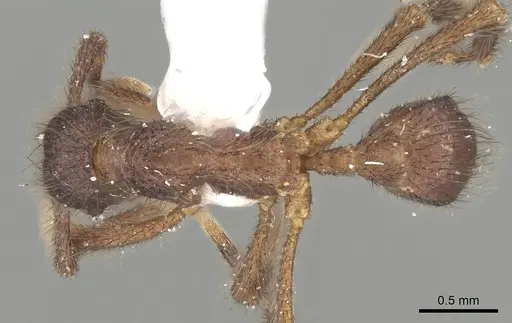
IAVH-E-222570
View on AntWeb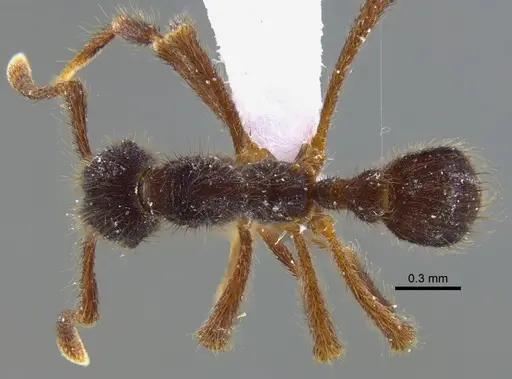
Literature
Loading...Loading products...