

Apterostigma manni
- Scientific Name
- Apterostigma manni
- Tribe
- Attini
- Subfamily
- Myrmicinae
- Author
- Weber, 1938
- Distribution
- Found in 3 countries
Apterostigma manni Overview
Apterostigma manni is an ant species of the genus Apterostigma. It is primarily documented in 3 countries , including Colombia, Panama, Venezuela. Detailed taxonomic data and occurrence records can be further explored via authoritative databases such as AntWeb or the Global Biodiversity Information Facility (GBIF).
Apterostigma manni
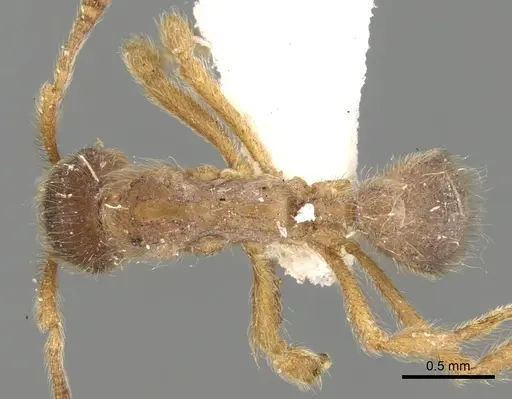
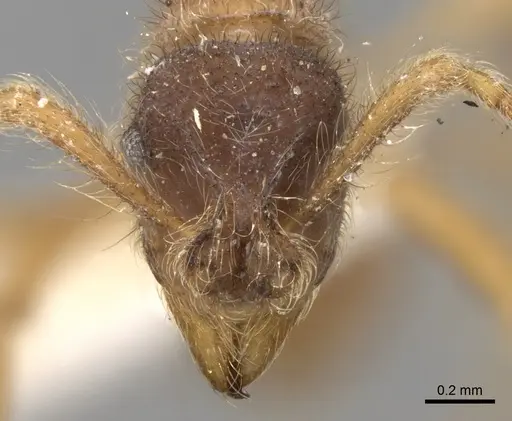
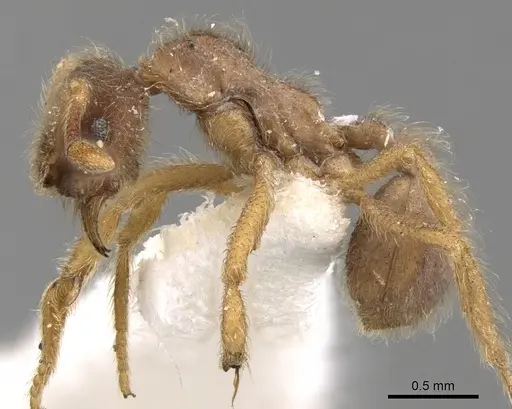
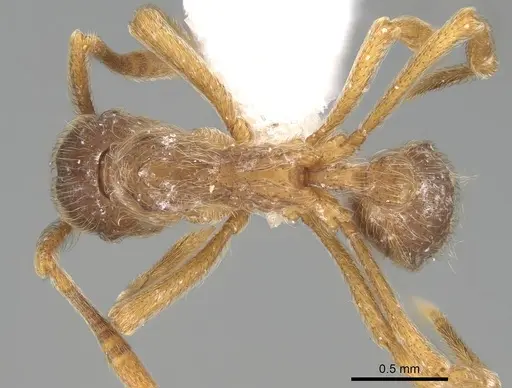
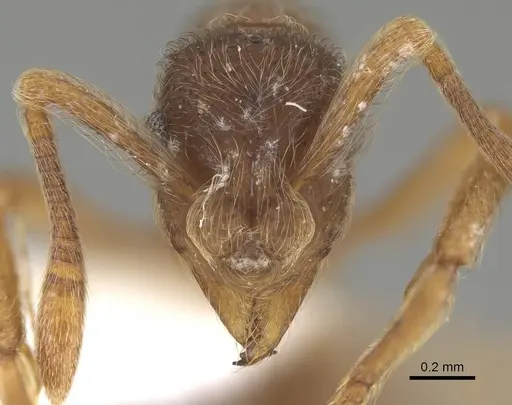
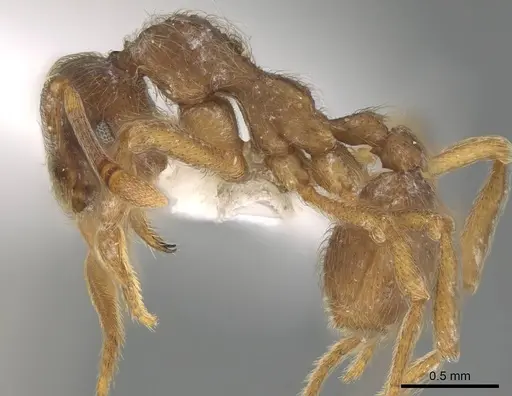
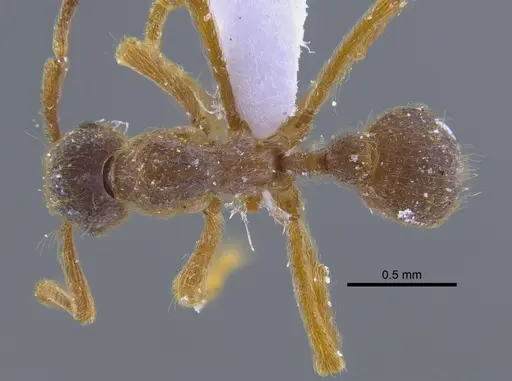
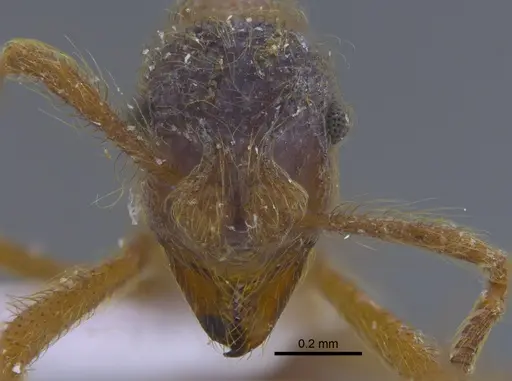
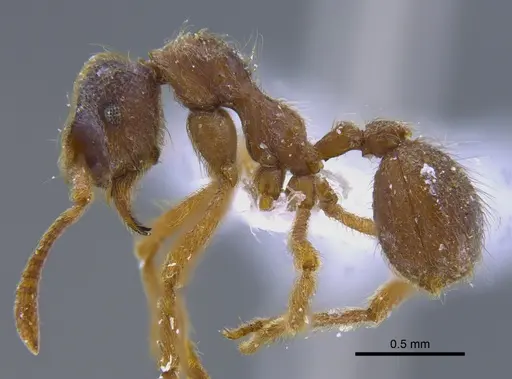
Apterostigma manni is a fungus-growing ant from the Neotropical region, found across southern Central America and northwestern South America including Costa Rica, Panama, Colombia, Venezuela, Peru, Bolivia, and Brazil [1][2]. These ants display yellowish to light brown bodies with kidney-shaped eyes and a distinct ridge on their middle body section [1].
Instead of hunting for food, Apterostigma manni are farmers. They cultivate a specialized coral-mushroom fungus from the family Pterulaceae (G4 clade) in underground gardens [3][4]. Workers tend dense, sponge-like fungus mats in chambers deep below the forest floor, lining the tunnels between rooms with veil-like fungal sheets [3]. Colonies stay small, usually housing fewer than 100 workers all of similar size under a single queen [3].
Quick Summary
- Difficulty: Expert
- Origin & Habitat: Neotropical forests from Costa Rica and Panama through Colombia, Venezuela, Peru, Bolivia, and Brazil (Bahia and Minas Gerais) [1][2]. Found in forest leaf litter, under stones, in rotten logs, and in bromeliads [3].
- Colony Type: Single-queen colonies (monogyne) with all workers uniform in size [3].
- Colony: Monogyne
- Size & Growth:
- Queen: Unknown, not specified in available research.
- Worker: Unknown, not specified, all workers are similar size (monomorphic) [3].
- Colony: Under 100 workers [3].
- Growth: Slow
- Development: 8-12 weeks (Estimate based on related fungus-growing ants, no direct studies available. Timing depends on temperature and fungus garden health.)
- Antkeeping:
- Temperature: 25-28°C (warm tropical conditions inferred from Neotropical range) [1]. Use a heating cable on one side to create a gentle gradient.
- Humidity: High, keep nest material damp but not waterlogged to maintain fungus garden health. The substrate should feel like a wrung-out sponge [3].
- Diapause: No, tropical species that remains active year-round [1].
- Nesting: Deep naturalistic setup with 6-8 inches of moist soil or coconut fiber mixed with decaying hardwood. Multiple chambers needed for fungus garden expansion [3].
- Behavior: Dedicated fungus farmers. Workers maintain fungal gardens and likely forage for insect frass and decaying plant matter to feed the fungus. Colonies are small and likely slow-moving given their specialized lifestyle [3].
- Common Issues: fungus garden contamination by mold or bacteria kills colonies quickly., drying out of the fungus garden from insufficient humidity or poor substrate moisture., small colony size provides little buffer against mistakes or environmental stress [3]., difficulty establishing new colonies without an existing fungus garden or fungal starter pellet.
Fungus Cultivation and Diet
Apterostigma manni cultivates a basidiomycete fungus from the coral-mushroom family Pterulaceae, specifically the G4 clade [3][4]. The garden grows as dense, sponge-like mats in underground chambers, with veil-like structures lining the tunnels between rooms [3]. Unlike leaf-cutter ants, these ants do not cut leaves. Instead, they feed their fungus with insect frass, decaying wood, and other organic debris. The ants then eat specialized nutrient-rich structures produced by the fungus. This makes them obligate fungus-growers, they cannot survive without their fungal crop. You must provide suitable decaying hardwood, dried leaves, or insect frass as fungus food, and maintain high humidity to prevent the garden from drying out.
Nest Design and Humidity
In the wild, colonies occupy six or more underground chambers connected by tunnels, often deep in the forest soil [3]. They also nest in rotten logs, under stones, in leaf litter, and in bromeliads [3]. In captivity, you need a deep, humid setup that mimics these underground chambers. Use a naturalistic setup with at least 6-8 inches of moist, well-draining soil or a mix of coconut fiber and decaying wood. The fungus garden needs consistent moisture, not waterlogged, but damp like a wrung-out sponge. Provide multiple chambers or hiding spots at different depths. Avoid dry conditions at all costs, as the fungus will die and the colony will starve.
Temperature Requirements
Coming from tropical forests across Central and South America, these ants need warm, stable temperatures [1]. Keep the nest area between 25-28°C. You can use a heating cable on one side of the nest to create a gentle gradient, but avoid overheating the fungus garden. Temperatures below 20°C will likely slow fungus growth and threaten the colony. Because they are tropical, they do not need a winter rest period.
Colony Founding and Growth
Founding behavior is unconfirmed for this species. Most fungus-growing ants start colonies when a new queen carries a pellet of fungus from her birth colony to start her own garden. Without this fungal starter, the queen cannot feed her first workers. This makes founding extremely difficult in captivity unless you can obtain a queen with an established fungus pellet. Colonies grow slowly, reaching only 100 workers or fewer [3]. All workers are the same size, so there are no major or minor worker castes to handle different tasks.
Frequently Asked Questions
Can I keep Apterostigma manni in a test tube?
No. Test tubes are too small and cannot maintain the complex fungus garden and humidity these ants need. They require a naturalistic setup with deep substrate and multiple chambers.
What do Apterostigma manni eat?
They eat a specialized coral-mushroom fungus that they grow themselves [3][4]. You do not feed them directly with honey or insects. Instead, you provide the fungus with decaying organic matter like hardwood, dried leaves, or insect frass (waste).
How long until Apterostigma manni gets first workers?
The exact timeline is unknown from direct studies. Based on related fungus-growing ants in the Attini tribe, expect roughly 8-12 weeks from egg to first worker at 25-28°C, though this is an estimate.
Do Apterostigma manni need hibernation?
No. They come from tropical regions and remain active year-round. Do not cool them for winter [1].
Are Apterostigma manni good for beginners?
No. These are expert-level ants. They require maintaining a living fungus garden, which is sensitive to contamination and drying. Most beginners should start with hardier species like Lasius niger or Tetramorium species.
How big do Apterostigma manni colonies get?
Colonies stay small, usually with fewer than 100 workers [3].
Can I keep multiple Apterostigma manni queens together?
No. These are single-queen colonies. Multiple queens will likely fight or be rejected [3].
What temperature do Apterostigma manni need?
Keep them warm at 25-28°C, typical of their tropical forest habitat [1].
References

This caresheet is licensed under CC BY-SA 4.0 .
Literature
Loading...Loading products...