

Aphaenogaster maculifrons
- Scientific Name
- Aphaenogaster maculifrons
- Tribe
- Stenammini
- Subfamily
- Myrmicinae
- Author
- Kiran & Aktaç, 2008
- Distribution
- Found in 1 countries
Aphaenogaster maculifrons Overview
Aphaenogaster maculifrons is an ant species of the genus Aphaenogaster. It is primarily documented in 1 countries , including Türkiye. Detailed taxonomic data and occurrence records can be further explored via authoritative databases such as AntWeb or the Global Biodiversity Information Facility (GBIF).
Aphaenogaster maculifrons
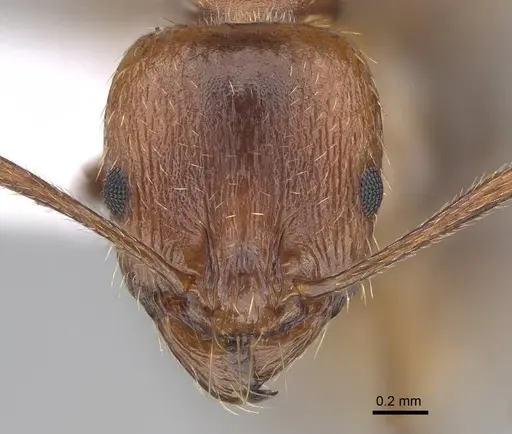
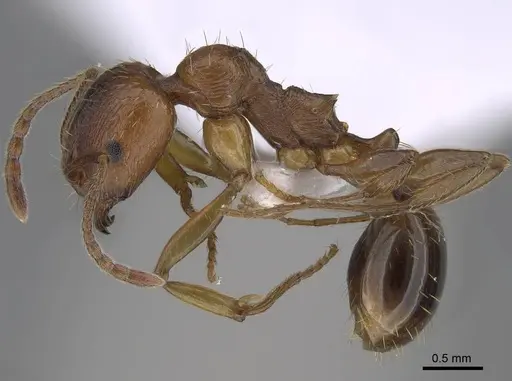
Aphaenogaster maculifrons is a small, dark ant belonging to the subterranea species group, native to western Turkey. Workers measure 1-1.3mm with a distinctive dark patch on the frontal area of the head, this marking gives the species its name (maculifrons means 'patch on the forehead'). Their head and mesosoma are yellowish-brown while the abdomen is blackish. Queens are larger at 1.4mm head length and 2.5-2.6mm body length. This species lives in mountain forests at high altitudes between 1000-1800m, nesting under large stones in pine and oak forests [1][2].
What makes A. maculifrons interesting is its restricted distribution to western Turkey and its preference for cool, high-altitude habitats. It's closely related to Aphaenogaster tristis found in Greece, but the two are separated geographically. Colonies contain several thousand workers and are found almost exclusively under stones in forested areas [1][2].
Quick Summary
- Difficulty: Medium
- Origin & Habitat: Western Turkey (Anatolia), specifically Konya, Antalya, and Isparta provinces. Found in mountain forests with old Pinus nigra (black pine) trees at altitudes 1420-1770m, and in oak forests at lower elevations around 1000-1200m. Nests are located under large stones [1][2][3].
- Colony Type: Colony structure is not directly documented in research. Based on typical Aphaenogaster patterns, likely single-queen (monogyne) colonies, but this requires confirmation.
- Size & Growth:
- Queen: 1.37-1.41mm head length,2.50-2.63mm total length [1]
- Worker: 0.95-1.29mm head length (mean 1.16mm),1.34-1.83mm alitrunk length (mean 1.60mm) [1]. More recent measurements show workers at 0.98-1.10mm head length [3].
- Colony: Several thousand workers per colony [1][2]
- Growth: Moderate, inferred from typical Aphaenogaster development patterns
- Development: Estimated 8-12 weeks based on typical Aphaenogaster genus patterns at optimal temperature. No direct species-specific data available. (Development time is inferred from related species in the subterranea group. Temperature will significantly affect development speed.)
- Antkeeping:
- Temperature: Keep at 18-24°C. Being a high-altitude Turkish species, they prefer cooler conditions than many ants. Room temperature (around 20°C) is likely ideal. Provide a slight temperature gradient so workers can choose their preferred zone [1][2].
- Humidity: Moderate to high. In nature they nest under stones in forest habitats, suggesting they prefer some moisture but not wet conditions. Keep nest substrate slightly moist but allow drying between waterings. Avoid both drying out completely and waterlogging.
- Diapause: Yes, as a species from high-altitude Turkey with cold winters, they require a winter dormancy period. Reduce temperature to 10-15°C for 2-3 months during winter, mimicking natural seasonal cycles [1][2].
- Nesting: Natural nesting is under large stones in forested areas. In captivity, a naturalistic setup with flat stones or a Y-tong/plaster nest works well. They prefer tight, dark chambers. Avoid tall, open spaces, these are ground-nesting ants that feel secure in compact nests [1][2].
- Behavior: Generally non-aggressive and shy. Workers are active foragers that search for seeds, honeydew, and small insects. They are not known for stinging and pose no danger to keepers. Their small size (around 1mm) means escape prevention must be excellent, they can squeeze through tiny gaps. They are moderate climbers but primarily ground-dwelling. Workers are most active during cooler parts of the day in their natural habitat [1].
- Common Issues: high altitude origin means they struggle in warm rooms, keep them cool, escape prevention is critical due to tiny worker size, several thousand workers means colonies need space to expand, winter dormancy is required, skipping hibernation weakens colonies, may be difficult to establish from founding due to limited availability
Natural History and Distribution
Aphaenogaster maculifrons is endemic to western Turkey, found primarily in the Konya, Antalya, and Isparta provinces. This species inhabits mountain forests at impressive altitudes, in the Sultan Mountains of Konya province, they nest at 1420-1770m elevation among old Pinus nigra (black pine) trees. A separate population was discovered in the ancient ruins of Termessos (Antalya Province) at 1018m in an oak forest. Overall, they occupy mountain localities between 1234-1689m elevation in Anatolia [1][2][3].
The species was formally described in 2008 by Kiran & Aktaç, making it a relatively recently described ant. It belongs to the subterranea species group, characterized by workers with a head longer than broad, scapes that barely surpass the occipital margin, and funicular segments 2-6 that are as wide as long. The most distinctive feature is the dark patch on the frontal area, this unique marking helps separate it from related species like Aphaenogaster subterranea and Aphaenogaster tristis [1][2].
Nests are always located under large stones, with colonies containing several thousand workers. This preference for stone-covered nesting sites is typical of the subterranea group and helps maintain the cool, stable conditions these ants prefer.
Housing and Nest Setup
For keeping Aphaenogaster maculifrons in captivity, replicate their natural nesting conditions under stones in cool, forested habitats. A naturalistic setup with flat stones placed on moist substrate works well, the stones provide darkness and stability that these ants prefer. Alternatively, a Y-tong (AAC) nest or plaster nest with narrow chambers scaled to their tiny size makes a suitable captive environment [1][2].
The key requirements are: cool temperatures (18-24°C), moderate humidity, and dark, compact nesting chambers. These ants do not do well in tall, open formicarium spaces, they feel exposed and may not use such areas. Keep the nest area relatively small and enclosed.
Because workers are only about 1mm long, escape prevention is critical. Use fine mesh on any ventilation holes and ensure all connections between outworld and nest are tight-fitting. Even small gaps that seem insignificant to human eyes can allow these tiny ants to escape.
The outworld can be decorated with small stones, pieces of bark, or artificial plants to create a naturalistic foraging area. A shallow water setup for drinking is appreciated, along with a protein food dish and sugar source.
Feeding and Diet
Aphaenogaster maculifrons is a typical member of the genus, they are generalist foragers that collect seeds, honeydew from aphids, and small insects. In captivity, offer a varied diet: protein sources like small mealworms, fruit flies, or other tiny insects 2-3 times per week. A sugar source like honey water or sugar water should always be available.
Being a seed-collecting species (like most Aphaenogaster), they may also accept small seeds or grain fragments. However, protein and sugar are likely the primary dietary needs for colony growth.
Feed small amounts that can be consumed within 24-48 hours. Remove any uneaten protein to prevent mold. The small worker size means even tiny prey items are appropriate, avoid offering prey that is larger than the workers themselves.
Temperature and Seasonal Care
This is one of the most important aspects of keeping A. maculifrons successfully. As a high-altitude species from Turkey, they are adapted to cool conditions. Unlike many ant species that thrive at room temperature or warmer, these ants prefer temperatures in the 18-24°C range.
During summer months, ensure they are not overheating. If your room temperature regularly exceeds 24°C, consider moving them to a cooler location or using a small fan for air circulation. Signs of overheating include workers clustering away from heat sources and decreased activity.
Winter care requires a proper dormancy period. Reduce temperatures to 10-15°C for 2-3 months during winter, mimicking natural seasonal cycles in their mountain habitat. This dormancy is essential for colony health and likely triggers reproductive cycles. Do not skip hibernation, it weakens colonies over time and may prevent alate production. [1][2]
Colony Development and Growth
Aphaenogaster maculifrons colonies grow to several thousand workers in the wild, making them a moderately large species for the genus [1][2]. However, development is relatively slow compared to some tropical ants.
The founding stage has not been directly documented for this species, but based on typical Aphaenogaster behavior, the queen likely seals herself in a small chamber (claustral founding) and raises the first workers alone on stored body fat. The first workers (nanitics) will be smaller than normal workers.
Expect the first workers to emerge around 2-3 months after founding under optimal conditions, though this is an estimate based on genus patterns. Colony growth is moderate, it may take a year or more to reach several hundred workers. Patience is key with this species.
Once established, colonies can potentially reach several thousand workers over several years, but this depends on proper care including correct temperature and winter dormancy.
Frequently Asked Questions
How long does it take for Aphaenogaster maculifrons to produce first workers?
The exact timeline is not documented, but based on typical Aphaenogaster development, expect 8-12 weeks from egg to first worker at optimal temperature (around 20°C). This is an estimate, actual times may vary.
What temperature is best for Aphaenogaster maculifrons?
Keep them at 18-24°C. As a high-altitude Turkish species, they prefer cooler conditions than many ants. Room temperature around 20°C is ideal. Avoid temperatures above 25°C.
Do Aphaenogaster maculifrons ants need hibernation?
Yes. As a species from mountain habitats in Turkey with cold winters, they require a winter dormancy period. Reduce temperature to 10-15°C for 2-3 months during winter.
How big do Aphaenogaster maculifrons colonies get?
In the wild, colonies contain several thousand workers. In captivity, with proper care, they can grow to similar sizes over several years.
What do Aphaenogaster maculifrons eat?
They are generalist foragers. Offer small insects (protein) 2-3 times per week and keep a sugar source (honey water or sugar water) available at all times. They may also accept small seeds.
Are Aphaenogaster maculifrons good for beginners?
They are rated as medium difficulty. The main challenges are their need for cool temperatures, proper winter dormancy, and excellent escape prevention due to their tiny size. Not the easiest species for complete beginners, but manageable with research.
Do Aphaenogaster maculifrons ants sting?
They are not known for stinging and pose no danger to keepers. They are generally shy and non-aggressive.
What size are Aphaenogaster maculifrons workers?
Workers are very small, measuring about 1mm in head length (0.95-1.29mm). This is among the smaller Aphaenogaster species and requires excellent escape prevention.
Can I keep multiple queens together?
Colony structure is not well documented for this species. Combining unrelated queens has not been studied. Based on typical Aphaenogaster patterns, single-queen colonies are likely, so keeping multiple queens together is not recommended.
Where is Aphaenogaster maculifrons found in the wild?
This species is endemic to western Turkey, specifically the Konya, Antalya, and Isparta provinces. They live in mountain forests at 1400-1800m elevation, nesting under large stones.
References

This caresheet is licensed under CC BY-SA 4.0 .
CASENT0922688
View on AntWeb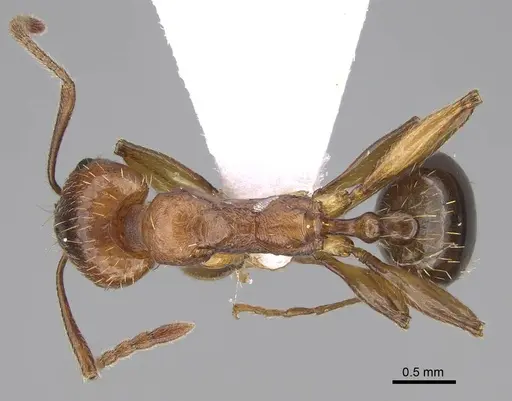
Literature
Loading...Loading products...