

Aphaenogaster dromedaria
- Scientific Name
- Aphaenogaster dromedaria
- Tribe
- Stenammini
- Subfamily
- Myrmicinae
- Author
- Emery, 1900
- Distribution
- Found in 1 countries
Aphaenogaster dromedaria Overview
Aphaenogaster dromedaria is an ant species of the genus Aphaenogaster. It is primarily documented in 1 countries , including Papua New Guinea. Detailed taxonomic data and occurrence records can be further explored via authoritative databases such as AntWeb or the Global Biodiversity Information Facility (GBIF).
Aphaenogaster dromedaria
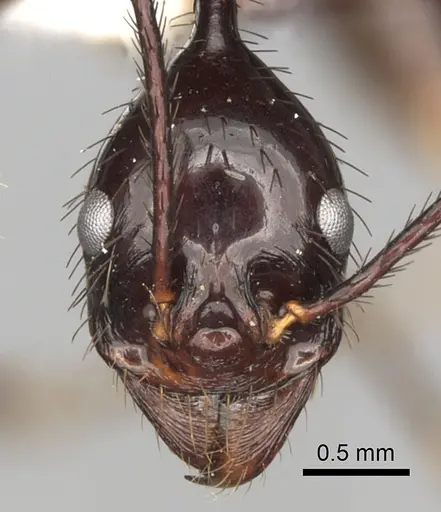
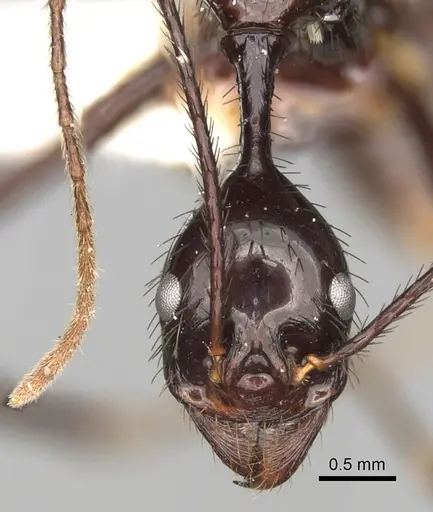
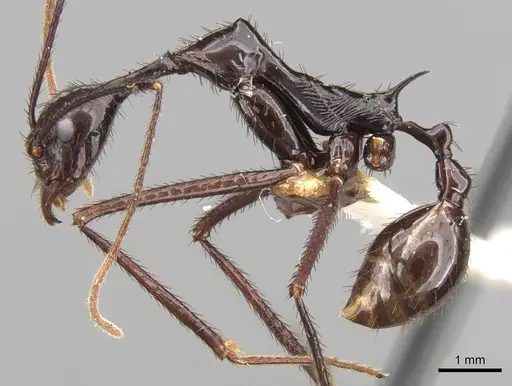
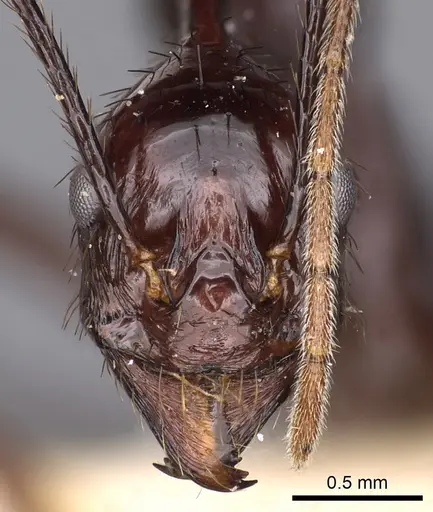
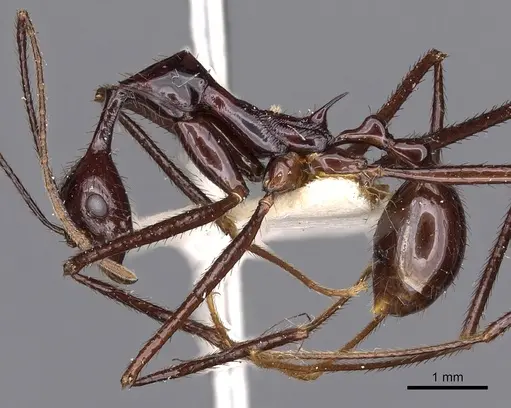
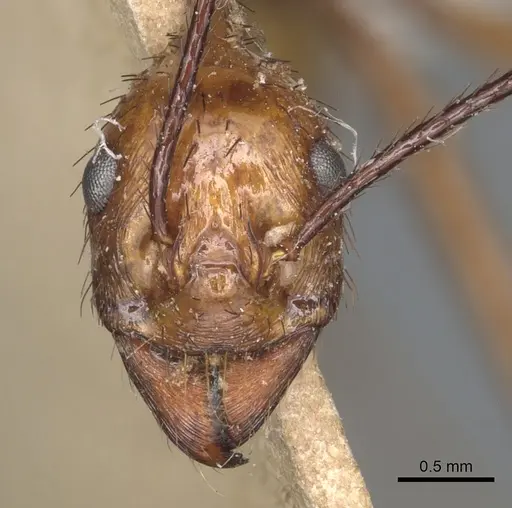
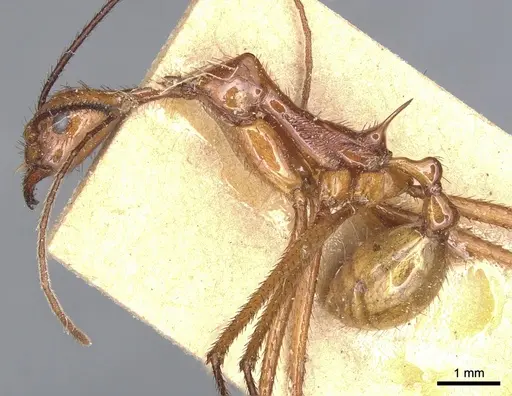
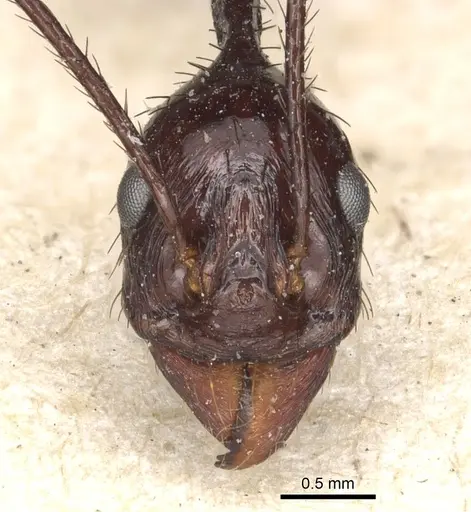
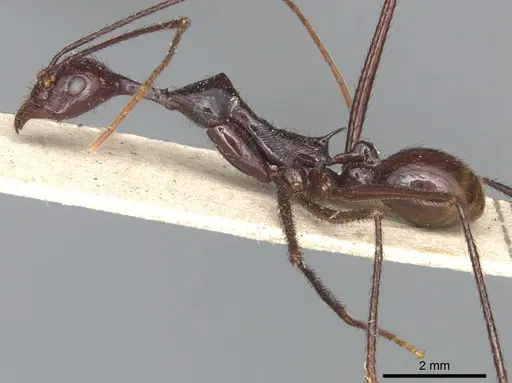
Aphaenogaster dromedaria stands out immediately due to its unusual silhouette. These ants possess a distinctive long-necked appearance because the back of their head extends backward into an elongated structure resembling a camel's neck [1]. They are larger and more elongate than most of their relatives [1]. Native to New Guinea, they occur in both Papua New Guinea and Indonesian Irian Jaya [2][3]. They are strict primary forest specialists, only found in undisturbed old-growth rainforest and absent from secondary forests or plantations [4].
Their name "dromedaria" references the dromedary camel, likely due to this distinctive head shape. As tropical ants living near 6.6° south latitude [3], they do not hibernate and remain active year-round. Their restriction to primary forest makes them sensitive to environmental changes [4], presenting unique challenges for captive care compared to more adaptable species.
Quick Summary
- Difficulty: Medium to Hard
- Origin & Habitat: New Guinea (Papua New Guinea and Irian Jaya), primary tropical rainforest [2][3][4]
- Colony Type: Likely single-queen (monogyne) based on typical Aphaenogaster patterns, though unconfirmed for this species
- Size & Growth:
- Queen: Approximately 8-10 mm (estimated from 'large' morphology description [1] and genus patterns)
- Worker: Approximately 5-7 mm (estimated from 'large' morphology [1])
- Colony: Unknown, likely moderate (hundreds to low thousands) based on typical Aphaenogaster colonies
- Growth: Moderate
- Development: Approximately 6-10 weeks at 25-28°C (inferred from tropical Aphaenogaster development patterns) (Tropical temperatures speed development compared to temperate relatives)
- Antkeeping:
- Temperature: Warm and stable 24-28°C year-round. Tropical species from equatorial New Guinea [3]. Provide a gentle heat gradient with the warm side around 27-28°C.
- Humidity: High humidity required. Keep nest substrate consistently moist but not waterlogged, mimicking primary forest understory conditions [4].
- Diapause: No, tropical species that remains active year-round [3].
- Nesting: Likely nests in soil, leaf litter, or rotting wood in nature [4]. In captivity, use a naturalistic setup with deep substrate, or a plaster/Y-tong nest with humid chambers.
- Behavior: Forest floor foragers. Likely collect seeds and small prey typical of the genus. Not particularly aggressive. Moderate escape risk due to larger size, but still require secure barriers.
- Common Issues: require stable tropical conditions, temperature drops below 20°C may stress the colony., primary forest specialist sensitivity, may fail to thrive in sparse or disturbed setups [4]., high humidity requirements increase mold risk without adequate ventilation., unknown founding success rate, captive founding attempts are undocumented.
Natural History and Distribution
Aphaenogaster dromedaria comes from the tropical forests of New Guinea, specifically found in Papua New Guinea and Indonesian Irian Jaya [2][3]. They belong to the Deromyrma clade within the genus [3].
These ants are habitat specialists restricted to primary forest [4]. They do not live in secondary forests or agricultural plantations like rubber or cocoa [4]. This makes them sensitive to disturbance in captivity. They live at tropical latitudes around 6.6° south [3], meaning they experience warm, stable temperatures year-round without seasonal cold periods.
Their most striking feature is the elongated posterior head that forms a long neck [1]. This gives them a camel-like profile that distinguishes them from other Aphaenogaster species.
Housing and Nest Setup
In nature, these ants occupy primary forest floor habitats [4], likely nesting in soil, leaf litter, or rotting wood. You should recreate these humid, stable conditions in captivity.
Use a naturalistic setup with deep, moist substrate and leaf litter, or a plaster or Y-tong nest with humid chambers. The nest material should feel damp to the touch but not soggy. Provide adequate ventilation to prevent mold while maintaining humidity.
Because they are larger than typical Aphaenogaster [1], you can use slightly larger chambers, but still provide tight spaces that make them feel secure. A depth of substrate allows them to dig their own chambers if given the opportunity.
Temperature and Seasonal Care
As a tropical species from equatorial New Guinea [3], Aphaenogaster dromedaria requires warm temperatures year-round. Keep them at 24-28°C with minimal fluctuation.
You can create a gentle heat gradient by placing a heating cable or mat on one side of the nest, keeping the warm side around 27-28°C and the cool side around 24°C. This lets the ants choose their preferred temperature.
They do not require hibernation or diapause [3]. Maintain the same temperature and feeding schedule throughout the year. Avoid letting temperatures drop below 20°C, as this tropical species likely cannot tolerate cool conditions for extended periods.
Feeding and Diet
While specific diet studies for this species are lacking, Aphaenogaster species are typically generalist predators and seed collectors. They likely feed on small insects, springtails, and seeds in their forest habitat [4].
Offer a varied diet including small live prey like fruit flies, springtails, and tiny crickets. Provide seeds such as chia, flax, or canary seed, as many Aphaenogaster species store seeds in their nests. Also offer sugar water or honey water for carbohydrates.
Remove uneaten protein within 24-48 hours to prevent mold in the humid conditions they require.
Colony Founding
Founding behavior is unconfirmed for Aphaenogaster dromedaria. Based on typical Aphaenogaster genus patterns, queens likely seal themselves in (claustral founding) and raise their first workers using stored body fat reserves.
Set up founding queens in a standard test tube or small founding chamber with a water reservoir blocked with cotton. Keep them warm (25-28°C) and undisturbed in a dark place. Do not feed the queen during founding if she is claustral, she will not forage until her first workers hatch.
Success rates for captive founding of this species are unknown. Patience is required, as development timelines are estimates based on related tropical species.
Growth and Development
Development timelines are not documented for this species. Based on tropical Aphaenogaster patterns, expect eggs to develop into workers in approximately 6-10 weeks at 25-28°C.
The first workers (nanitics) may be smaller than subsequent workers, which is common in ants. Colony growth is likely moderate, reaching hundreds to perhaps a few thousand workers over several years.
Because they are primary forest specialists [4], they may grow more slowly than disturbance-tolerant species. Do not overfeed to force growth, maintain steady, moderate conditions.
Frequently Asked Questions
Can I keep Aphaenogaster dromedaria in a test tube?
Yes, test tubes work well for founding queens and small colonies. Use a standard setup with a water reservoir blocked with cotton. For larger colonies, move them to a naturalistic setup or formicarium that maintains the high humidity they need.
What temperature do Aphaenogaster dromedaria need?
Keep them warm and stable at 24-28°C year-round. They are tropical ants from equatorial New Guinea and do not tolerate cold temperatures. Use a heating cable on one side of the nest to create a gentle gradient.
Do Aphaenogaster dromedaria need hibernation or diapause?
No. They are tropical species that remain active year-round. Do not cool them down for winter, maintain consistent warm temperatures throughout the year.
How long until Aphaenogaster dromedaria get their first workers?
Approximately 6-10 weeks at 25-28°C, though this is estimated from related tropical Aphaenogaster species. Development may be slower at lower temperatures.
Can I keep multiple Aphaenogaster dromedaria queens together?
Not recommended. While unconfirmed for this species, most Aphaenogaster are single-queen colonies. Combining multiple queens likely leads to fighting and death.
Are Aphaenogaster dromedaria good for beginners?
They are better suited for intermediate keepers. Their specific needs as primary forest specialists [4] and requirements for stable tropical conditions make them more challenging than hardy beginner species like Lasius niger.
What do Aphaenogaster dromedaria eat?
They likely eat small insects and seeds based on typical Aphaenogaster behavior. Offer fruit flies, springtails, tiny crickets, and various small seeds. Also provide sugar water or honey.
How big do Aphaenogaster dromedaria colonies get?
Exact maximum size is unknown. Based on typical Aphaenogaster colonies, they likely reach hundreds to a few thousand workers.
Do Aphaenogaster dromedaria ants sting?
Like most Aphaenogaster, they probably have a small stinger but are not dangerous to humans. They are not aggressive and pose little threat unless handled roughly.
Why do Aphaenogaster dromedaria have such long necks?
The back of their head extends into an elongated neck-like structure [1], giving them a camel-like appearance that inspired their species name 'dromedaria' (like the dromedary camel). The function of this unusual head shape is not documented.
References

This caresheet is licensed under CC BY-SA 4.0 .
CASENT0280945
View on AntWeb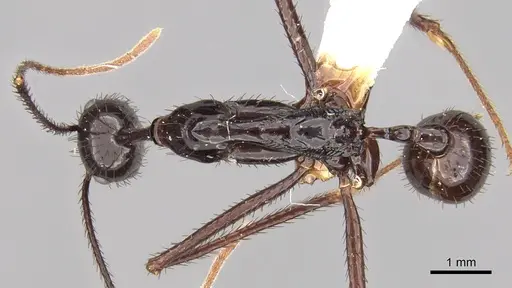
CASENT0900422
View on AntWeb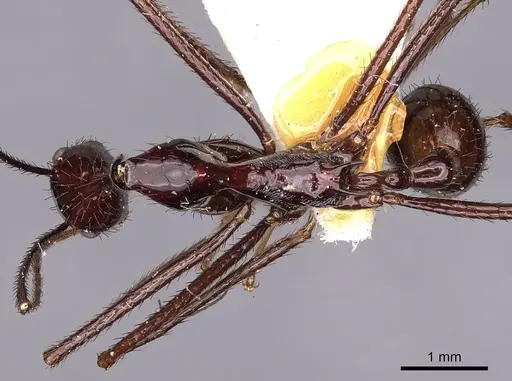
CASENT0904190
View on AntWeb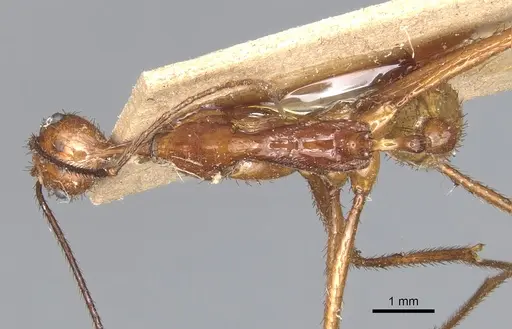
CASENT0904191
View on AntWeb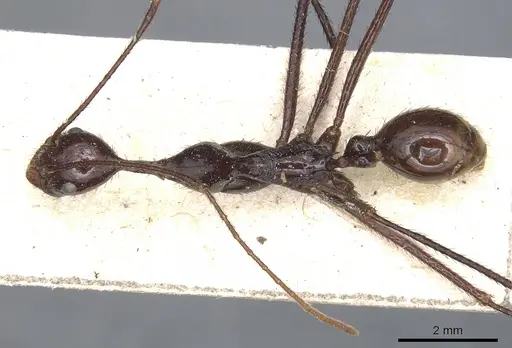
Literature
Loading...Loading products...