

Anochetus renatae
- Scientific Name
- Anochetus renatae
- Tribe
- Ponerini
- Subfamily
- Ponerinae
- Author
- Shattuck & Slipinska, 2012
- Distribution
- Found in 1 countries
Anochetus renatae Overview
Anochetus renatae is an ant species of the genus Anochetus. It is primarily documented in 1 countries , including Australia. Detailed taxonomic data and occurrence records can be further explored via authoritative databases such as AntWeb or the Global Biodiversity Information Facility (GBIF).
Anochetus renatae
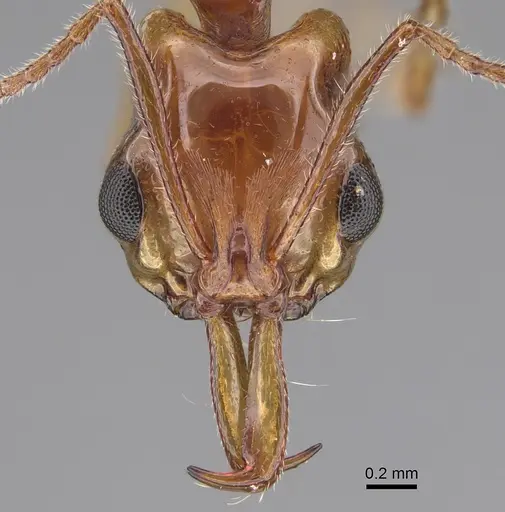
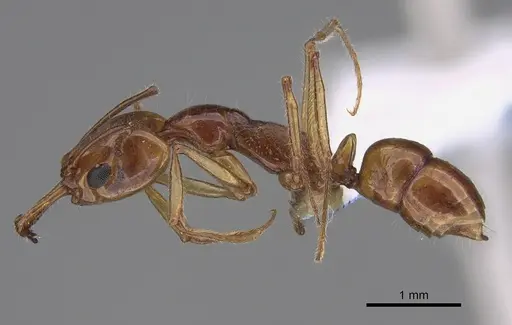
Anochetus renatae is a small trap-jaw ant from Western Australia with a smooth, shiny body colored dark yellow to yellow-brown [1]. Workers measure roughly 4-5mm in total length with distinctive elongated mandibles that snap shut to capture prey [1]. They inhabit mulga woodlands and other forested areas where they nest under flat stones and objects on the ground [1][2].
Unlike most trap-jaw ants that rely solely on hunting, Anochetus renatae shows surprising flexibility in diet, field observations found seed husks and plant refuse around their nests, suggesting they may supplement their diet with seeds despite their predatory mandibular specializations [2]. This makes them an unusual member of the trap-jaw ant group, though they still primarily hunt small live prey.
Quick Summary
- Difficulty: Hard
- Origin & Habitat: Western Australia, specifically mulga woodlands and forested habitats where they nest under ground objects [1]
- Colony Type: Unknown, likely single-queen based on typical Anochetus patterns, but this is unconfirmed
- Size & Growth:
- Queen: Unknown (not described)
- Worker: Approximately 4-5mm total length (head length 1.12-1.39mm) [1]
- Colony: Unknown, likely small based on related Anochetus species, possibly under 100 workers
- Growth: Slow (estimated from Ponerinae patterns)
- Development: Unknown, likely 8-12 weeks at 25°C based on related Anochetus species, but unconfirmed (Development time is speculative, first workers (nanitics) may emerge faster than subsequent broods)
- Antkeeping:
- Temperature: 24-28°C (warmth-loving, inferred from semi-arid Australian habitat)
- Humidity: Moderate, nest substrate should feel damp but not waterlogged, mimicking conditions under stones in woodlands [1]
- Diapause: Unknown, likely not required given warm climate origin, but colonies may slow in winter
- Nesting: Flat stone setups or small formicaria with tight, low chambers that mimic their natural habit of nesting under objects [1]
- Behavior: Cryptic and likely nocturnal, spending much time hidden under cover. They hunt using their trap-jaw mandibles which snap shut when trigger hairs touch prey. Generally shy and not aggressive toward humans, though they can sting like other Ponerinae. Their small size means escape prevention must be excellent.
- Common Issues: small size requires excellent escape prevention with tight-fitting lids and fine mesh., specific diet needs small live prey such as springtails or fruit flies, they may refuse dead insects., lack of research means captive care is experimental and requires careful observation., slow colony growth requires patience and risks overfeeding by impatient keepers., disturbance stress from too much light or handling can cause queens to abandon brood.
Natural History and Identification
Anochetus renatae comes from the mulga woodlands of Western Australia, specifically recorded from the Mt Jackson area [1]. These ants nest under flat stones and other objects on the ground in forested habitats, creating small colonies in protected spaces [1].
You can identify them by their smooth, shiny bodies with limited sculpturing, dark yellow to yellow-brown coloration, and relatively large eyes that bulge from the sides of the head [1][3]. They differ from their close relative Anochetus armstrongi by having longer antennae, more hair on their legs, and more sculpturing on the dorsal surface of the thorax [1]. Workers have noticeably elongated mandibles typical of trap-jaw ants, measuring 0.64-0.75mm in length [1].
Nest Preferences in Captivity
Because Anochetus renatae nests under flat stones and objects in nature, you should recreate this in captivity with flat stone setups or formicaria that have tight, low chambers [1]. They prefer dark, secure spaces with little open height.
Avoid tall, open spaces which stress these cryptic ants. If using a formicarium, choose one with narrow passages and small chambers. You can also use a naturalistic setup with flat stones on a soil substrate, which allows them to choose their own nesting spot under the stones. Ensure the nest area stays moderately humid, the substrate should feel damp but not soggy, similar to the moist microclimate found under stones in woodlands [1].
Feeding and Diet
Anochetus renatae is primarily predatory like other trap-jaw ants, using their spring-loaded mandibles to catch small prey. In captivity, offer small live insects such as springtails, fruit flies, pinhead crickets, or tiny termites [2].
Interestingly, field observations suggest this species may also eat seeds, husks and plant refuse have been found around their nests [2]. This is unusual for trap-jaw ants. You can experiment by offering small seeds like millet or chia, but continue providing live prey as their primary food source. Sugar water or honey may be accepted, but protein is essential for their development.
Temperature and Environmental Needs
Coming from the warm mulga woodlands of Western Australia, Anochetus renatae needs warm conditions around 24-28°C. You can achieve this with a heating cable or mat placed on one side of the nest to create a gentle gradient, allowing the ants to choose their preferred temperature.
Keep humidity moderate, not desert-dry, but not tropical-wet either. The nest substrate should feel damp to the touch, with some slightly drier areas available. Because they nest under stones in nature, they experience more stable humidity than the open air, so avoid letting the nest dry out completely or become waterlogged [1].
Whether they need a winter rest period (diapause) is unknown. Given their warm climate origin, they likely remain active year-round at constant temperatures, though they may naturally slow during cooler months.
Behavior and Trap-Jaw Mechanics
Like all Anochetus species, Anochetus renatae possesses trap-jaw mandibles that snap shut at high speed when special trigger hairs on the inner surface contact prey. This allows them to catch fast-moving small prey that other ants might miss.
These ants are cryptic and likely nocturnal, spending much of their time hidden under cover and emerging to forage when disturbed or during dark hours. They are generally shy and not aggressive toward humans, though they can deliver a mild sting like other members of the Ponerinae subfamily. Handle setups gently and minimize vibrations, as they are sensitive to disturbance.
Colony Founding
Founding behavior for Anochetus renatae is completely unconfirmed. If you attempt to raise a colony from a queen, you have two approaches to consider.
First, treat them as potentially semi-claustral (meaning the queen must leave the nest to hunt during founding). Provide a small founding setup with a nest chamber connected to a foraging area where you regularly offer tiny live prey like springtails. Alternatively, if the queen seals herself in and refuses food, she may be claustral (living off stored fat reserves), and you should leave her undisturbed in a test tube setup until workers arrive.
Most Anochetus species are thought to be semi-claustral, but this has not been documented for Anochetus renatae specifically. Watch your queen's behavior closely and adjust accordingly.
Frequently Asked Questions
Can I keep Anochetus renatae in a test tube?
Yes, test tubes work for founding if the queen is claustral, but founding behavior is unconfirmed for this species. Use a small test tube with a water reservoir and cotton plug, kept in the dark. If the queen appears to be hunting or foraging, move her to a small setup with a foraging area where you can offer live prey.
What do Anochetus renatae eat?
They primarily eat small live insects like springtails, fruit flies, and pinhead crickets. Uniquely for a trap-jaw ant, they may also accept seeds, field observations found seed husks around their nests [2]. Offer small seeds like millet to test acceptance, but ensure live prey remains the main food source.
How long until first workers for Anochetus renatae?
Unknown. Based on related Anochetus species, expect roughly 8-12 weeks at 25°C, but this is unconfirmed and may vary with temperature.
Do Anochetus renatae ants sting?
Yes, they can sting like other Ponerinae ants, though their small size means the sting is mild to humans and rarely causes significant pain.
Are Anochetus renatae good for beginners?
No. They are poorly studied, likely have specific care requirements, need small live prey, and are sensitive to disturbance. They are better suited to experienced keepers comfortable with experimental care.
How big do Anochetus renatae colonies get?
Unknown in the wild. Based on related Anochetus species, they likely remain small with under 100 workers, though this is speculative.
What temperature do Anochetus renatae need?
Keep them warm at 24-28°C based on their Western Australian origin in semi-arid woodlands. Use a heating cable on one side of the nest to create a temperature gradient.
Do Anochetus renatae need hibernation?
Unknown. Given their warm climate origin, they likely do not need true hibernation, but may naturally slow down during cooler winter months. If kept at constant warm temperatures year-round, they will likely remain active.
Why are my Anochetus renatae dying?
Common issues include escapes leading to desiccation (use excellent barriers), inability to catch prey that is too large (offer springtails or fruit flies), overfeeding causing mold, or disturbance stress from too much light or handling. They are sensitive ants that need stable conditions.
Can I keep multiple Anochetus renatae queens together?
Not recommended. Combining unrelated queens has not been documented for this species and will likely lead to fighting. Even if the species proves to be polygyne (multi-queen) in the wild, this refers to related queens from the same colony, not random introductions.
References

This caresheet is licensed under CC BY-SA 4.0 .
ANTWEB1008610
View on AntWeb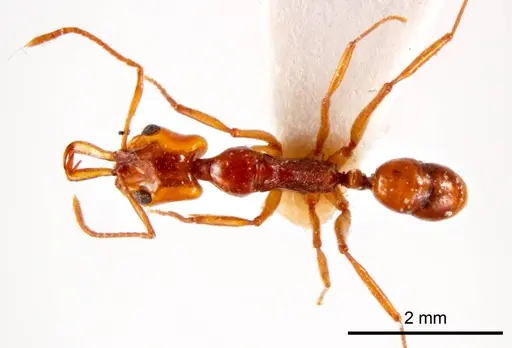
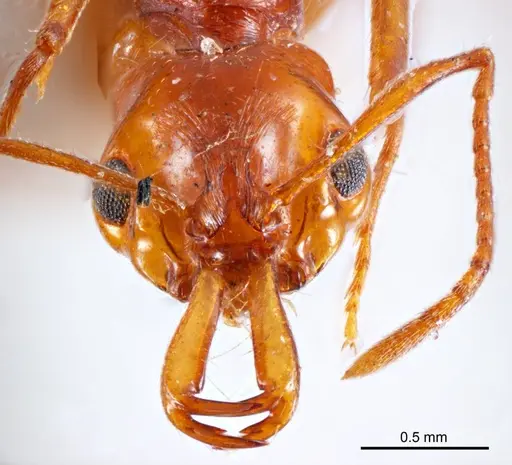
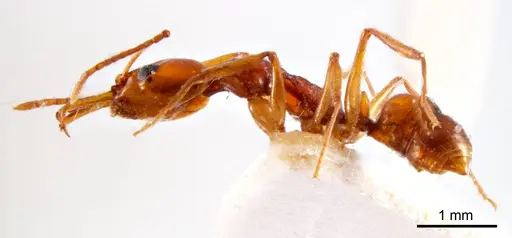
CASENT0887807
View on AntWeb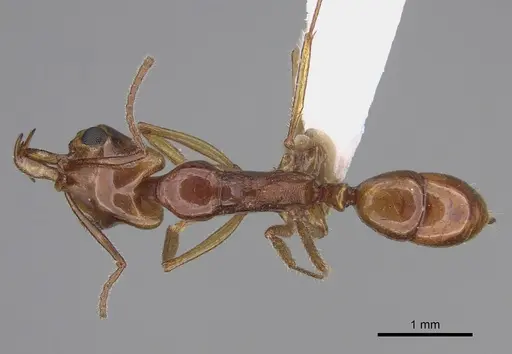
Literature
Loading...Loading products...