

Anochetus neglectus
- Scientific Name
- Anochetus neglectus
- Tribe
- Ponerini
- Subfamily
- Ponerinae
- Author
- Emery, 1894
- Distribution
- Found in 10 countries
Anochetus neglectus Overview
Anochetus neglectus is an ant species of the genus Anochetus. It is primarily documented in 10 countries , including Argentina, Brazil, Colombia. Detailed taxonomic data and occurrence records can be further explored via authoritative databases such as AntWeb or the Global Biodiversity Information Facility (GBIF).
Anochetus neglectus
Anochetus neglectus is a minute trap-jaw ant native to South America. Workers measure under 1.75 millimeters in combined head and thorax length, with uniform reddish-brown coloring and finely lined body surfaces [1][2]. They range broadly across the Neotropical region from Colombia and French Guiana south to Argentina and Uruguay [3][4].
These ants are leaf litter specialists that hunt small prey using spring-loaded mandibles. Researchers have documented them in pristine rainforests, pine plantations, sugarcane fields, and grasslands, showing adaptability despite their specialized lifestyle [5][6][7][8]. Their extremely small size and specific dietary needs make them challenging captives rarely maintained in the hobby.
Quick Summary
- Difficulty: Expert
- Origin & Habitat: South America (Argentina, Brazil, Colombia, French Guiana, Paraguay, Peru, Uruguay) [3][1]. Primarily a leaf litter specialist found in forests, grasslands, and agricultural areas [5][9][10].
- Colony Type: Unknown, colony structure has not been studied. Likely single-queen based on typical Anochetus patterns, but unconfirmed.
- Size & Growth:
- Queen: Unknown, likely 2.5-3.5mm based on worker proportions.
- Worker: Under 1.75mm head plus thorax length, total body approximately 2-2.5mm [1][2].
- Colony: Unknown, likely under 100 workers based on leaf litter ant biology.
- Growth: Slow.
- Development: Unknown, estimated 8-12 weeks at 25°C based on related small Ponerinae. (Development time is unconfirmed, provide stable warmth year-round.)
- Antkeeping:
- Temperature: 24-26°C (inferred from tropical distribution). Maintain stable warmth with minimal fluctuation.
- Humidity: High, nest substrate should feel damp to the touch, mimicking leaf litter conditions.
- Diapause: Likely not required. Southern populations may tolerate cooler winters, but no data confirms hibernation needs.
- Nesting: Small, dark cavities with tight spaces. Naturalistic setups with soil and leaf litter, or tiny plaster nests with narrow chambers.
- Behavior: Specialist predators using trap-jaw mandibles to capture small arthropods [5]. Extremely small size creates high escape risk. Likely sensitive to disturbance and light.
- Common Issues: escape prevention is critical, workers under 2mm can pass through standard mesh and gaps., feeding requires tiny live prey such as springtails or soil mites, standard ant food is too large., slow growth means colonies remain small for long periods, requiring patience., desiccation kills quickly, maintain damp substrate constantly., overheating is fatal, small colonies cannot tolerate temperatures above 28°C.
Identification and Appearance
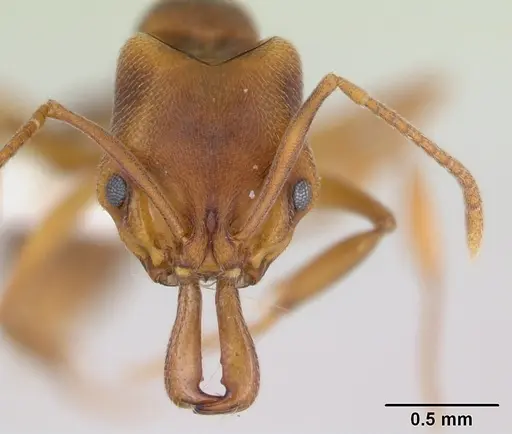
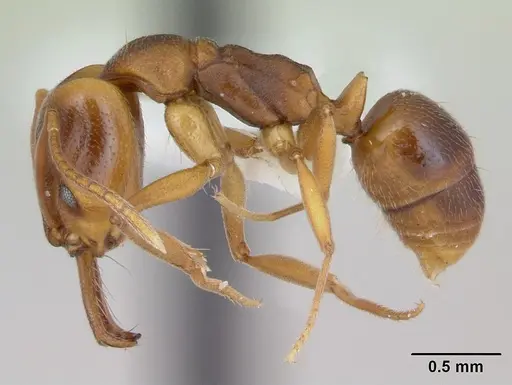
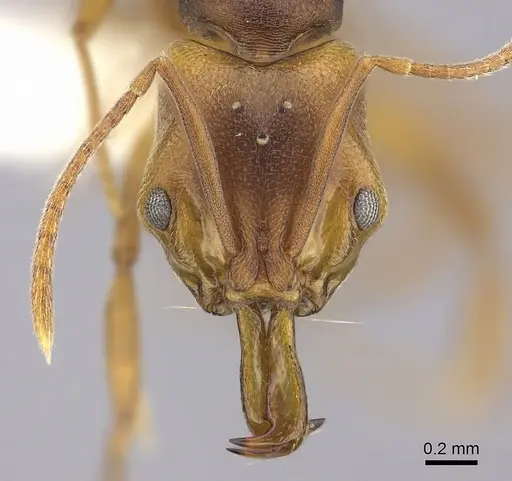
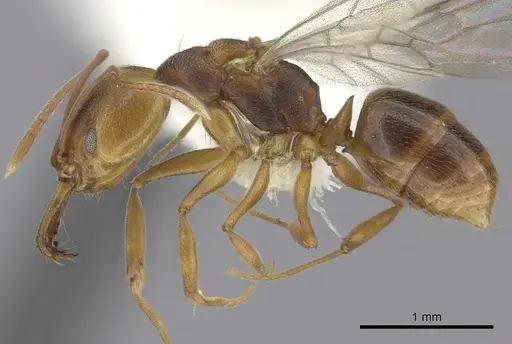
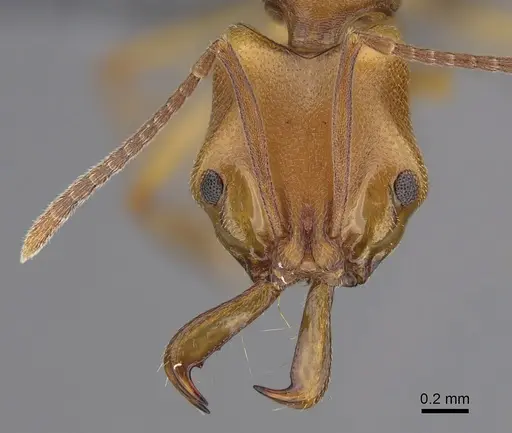
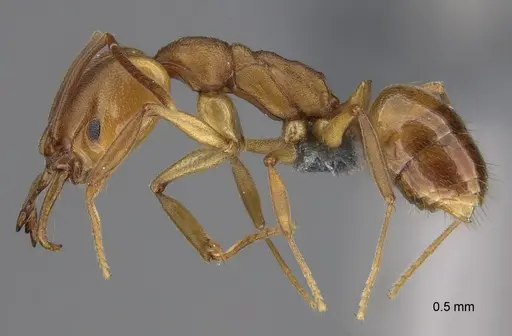
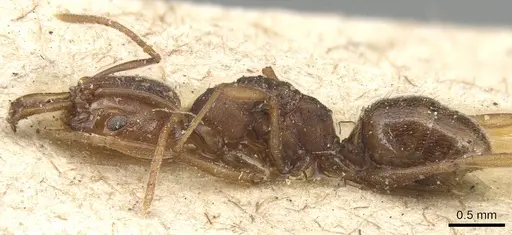
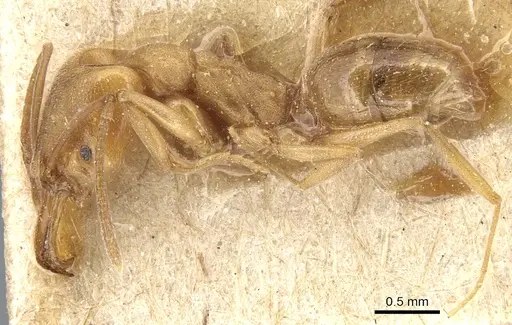
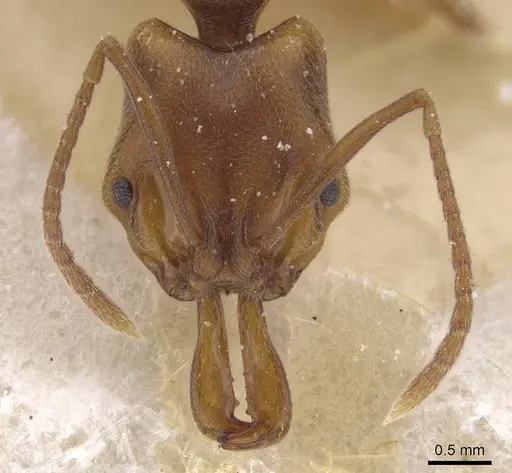
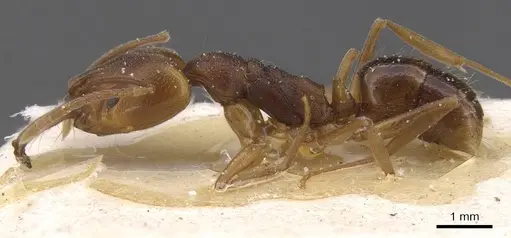
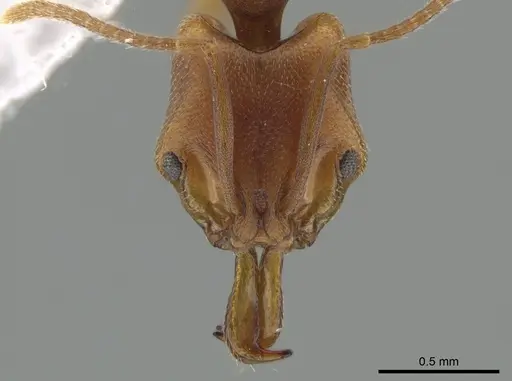
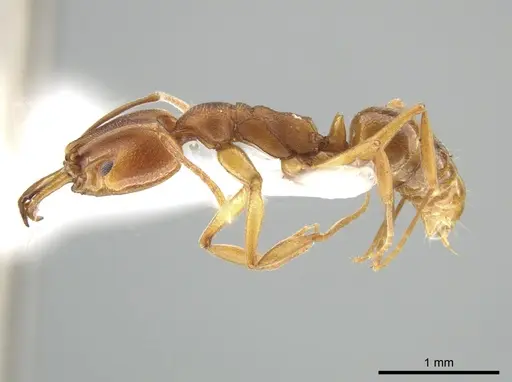
Anochetus neglectus belongs to the mayri species group and is one of the smallest members of its genus [11]. Workers are immediately recognizable by their tiny stature, the combined length of the head and thorax measures less than 1.75 millimeters [1][2]. They display uniform reddish-brown or brownish coloring without distinct patterns [1].
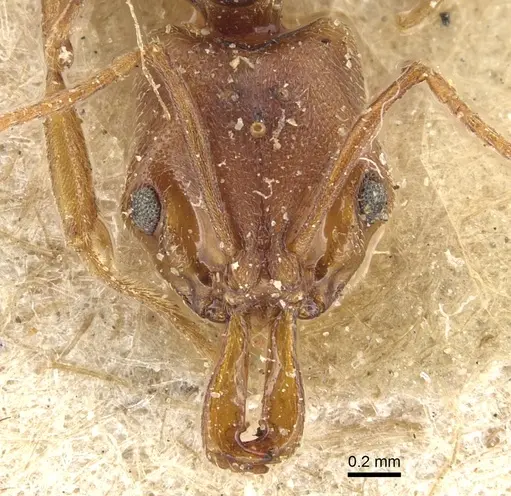
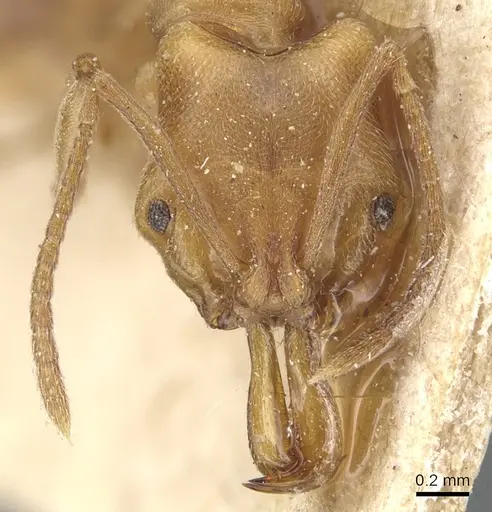
Key identifying features include a distinctly concave top edge on the waist segment (petiole), ending in two small teeth or angled corners when viewed from the front [1][2]. The sides of the thorax are fully covered with fine sculpturing, which separates them from similar species like Anochetus mayri [1]. The second antenna segment is short, less than twice as wide as it is long [1]. Their eyes are small, measuring approximately 0.13-0.16 millimeters across [1].
Natural Habitat and Microhabitat
These ants are specialized leaf litter dwellers. Researchers consistently collect them using Winkler extractors from forest floor samples [9][12]. They inhabit diverse environments across their range, including pristine Amazonian rainforest [10], Atlantic Forest fragments [13], and even disturbed habitats like pine plantations [6], eucalyptus groves [14], sugarcane fields [7], and southern grasslands [8].
In Colombia, they have been found in terra firme forest [15], while in French Guiana they occur in liana forests and plateau forests [10]. This flexibility suggests they can tolerate some habitat disturbance, though they remain dependent on ground litter and soil moisture. They are considered a specialist predator within the leaf litter community [5].
Feeding and Hunting Behavior
Anochetus neglectus is classified as a specialist predator (functional group SP), meaning they hunt specific small prey rather than scavenging or accepting general food sources [5]. Like all Anochetus, they possess trap-jaw mandibles, spring-loaded jaws that snap shut with incredible speed to capture prey.
In captivity, you must provide tiny live prey. Suitable options include springtails (Collembola), soil mites, fruit fly larvae, or newly hatched pinhead crickets chopped into small pieces. Standard feeder insects are too large for these ants to subdue or transport. They likely do not accept sugar water or honeydew substitutes readily, as they are adapted to hunting live prey in leaf litter. Offer food every 2-3 days, removing uneaten items promptly to prevent mold in the humid conditions they require.
Captive Care Requirements
Due to their minute size, Anochetus neglectus requires specialized housing. Standard test tubes may be too spacious, instead use very small test tubes (5mm diameter) or custom micro-formicariums with tight-fitting lids. If using a naturalistic setup, provide a thin layer of soil mixed with leaf litter and flat stones or bark pieces for nesting underneath.
Maintain temperatures between 24-26°C year-round, as they are tropical ants. Create a gentle heat gradient if possible, but avoid overheating, small colonies die quickly above 28°C. Keep the substrate consistently damp but not waterlogged, it should feel like a wrung-out sponge. Use fine mesh (under 0.5mm) for ventilation, or they will escape. Apply barrier products like Fluon or talcum powder to all lid edges and tubing connections.
Challenges in Captivity
These ants are expert-level captives for several reasons. First, their size under 2mm means standard ant keeping equipment is unsuitable, they can squeeze through gaps in acrylic nests and pass through standard stainless steel mesh. You must use extremely fine barriers and seal all connections perfectly.
Second, their specialized diet makes feeding difficult. If you cannot maintain cultures of springtails or other micro-prey, the colony will starve. Third, their slow growth rate means you may have only 10-20 workers even after a year of care. This requires patience and careful monitoring of the small population. Finally, their sensitivity to desiccation means any failure in humidity maintenance kills the colony within days.
Frequently Asked Questions
Can I keep Anochetus neglectus in a test tube?
Yes, but you need extremely small test tubes (5mm diameter or less) or micro setups. Standard test tubes are too large and allow escape through gaps. Seal the cotton plug extremely well, or use a small plaster nest instead.
How long until first workers for Anochetus neglectus?
Unknown. Based on similar small tropical Ponerinae, expect approximately 8-12 weeks at 25°C, but this is unconfirmed. Development may be faster or slower depending on temperature and feeding.
Do Anochetus neglectus need hibernation?
Likely not, they are tropical ants from warm regions. However, this is unconfirmed, and southern populations from Argentina or Uruguay might benefit from a cooler period around 18-20°C during winter months.
What do Anochetus neglectus eat?
They are specialist predators that require tiny live prey. Offer springtails, soil mites, fruit fly larvae, or very small chopped insects. Standard ant foods like honey water may not be accepted, and large prey items are unsuitable for their size.
Are Anochetus neglectus good for beginners?
No. Their extremely small size requires expert-level escape prevention, and their specialized diet makes them difficult to maintain. Beginners should start with larger species like Lasius or Camponotus.
Can I keep multiple Anochetus neglectus queens together?
Not recommended. Colony structure is unknown, and combining unrelated queens likely leads to fighting. Even if the species permits multiple queens naturally, introducing strangers risks mortality.
Why are my Anochetus neglectus dying?
Common causes include desiccation (substrate too dry), overheating (above 28°C), starvation (prey too large or not offered frequently enough), or escape. Check that prey is actually being consumed, if too large, they will ignore it.
References

This caresheet is licensed under CC BY-SA 4.0 .
CASENT0173534
View on AntWeb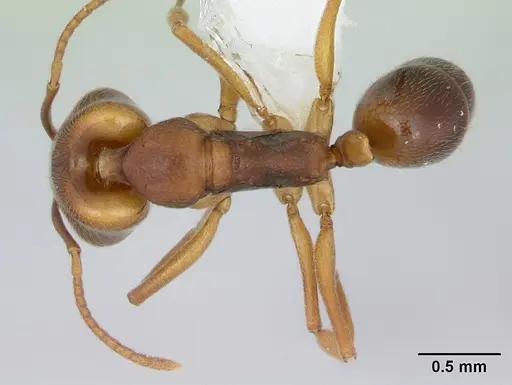
CASENT0260502
View on AntWeb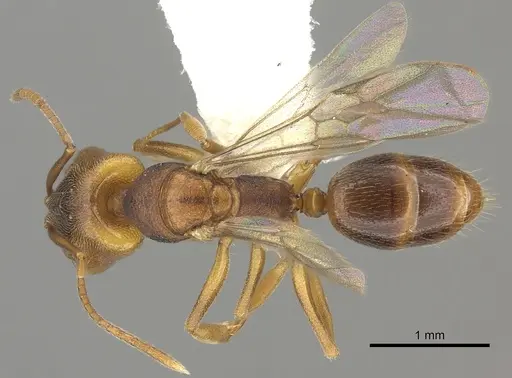
CASENT0379431
View on AntWeb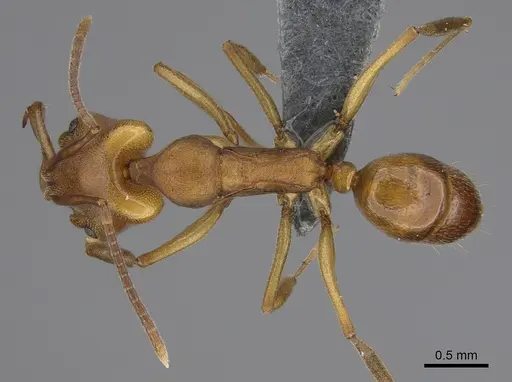
CASENT0903988
View on AntWeb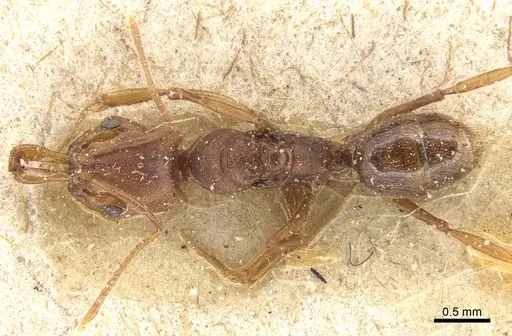
CASENT0903989
View on AntWeb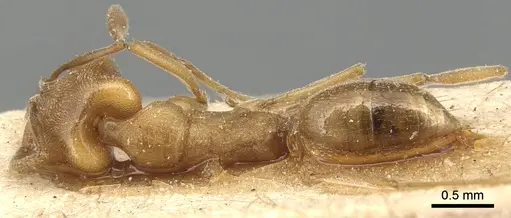
CASENT0915162
View on AntWeb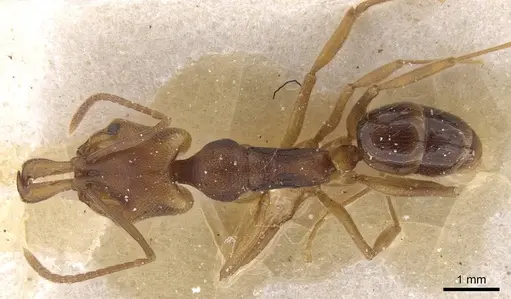
DZUP549116
View on AntWeb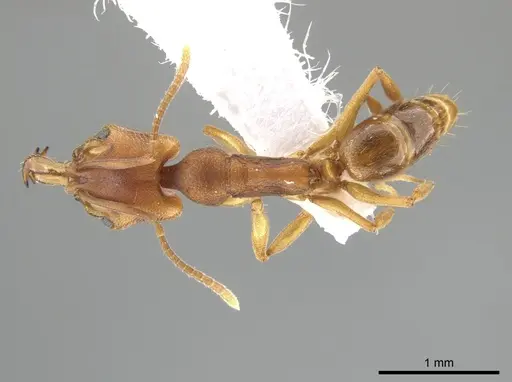
Literature
Loading...Loading products...