

Anochetus haytianus
- Scientific Name
- Anochetus haytianus
- Tribe
- Ponerini
- Subfamily
- Ponerinae
- Author
- Wheeler & Mann, 1914
- Distribution
- Found in 1 countries
Anochetus haytianus Overview
Anochetus haytianus is an ant species of the genus Anochetus. It is primarily documented in 1 countries , including Haiti. Detailed taxonomic data and occurrence records can be further explored via authoritative databases such as AntWeb or the Global Biodiversity Information Facility (GBIF).
Anochetus haytianus
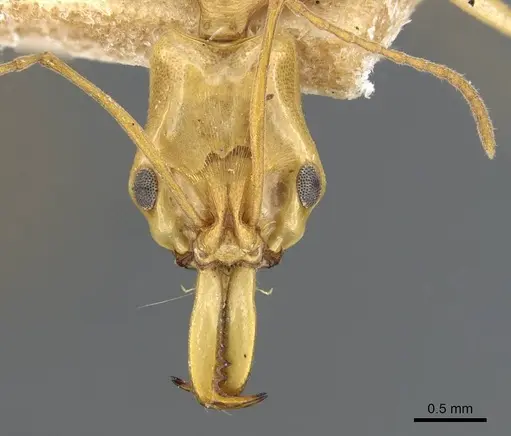
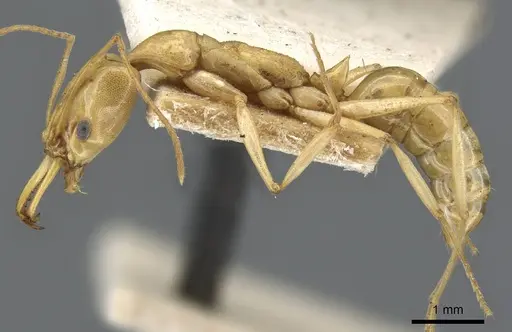
Anochetus haytianus is a trap-jaw ant found only in eastern Haiti [1][2]. Workers are medium-sized at 6.5-7.5 mm with a pale brownish-yellow body and lighter legs and antennae [3]. They belong to the emarginatus species group, distinguished by shorter mandibles bearing only 4 to 5 small teeth along the inner edge and a broader head than their relatives [3].
This species is one of the rarest ants in the Americas. Since their discovery in 1912-1913,no additional specimens have been reported [1]. Wheeler and Mann found them living in small colonies beneath flat stones in shady locations [1][2]. Their light coloration led Brown (1978) to suggest they forage at night [1][2].
Quick Summary
- Difficulty: Expert
- Origin & Habitat: Eastern Haiti (Ou and SE regions), specifically under stones in shaded, rocky locations [1][2]
- Colony Type: Unknown, only small colonies documented in the wild [1]
- Size & Growth:
- Antkeeping:
- Temperature: Likely warm based on Haitian climate, suggest starting at 24-28°C, but this is unconfirmed
- Humidity: Moderate to high, nesting under stones in shade suggests need for damp but not waterlogged conditions
- Diapause: Unknown, likely unnecessary given tropical Haitian climate
- Nesting: Under flat stones in nature, captive setups should provide flat stones or shallow, dark chambers that mimic these microhabitats [1]
- Behavior: Likely nocturnal based on pale yellowish coloration [1][2]. As members of the genus Anochetus, they possess spring-loaded trap-jaw mandibles for hunting. They have a functional stinger as typical for Ponerini ants. Small wild colony size suggests they are not aggressive territory holders.
- Common Issues: this species exists only as museum specimens collected in 1912-1913, no live colonies are available in the ant trade [1][4], founding behavior is completely unknown, even if queens were found, care requirements would be purely speculative, specific dietary needs, temperature tolerances, and humidity requirements are completely undocumented, extreme rarity makes any collection from the wild unethical and potentially illegal
Historical Collections and Extreme Rarity
Anochetus haytianus is effectively unavailable to ant keepers. All known specimens consist of three worker syntypes collected by W.M. Mann in 1912-1913 from the mountains north of Jacmel and Manneville in Haiti [4]. No additional specimens have been reported in the century since their initial description [1]. This makes them unobtainable and means that any care guidelines would be purely hypothetical. The type specimens are housed in the Museum of Comparative Zoology and the Natural History Museum in Basel [4].
Natural Nest Sites
Wheeler and Mann reported finding these ants in small colonies nesting under stones in shady places [1][2]. This microhabitat choice suggests they require stable, dark conditions with moderate humidity and protection from direct sunlight. The lack of elevation data means we do not know if they prefer lowland or mountain habitats [2]. In captivity, this would translate to setups with flat hiding stones or dark, shallow chambers rather than deep vertical nests.
Physical Identification
Workers can be recognized by their pale brownish-yellow coloration, which is lighter than the related Anochetus emarginatus [3]. The mandibles are relatively short for the genus, with only 4 to 5 denticles on the inner border and slightly shorter apical teeth [3]. The head is noticeably broader behind the eyes than in related species, and the antennal scapes are short, extending less than one quarter of their length beyond the back of the head [3]. The petiole node has two longer, more acute, and more diverging teeth at the summit compared to A. emarginatus [3].
Nocturnal Behavior
Brown (1978) noted that the yellowish coloration of these ants suggests they are nocturnal foragers [1][2]. This is a common pattern in tropical ants, where pale colors provide camouflage in low light and help reflect heat during night foraging. If this is accurate, captive colonies would require a reversed light schedule or darkened observation to see natural activity patterns.
Frequently Asked Questions
Can I keep Anochetus haytianus as a pet?
No. This species is not available in the ant trade. All known specimens are museum types collected over 100 years ago. Live colonies have never been documented in captivity.
Is Anochetus haytianus good for beginners?
No. Even if they were available, the complete lack of care information makes them unsuitable for beginners. Additionally, their extreme rarity means any attempt to collect them would be unethical.
How long does Anochetus haytianus take from egg to worker?
Unknown. No developmental data exists for this species.
What do Anochetus haytianus eat?
Unknown. As trap-jaw ants in the genus Anochetus, they likely hunt small live prey such as springtails or tiny insects, but this has never been observed in this species.
Where does Anochetus haytianus live?
They are endemic to eastern Haiti, specifically recorded from the mountains north of Jacmel and Manneville near Lake Assuei [1][2]. They have never been found in the Dominican Republic or elsewhere.
How big do Anochetus haytianus colonies get?
Unknown. Wheeler and Mann described them as small colonies, but gave no specific worker counts [1].
Does Anochetus haytianus need hibernation?
Unknown, but likely not. Haiti has a tropical climate without cold winters, suggesting they do not undergo winter rest periods.
Report an Issue
The current care sheet is based fully on literature. See inconsistencies, or something that's incorrect? Please , it will be resolved after review from an admin. Contributing to the blogs tab also helps providing information, to make us be able to further improve the caresheets. Thank you for your support!
References

This caresheet is licensed under CC BY-SA 4.0 .
CASENT0905847
View on AntWeb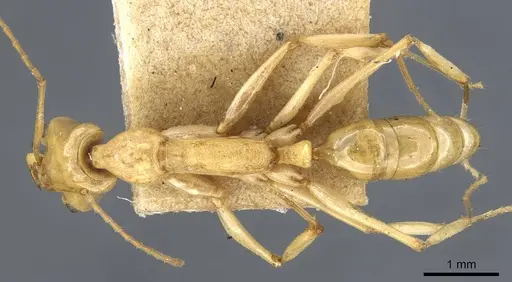
Literature
Loading...Loading products...