

Anochetus avius
- Scientific Name
- Anochetus avius
- Tribe
- Ponerini
- Subfamily
- Ponerinae
- Author
- Shattuck & Slipinska, 2012
- Distribution
- Found in 1 countries
Anochetus avius Overview
Anochetus avius is an ant species of the genus Anochetus. It is primarily documented in 1 countries , including Australia. Detailed taxonomic data and occurrence records can be further explored via authoritative databases such as AntWeb or the Global Biodiversity Information Facility (GBIF).
Anochetus avius
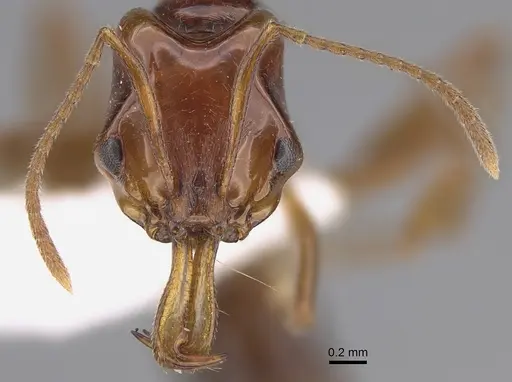
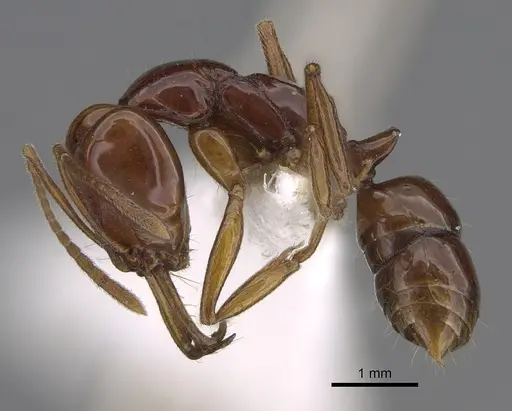
Anochetus avius is a small trap-jaw ant from the remote Kimberley region of northern Western Australia. Workers measure approximately 4-5mm in length with yellow-brown to brown bodies that are mostly smooth and shiny, featuring slightly lighter heads and legs [1]. They have small eyes, short antennae that do not reach the back of the head, and rounded corners on the rear of their middle body section [1].
What makes this species extraordinary is the near-total absence of biological data. Only four worker specimens have ever been collected, all from pitfall traps set in dry woodlands during the 1980s [1]. No queens have been found, no nests have been described, and no one has observed their behavior in the wild or captivity [1]. If you attempt to keep Anochetus avius, you will be pioneering care methods for one of the most poorly understood ants in the world.
Quick Summary
- Difficulty: Expert
- Origin & Habitat: Extreme northern Western Australia (Kimberley region: Admiralty Gulf, Mitchell Plateau, Carson Escarpment), collected in dry sclerophyll woodlands [1][2]
- Colony Type: Unknown, colony structure has never been documented. Based on typical Anochetus patterns, likely single-queen colonies, but this remains unconfirmed.
- Size & Growth:
- Queen: Unknown, no queens have been described [1]
- Worker: Approximately 4-5mm total length (head length 1.04-1.23mm, thorax length 1.30-1.60mm) [1]
- Colony: Unknown, likely small based on typical Anochetus patterns, estimated under 100 workers, but completely unconfirmed
- Growth: Unknown
- Development: Unknown, estimated 8-12 weeks at 26-28°C based on similar tropical trap-jaw ants, but completely unconfirmed (Timeline is speculative. Nanitic workers (first generation) may develop faster than subsequent workers, as seen in related species.)
- Antkeeping:
- Temperature: Likely warm conditions based on tropical Australian location. Start around 25-28°C and observe activity levels. Exact requirements unknown.
- Humidity: Dry woodland habitat suggests moderate humidity with dry areas available. Provide a moisture gradient from damp to dry substrate and let the colony choose.
- Diapause: Unknown, northern Western Australia has a tropical climate without cold winters, so diapause is likely unnecessary, but this is unconfirmed.
- Nesting: Unknown. Collected in ground traps suggesting ground-nesting or leaf litter dwelling. A naturalistic setup with leaf litter and soil, or a formicarium with small chambers, may work.
- Behavior: Trap-jaw ant, likely uses spring-loaded mandibles to strike prey. Behavior in captivity is completely undocumented. Their small size means escape prevention must be excellent.
- Common Issues: no established captive care protocols exist, you will be pioneering all care methods., biological requirements are completely unknown making troubleshooting nearly impossible., tiny worker size (4-5mm) means they can escape through minute gaps in standard enclosures., likely requires specialized live prey typical of trap-jaw ants, which may be difficult to source., founding behavior is unconfirmed, it is unknown whether queens seal themselves in or require food during colony establishment.
The Rarest Ant in Captivity
Anochetus avius represents the ultimate challenge in ant keeping due to the complete absence of biological data. Only four specimens exist in scientific collections: one from Walsh Point in Admiralty Gulf, one from Carson Escarpment, and two from Mitchell Plateau, all collected in the Kimberley region of northern Western Australia during 1983 and 1986 [1]. These came from pitfall traps set in dry sclerophyll woodlands, dry forests with hard-leaved vegetation typical of the region [1].
No researcher has ever found a nest, observed a queen, or documented colony behavior [1]. The species was only recognized as distinct in 2012 when scientists determined these northern specimens were different from the similar-looking Anochetus armstrongi found in southeastern Australia [1]. For keepers, this means every aspect of care, from temperature to diet to nesting preferences, must be guessed based on general Anochetus patterns and the local climate.
Housing and Containment
Since nests have never been found in the wild, we can only infer housing needs from the collection method and related species. The specimens were caught in ground-level pitfall traps, suggesting these ants live in leaf litter or soil rather than arboreally [1].
Their small size, workers measure roughly 4-5mm with heads just over 1mm long, demands exceptional escape prevention [1]. Use fine mesh barriers (under 1mm holes), tight-fitting lids, and Fluon or talcum powder barriers on all ventilation openings. A naturalistic setup with a mix of leaf litter, sandy soil, and flat stones might replicate their dry woodland habitat, though this is speculative. If using a formicarium, choose one with very small chambers and narrow passages appropriate for tiny ants.
Feeding and Diet
As a trap-jaw ant, Anochetus avius likely possesses the spring-loaded mandible mechanism characteristic of the genus, used to strike prey with incredible speed. While the specific diet is unknown, related Anochetus species are specialized predators of small arthropods.
Offer small live prey such as springtails, fruit flies (Drosophila), and pinhead crickets. The prey should be small enough for 4-5mm workers to subdue. You may also offer sugar water or honey, but protein will likely be essential for colony growth. Feed small amounts frequently rather than large meals infrequently, as is typical for small ponerine colonies. [1]
Temperature and Environment
Northern Western Australia has a tropical climate with hot temperatures year-round and distinct wet and dry seasons. The specimens were collected in May and June, which corresponds to the dry season [1]. This suggests year-round activity without a winter dormancy period, though this is inferred rather than confirmed.
Start with temperatures around 25-28°C, creating a gentle heat gradient across the nest. If the ants consistently cluster on the warm side, increase heat slightly, if they avoid it, reduce temperature. Provide a humidity gradient, some areas of damp substrate and some dry, reflecting the dry woodland floor where they were collected. Whether they require a diapause period is unknown, but likely unnecessary given their tropical origin.
Frequently Asked Questions
Can I keep Anochetus avius in a test tube?
Unknown. Test tubes might work for founding if the queen is semi-claustral, but long-term housing requirements are completely unconfirmed. A naturalistic setup may be more appropriate given their likely ground-dwelling habits.
How long until first workers for Anochetus avius?
Unknown. Based on similar tropical trap-jaw ants, estimate 8-12 weeks at 25-28°C, but this is purely speculative and unconfirmed.
What do Anochetus avius eat?
Unknown in the wild. As trap-jaw ants, they likely hunt small live prey such as springtails, fruit flies, and tiny insects. Offer protein sources regularly.
Are Anochetus avius good for beginners?
No. Only expert antkeepers should attempt this species due to the complete lack of care data and extreme rarity of specimens.
Do Anochetus avius need hibernation?
Unknown, but probably not. They come from tropical northern Australia where temperatures remain warm year-round.
How big do Anochetus avius colonies get?
Unknown. Most Anochetus have small colonies under 100 workers, but this is unconfirmed for A. avius.
Can I keep multiple Anochetus avius queens together?
Unknown and not recommended without evidence. Most trap-jaw ants are single-queen colonies, but this is unconfirmed.
Why are my Anochetus avius dying?
With only four specimens ever collected, no one knows the specific failure modes. Ensure excellent escape prevention, appropriate humidity, and small live prey. Document everything to help future keepers.
References

This caresheet is licensed under CC BY-SA 4.0 .
CASENT0887806
View on AntWeb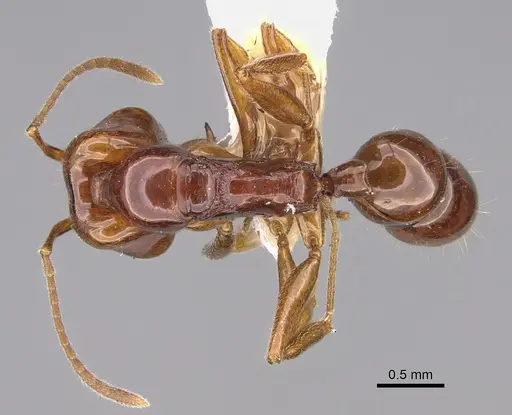
Literature
Loading...Loading products...