

Amblyopone leae
- Scientific Name
- Amblyopone leae
- Tribe
- Amblyoponini
- Subfamily
- Amblyoponinae
- Author
- Wheeler, 1927
- Distribution
- Found in 1 countries
Amblyopone leae Overview
Amblyopone leae is an ant species of the genus Amblyopone. It is primarily documented in 1 countries , including Australia. Detailed taxonomic data and occurrence records can be further explored via authoritative databases such as AntWeb or the Global Biodiversity Information Facility (GBIF).
Amblyopone leae
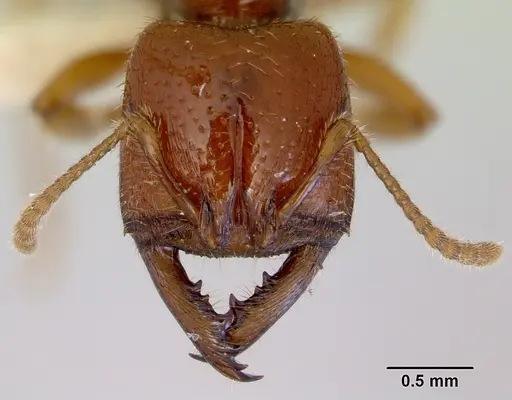
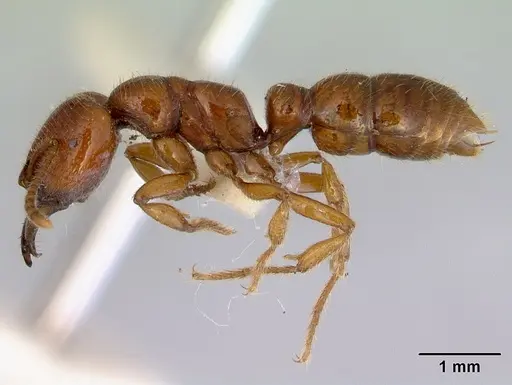
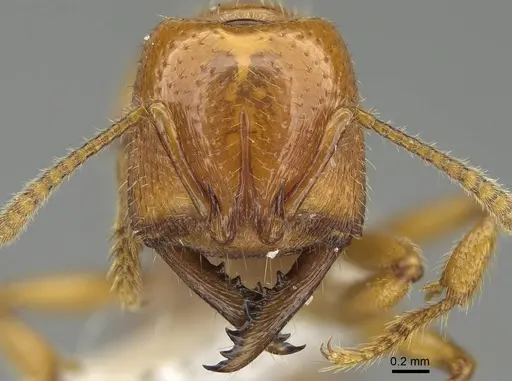
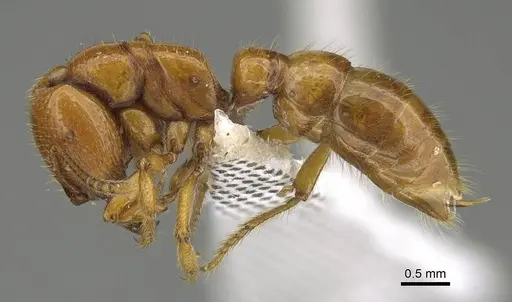
Amblyopone leae is a small, primitive ant found only on Lord Howe Island, a subtropical island off the east coast of Australia [1]. Workers measure roughly 3-5mm with elongated mandibles and pale yellowish-brown coloring typical of the genus [2]. They inhabit the island's forest floor, living in soil and leaf litter where they hunt small arthropods.
As members of the subfamily Amblyoponinae, often called Dracula ants, these ants display ancient traits including semi-claustral founding where queens must hunt for food during the founding stage. Unlike many modern ants, they do not seal themselves away during colony establishment and cannot survive on stored body fat alone.
Quick Summary
- Difficulty: Expert
- Origin & Habitat: Endemic to Lord Howe Island, Australia [1]. Inhabits forest soil and leaf litter in the island's subtropical forests.
- Colony Type: Single-queen colonies based on typical Amblyopone patterns.
- Colony: Monogyne
- Founding: Semi-claustral
- Size & Growth:
- Queen: Approximately 4-6mm estimated from genus morphology [2].
- Worker: Approximately 3-5mm estimated [2].
- Colony: Likely under 100 workers based on related Amblyopone species.
- Growth: Slow
- Development: 8-12 weeks estimated based on Amblyopone genus patterns. (Development timing is unconfirmed for this species. Estimate assumes temperatures around 22-24°C.)
- Antkeeping:
- Temperature: 20-24°C based on Lord Howe Island's mild subtropical climate. Avoid high heat.
- Humidity: High humidity with consistently moist substrate. Think damp forest floor, not dry conditions.
- Diapause: Likely not required given the mild subtropical climate, though a cool period around 15-18°C may be offered.
- Nesting: Small soil chambers or cavities in leaf litter. They prefer tight, dark spaces with minimal open volume.
- Behavior: Slow-moving, specialized predators with poor vision. They are not aggressive toward humans but are efficient hunters of small soil arthropods. Their small size means escape prevention requires fine mesh barriers.
- Common Issues: queens require active feeding during founding (semi-claustral), leading to high mortality if you do not provide small live prey., specialized predatory diet means they may reject standard ant foods like sugar water or fruit flies., extremely slow colony growth requires years of patience before the colony reaches mature size., endemic status makes collection and export legally restricted and ethically problematic., small prey size requirements mean standard feeders like crickets are often too large, you need springtails or tiny soil arthropods.
Nest Preferences
In nature, Amblyopone leae nests in soil and leaf litter on the forest floor of Lord Howe Island [1]. For captive care, you should recreate these conditions with a naturalistic setup containing soil, leaf litter, and small hiding places. They prefer tight, dark chambers rather than open spaces.
A test tube setup works for founding, but you must provide a foraging area since the queen needs to hunt. Once the colony grows, move them to a small naturalistic formicarium or a container with soil and rotting wood. Avoid large, open acrylic nests, these ants feel secure only in small, enclosed spaces. Keep the substrate moist but not waterlogged, and provide leaf litter for them to hide under.
Feeding and Diet
These ants are specialized predators. In the wild, they hunt small soil arthropods like centipedes, springtails, and mites. You will need to provide similar small live prey.
Acceptable foods include live springtails, tiny soil centipedes, and small mites. Standard ant foods like honey or sugar water may be ignored, these ants are primarily protein hunters. Fruit flies might be too large for small colonies, pinhead crickets could work for larger colonies but watch that they do not harm the ants.
Feed small amounts frequently rather than large prey items. Remove uneaten prey quickly to prevent mold in the humid conditions these ants require. [2]
Temperature and Humidity
Lord Howe Island has a mild subtropical climate with temperatures rarely exceeding 25°C or dropping below 15°C [1]. Keep your colony at 20-24°C for best results. They do not need heating cables if your room stays within this range.
Humidity must remain high. Use a water tower or moist substrate in the nest area. The substrate should feel damp to the touch but not have standing water. You may need to mist the foraging area occasionally to maintain humidity, but ensure ventilation to prevent mold.
These ants probably do not require hibernation given their island origin, though you can offer a cool period at 15-18°C for 1-2 months during winter if you want to simulate seasonal changes.
Colony Founding
Queens are semi-claustral, meaning they do not seal themselves in a chamber and live off stored fat. Instead, they must leave the nest to hunt for food while raising their first workers. This makes founding much more difficult than with claustral species like Lasius or Camponotus.
You must provide a foraging area with small live prey from day one. The queen will hunt and bring food back to her brood. If you do not feed her, she will die before the first workers hatch. Use a test tube with a foraging container attached, or a small founding setup with direct access to food.
First workers (nanitics) will be small and may take 2-3 months to develop. Once they arrive, continue feeding small prey items. The colony will grow very slowly, do not expect hundreds of workers within the first year.
Behavior and Hunting
Amblyopone leae shows primitive ant behaviors typical of the Amblyoponinae subfamily. They have poor eyesight and rely on chemical cues to navigate and hunt. They move slowly and deliberately, stalking small prey items in the soil.
These ants are not aggressive toward humans and cannot sting effectively through human skin, though they do possess stingers. They are shy and will retreat into their nest when disturbed. They do not recruit to food sources with trail pheromones like more advanced ants, instead, individual workers hunt alone.
Because they are slow-moving, they are not escape artists, but their small size means you must use fine mesh (fine enough to block 1mm gaps) to prevent workers from slipping through ventilation holes. [2]
Conservation and Legal Status
This species is endemic to Lord Howe Island, meaning it occurs nowhere else on Earth [1]. The island has strict biosecurity measures to protect its unique wildlife. You should never attempt to collect or export these ants without proper permits, and you absolutely must not release them outside Lord Howe Island if you somehow obtain them.
If you keep this species, maintain strict containment protocols. An escaped colony could establish outside its native range and become an invasive threat, or conversely, your colony could be the last of its kind if wild populations are threatened. Treat this species with the same care you would give an endangered animal.
Frequently Asked Questions
Can I keep Amblyopone leae in a test tube?
Yes, but you must attach a foraging area. Unlike claustral ants, the queen needs to hunt for food during founding. Use a test tube connected to a small outworld where you can place tiny live prey like springtails.
How long until first workers for Amblyopone leae?
The exact timeline is unknown, but based on related Amblyopone species, expect 8-12 weeks at 22-24°C. These ants develop slowly compared to common species like Lasius niger.
Do Amblyopone leae need hibernation?
Probably not. Lord Howe Island has a mild subtropical climate without harsh winters [1]. You can keep them at room temperature year-round, though a brief cool period at 15-18°C during winter months will not harm them.
What do Amblyopone leae eat?
They are specialized predators that hunt small soil arthropods. Feed them live springtails, tiny centipedes, or small mites. They may not accept sugar water or standard ant foods like honey.
Can I keep multiple Amblyopone leae queens together?
No. These ants form single-queen colonies (monogyne). If you house multiple queens together, they will fight until only one survives.
Are Amblyopone leae good for beginners?
No. These are expert-level ants due to their semi-claustral founding (queens must be fed), specialized diet, extremely slow growth, and the ethical/legal complications of keeping an endemic island species.
Do Amblyopone leae ants sting?
They possess stingers but they are too small to penetrate human skin effectively. They are not dangerous to humans, though they use their stingers to subdue tiny prey items.
References

This caresheet is licensed under CC BY-SA 4.0 .
CASENT0172391
View on AntWeb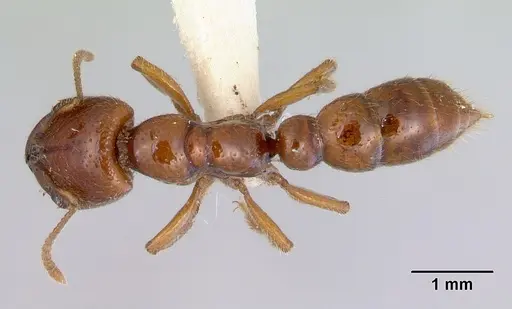
CASENT0746791
View on AntWeb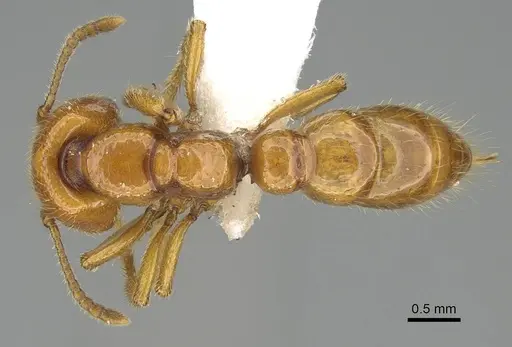
Literature
Loading...Loading products...