Aenictus sagei - "Sage's Army Ant"
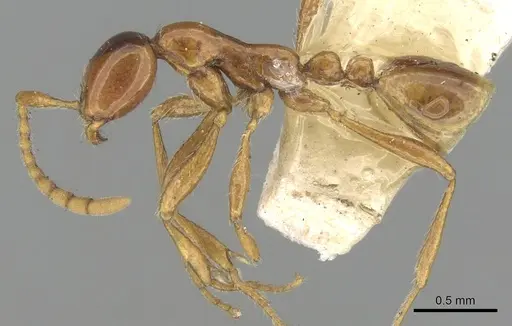
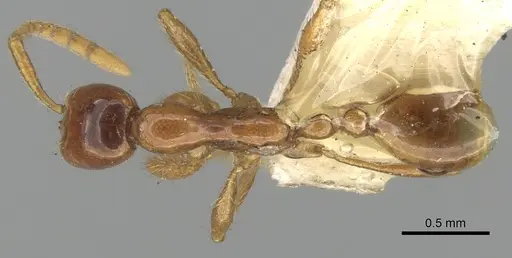
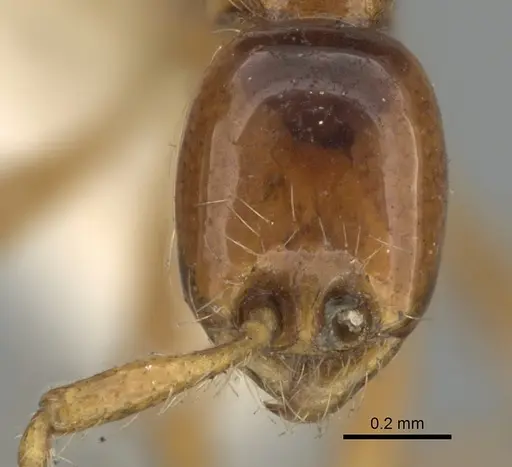
Aenictus sagei is a fascinating army ant species known for its nomadic lifestyle and predatory behavior. Workers are relatively small, measuring around 3.1-3.2 mm in total length, with a subrectangular head that's slightly longer than it is wide. Their bodies are mostly smooth and shiny, ranging in color from deep yellow to pale brown, with yellowish mandibles, antennae, and legs. They are distinguished from close relatives by their slightly larger size and longer pronotal hairs. Like other Aenictus species, they form temporary bivouacs rather than permanent nests, moving frequently in search of prey.
- Difficulty: Hard
- Origin & Habitat: North-central India, Afghanistan, Sri Lanka in Forests (hill evergreen, savanna, evergreen, disturbed), agricultural areas near natural seasonal forests, and potentially higher altitudes (1380-1400m)..
- Colony Type: Monogyne, fission (new colonies formed by division of existing colonies) founding.
- Size & Growth:
- Queen: Not specified
- Worker: 3.1-3.2mm
- Colony: Medium (several thousands). Fast (due to nomadic, predatory lifestyle) growth.
- Antkeeping:
- Temperature: Specific temperature requirements for Aenictus sagei are not detailed, but generally, tropical army ants thrive in warm conditions. A range between 24-28°C (75-82°F) is often suitable for tropical species to encourage active foraging and brood development. Consistent warmth is crucial for their nomadic life cycle..
- Humidity: Exact humidity levels for Aenictus sagei are not specified, but given their forest habitats, high humidity is likely important. Maintaining a humidity range of 70-85% would generally be appropriate for a tropical army ant species. This can be achieved with a moisture gradient in the setup..
- Diapause: Not required. Not specified at Not specified.
- Nesting: As army ants, Aenictus sagei do not build permanent nests. They alternate between nomadic and stationary phases, forming temporary bivouacs. In captivity, they would require a spacious outworld for raiding and a flexible, temporary nesting area, possibly a setup mimicking sheltered above-ground or semi-underground bivouacs..
- Behavior: High (towards prey and other ants) aggressiveness.
- Common Issues: Difficulty in providing consistent live ant prey, Managing nomadic behavior in an enclosure, Maintaining proper humidity and temperature in a dynamic setup, Colony stalling due to inadequate prey or environmental conditions.
Keeping Aenictus sagei in a home setup presents unique challenges due to their nomadic nature. These ants do not settle in a permanent formicarium but rather form temporary 'bivouacs,' which are essentially clusters of ants and brood. This means you'll need to provide an environment that accommodates their constant movement, possibly a large outworld where they can establish new bivouacs as they transition between stationary and nomadic phases. Replicating their natural movement patterns and providing appropriate temporary housing is key to their long-term health and vitality.
Aenictus sagei are specialized predators, primarily preying on other ant species, including their brood, and sometimes other small insects like wasps and termites. This dietary specialization means a consistent and varied supply of live ant prey is essential for their colony's well-being. Unlike many common ant species that thrive on a mix of sugars and proteins, Aenictus species heavily rely on protein from live prey to fuel their large colonies and rapid growth. This can be a significant undertaking for the average ant keeper.
The queens of Aenictus species are quite distinct; they are flightless and have notably enlarged gasters, known as dichthadiform queens. New colonies are not founded by a single queen after a nuptial flight, but rather through a process called fission, where a portion of an existing colony, including a queen and workers, breaks off to form a new one. This unique founding strategy makes obtaining a founding queen a completely different endeavor compared to other ant species, often requiring acquiring a division from an established colony.
Maintaining a proper humidity gradient and temperature consistency is critical for these ants, especially given their bivouac lifestyle. Since they don't have a fixed nest to regulate these conditions, their environment needs to provide suitable microclimates that they can move between. Any significant fluctuations could stress the colony and negatively impact brood development. Monitoring these parameters closely in the foraging area and bivouac sites will be crucial for successful care.
While general information about Aenictus species suggests some can deliver a sting, specifics for Aenictus sagei are not widely documented. It is always wise to exercise caution when handling any army ant species, as their aggressive predatory nature implies a defensive capability. Observing their behavior during feeding and maintenance will provide insights into their specific temperament and potential risks, reinforcing the need for careful handling and secure enclosures.
Frequently Asked Questions
What makes Aenictus sagei different from other ant species an ant keeper might encounter?
Aenictus sagei, like all army ants, stands out because they're nomadic. Unlike typical ants that build permanent nests, these guys form temporary 'bivouacs' and are always on the move, especially when the colony needs more food for its growing brood. This means no fixed formicarium setup, but rather a dynamic environment to accommodate their constant migrations.
How do you 'house' an Aenictus sagei colony if they don't build a permanent nest?
Housing Aenictus sagei is definitely a unique challenge for ant keepers! Since they're nomadic, they'll require a large outworld or a series of interconnected habitats where they can establish temporary bivouacs. Think of it as providing a 'mobile home' rather than a stationary one, allowing them to cluster and move as their natural instincts dictate. You'll need to observe their movement patterns and adapt your setup accordingly.
What do Aenictus sagei ants eat, and is it hard to find their food?
These army ants are highly specialized predators, primarily feasting on other ant species and their brood. They might also take down small insects like wasps and termites. Providing a consistent supply of live ant prey can be quite demanding for ant keepers, as they need protein-rich meals to fuel their large, active colonies.
How do Aenictus sagei colonies start, and can I get a queen to begin a new colony?
Aenictus sagei queens are quite unique; they are flightless and have an enlarged gaster. New colonies aren't founded by a single queen after a nuptial flight, but through a process called fission. This means a new colony forms when a segment of an existing, mature colony, including a queen and a group of workers, splits off and moves to a new location. So, you can't just catch a queen and expect her to found alone; you'd typically need a division from an established colony.
Are Aenictus sagei workers monomorphic or polymorphic?
Aenictus sagei workers are generally considered monomorphic, meaning there isn't a significant size difference between workers within the colony. This is typical for many Aenictus species.
What's the typical size of an Aenictus sagei worker?
Individual Aenictus sagei workers are quite small, usually measuring around 3.1 to 3.2 mm in total length. Their compact size allows them to be efficient in their predatory raids.
Where are Aenictus sagei naturally found?
These interesting army ants are native to parts of Asia, specifically north-central India, and have also been recorded in Afghanistan and Sri Lanka. They thrive in various forest environments, from hill evergreen forests to savannas, and even in disturbed agricultural areas near natural forests.
Do Aenictus sagei sting, and how aggressive are they?
Like many army ant species, Aenictus ants are known to sting, and given their highly predatory nature, it's safe to assume Aenictus sagei can deliver a sting as well. They are considered highly aggressive towards their prey and other ant species, which is essential for their hunting strategy. Always handle with caution and ensure secure enclosures!
What are some common challenges in keeping Aenictus sagei?
Keeping Aenictus sagei can be quite challenging! The main hurdles include consistently providing their specialized diet of live ant prey, managing their nomadic behavior within an artificial setup, and maintaining precise humidity and temperature conditions that mimic their natural, ever-changing bivouacs. Colonies can easily stall if these critical needs aren't met.
How large can an Aenictus sagei colony get?
While exact numbers for Aenictus sagei are not precisely documented, other Aenictus species can form colonies containing up to several thousand workers. Some larger species in the genus have been reported to reach impressive sizes, with colonies containing up to 80,000 to 110,000 individuals, but for A. sagei, it's generally in the thousands.
Do Aenictus sagei need a diapause or hibernation period?
Aenictus sagei, being a tropical species from regions like India, generally do not require a diapause or hibernation period. They maintain activity year-round, aligning with their continuous growth and predatory lifestyle in warm climates.
What kind of enclosure is best for Aenictus sagei?
Due to their nomadic habits, a conventional formicarium isn't suitable. An ideal setup would involve a large, escape-proof outworld with plenty of substrate options (though not for nesting, but for foraging), and perhaps modular, easily accessible areas where they can form their temporary bivouacs. The emphasis should be on space and the ability to move freely.
Are Aenictus sagei good for beginner ant keepers?
Definitely not! Aenictus sagei, and army ants in general, are considered expert-level species for ant keeping. Their unique nomadic behavior, specialized predatory diet, and specific environmental needs make them incredibly challenging to maintain successfully. They are best suited for experienced keepers who can dedicate significant time and resources to their complex care.