

Aenictus ceylonicus
- Scientific Name
- Aenictus ceylonicus
- Subfamily
- Dorylinae
- Author
- Mayr, 1866
- Distribution
- Found in 5 countries
Aenictus ceylonicus Overview
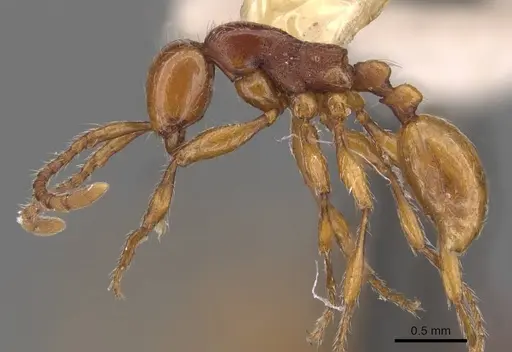
Aenictus ceylonicus is an ant species of the genus Aenictus. It is primarily documented in 5 countries , including Australia, China, Hong Kong. Detailed taxonomic data and occurrence records can be further explored via authoritative databases such as AntWeb or the Global Biodiversity Information Facility (GBIF).
Aenictus ceylonicus
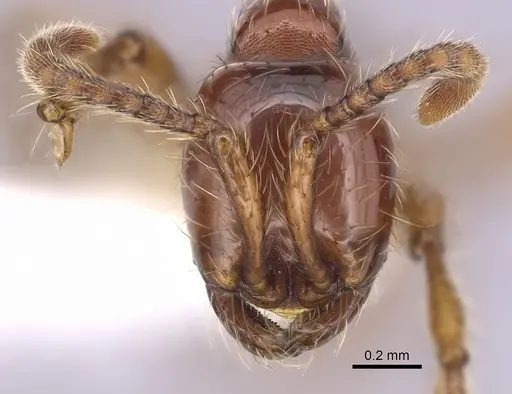
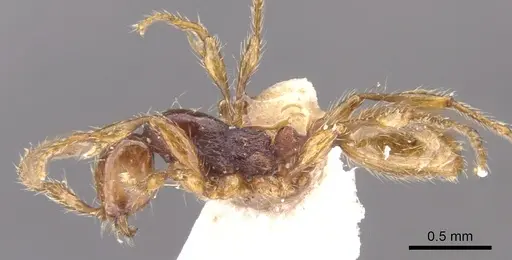
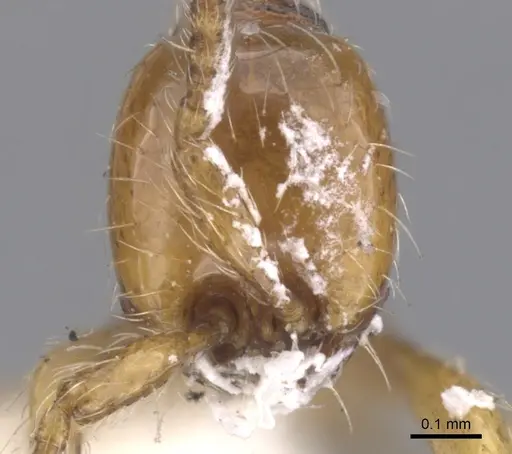
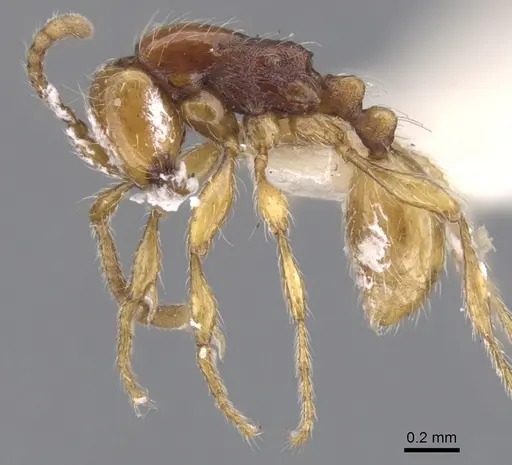
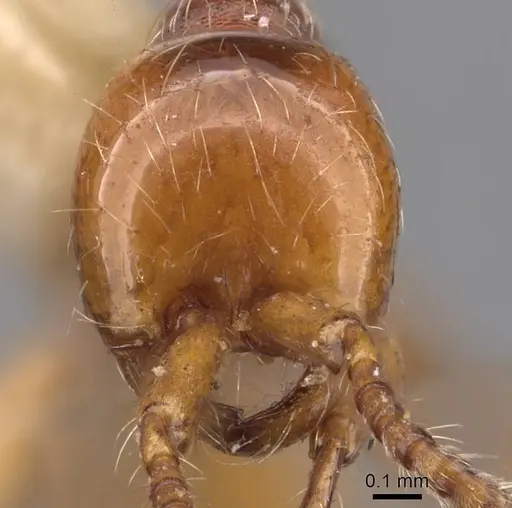
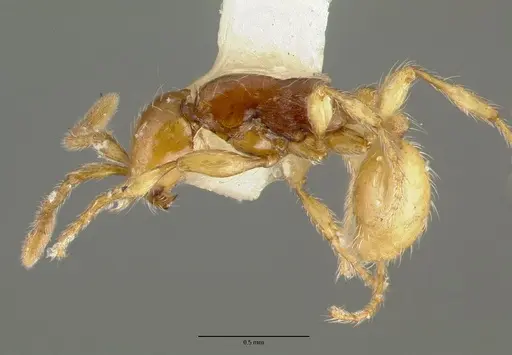
Aenictus ceylonicus is a tiny army ant native to India and Sri Lanka. Workers are small, yellowish-brown ants measuring just 3-4 mm, with distinctive mandibles that have only three teeth [1][2]. Unlike ants that build permanent nests, these are true army ants that form temporary bivouacs in rotten wood and move frequently to raid prey [2]. Recent research has restricted their range to the Indian subcontinent, previous records from China, Taiwan, and Australia actually refer to different, newly recognized species in the same complex [3][4]. They live in forests at elevations up to 1430 meters and prey on other arthropods, including other ant species [5][6].
Quick Summary
- Difficulty: Expert
- Origin & Habitat: India and Sri Lanka, in forests and woodlands up to 1430 meters elevation [1][5]
- Colony Type: Single-queen colonies typical for army ants, though specific social structure is unconfirmed for this species
- Size & Growth:
- Queen: Approximately 1.3 mm head width (estimated from historical records) [2]
- Worker: 2.6-3.2 mm [1][7]
- Colony: Unknown, army ant colonies typically reach thousands of workers but specific data for this species is unavailable
- Growth: Unknown
- Development: Unknown, likely 4-8 weeks based on tropical army ant patterns, but unconfirmed (Development time has not been documented for this species)
- Antkeeping:
- Temperature: Warm tropical conditions, roughly 24-28°C (inferred from Indian subcontinent distribution) [1]
- Humidity: High humidity required, maintain damp substrate similar to forest floor conditions
- Diapause: No, this is a tropical species that remains active year-round
- Nesting: Temporary bivouacs in rotten wood or leaf litter, they are nomadic and do not build permanent nests [2]
- Behavior: Highly active raiders that travel in files during morning hours [2]. They are escape artists due to their tiny 3mm size and require excellent barriers. They prey on other arthropods and ants [6].
- Common Issues: tiny worker size means they escape through the smallest gaps in standard setups., nomadic lifestyle makes them incompatible with standard test tubes and formicariums, they need massive continuous space to roam., require constant supply of live prey, they cannot survive on sugar water alone., colonies often fail due to insufficient humidity or space to form proper bivouacs., founding behavior is unconfirmed, making it nearly impossible to start colonies from queens in captivity.
The Reality of Keeping Army Ants
Aenictus ceylonicus is not a standard pet ant and presents extreme challenges for captive care. As true army ants, they exhibit a nomadic lifestyle where the colony frequently relocates to new temporary shelters called bivouacs [2]. They do not build permanent nests and will not stay in a test tube or standard formicarium. In nature, they form bivouacs in rotten logs or leaf litter, with the entire colony moving regularly to exploit new foraging areas [2]. This means you cannot keep them in a static setup, they require massive outworlds or specialized continuous environments that allow for natural movement patterns. Most attempts to keep army ants in captivity fail because the setup cannot accommodate their need to roam and raid constantly.
Housing Requirements for Nomadic Species
Standard ant keeping equipment is unsuitable for Aenictus ceylonicus. Because workers are only 3mm long, they escape through the tiniest gaps, requiring fine mesh barriers and perfectly sealed containers [1]. More importantly, they need space to form temporary bivouacs and conduct raids. A suitable setup would require a very large terrarium or multiple connected containers with substantial substrate depth, allowing the colony to choose their own nesting sites in rotten wood or deep leaf litter. The enclosure must maintain high humidity while providing ventilation to prevent mold. Heating should create a gradient from roughly 24-28°C, with warmer areas for brood and cooler areas for foraging. Do not attempt to force them into a nest, provide options and let them choose.
Feeding and Diet
These ants are obligate predators that hunt live prey. They have been observed raiding other ant species, specifically noted attacking Pheidole concinna in Vietnam [2], and generally prey on other arthropods including various ant species [6]. In captivity, they require a constant supply of live insects such as fruit flies, springtails, small crickets, and potentially other ant colonies to raid. They cannot survive on sugar water or dead insects alone. The colony's high metabolism and large worker numbers mean you must provide food daily or even multiple times per day once the colony grows. Without adequate protein, the colony will quickly decline.
Environmental Conditions
Originating from tropical India and Sri Lanka, Aenictus ceylonicus requires warm, humid conditions year-round. They do not hibernate and remain active throughout the year [1]. Maintain temperatures around 24-28°C with a gentle gradient, and keep humidity high by using damp substrate that feels wet to the touch but not waterlogged. They inhabit forests from lowlands up to 1430 meters, suggesting they tolerate some temperature variation but cannot handle cold or dry conditions [5]. Use a heating cable or mat on one side of the enclosure to create a thermal gradient, but ensure it does not dry out the substrate.
Colony Founding and Growth
Founding behavior for Aenictus ceylonicus has not been documented in the provided research. Army ant queens typically do not found colonies in the standard claustral way (sealed in a chamber). Instead, they may be semi-claustral or employ specialized founding strategies. Without confirmed founding data, attempting to raise a colony from a single queen is not recommended and likely to fail. Established colonies are rarely available in the trade due to their specialized needs and restricted range. If you somehow acquire a colony, focus on maintaining the existing workforce rather than attempting to found new colonies.
Frequently Asked Questions
Can I keep Aenictus ceylonicus in a test tube?
No. These are army ants that require massive space to roam and form temporary bivouacs. They will not survive in a test tube or standard formicarium.
Are Aenictus ceylonicus good for beginners?
Absolutely not. They are expert-level ants requiring specialized housing, constant live food supply, and specific humidity conditions. Their small size also makes escape prevention extremely difficult.
What do Aenictus ceylonicus eat?
They are strict predators that hunt live prey. They raid other ant colonies and hunt various arthropods. In captivity, they need daily live insects such as fruit flies, springtails, and small crickets.
How big do Aenictus ceylonicus colonies get?
Specific colony size is unknown, but army ants typically maintain colonies of thousands of workers. They are not small-colony species.
Do Aenictus ceylonicus need hibernation?
No. They are tropical ants from India and Sri Lanka and remain active year-round. They do not require diapause or winter rest.
Can I keep multiple Aenictus ceylonicus queens together?
Not recommended. Army ants are typically monogyne (single queen), and combining queens would likely result in fighting. Additionally, founding behavior is unconfirmed, making multi-queen setups experimental and likely fatal.
Why are my Aenictus ceylonicus dying?
Common causes include insufficient space (they need room to roam), lack of live prey, incorrect humidity (too dry), or attempts to keep them in static nests rather than allowing nomadic behavior.
Where do Aenictus ceylonicus come from?
They are native to India and Sri Lanka. Previous records suggesting they live in China, Taiwan, or Australia have been shown to be misidentifications of different species.
References

This caresheet is licensed under CC BY-SA 4.0 .
CASENT0217373
View on AntWeb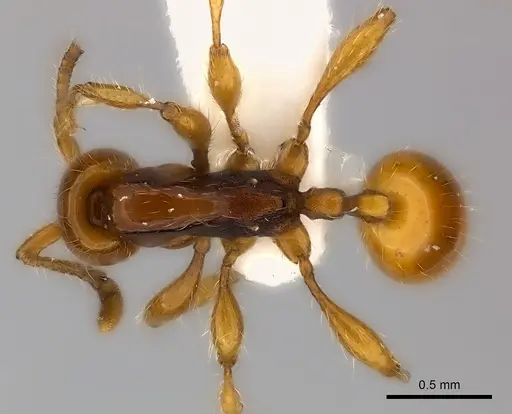
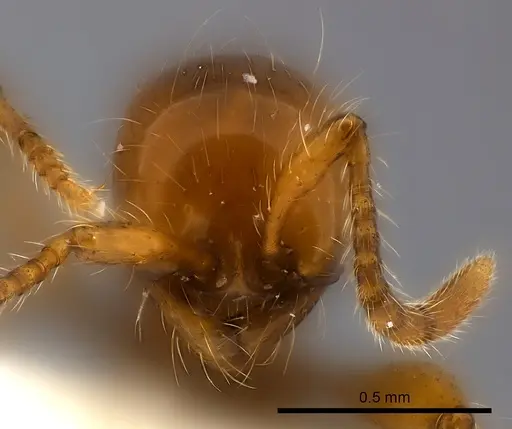
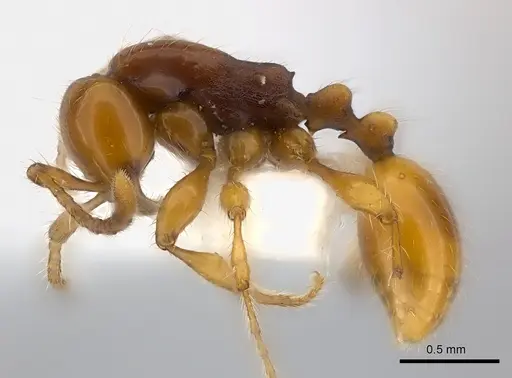
CASENT0249272
View on AntWeb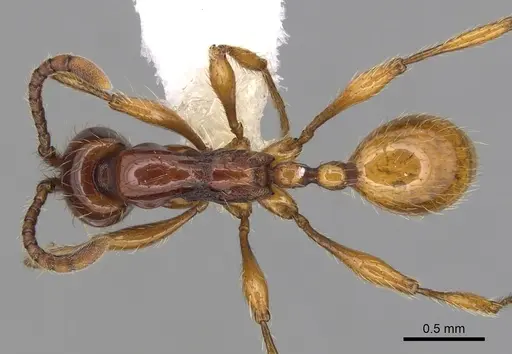
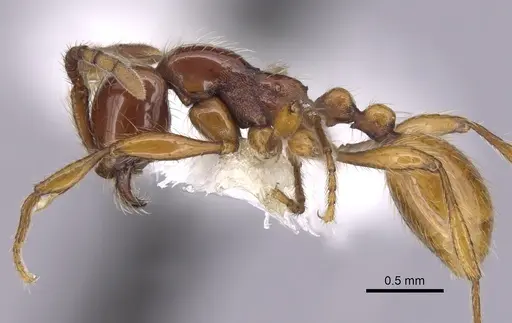
CASENT0902677
View on AntWeb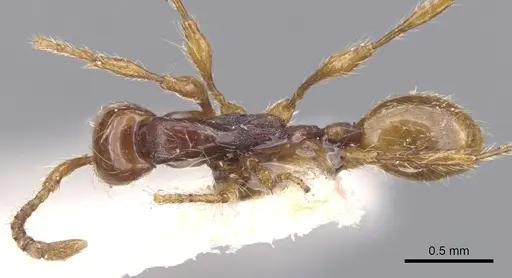
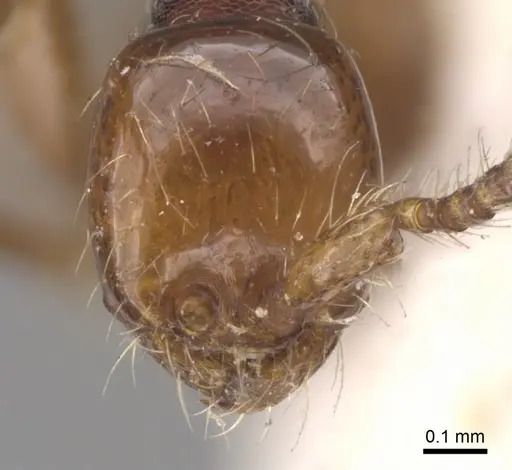
CASENT0902678
View on AntWeb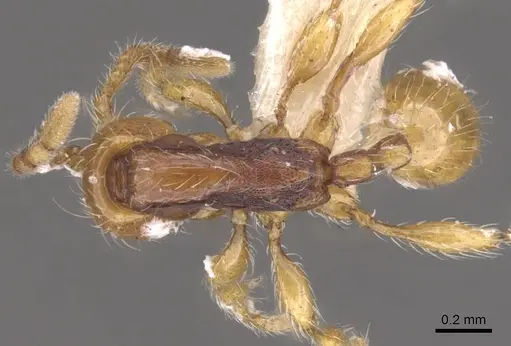
CASENT0905991
View on AntWeb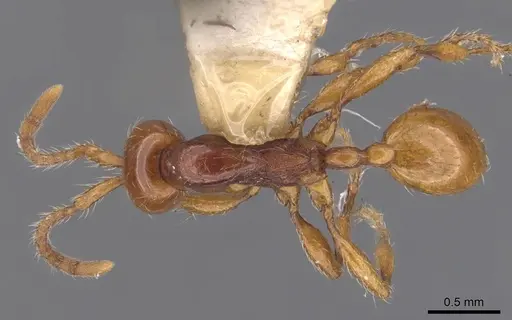
CASTYPE06956
View on AntWeb

Literature
Loading...Loading products...