

Aenictus rabori
- Scientific Name
- Aenictus rabori
- Subfamily
- Dorylinae
- Author
- Chapman, 1963
- Distribution
- Found in 1 countries
Aenictus rabori Overview
Aenictus rabori is an ant species of the genus Aenictus. It is primarily documented in 1 countries , including Philippines. Detailed taxonomic data and occurrence records can be further explored via authoritative databases such as AntWeb or the Global Biodiversity Information Facility (GBIF).
Aenictus rabori
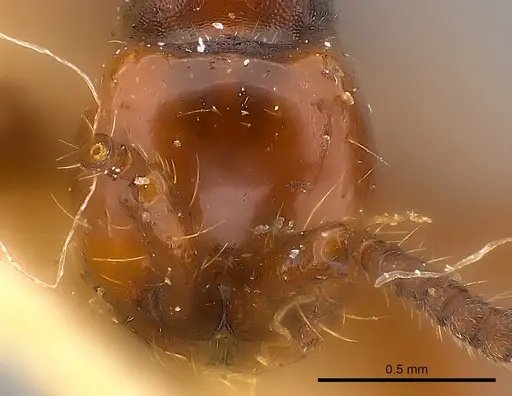
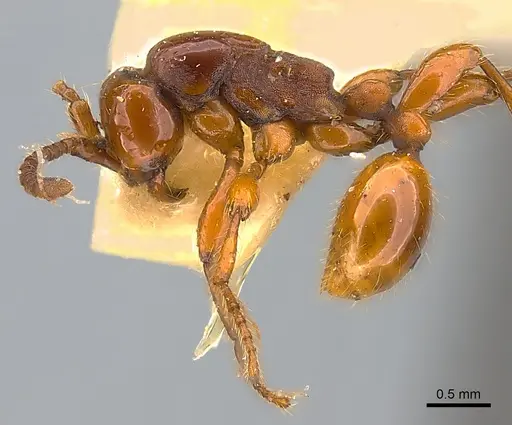
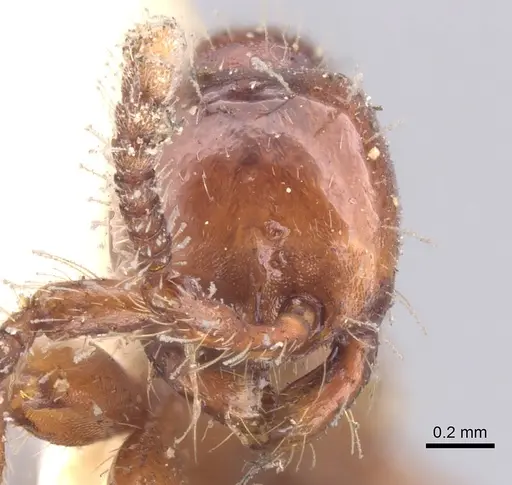
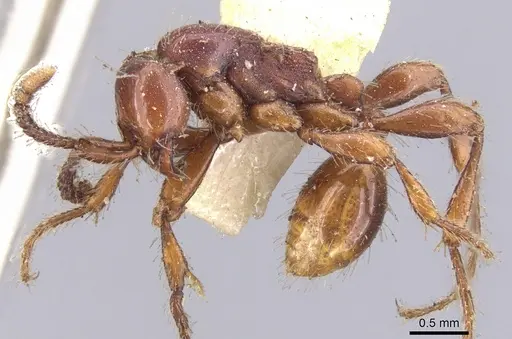
Aenictus rabori is a small army ant species endemic to Negros Island in the Philippines. Workers measure 4.35-4.50 mm in total length, with a distinctive reddish-brown coloration on the mesosoma, petiole, and postpetiole, while the head, antennae, legs, and gaster are yellowish-brown [1][2]. This species belongs to the Aenictus philippinensis species group and can be identified by the protruding lobe at the occipital corner of the head, a feature shared with only a few related Philippine species [1][2]. The colony was discovered foraging in a garden at 1,080 meters elevation on Cuernos de Negros [1][2].
As an army ant, A. rabori exhibits the classic nomadic lifestyle typical of the genus, these ants form raiding columns and do not establish permanent nests, instead moving their colony location regularly as they deplete prey in each area. This makes them fascinating but challenging to keep, as they require space to forage and constant protein sources to support their active hunting behavior.
Quick Summary
- Difficulty: Expert
- Origin & Habitat: Negros Island, Philippines, found at 1,080m elevation in a garden setting [1][2]
- Colony Type: Army ant colony structure, colonies are nomadic with a single queen that is permanently wingless (ergatoid). The colony constantly moves as workers exhaust local prey populations.
- Colony: Monogyne
- Size & Growth:
- Queen: Unknown for this species, army ant queens are typically larger than workers, often 15-25mm+ in related species
- Worker: 4.35-4.50 mm total length,0.78-0.83 mm head width [1][2]
- Colony: Unknown for this species, Aenictus colonies typically reach thousands to tens of thousands of workers
- Growth: Fast, army ant colonies grow rapidly when well-fed
- Development: Estimated 3-5 weeks at tropical temperatures based on genus patterns (Army ant development is typically fast compared to most ants, but specific data for this species is unavailable)
- Antkeeping:
- Temperature: Keep at 24-28°C, these are tropical Philippine ants requiring warm conditions. Use a heating cable on one side of the enclosure to create a gradient.
- Humidity: Moderate humidity around 60-80%. Provide a moist substrate area for the bivouac but also dry areas for foraging. Mist occasionally but avoid waterlogging.
- Diapause: Unlikely, as a tropical species from the Philippines, they probably do not require a true hibernation period. However, they may have seasonal activity patterns related to wet/dry seasons.
- Nesting: Army ants do not build permanent nests. In captivity, they form a bivouac, a living nest made of workers clinging together. Provide a large outworld space for raiding columns and a dark enclosed area (like a plastic container with moist substrate) for the bivouac site.
- Behavior: Aenictus rabori is an aggressive predator, like all army ants. Workers hunt in organized columns, attacking and overwhelming prey including other ants, arthropods, and small insects. They have functional stings and will use them defensively. Escape prevention is critical, these are small, active ants that readily explore gaps. They are diurnal to crepuscular, with peak raiding activity during warmer parts of the day. Unlike some army ants, Aenictus species typically raid in columns rather than massive swarm raids.
- Common Issues: colonies can decline rapidly if protein food is insufficient or inconsistent, nomadic nature means they may abandon bivouac sites frequently, this is normal army ant behavior, not a problem, small size and high activity make escape prevention challenging, very limited species-specific information means care is largely based on genus knowledge, captive colonies may struggle without adequate foraging space to express natural raiding behavior
Understanding Army Ant Biology
Aenictus rabori belongs to the Dorylinae subfamily, commonly known as army ants. Unlike most ants that build permanent nests, army ants are nomadic, they establish temporary bivouacs (living nests made of workers clinging together) and move every few weeks as they exhaust prey in their territory. This nomadic lifestyle is driven by their predatory nature, they need to constantly find new hunting grounds [3].
Army ant colonies are centered around a single ergatoid queen, a queen that is permanently wingless rather than developing wings for nuptial flights. She is larger than workers and remains in the bivouac, continuously laying eggs. When the colony grows too large or the queen dies, new ergatoid queens may be produced to take over [4].
The workers of A. rabori are small (4.35-4.50mm) but highly organized. They forage in columns, systematically searching an area for prey. Unlike some army ant genera that conduct massive swarm raids, Aenictus species typically use more organized column raids to overwhelm prey [4].
Housing and Enclosure Setup
Keeping army ants requires a different approach than typical ant keeping. You need a large outworld for foraging and raiding, plus a designated bivouac area. The outworld should be spacious, think 30cm+ across minimum, with a substrate suitable for the ants to search through. Many keepers use a setup with multiple containers connected by tubing, allowing the colony to move between a foraging area and a resting area.
For the bivouac site, provide a dark, enclosed space with moist substrate. A plastic container with damp soil or cotton works well. The ants will cluster together in this area during rest periods. Unlike traditional nests, you should not expect them to dig or create permanent galleries, they create a living structure from their own bodies.
Escape prevention is critical. These small ants can squeeze through surprisingly small gaps. Use tight-fitting lids, fluon barriers on tubing, and ensure all connections are secure. Check for gaps regularly, especially where tubing meets enclosures. [4]
Feeding and Nutrition
Army ants are strict predators, they require a constant supply of protein-rich food. In captivity, you should offer live or freshly killed insects regularly. Suitable prey includes: fruit flies, small crickets, mealworms, waxworms, and other small arthropods. Feed small amounts multiple times per week rather than large infrequent feedings.
The frequency depends on colony size. A small colony may need feeding every 1-2 days, while a large colony may need daily feeding during active periods. Remove uneaten prey after 24-48 hours to prevent mold. Watch the ants' behavior, if they are actively hunting and consuming food quickly, increase feeding frequency.
Some army ant species will accept protein jelly or canned insects if live prey isn't available, but live prey is ideal for stimulating natural hunting behavior. Sugar sources are generally not required for army ants as they get their energy from protein, though some keepers offer occasional honey water. [4]
Temperature and Seasonal Care
As a Philippine species from 1,080m elevation, Aenictus rabori likely prefers warm, moderately humid conditions. Maintain temperatures in the range of 24-28°C. A heating cable placed on one side of the enclosure creates a temperature gradient, allowing the ants to regulate their body temperature by moving between warmer and cooler areas.
Regarding diapause (winter rest): this species is from a tropical environment without harsh winters. A true hibernation period is likely not necessary. However, they may have seasonal activity patterns related to the wet and dry seasons in the Philippines. During cooler months, you might observe reduced activity, but this is different from temperate diapause.
Monitor your colony's behavior. If workers become less active and cluster tightly in the bivouac area, this may indicate temperatures are too cool. Increase heating gradually until normal activity resumes. [1][2]
Frequently Asked Questions
Can I keep Aenictus rabori in a test tube?
No, army ants cannot be kept in test tubes or traditional formicariums. They need a large foraging area to express their natural raiding behavior and a separate bivouac space. A minimum setup would be a 30cm+ outworld connected to a dark container for the bivouac. Expect to invest in a custom or modified enclosure setup.
How long does it take for first workers in Aenictus rabori?
The exact development timeline for this species is unknown. Based on typical Aenictus genus patterns, expect 3-5 weeks from egg to worker at optimal tropical temperatures (around 26°C). Army ant development is generally faster than most ant species.
Are Aenictus rabori good for beginners?
No, this species is rated Expert difficulty. Army ants have specialized care requirements that differ significantly from typical ant keeping: they need large enclosures, constant protein feeding, and their nomadic behavior can be challenging to accommodate. They are not recommended for those new to ant keeping.
How big do Aenictus rabori colonies get?
The maximum colony size for this specific species is unknown. However, Aenictus colonies typically reach thousands to tens of thousands of workers. Expect significant growth if the colony thrives, which requires corresponding increases in feeding and space.
Do Aenictus rabori need hibernation?
No, as a tropical Philippine species, they do not require hibernation. Maintain warm temperatures year-round (24-28°C). They may show reduced activity during cooler periods, but this is not true diapause.
Why does my army ant colony keep moving?
This is completely normal army ant behavior. Army ants are nomadic by nature, they periodically abandon their bivouac and move to a new location. This happens every few weeks in healthy colonies. Do not interfere unless they are moving into an unsafe area.
Can I keep multiple queens together in Aenictus rabori?
This species is monogyne (single queen). While some Aenictus species may have ergatoid replacement reproductives, they do not form multi-queen colonies like some other ants. Do not attempt to combine unrelated queens.
What do I feed Aenictus rabori?
Feed live or freshly killed insects, fruit flies, small crickets, mealworms, and other small arthropods are ideal. Feed multiple times per week, with frequency increasing as the colony grows. Remove uneaten prey after 24-48 hours. Live prey is best to stimulate natural hunting behavior.
When should I move my colony to a formicarium?
Army ants don't use traditional formicariums. Instead, provide a large outworld connected to a bivouac container. There is no 'formicarium' transition as with typical ants. The key is ensuring adequate foraging space and a secure bivouac area.
References

This caresheet is licensed under CC BY-SA 4.0 .
CASENT0217384
View on AntWeb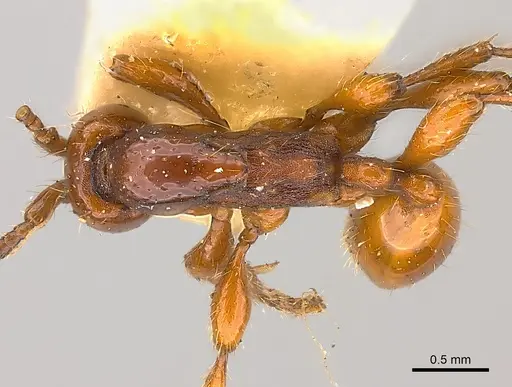
CASENT0902680
View on AntWeb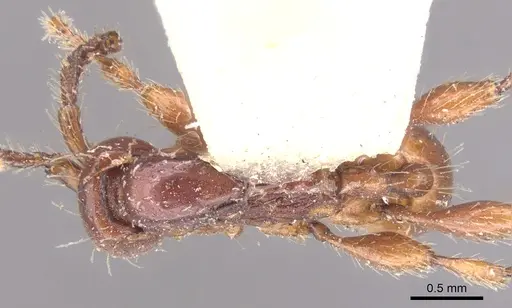
Literature
Loading...Loading products...