

Aenictus punensis
- Scientific Name
- Aenictus punensis
- Subfamily
- Dorylinae
- Author
- Forel, 1901
- Distribution
- Found in 1 countries
Aenictus punensis Overview
Aenictus punensis is an ant species of the genus Aenictus. It is primarily documented in 1 countries , including India. Detailed taxonomic data and occurrence records can be further explored via authoritative databases such as AntWeb or the Global Biodiversity Information Facility (GBIF).
Aenictus punensis
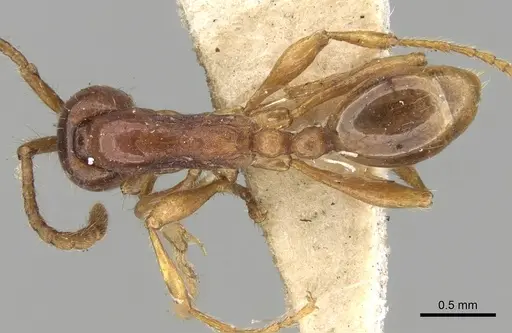
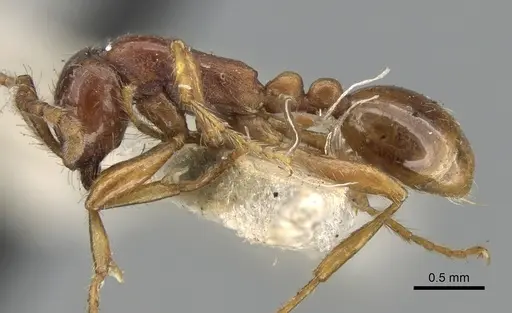
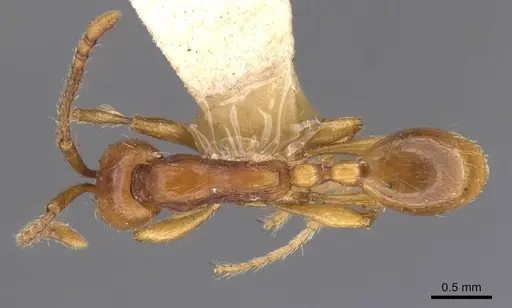
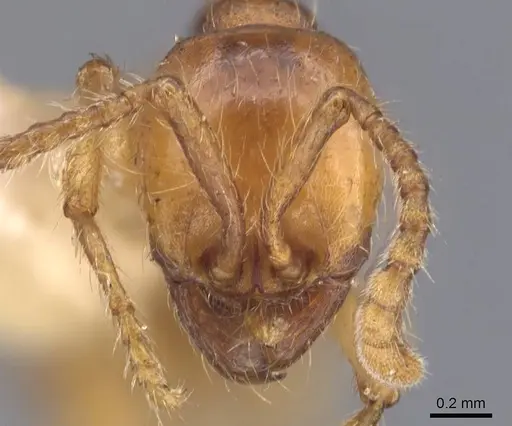
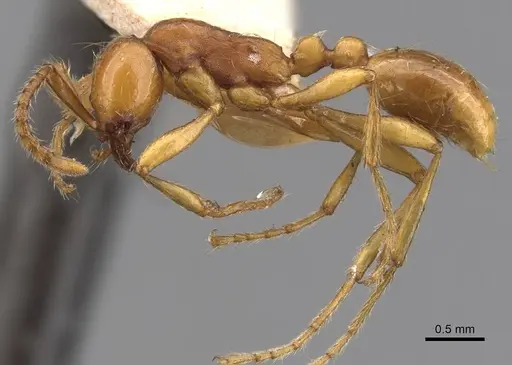
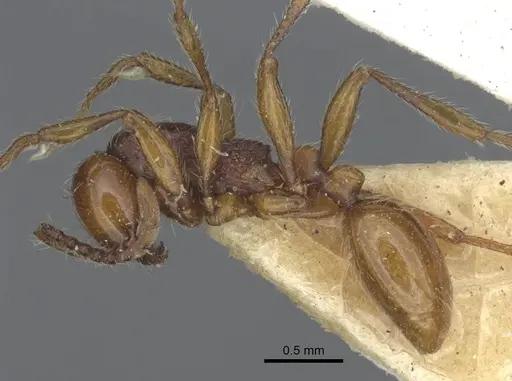
Aenictus punensis is a tiny yellow army ant found in India and China. Workers have a head width of just 0.73mm and a head length of 0.87mm, making them among the smallest ants you could encounter [1]. They show a distinctive pattern of about 20 longitudinal ridges on the sides of their middle body section, with a shiny yellow-brown coloration and clear yellow legs [1][2]. The species was first described from Poona (Pune), India in 1901 and has since been recorded in Karnataka, India and parts of China [1][3][4].
Here is the critical thing you must understand: nobody knows how this ant lives. Only worker specimens exist in museum collections, no queens, no males, and no observations of living colonies have ever been published [5]. The biology of Aenictus punensis is completely unknown, which makes this species impossible to keep in captivity. While other army ants in the genus Aenictus are specialized predators with massive colonies and nomadic lifestyles, we cannot assume this species follows the same patterns without evidence.
Quick Summary
- Difficulty: Expert
- Origin & Habitat: India (Maharashtra, Karnataka) and China (Yunnan, Zhejiang) in tropical to subtropical regions [1][3][4]
- Colony Type: Unknown, only the worker caste has ever been collected [5]
- Size & Growth:
- Queen: Unknown, queens have never been described [5]
- Worker: Head width 0.73mm, head length 0.87mm (approximately 2-3mm total body length estimated) [1]
- Colony: Unknown [5]
- Growth: Unknown
- Development: Unknown, no reproductive caste or brood has ever been observed [5] (Development timeline cannot be estimated as colony reproduction has never been documented.)
- Antkeeping:
- Temperature: Unknown, based on distribution in India and China, likely requires warm conditions between 22-28°C, but this is unconfirmed [1]
- Humidity: Unknown
- Diapause: Unknown
- Nesting: Unknown, army ants typically do not build permanent nests, but specific requirements for this species are unconfirmed [5]
- Behavior: Specialized predator likely showing nomadic army ant behavior, but specific habits are completely unknown [5]. Workers are extremely small and would require exceptional escape prevention.
- Common Issues: only workers are known, you cannot start a colony because queens have never been collected or described., army ant biology typically requires massive foraging territories and constant food sources not practical for home ant keeping., extremely small worker size (under 1mm head width) means they can escape through the tiniest gaps in standard equipment., no captive care information exists, even expert keepers have no data on feeding, nesting, or temperature needs.
Morphology and Identification
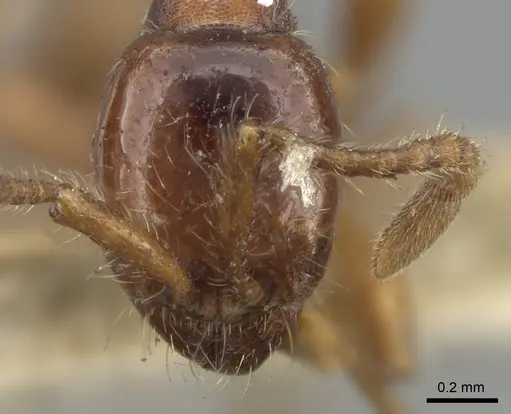
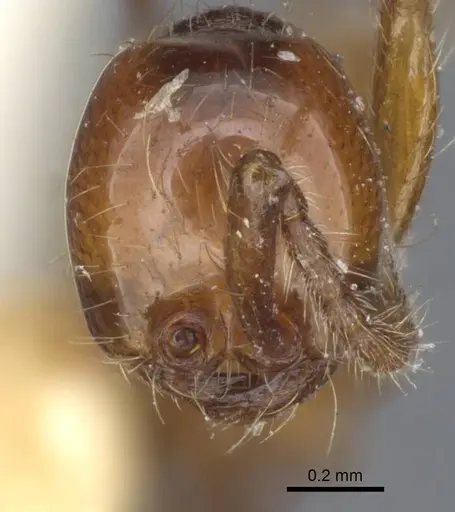
Aenictus punensis belongs to the Aenictus pachycerus species group and shows several distinctive features described by Wilson in 1964 [1]. Workers have 10-segmented antennae and a well-developed ridge running alongside the front of the head (parafrontal ridge) measuring about 0.33mm long [1]. The back of the head (occiput) is weakly convex without a distinct collar, and has a microreticulate texture that appears slightly dull, while the rest of the head shines [1].
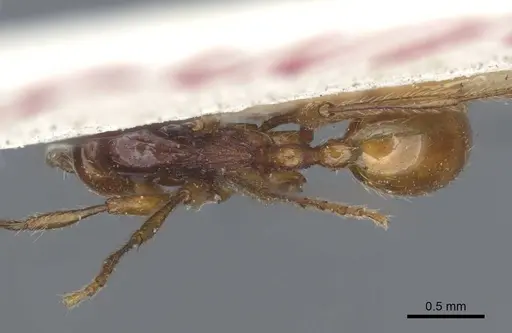
The middle body section shows the most distinctive feature: about 20 longitudinal ridges running along the sides, with only a few extending to the rear section [1]. The upper surface of the front thorax shines, while the rest appears dull to opaque [1]. The waist segment (petiole) has a low, forward-pointing lobe underneath with a straight bottom edge [1]. Coloration ranges from clear medium yellow on the head and legs to brownish yellow on the middle body, waist, and antennae [1]. Recent work confirms these traits distinguish them from related Indian species like Aenictus kadalarensis [6].
Distribution and Records
This species was first described from Poona (now Pune), Maharashtra, India, based on specimens collected by R.C. Wroughton in 1901 [1][7]. For decades it remained known only from this original type collection [1]. More recent surveys have expanded the known range to include Karnataka, India [3], and parts of China including Yunnan and Zhejiang provinces [4].
The type specimens consist of two worker syntypes preserved in collections at MHNG and SIZK [7]. Despite being described over 120 years ago, no additional biological information has emerged from these regions. The lack of modern observations suggests either extreme rarity, cryptic nesting habits, or simply a lack of targeted research on this specific species.
Why This Species Cannot Be Kept in Captivity
You cannot keep Aenictus punensis because basic requirements for captive maintenance are unknown and possibly unavailable. First, only workers have ever been collected, without a queen, you cannot establish a colony [5]. Even if you found a wild colony, army ants present unique challenges: they typically require massive foraging areas, specialized diets of live prey, and do not use permanent nests that fit in standard formicaria.
Army ants in the genus Aenictus are true army ants (subfamily Dorylinae) with specialized biology including nomadic phases and high worker counts [5]. While we might assume this species follows similar patterns to better-known Aenictus species, assuming without evidence risks harming any specimens and wasting effort. No commercial ant supplier offers this species, and collecting wild army ant colonies raises serious ethical and ecological concerns while being illegal in many jurisdictions.
Research Status and Future Prospects
Aenictus punensis represents a gap in our understanding of army ant diversity. The species is known from fewer than a handful of preserved worker specimens despite over a century of ant research in India and China [1][7]. Recent taxonomic work has clarified its position within the pachycerus group and distinguished it from newly described relatives [6][2], but biological studies remain absent.
For this species to become available to ant keepers, researchers would need to locate living colonies, describe the reproductive castes, and document basic parameters like diet, colony size, and nesting behavior. Until then, Aenictus punensis remains a scientific curiosity rather than a candidate for captive care.
Frequently Asked Questions
Can I keep Aenictus punensis in a test tube or formicarium?
No. You cannot keep this species because only worker ants have ever been collected, no queens exist in captivity or even in scientific collections [5]. Without a queen, a colony cannot reproduce or replace workers. Additionally, army ants require specialized care that differs completely from standard ant keeping setups.
How long until Aenictus punensis gets its first workers?
This is unknown. The founding behavior and development timeline have never been observed because queens have never been found [5]. We do not know if this species founds colonies traditionally or through colony fission like some other army ants.
What do Aenictus punensis ants eat?
Their diet is unknown. Other Aenictus species are specialized predators that hunt other ants, termites, and small arthropods, but we have no specific data for A. punensis [5]. You should not attempt to feed them based on assumptions about related species.
Do Aenictus punensis colonies have a queen?
Probably, but none have ever been found. Only worker specimens exist in museum collections [5]. The queen caste remains undescribed, and we do not know if they have winged queens, wingless reproductive workers, or other reproductive strategies.
Where can I buy Aenictus punensis?
You cannot buy this species. It is not available in the ant keeping trade due to the complete lack of biological knowledge and the fact that only preserved museum specimens exist [5]. Any claim to sell this species would likely be a misidentification of another small yellow ant.
How big do Aenictus punensis colonies get?
Colony size is unknown. No living colonies have ever been studied [5]. Other Aenictus species can have colonies with thousands of workers, but we cannot assume this applies to A. punensis without evidence.
What temperature do Aenictus punensis need?
Temperature requirements are unknown. Based on their distribution in India and China, they likely prefer warm conditions between 22-28°C, but this is speculation [1]. There are no observations of their thermal preferences.
Do Aenictus punensis need hibernation or diapause?
Unknown. We have no information about their seasonal activity patterns or whether they slow down during cooler months [5].
Are Aenictus punensis dangerous or do they sting?
They are too small to pose any threat to humans. Workers are under 1mm in head width and lack the size to penetrate skin [1]. However, like all ants, they can bite, and army ants are typically aggressive predators of other insects.
Why is nothing known about Aenictus punensis biology?
The species was described in 1901 from a few worker specimens and has rarely been collected since [1][7]. Army ants are often difficult to study because they lack permanent nests and can be hard to track. Modern researchers have focused on describing new species and clarifying taxonomy rather than behavioral studies [6][2].
References

This caresheet is licensed under CC BY-SA 4.0 .
Literature
Loading...Loading products...