

Aenictus punctatus
- Scientific Name
- Aenictus punctatus
- Subfamily
- Dorylinae
- Author
- Jaitrong & Yamane, 2012
- Distribution
- Found in 0 countries
Aenictus punctatus Overview
Aenictus punctatus is an ant species of the genus Aenictus. It is primarily documented in 0 countries . Detailed taxonomic data and occurrence records can be further explored via authoritative databases such as AntWeb or the Global Biodiversity Information Facility (GBIF).
Aenictus punctatus
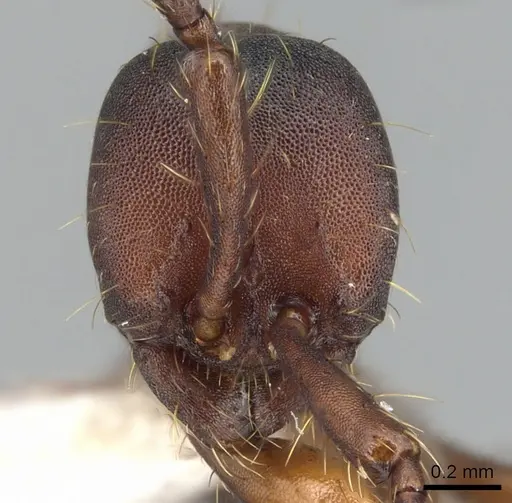
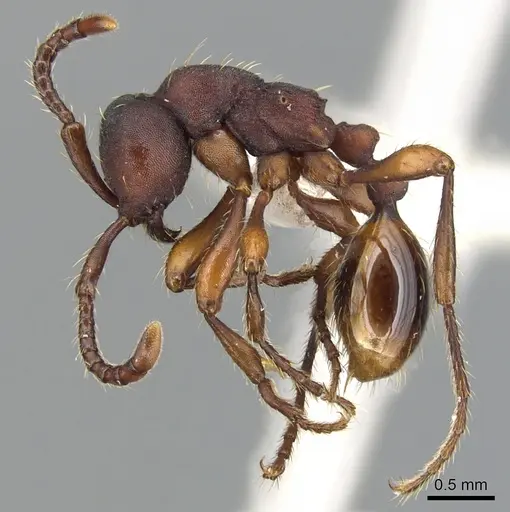
Aenictus punctatus is a small army ant found in the lowland rainforests of Borneo and Java. Workers measure about 4.3 to 4.5 mm long and are dark reddish brown with a distinctive rough, dotted texture covering their entire head, this "punctate" surface is what gives them their name [1]. They have relatively long legs and antennae for their size, and you can recognize them by their elongated heads with a distinct ridge along the back margin [1]. Unlike most ants kept by hobbyists, scientists have only ever found workers of this species, no queens or males have been documented [2]. In the wild, they nest in rotten wood and forage at night [1].
These ants belong to the army ant group, which means they likely live in large colonies and move their nest frequently to find new food sources. A colony from Sarawak was found living in rotting wood, and another was spotted foraging at night in Lambir National Park [1]. While they share the army ant lifestyle with their famous relatives, they remain poorly studied and have never been successfully kept in captivity long-term.
Quick Summary
- Difficulty: Expert
- Origin & Habitat: Borneo (Sabah, Sarawak, Brunei, East Kalimantan) and Java, lowland rainforests [1]
- Colony Type: Unknown, only worker caste documented [2]
- Size & Growth:
- Queen:{.size-link} Unknown, queens not documented [2]
- Worker:{.size-link} 4.30-4.50 mm [1]
- Colony: Unknown, likely large based on typical army ant biology, but unconfirmed for this species
- Growth: Unknown
- Development: Unknown, no founding data available (Development timing has not been studied for this species)
- Antkeeping:
- Temperature: Warm and stable, roughly 24-28°C, inferred from their lowland rainforest habitat [1]
- Humidity: High humidity required, keep nest substrate damp but not waterlogged, matching their rainforest home [1]
- Diapause: No, tropical species that remains active year-round [1]
- Nesting: Natural nests in rotten wood [1], captive housing has not been documented
- Behavior: Army ant behavior, likely nomadic with frequent nest moves, nocturnal foraging, and predatory habits. Workers are small but active. Escape prevention would be critical due to their small size (4.3-4.5 mm), though their specific climbing ability is unstudied.
- Common Issues: colony size may require significant space unsuitable for home captivity., nomadic lifestyle means they do not stay in one nest long enough for standard formicarium setups., only workers documented, founding behavior and queen care completely unknown., require constant supply of appropriate prey items if colony establishment were possible., no successful captive rearing documented, all care is theoretical.
Natural History and Habitat
Aenictus punctatus lives in the lowland rainforests of Borneo and Java [1]. All specimens studied came from this specific habitat type, hot, wet, tropical forests at low elevation. One colony was collected from rotten wood in Sarawak in September 1993,while another was found foraging at night in Lambir National Park [1]. This nocturnal activity pattern suggests they avoid the intense heat of the day by hunting after dark. The species prefers nesting in decaying wood rather than soil, which provides a humid, protected environment for their brood [1]. Their dark reddish brown coloration helps them blend into the leaf litter and rotting wood of the forest floor [1].
Why These Ants Are Not Suitable for Standard Captivity
You should know that Aenictus punctatus has never been successfully kept by antkeepers, and there are good reasons why. First, scientists have only ever found workers, nobody has documented a queen, which means we do not know how colonies start or how to care for founding queens [2]. Second, as army ants, they likely live in large colonies with many workers that require massive space and constant food [1]. Third, army ants are nomadic, they move their entire colony every few days or weeks to follow prey, which makes permanent nest structures like formicaria completely unsuitable. Finally, their small size (4.3-4.5 mm) combined with active foraging behavior means escape prevention would be extremely difficult even if you could house them [1].
Housing and Environmental Needs
If you were to attempt keeping these ants, you would face significant housing challenges. Based on their natural nesting in rotten wood, they would need a humid, enclosed space with wood or similar substrate [1]. However, their nomadic behavior means they would quickly outgrow or abandon any static nest setup. You would need an enormous enclosure, likely a large terrarium or specially designed army ant setup, to accommodate their foraging trails and frequent nest moves. Temperature should stay warm and stable, roughly 24-28°C, based on their tropical rainforest origin [1]. Humidity must remain high, think damp forest floor conditions, with substrate that stays moist but not waterlogged [1]. Ventilation is important to prevent mold in these damp conditions, but openings must be secured with extremely fine mesh to prevent escapes given their small size [1].
Diet and Feeding
As army ants, Aenictus punctatus are almost certainly specialized predators that hunt other arthropods. Related Aenictus species prey on other social insects, spiders, and various small invertebrates. If you somehow obtained a colony, you would need to provide a constant supply of appropriate live prey, not occasional feeding, but daily or near-daily hunting opportunities to match their army ant lifestyle. Sugar sources like honey or sugar water may not be sufficient or appropriate, as many army ants rely almost entirely on protein from prey. However, specific dietary preferences for this species remain unstudied, so any feeding regime would be experimental. [1]
Identification and Similar Species
You can identify Aenictus punctatus by their small size (4.3-4.5 mm), dark reddish brown color, and especially by their finely punctate (dotted) head surface [1]. They are closely related to Aenictus philippinensis, but you can tell them apart because A. punctatus has a rough, punctate head while A. philippinensis has a smooth, shiny or superficially net-like patterned head [1][3]. The dorsal face of their pronotum (the top of their middle body section) is also finely punctate in A. punctatus but smooth and shiny in A. philippinensis [1]. They have relatively long antennae that extend about three-quarters the length of their head, and their legs are somewhat swollen toward the tips [1].
Frequently Asked Questions
Can I keep Aenictus punctatus in a test tube?
No. Test tubes are completely unsuitable for army ants like Aenictus punctatus. They require enormous space for their colony size and nomadic lifestyle, and they need specialized housing that allows for frequent nest moves and extensive foraging areas. Additionally, only workers have been documented, we do not know how queens found colonies or what they need during founding [2].
How long until Aenictus punctatus gets their first workers?
Unknown. The founding behavior and development timeline for Aenictus punctatus has never been documented. Since only worker ants have been found in the wild, scientists have not observed how queens establish colonies or how long eggs take to develop into workers [2].
How big do Aenictus punctatus colonies get?
Colony size is unknown for this specific species. Based on typical Aenictus army ant biology, colonies likely contain many workers, but this is inferred from related species rather than direct observation of A. punctatus [1].
Do Aenictus punctatus need hibernation?
No. They come from tropical lowland rainforests in Borneo and Java where temperatures remain warm year-round. They do not experience winter and should not be cooled down for hibernation [1].
What do Aenictus punctatus eat?
As army ants, they are specialized predators that hunt other arthropods. They likely prey on other insects, spiders, and small invertebrates. Unlike many pet ant species, they probably cannot survive on sugar water alone and need constant access to live prey [1].
Can I keep multiple Aenictus punctatus queens together?
Unknown. Since queens have never been documented for this species, we do not know if they accept multiple queens in one colony. Combining unrelated queens would be extremely risky and is not recommended [2].
Are Aenictus punctatus good for beginners?
No. These are unsuitable for beginners or even experienced antkeepers. They have never been successfully kept in captivity, require massive specialized setups, need constant feeding, and their founding behavior is completely unknown. Only workers have ever been found, we do not even know what their queens look like or how to care for them [2].
Why are my Aenictus punctatus workers dying?
If you have these ants and they are dying, it is likely due to inappropriate housing. As army ants, they need enormous space, constant humidity, warm temperatures, and frequent nest changes. Standard ant farms or formicaria are unsuitable. They may also be starving, army ants need constant access to live prey, not occasional feeding [1].
Report an Issue
The current care sheet is based fully on literature. See inconsistencies, or something that's incorrect? Please , it will be resolved after review from an admin. Contributing to the blogs tab also helps providing information, to make us be able to further improve the caresheets. Thank you for your support!
References

This caresheet is licensed under CC BY-SA 4.0 .
CASENT0903683
View on AntWeb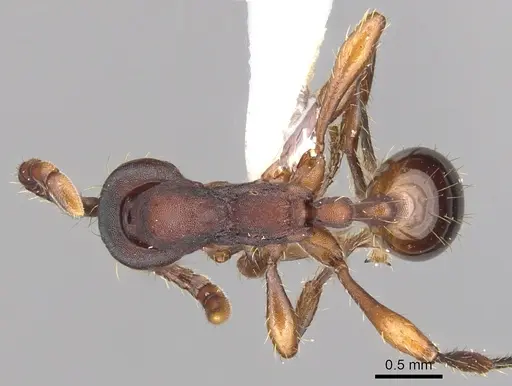
Literature
Loading...Loading products...