

Aenictus piercei
- Scientific Name
- Aenictus piercei
- Subfamily
- Dorylinae
- Author
- Wheeler & Chapman, 1930
- Distribution
- Found in 1 countries
Aenictus piercei Overview
Aenictus piercei is an ant species of the genus Aenictus. It is primarily documented in 1 countries , including Philippines. Detailed taxonomic data and occurrence records can be further explored via authoritative databases such as AntWeb or the Global Biodiversity Information Facility (GBIF).
Aenictus piercei
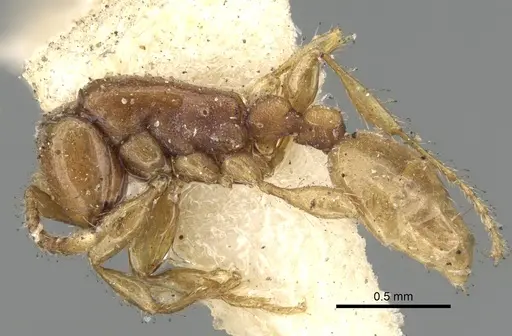
Aenictus piercei is a tiny army ant from the Philippines, with workers measuring just over 2 mm in length [1][2]. These ants are yellowish-brown to reddish-brown in color with pale legs, and have a distinctive appearance featuring thickened hind femora and very short antennae [3][1]. They inhabit lowland tropical forests on the islands of Negros and Mindanao, typically found at elevations between 15 and 600 meters [1][3]. Only the worker caste has ever been documented, no queens or males are known for this species [4].
This is a true army ant in the subfamily Dorylinae, which means they likely live in large colonies with nomadic habits, constantly moving through the forest and preying on other ant species [3]. A colony observed in India was seen attacking workers of the ant genus Triglyphothrix [3]. Their biology makes them extremely challenging, likely impossible, to maintain in standard antkeeping setups, as they require massive foraging ranges, constant access to live prey, and specific conditions that replicate their tropical forest floor habitat.
Quick Summary
- Difficulty: Expert
- Origin & Habitat: Lowland tropical forests of the Philippines (Negros and Mindanao), elevation 15-600m [1][3]. Records from India require confirmation [5].
- Colony Type: Unknown, only the worker caste has been documented. Army ants typically have a single queen, but no reproductive castes have been found for this species [4].
- Size & Growth:
- Queen: Unknown, queens never documented [4]
- Worker: 2.15 mm total length, head width 0.48-0.50 mm [1][2]
- Colony: Unknown, related army ants typically maintain colonies of thousands to hundreds of thousands of workers [4]
- Growth: Unknown
- Development: Unknown, no brood development data available for this species (Army ants typically have rapid development in warm conditions, but specific timelines for A. piercei are unstudied)
- Antkeeping:
- Temperature: Warm tropical conditions, likely 24-28°C based on lowland Philippine habitat [1]. Start at 26°C and adjust based on activity levels.
- Humidity: High humidity required, keep nest substrate damp but not waterlogged to replicate tropical forest floor conditions [1].
- Diapause: No, tropical species that remains active year-round [4].
- Nesting: Not applicable to standard antkeeping. Army ants are nomadic and do not stay in one nest location. They require massive enclosure spaces with continuous foraging areas [4].
- Behavior: True army ant behavior with nomadic lifestyle and mass raiding of prey colonies. Workers are tiny (2mm) and require extreme escape prevention. They are predatory, specializing on other ants and small arthropods [3]. Not aggressive toward humans due to small size, but colonies require constant movement and massive space.
- Common Issues: only workers are known, you cannot start a colony without a queen, and no queens have ever been documented for this species, army ants require enormous foraging areas that cannot be replicated in standard formicaria, constant need for live prey, they do not store food and require continuous hunting, tiny worker size (2mm) means they can escape through the smallest gaps in any enclosure, tropical humidity requirements make mold a constant risk in captive setups, nomadic behavior means they will not stay in a nest box, they need to emigrate regularly
The Queen Problem: Why You Cannot Keep This Species
Aenictus piercei presents a fundamental problem for antkeepers: only workers have ever been found and described [4]. No queens, males, or brood stages have been documented in the scientific literature. Army ants typically have a specialized wingless queen called a dichthadiiform queen, but for this species, she remains unknown.
Without a queen, you cannot start a colony. Unlike some ant genera where workers can reproduce (gamergates), Aenictus follows the typical army ant pattern where only the queen lays eggs. Even if you collected wild workers, they would be sterile females incapable of founding a new colony. This makes the species effectively unavailable for standard antkeeping.
If you are interested in keeping army ants, you would need to either discover the unknown queen caste yourself (extremely unlikely) or collect an entire colony including the queen, a task requiring specialized equipment and knowledge of their nomadic patterns.
Army Ant Biology: Why Standard Setups Fail
Aenictus piercei is a true army ant, which means it has biological requirements that conflict with standard antkeeping practices. Army ants do not build permanent nests. Instead, they enter emigration phases where the entire colony moves to new locations, often daily or weekly [4].
In captivity, this means they will not stay in a test tube or formicarium. They require massive enclosure spaces, often entire room-sized setups, to accommodate their foraging columns and nomadic behavior. They also need continuous access to prey. Unlike most pet ants that can be fed weekly, army ants hunt constantly and do not store food. If prey runs out, the colony collapses rapidly.
The workers are also extremely small at just 2 mm long [1]. This means standard barriers like petroleum jelly may not stop them, and they can squeeze through gaps in mesh or acrylic joints that larger ants cannot.
Natural History and Distribution
This species inhabits the lowland tropical forests of the Philippine islands of Negros and Mindanao, typically found between 15 and 600 meters elevation [1][3]. The habitat is warm, humid, and shaded, classic tropical forest floor conditions.
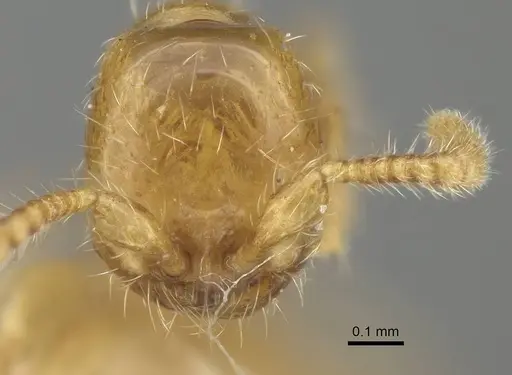
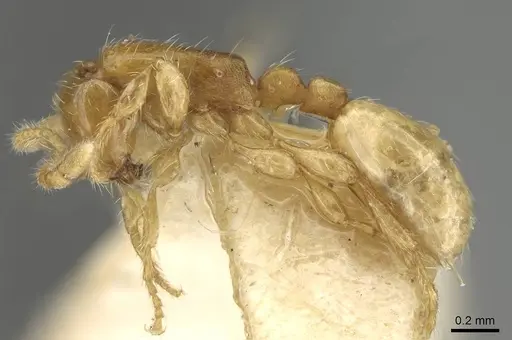
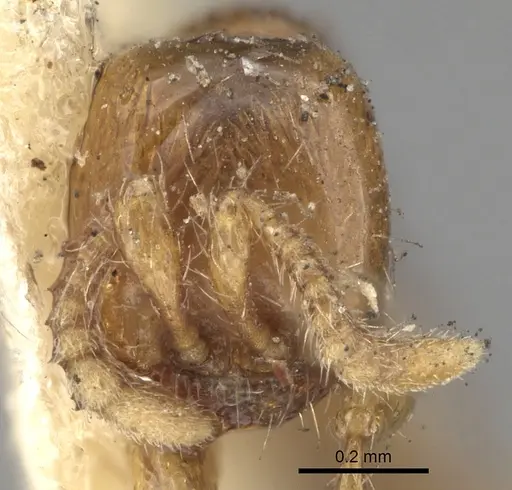
The ants are yellowish-brown to reddish-brown in color with distinctive thickened hind femora that help distinguish them from similar species [3][1]. They belong to the Aenictus javanus species group and can be identified by their 10-segmented antennae with very short scapes, and mandibles with three teeth [3][2].
A record from India (Solon,1400m) exists but requires confirmation, as this is outside their known Philippine range and at a higher elevation than their typical lowland habitat [5].
Diet and Feeding in Nature
Like all army ants, Aenictus piercei is a specialized predator. The only direct observation of their feeding behavior comes from India, where a colony was observed preying on workers of the ant genus Triglyphothrix [3]. This confirms they are ant predators, likely specializing on other small ants and possibly other soft-bodied arthropods.
In captivity, this would translate to a need for constant live food, specifically other ants. They do not accept dead insects or sugar water like most pet ant species. You would need a continuous supply of small prey ants, which presents ethical and practical challenges for most keepers. Their predatory nature also means they cannot be kept with other ant species in the same enclosure.
Identification and Similar Species
Workers of Aenictus piercei are small, measuring about 2.15 mm in total length [1][2]. Key identifying features include their yellowish-brown color, very short antennae that only reach halfway up the head, and noticeably thickened hind femora [3]. The mandibles have three sharp teeth, and the clypeus (the plate above the jaws) has 9-10 small denticles along its front edge [2].
They are most similar to Aenictus duengkaei but can be distinguished by the lack of denticles on the basal margin of the mandible [2]. The subpetiolar process (a lobe under the waist) is large and rectangular, another distinctive feature [1].
If you think you have found this species, remember that only workers are known, if you find a larger reproductive ant, it is likely a different species.
Frequently Asked Questions
Can I keep Aenictus piercei in a test tube?
No. This is an army ant species that requires massive space to roam and forage. They do not stay in one place and will not survive in a test tube setup. Additionally, only workers are known, without a queen, you cannot start a colony.
How do I start an Aenictus piercei colony?
You cannot start a colony using standard methods. No queens have ever been documented for this species. Army ant queens are large, wingless, and rarely seen, but for this specific species, they remain completely unknown. You would need to collect an entire wild colony including the queen, which requires specialized knowledge of their nomadic patterns.
What do Aenictus piercei eat?
They are specialized predators of other ants. In the wild, they have been observed preying on Triglyphothrix workers. They require constant access to live prey and do not accept sugar water or dead insects like most pet ant species.
How big do Aenictus piercei colonies get?
The exact colony size is unknown, but army ants typically maintain colonies of thousands to hundreds of thousands of workers. They are not small colony ants.
Do Aenictus piercei ants sting?
They are too small to sting humans effectively. Workers are only 2 mm long. However, they are aggressive predators of other insects and ants.
Are Aenictus piercei good for beginners?
No. This species is unsuitable for any level of antkeeping. They require specialized equipment, constant live food supplies, massive enclosure spaces, and their reproductive biology (queens) remains unknown. They are considered unkeepable in standard hobby setups.
Do Aenictus piercei need hibernation?
No. They are a tropical species from the Philippines lowlands and remain active year-round. They do not require diapause or winter rest periods.
How long until Aenictus piercei get their first workers?
Unknown. Development timelines have never been studied for this species. Additionally, since no queens are known, there is no way to observe a founding colony develop from a single queen.
Can I keep multiple Aenictus piercei queens together?
This question cannot be answered because queens have never been documented for this species. Army ants typically have only one queen per colony, but without observing the reproductive caste, we cannot confirm their colony structure.
Why are my Aenictus piercei dying?
If you somehow obtained these ants, they are likely dying because they cannot be kept in captivity with standard methods. They require constant live food, massive foraging space, high tropical humidity, and the ability to emigrate regularly. They also cannot reproduce without a queen, so any workers you have will simply age and die without replacement.
What is the best nest type for Aenictus piercei?
Standard nests do not work for army ants. They are nomadic and do not stay in one location. They require a massive enclosure with soil substrate and continuous foraging areas, often taking up entire rooms in laboratory settings.
Where can I buy Aenictus piercei?
You cannot buy this species through normal antkeeping channels. They are not bred in captivity because their reproductive biology is unknown. Any specimens would have to be collected from the wild in the Philippines, which raises ethical and legal concerns regarding collection permits and export regulations.
References

This caresheet is licensed under CC BY-SA 4.0 .
CASENT0217382
View on AntWeb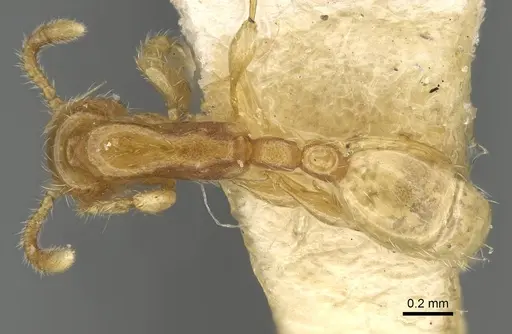
CASENT0281961
View on AntWeb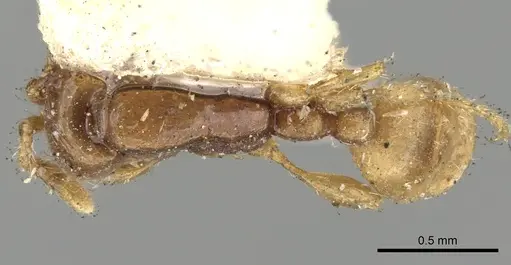
Literature
Loading...Loading products...