

Aenictus javanus
- Scientific Name
- Aenictus javanus
- Subfamily
- Dorylinae
- Author
- Emery, 1896
- Distribution
- Found in 1 countries
Aenictus javanus Overview
Aenictus javanus is an ant species of the genus Aenictus. It is primarily documented in 1 countries , including Indonesia. Detailed taxonomic data and occurrence records can be further explored via authoritative databases such as AntWeb or the Global Biodiversity Information Facility (GBIF).
Aenictus javanus
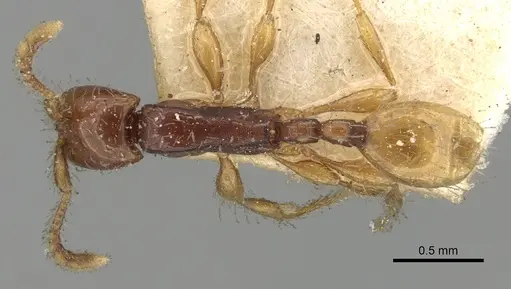
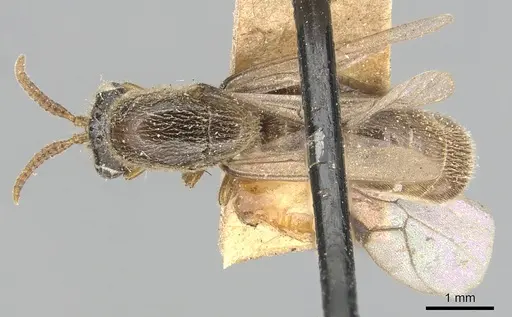
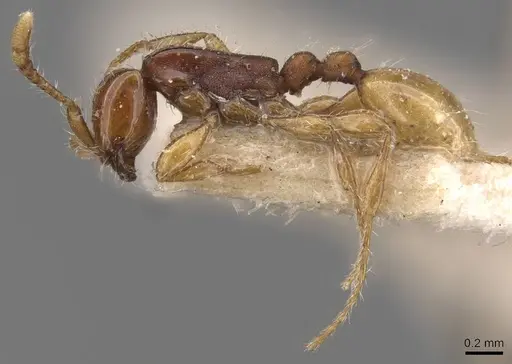
Aenictus javanus are tiny army ants measuring just 2.35-2.60 mm, with yellowish-brown to reddish-brown coloring and a distinctive long, narrow waist segment [1][2]. They live in the lowland rainforests of Java, Borneo, Thailand and Vietnam, where they nest in soil and hunt small prey [3][1]. Unlike most ants kept by hobbyists, these present a unique challenge: scientists have only ever found workers. No queens have been formally described, and colonies reproduce by splitting in two (fission) rather than by single queens starting new nests [4][5].
Quick Summary
- Difficulty: Expert
- Origin & Habitat: Lowland rainforests of Java, Borneo (Sabah, Sarawak, Brunei), Thailand and Vietnam [3][1].
- Colony Type: Army ant colonies that reproduce by fission (colony splitting). Only the worker caste has been described, no queens are known [4][5].
- Size & Growth:
- Queen: Unknown, no queens have been found [5].
- Worker: 2.35-2.60 mm total length [1].
- Colony: Unknown, but likely large given army ant biology.
- Growth: Unknown
- Development: Unknown, development timelines for Aenictus species are poorly documented. (Army ants typically have rapid development, but specific timing for this species is unconfirmed.)
- Antkeeping:
- Temperature: Warm and stable, roughly 24-28°C, based on lowland tropical rainforest habitat [3].
- Humidity: High humidity required, nest substrate should feel damp to the touch, mimicking rainforest floor conditions.
- Diapause: No, tropical species that remains active year-round.
- Nesting: Soil-nesting in nature [4], but captive keeping requires specialized army ant setups with extensive foraging space, not standard formicaria.
- Behavior: True army ants with nomadic lifestyle and specialized predatory behavior. Workers forage in groups and require constant food supply. They are small (under 3mm) so escape prevention must be exceptional [1].
- Common Issues: no queens available means you cannot start a colony from a single individual., army ants require massive foraging territories and constant prey input that standard setups cannot provide., tiny worker size (2.3-2.6mm) allows escape through the smallest gaps in barriers or lids., nomadic behavior makes traditional nest chambers unsuitable, they need space to roam., colony fission requires an established, large colony to propagate, making captive breeding nearly impossible.
Why This Species Is Not Suitable for Standard Ant Keeping
Aenictus javanus cannot be kept using standard antkeeping methods. First, only workers have ever been found, no queens are available to start a colony [5]. Second, as true army ants (subfamily Dorylinae), they have a nomadic lifestyle that requires huge foraging ranges and massive amounts of prey daily [4]. They do not settle into a single nest chamber like Lasius or Camponotus. Instead, they wander constantly. This means they need specialized 'arena' setups with soil and vast hunting spaces, not test tubes or Y-tong nests. Finally, their reproduction happens through colony fission, the colony splits into two when large enough, meaning you cannot start with a single queen and grow slowly [4].
Physical Identification and Features
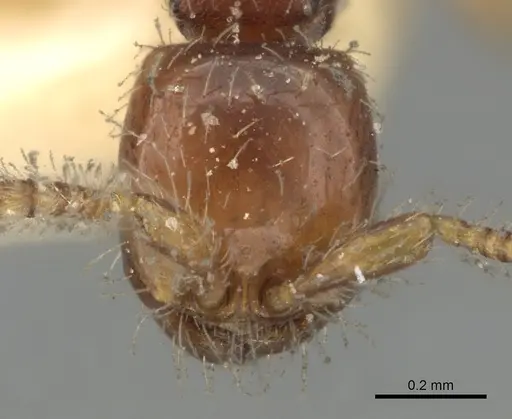
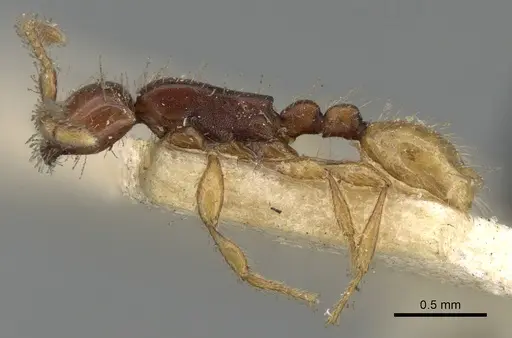
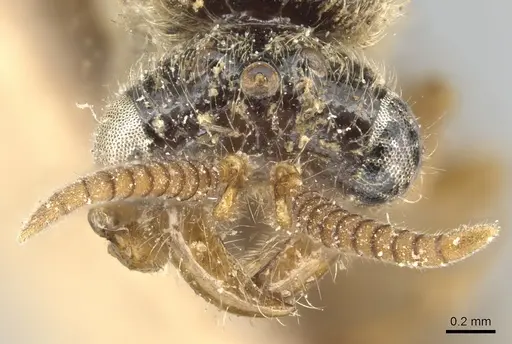
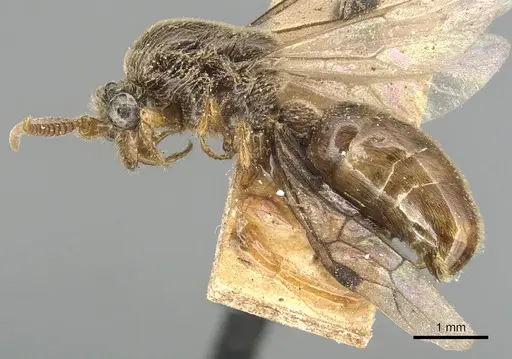
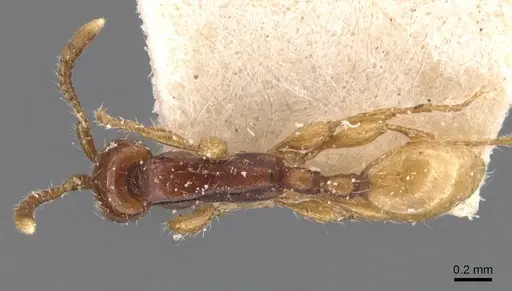
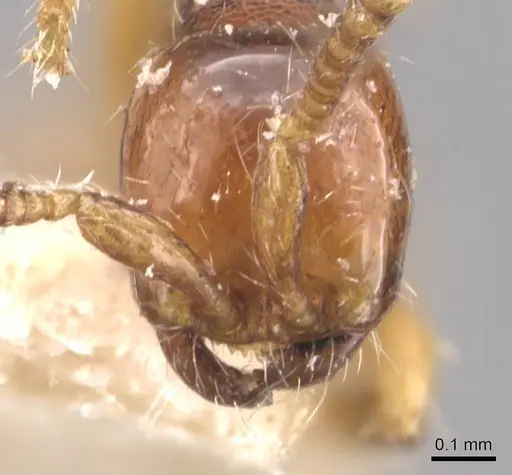
These are among the smallest army ants. Workers have a total length of 2.35-2.60 mm with a head width of just 0.50-0.53 mm [1]. Key identifying features include an angulated (sharp-cornered) back of the head when viewed from the side, and a petiole (waist) that is distinctly longer than it is high [1][2]. The head and antennae are smooth and shiny, while the middle body section has a weak net-like texture [1]. Live workers show two bright red spots on their rear abdomen, these are the postpygidial glands showing through their pale cuticle [6]. The color is yellowish-brown to reddish-brown with a lighter yellowish-brown gaster (abdomen) [1].
Natural Habitat and Distribution
All collected colonies have come from lowland rainforests [3][1]. They range across Java (where they were first discovered in Bogor), Borneo (including Sabah, Sarawak and Brunei), Thailand and Vietnam [3][7]. They nest in soil [4]. This tropical distribution means they require warm, humid conditions year-round with no winter rest period.
Army Ant Biology and Behavior
Like other Aenictus species, these are specialized predators. They hunt small soil-dwelling arthropods and have a fixed daily cycle of nomadic movement and foraging. Colonies reproduce by fission, when a colony grows large enough, it splits into two groups, with one group leaving to form a new colony [4]. This makes them impossible to propagate in captivity unless you already possess a massive, mature colony and can provide the space for them to split. Their social structure is listed as monogynous (single queen), but since queens are unknown, this likely refers to the genetic structure where each colony fragment has a single reproductive individual [4].
Frequently Asked Questions
Can I keep Aenictus javanus in a test tube?
No. These are army ants that require large foraging spaces and specific humidity gradients. They cannot be confined to test tubes, and more importantly, you cannot start a colony without a queen, which has never been found for this species.
How do I start an Aenictus javanus colony?
You cannot start a colony with current knowledge. This species has only been found as workers, no queens have ever been collected [5]. In the wild, colonies reproduce by splitting (fission), meaning you would need to obtain an entire existing colony, which is impractical and ethically questionable for wild rainforest species [4].
What do Aenictus javanus eat?
As army ants, they are specialized predators hunting small soil arthropods. In captivity they would require constant supplies of live prey such as springtails, termites, or other small insects, but specific dietary preferences are unstudied.
How big do Aenictus javanus colonies get?
Colony size is unknown for this specific species, but Aenictus army ants typically maintain colonies of several thousand workers. They reproduce by colony fission, so populations are regulated by splitting rather than growing indefinitely [4].
What temperature do Aenictus javanus need?
Keep them warm and stable, roughly 24-28°C, based on their lowland rainforest habitat in Java and Borneo. They are tropical and do not tolerate cold [3].
Why are my Aenictus javanus dying?
If you somehow have these ants and they are dying, it is likely due to inadequate space for foraging, insufficient humidity, or lack of appropriate prey. However, you should not attempt to keep this species as it is not viable for captive care.
References

This caresheet is licensed under CC BY-SA 4.0 .
Literature
Loading...Loading products...