

Aenictus huonicus
- Scientific Name
- Aenictus huonicus
- Subfamily
- Dorylinae
- Author
- Wilson, 1964
- Distribution
- Found in 2 countries
Aenictus huonicus Overview
Aenictus huonicus is an ant species of the genus Aenictus. It is primarily documented in 2 countries , including Indonesia, Papua New Guinea. Detailed taxonomic data and occurrence records can be further explored via authoritative databases such as AntWeb or the Global Biodiversity Information Facility (GBIF).
Aenictus huonicus
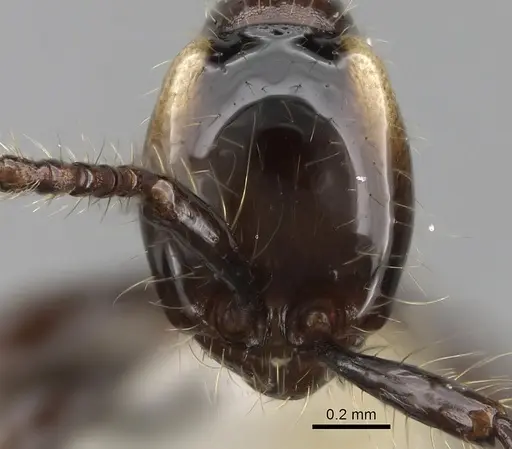
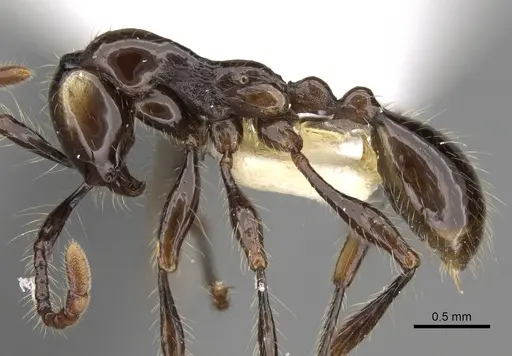
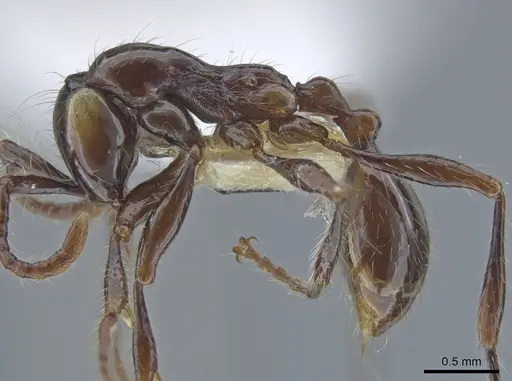
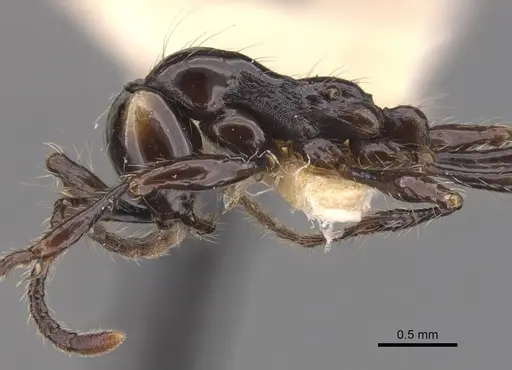
Aenictus huonicus is a small army ant found only in New Guinea. Workers measure about 4.2 mm long and have a dark reddish-brown body with tiny yellow spots on the back of their heads [1][2]. They were first discovered in 1955 on the Huon Peninsula, where workers were seen running in a tight column over a log at the edge of a forest trail [1]. Only workers have ever been found, no queens or males have been collected or described, which makes this species impossible to keep in captivity using standard antkeeping methods [3].
This species belongs to the currax group of army ants and looks similar to Aenictus pfeifferi and Aenictus parahuonicus, but you can tell it apart by the short hairs on its head and the rim around its propodeum [2]. Like all army ants, they are nomadic predators that move frequently and hunt in coordinated groups, making them unsuitable for life in a static formicarium.
Quick Summary
- Difficulty: Expert
- Origin & Habitat: New Guinea (Huon Peninsula), secondary rainforest at 800m elevation [1][2].
- Colony Type: Unknown, only worker caste documented, no queens observed [3].
- Size & Growth:
- Antkeeping:
- Temperature: Likely warm and stable around 22-26°C based on tropical montane rainforest habitat at 800m elevation.
- Humidity: High humidity required, keep substrate damp but not waterlogged, matching rainforest floor conditions.
- Diapause: No, tropical species does not hibernate.
- Nesting: Nomadic, forms temporary bivouacs rather than permanent nests. Not compatible with standard formicaria.
- Behavior: Highly active, fast-moving army ant that forages in coordinated columns. Workers are predatory and likely hunt other insects [1]. Small size (4mm) combined with army ant activity levels means escape prevention would be extremely difficult if attempted.
- Common Issues: impossible to found colonies, no queens have ever been collected or documented., wild-caught worker groups will die within weeks without a queen to replace them., army ant biology requires massive foraging territories and frequent nest moves that cannot be replicated in captivity., tiny size and rapid movement make escapes inevitable in standard setups.
Why This Species Cannot Be Kept
You cannot keep Aenictus huonicus in a standard ant farm because only workers have ever been found. No queens have been collected, described, or made available to antkeepers [3]. Without a queen, any workers you collect will die off without producing new ants, giving you a temporary observation at best.
Even if queens were available, Aenictus are Old World army ants with biology that makes captivity nearly impossible. They are nomadic, meaning they move their entire colony every few days to new hunting grounds. They do not build permanent nests like other ants, instead they form living structures called bivouacs made of the ants' own bodies. Their colonies likely contain thousands or millions of workers, requiring massive foraging territories that cannot be provided in a tank or formicarium. While some specialized researchers maintain army ant colonies in large facilities, this is not feasible for hobbyists.
Discovery and Natural History
E.O. Wilson discovered this species in April 1955 on the Huon Peninsula of New Guinea, specifically at Wamuki in the Mongi-Mape Watershed at 800 meters elevation [1]. He found workers on a bright sunny morning running in a tight file over a log at the edge of a native trail through open secondary rainforest [1][2].
The species name comes from the Huon Peninsula where it was discovered. Since that initial collection, additional workers have been found at Lae, but no reproductive forms have ever turned up in collections [1]. This suggests either that queens are extremely rare, live underground, or that the species has an unusual reproductive biology not yet observed by scientists.
Identification and Appearance
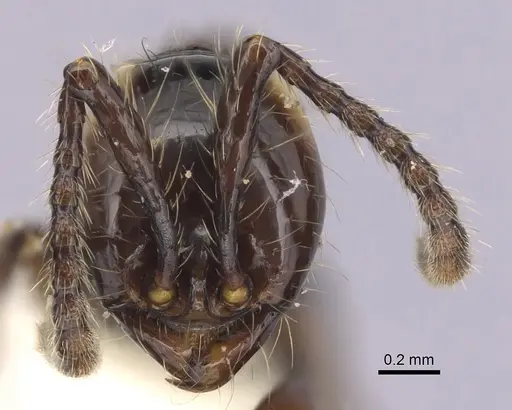
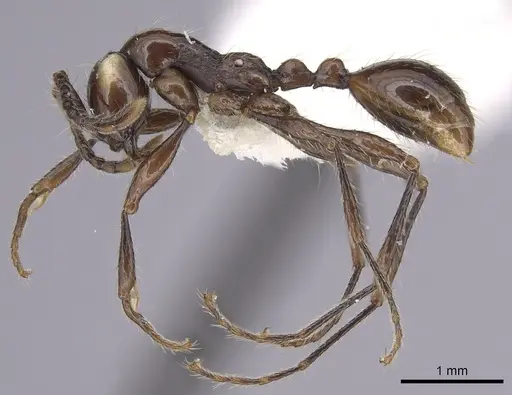
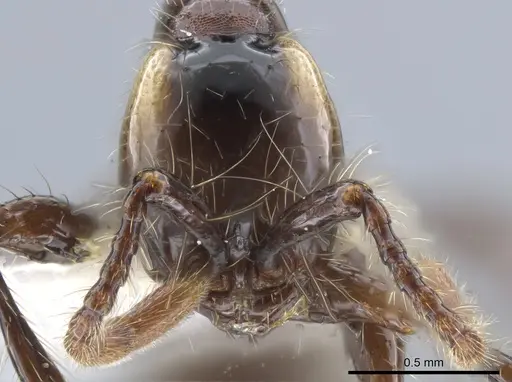
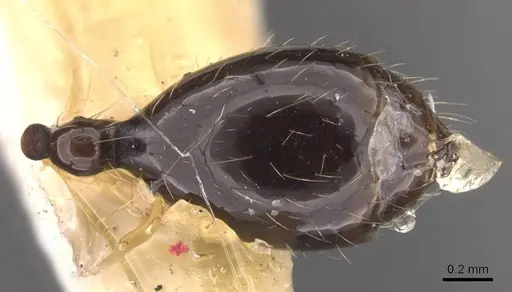
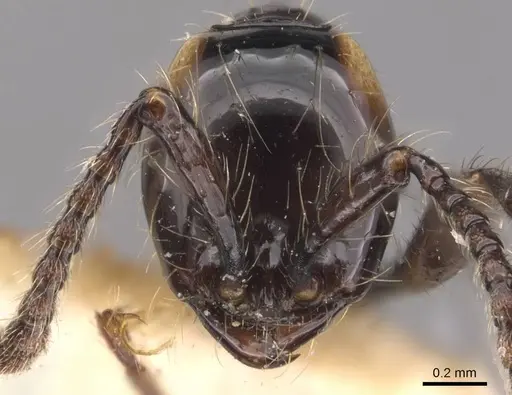
Workers are small but distinctive. They measure 4.20-4.25 mm in total length with a head length of 0.90-0.95 mm [2][1]. Their bodies are dark reddish-brown with small yellow typhlatta spots on the occipital corners (back of the head) [1].
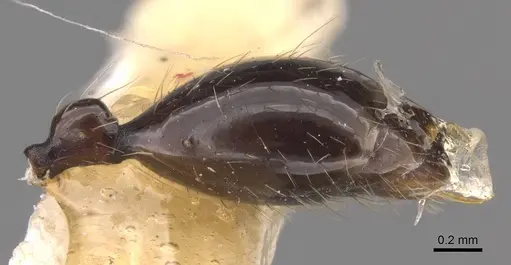
You can distinguish them from similar species by several features: they have some short standing hairs on the head in addition to two long hairs on the vertex, and the longest hair on the pronotum measures 0.35-0.40 mm [2]. The declivity of the propodeum is encircled with a thin rim, which separates them from Aenictus parahuonicus where this rim is absent [2]. Their antennal scapes are relatively short, extending only about two-thirds of the head length [1].
Symbiotic Bacteria
Like many insects, these ants host bacterial symbionts. Research has identified Arsenophonus bacteria living inside Aenictus huonicus workers [4]. This bacterium is an intracellular symbiont found in many arthropods. While the exact function of this bacteria in the ant's biology is not fully understood, it likely plays a role in nutrition or immune function. This is common in army ants, which often have reduced digestive systems and rely on symbiotic relationships.
Frequently Asked Questions
Can I keep Aenictus huonicus in captivity?
No. Only workers have ever been documented, so you cannot obtain a queen to start a colony. Any workers collected will die without reproducing. Additionally, as army ants they require specialized care and massive space that is not feasible for hobbyists.
Where can I buy Aenictus huonicus queens?
You cannot buy them because no queens have ever been collected or described for this species. The species is known only from worker specimens collected in the wild [3].
How long until Aenictus huonicus gets first workers?
This is unknown. No one has ever observed the founding process or egg development in this species because no queens have been found [3].
What do Aenictus huonicus eat?
As army ants, they are almost certainly specialized predators that hunt other insects and possibly other ants. However, the specific diet has not been documented for this species. Army ants typically do not accept standard ant foods like honey water or seeds in captivity, they need live prey.
How big do Aenictus huonicus colonies get?
The colony size is unknown, but based on their biology as army ants, they likely have thousands of workers. Army ants typically form massive colonies compared to other ant types.
Do Aenictus huonicus need hibernation?
No. They come from tropical New Guinea where temperatures remain warm year-round. They do not require a winter rest period.
Can I keep multiple Aenictus huonicus queens together?
This question cannot be answered because queens have never been observed. Army ants are typically polygynous (multiple queens), but without confirmed observations of this specific species, combining queens would be impossible even if you could find them.
References

This caresheet is licensed under CC BY-SA 4.0 .
CASENT0249276
View on AntWeb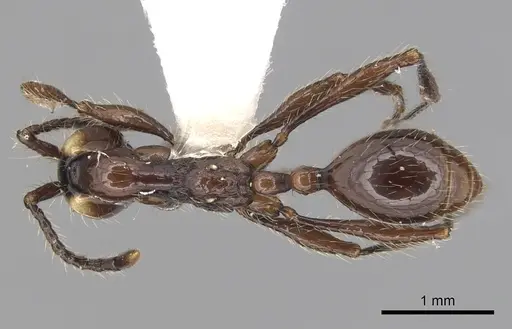
CASENT0281963
View on AntWeb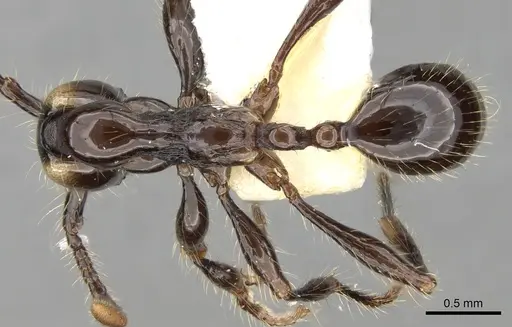
CASENT0651688
View on AntWeb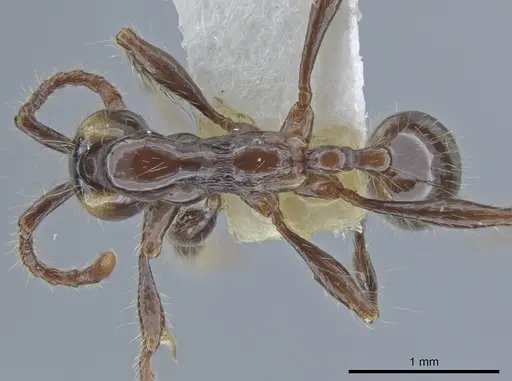
CASENT0905731
View on AntWeb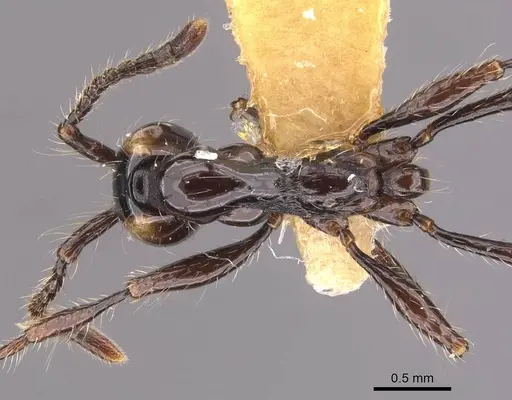
Literature
Loading...Loading products...