

Aenictus fuchuanensis
- Scientific Name
- Aenictus fuchuanensis
- Subfamily
- Dorylinae
- Author
- Zhou, 2001
- Distribution
- Found in 2 countries
Aenictus fuchuanensis Overview
Aenictus fuchuanensis is an ant species of the genus Aenictus. It is primarily documented in 2 countries , including China, Hong Kong. Detailed taxonomic data and occurrence records can be further explored via authoritative databases such as AntWeb or the Global Biodiversity Information Facility (GBIF).
Aenictus fuchuanensis
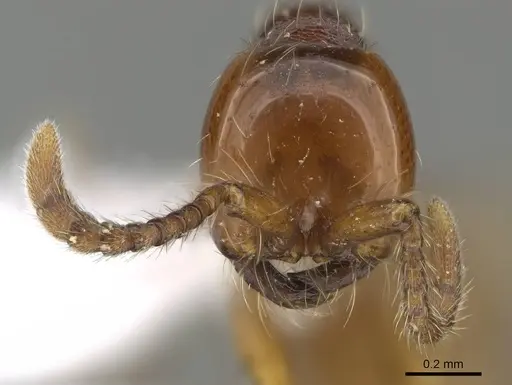
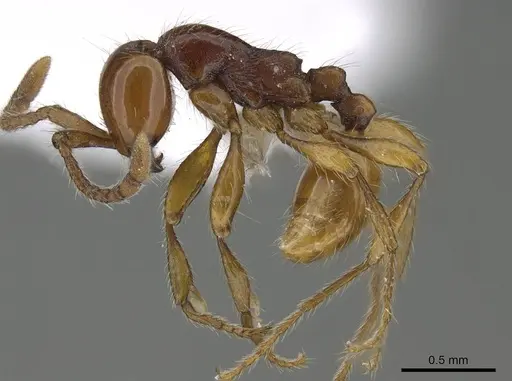
Aenictus fuchuanensis are tiny army ants measuring just 3.1-3.5 mm in length [1]. Workers have dark reddish-brown heads and bodies with lighter yellowish-brown legs and gasters, giving them a two-toned appearance [1]. They belong to the Aenictus ceylonicus group, recognizable by their broad heads and long cylindrical petioles [1]. These ants range across Southeast Asia from Thailand and Laos through Vietnam and Cambodia to south China including Guangxi, Jiangxi, Hong Kong, and Hainan [1][2][3]. Unlike many army ants that require dense forest, Aenictus fuchuanensis can inhabit open landscapes like young tree plantations with bare soil patches [2]. Only worker ants have ever been collected, no queens or males are known for this species [4].
Quick Summary
- Difficulty: Expert
- Origin & Habitat: Southeast Asia including Thailand, Laos, Vietnam, Cambodia, and south China [1][2]. Found in forests and open tree plantations with bare soil [1][2].
- Colony Type: Army ant, reproduces by colony fission. Only workers are known [4].
- Size & Growth:
- Queen: Unknown, queens have never been collected [4].
- Worker: 3.1-3.5 mm [1].
- Colony: Unknown, estimated several hundred to thousands based on typical Aenictus patterns.
- Growth: Unknown, likely moderate to fast with adequate food.
- Development: Unknown, estimated 4-8 weeks at tropical temperatures based on related army ant patterns. (Army ants typically have rapid development in warm conditions, but specific timing is unconfirmed for this species.)
- Antkeeping:
- Temperature: Keep warm and stable around 24-28°C based on tropical Southeast Asian distribution [1][2]. Provide a gentle heat gradient.
- Humidity: Keep nest substrate consistently moist to wet, think tropical forest floor conditions. Ensure good ventilation to prevent mold while maintaining humidity.
- Diapause: No, tropical species that remains active year-round [1].
- Nesting: Army ants are nomadic and need massive foraging areas. Use large interconnected chambers or naturalistic setups with soil layers, not standard test tubes or small formicaria.
- Behavior: Aggressive group foragers that hunt in coordinated raids. Workers are extremely small at 3.1-3.5 mm [1], so escape prevention must be exceptional, they can squeeze through the tiniest gaps. They are specialist predators that require live prey.
- Common Issues: colony collapse from insufficient prey, army ants need constant access to large amounts of live food., escapes are likely without excellent barriers due to tiny 3mm worker size., cannot be founded from a single queen, you must collect an established colony., stress-induced cannibalism if the colony is disturbed or underfed., unsuitable housing, standard ant farms are too small for their nomadic army ant behavior.
Army Ant Biology and Why These Are Expert-Only
Aenictus fuchuanensis are true army ants in the subfamily Dorylinae. This means they are specialized predators with a nomadic lifestyle, they frequently move their nest site and conduct coordinated group raids to overwhelm prey [4]. Unlike most ants you can buy from dealers, you cannot start a colony from a single queen. These ants are only known from worker collections, meaning no queens have ever been documented for this species [4]. In the wild, army ant colonies reproduce by fission, the colony splits into two parts when large enough. This makes them nearly impossible to acquire through normal ant-keeping channels. You would need to collect an entire established colony from the wild, which requires specialized knowledge and permits.
Housing and Space Requirements
Forget test tubes and small acrylic nests. Army ants need space, lots of it. In captivity, they require massive setups with multiple interconnected nest areas and enormous foraging spaces. A naturalistic setup with deep soil layers, rotting wood, and leaf litter works better than artificial nests because it allows them to create temporary bivouacs. They will constantly explore and eventually exhaust small spaces. The setup must also have exceptional escape prevention, at 3.1-3.5 mm [1], these workers can squeeze through gaps you cannot see. Fine mesh (less than 1mm) and Fluon barriers are essential on all ventilation and access points.
Feeding and Diet
These are obligate predators. They do not eat sugar water or honey as their primary food, they need protein, and lots of it. In the wild, Aenictus species raid other ant nests and termite colonies. In captivity, you must provide live prey such as termites, small crickets, fruit flies, and especially other ant species. The colony needs constant access to food, if they go hungry, they will eat their own brood. This high feeding demand makes them expensive and time-consuming to maintain. You cannot simply drop in a mealworm twice a week, they need frequent, varied live prey daily when the colony is large. [4]
Temperature and Humidity
Coming from tropical Southeast Asia, these ants need warmth. Keep them around 24-28°C with a gentle gradient, place a heating cable on one side of the setup so they can choose their preferred temperature [1][2]. They do not hibernate and remain active year-round. Humidity should be high, keep the nest substrate damp but not waterlogged, mimicking the moist conditions of tropical forests or damp plantations where they naturally occur [1][2]. Good ventilation is crucial to prevent mold in these damp conditions, so use fans or well-designed airflow while maintaining humidity through regular misting of the substrate.
Obtaining a Colony
You cannot buy a queen and start a colony. Since only workers are known for this species [4], and army ants reproduce by colony fission, the only way to keep them is to collect an entire established colony from the wild. This requires traveling to their range in Southeast Asia (Thailand, Laos, Vietnam, or southern China) [1][2], locating a colony, and carefully excavating or capturing the entire bivouac with thousands of workers and brood. This is extremely difficult, requires permits, and is not recommended for beginners. Most keepers should admire these ants in the wild or in research settings rather than attempting captivity.
Frequently Asked Questions
Can I keep Aenictus fuchuanensis in a test tube?
No. These are army ants that need massive space and constant food. A test tube is far too small and will cause the colony to die quickly.
How do I start an Aenictus fuchuanensis colony from a queen?
You cannot. Queens have never been documented for this species, only workers are known. Army ants reproduce by splitting established colonies, not by single queens founding new nests.
What do Aenictus fuchuanensis eat?
They are specialist predators that need live prey, especially other ants and termites. They will not survive on sugar water or standard feeder insects alone, they need frequent, varied live prey.
How big do Aenictus fuchuanensis colonies get?
Exact numbers are unknown, but based on other Aenictus species, likely several hundred to thousands of workers. They need large colonies to function as army ants.
Do Aenictus fuchuanensis need hibernation?
No. They are tropical ants from Southeast Asia and remain active year-round. Do not cool them down for winter.
Are Aenictus fuchuanensis good for beginners?
Absolutely not. They are expert-only ants requiring specialized housing, massive amounts of live prey, and colony acquisition methods that are not available through normal ant dealers.
How long until Aenictus fuchuanensis get their first workers?
This question does not apply to army ants. You cannot start with a single queen. You must collect an established colony that already has workers and brood.
Where can I buy Aenictus fuchuanensis?
You likely cannot buy them. They are not sold by ant dealers because they cannot be founded from queens. The only source would be collecting wild colonies in Southeast Asia, which requires permits and expertise.
Why are my Aenictus fuchuanensis dying?
Common causes include insufficient prey (they starve quickly), inadequate space causing stress, or escapes. Army ants are extremely difficult to keep alive in captivity without perfect conditions.
References

This caresheet is licensed under CC BY-SA 4.0 .
CASENT0914926
View on AntWeb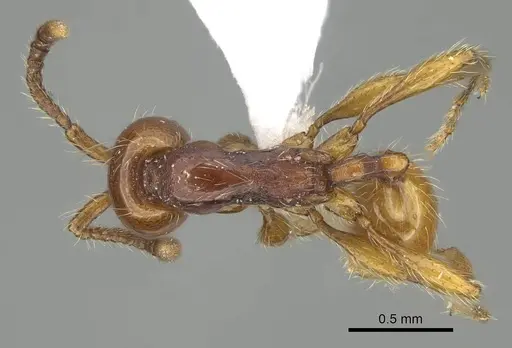
Literature
Loading...Loading products...