

Aenictus bidentatus
- Scientific Name
- Aenictus bidentatus
- Subfamily
- Dorylinae
- Author
- Donisthorpe, 1942
- Distribution
- Found in 5 countries
Aenictus bidentatus Overview
Aenictus bidentatus is an ant species of the genus Aenictus. It is primarily documented in 5 countries , including Côte d'Ivoire, Cameroon, Ghana. Detailed taxonomic data and occurrence records can be further explored via authoritative databases such as AntWeb or the Global Biodiversity Information Facility (GBIF).
Aenictus bidentatus
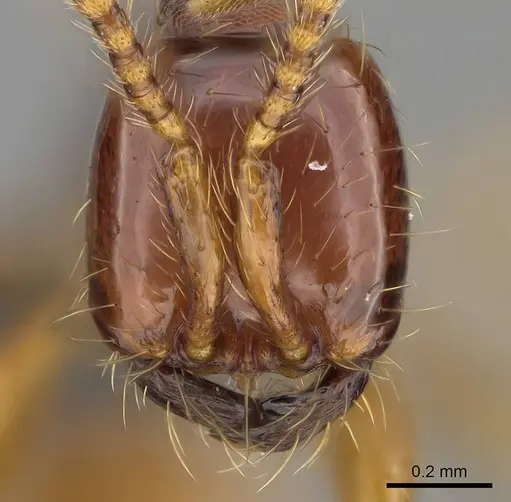
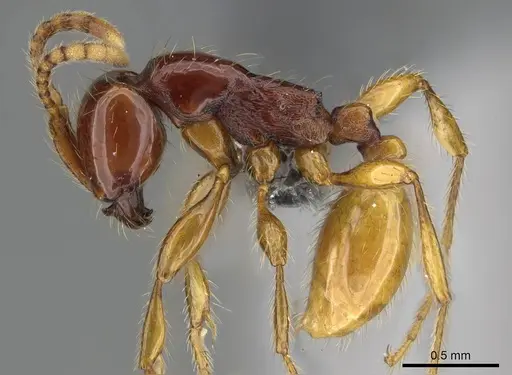
Aenictus bidentatus is a tiny army ant species native to the forests of West and Central Africa. Workers measure just 0.5-0.6mm in head width, making them among the smallest army ants you'll encounter [1]. They belong to the Aenictus decolor species group and were previously classified as a separate species before being recognized as a junior synonym of Aenictus decolor [2]. These ants are nearly identical in appearance to their close relatives A. decolor and A. batesi, distinguished mainly by their smaller size and shorter scapes [1].
What makes Aenictus bidentatus special is their classic army ant behavior, they form raiding columns and hunt in coordinated groups, making them fascinating to watch. They are strictly hypogaeic, meaning they avoid light and spend most of their time underground or in shaded forest areas [3]. This makes them a challenging but rewarding species for experienced antkeepers who can provide the dark, humid conditions they need.
Quick Summary
- Difficulty: Expert
- Origin & Habitat: West and Central African forests, found in Ghana, Ivory Coast, Cameroon, Nigeria, Uganda, and Kenya. They inhabit moist, semi-deciduous forests and rainforests [3][1].
- Colony Type: Colony structure is not fully documented, only worker caste has been described. As army ants, they likely form large colonies with a single queen, typical of the Dorylinae subfamily.
- Colony: Monogyne
- Size & Growth:
- Queen: Unknown, queen has not been described in scientific literature
- Worker: 0.5-0.6mm head width,0.8-1.07mm mesosoma length [1]
- Colony: Likely large, typical army ant colonies contain thousands of workers, but exact numbers for this species are unconfirmed
- Growth: Unknown
- Development: Unconfirmed, no direct development studies exist for this species (Army ant development is typically rapid, but specific timelines for A. bidentatus are unknown)
- Antkeeping:
- Temperature: Keep at 24-28°C, these are tropical forest ants that need warm, stable conditions. A heating cable on one side of the nest creates an appropriate gradient.
- Humidity: High humidity of 70-85% is essential. These ants come from moist rainforest habitats and will not tolerate dry conditions [3]. Keep the nest substrate consistently damp but not waterlogged.
- Diapause: No, as a tropical species, they do not require hibernation. Keep them at warm temperatures year-round.
- Nesting: Use a naturalistic setup with deep, moist substrate or a Y-tong/plaster nest. They are hypogaeic and prefer dark, enclosed spaces. Provide soil or coco fiber substrate that holds moisture well.
- Behavior: Aenictus bidentatus are classic army ants, they form raiding columns and hunt cooperatively. Workers are negatively phototaxic, meaning they avoid light and will retreat when exposed [3]. They forage primarily in morning hours, with peak activity between 0900-1200 hours. Workers move in tandem groups of 4-6 individuals toward raiding sites, while returning workers form larger, more fluid groups [3]. They are small but fast-moving and can squeeze through tiny gaps, excellent escape prevention is critical.
- Common Issues: escape prevention is critical, their tiny size means they can squeeze through standard barrier gaps, light sensitivity causes stress, minimize exposure during feeding and nest maintenance, humidity drops quickly in captive setups, monitor and rehydrate frequently, they may refuse to forage in bright/outdoor arenas, keep observation areas dim, colonies may be difficult to establish, only wild-caught colonies are currently available
Understanding Army Ant Behavior
Aenictus bidentatus exhibits classic army ant behavior, they are nomadic predators that form raiding columns to hunt prey. Unlike most ant species that maintain permanent nests, army ants periodically relocate their entire colony. Workers remove soil particles from foraging trails, suggesting they maintain and clear their raiding paths [3]. They are strictly hypogaeic, meaning they avoid light and prefer to remain underground or in shaded areas. This light avoidance is so strong that exposing them to bright conditions causes significant stress. Their foraging follows a daily pattern, with peak activity in the morning hours between 0900 and 1200 [3]. Understanding this behavior is crucial for keeping them successfully, they need dark spaces and should be fed in dim conditions.
Housing and Nest Setup
Because they are hypogaeic (ground-dwelling) and light-sensitive, Aenictus bidentatus needs a dark, humid enclosure. A naturalistic setup with deep, moist substrate works well, use a mixture of coco fiber and soil that holds moisture without becoming waterlogged. Alternatively, a Y-tong or plaster nest provides the dark, enclosed environment they prefer. The nest should have chambers scaled to their tiny size, with narrow passages. Place the setup in a dim room or use a cover to block light. An outworld can be provided for foraging but keep it dimly lit, they will hesitate to enter bright areas. Ensure all connections between nest and outworld are secure, as their small size allows them to squeeze through tiny gaps. [3][1]
Feeding and Diet
As army ants, Aenictus bidentatus are predators that raid insect colonies. In captivity, they need a protein-rich diet of small live prey. Offer small insects like fruit flies, pinhead crickets, and other tiny arthropods. They may accept freshly killed insects if placed near their foraging columns. Unlike some ants, they are unlikely to accept sugar water or honey as they are primarily predatory. Feed them every 2-3 days, removing uneaten prey to prevent mold. Their small size means prey items should be appropriately sized, nothing larger than their own body mass. Watch their foraging behavior in the morning hours when they are most active. [3]
Temperature and Humidity Management
These tropical forest ants require warm, humid conditions year-round. Maintain temperatures between 24-28°C using a heating cable placed on one side of the nest to create a gentle gradient. Avoid temperature drops below 22°C. Humidity should stay at 70-85%, check the substrate regularly and rehydrate when the surface begins drying. Use a moisture-retaining substrate like coco fiber or a plaster nest that holds water well. Place the nest in an area away from direct sunlight and drafts. Since they avoid light, even ambient room light may cause stress, consider keeping them in a cabinet or covered setup. Monitor condensation levels as an indicator of humidity. [3][1]
Handling and Observation
Observing Aenictus bidentatus requires special considerations due to their light sensitivity and small size. When you need to check on them, use a red light or work in very dim conditions, they cannot see red light well and will remain calmer. Avoid opening the nest in bright light. Their tiny size also means they are fragile, handle any nest components gently. When feeding, place prey near their foraging columns in the dim outworld rather than in a brightly lit area. Their foraging columns peak in the morning, so this is the best time to observe their hunting behavior. Keep observation sessions brief to minimize stress. Their workers move in tandem groups of 4-6 individuals when heading toward raiding sites, which is fascinating to watch. [3]
Frequently Asked Questions
Can I keep Aenictus bidentatus in a test tube?
A test tube is not ideal for this species. They are army ants that need space to form raiding columns and require high humidity that test tubes struggle to maintain. A naturalistic setup with moist substrate or a Y-tong nest works much better.
How long until first workers in Aenictus bidentatus?
The development timeline is unconfirmed for this species. Army ant development is typically rapid, but no specific data exists for A. bidentatus. Expect several months to a year for a wild-caught colony to establish.
Are Aenictus bidentatus good for beginners?
No, this is an expert-level species. Their light sensitivity, humidity requirements, need for live prey, and escape-prone tiny size make them challenging even for experienced antkeepers.
What do Aenictus bidentatus eat?
They are predatory army ants that need live protein. Feed small insects like fruit flies, pinhead crickets, and other tiny arthropods. They are unlikely to accept sugar sources.
Do Aenictus bidentatus need hibernation?
No, as a tropical forest species from West Africa, they do not require hibernation. Keep them warm at 24-28°C year-round.
Why are my Aenictus bidentatus dying?
Common causes include: low humidity (they need 70-85%), too much light exposure, temperatures below 22°C, or stress from observation. They are also expert escape artists, check for tiny gaps in your setup.
When do Aenictus bidentatus forage?
They are most active in the morning hours, typically between 0900 and 1200. Their foraging columns peak during this time, with workers moving toward raiding sites in small tandem groups.
Can I keep multiple queens together?
Colony structure is not fully documented for this species, only workers have been described. Army ants typically have single-queen colonies, but combining unrelated queens is not recommended as it has not been studied.
How big do Aenictus bidentatus colonies get?
Exact colony size is unknown, but typical army ant colonies contain thousands of workers. Expect large colonies if successfully maintained.
When to move to a formicarium?
Move them when the test tube or initial setup becomes too small. However, a naturalistic setup with deep substrate is preferable to a standard formicarium due to their humidity and light requirements.
Are Aenictus bidentatus invasive anywhere?
No, they are native to West and Central Africa and have not been documented as invasive. They are found naturally in Ghana, Ivory Coast, Cameroon, Nigeria, Uganda, and Kenya.
References

This caresheet is licensed under CC BY-SA 4.0 .
CASENT0350562
View on AntWeb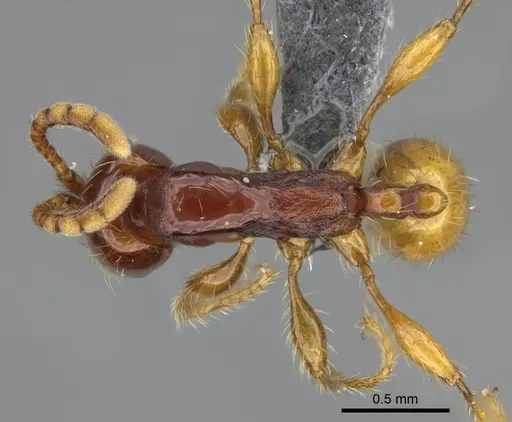
Literature
Loading...Loading products...