

Aenictus decolor
- Scientific Name
- Aenictus decolor
- Subfamily
- Dorylinae
- Author
- Mayr, 1879
- Distribution
- Found in 4 countries
Aenictus decolor Overview
Aenictus decolor is an ant species of the genus Aenictus. It is primarily documented in 4 countries , including Congo, Kenya, Liberia. Detailed taxonomic data and occurrence records can be further explored via authoritative databases such as AntWeb or the Global Biodiversity Information Facility (GBIF).
Aenictus decolor
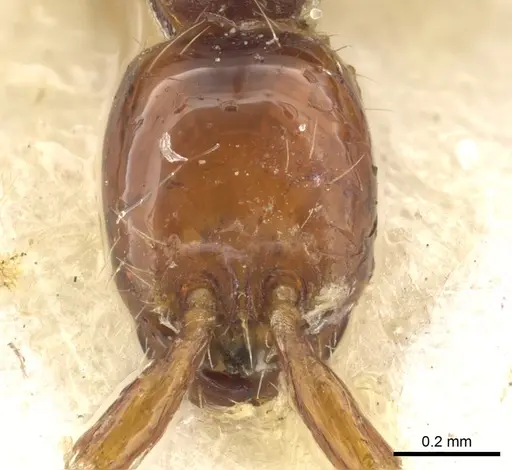
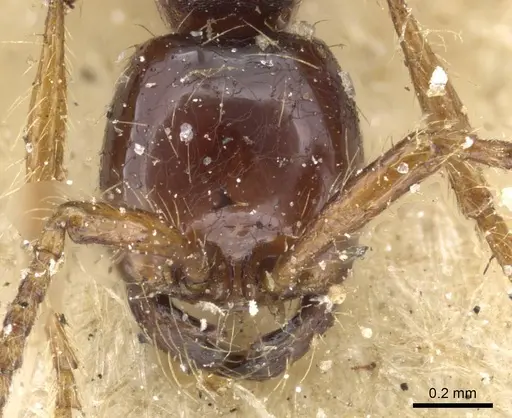
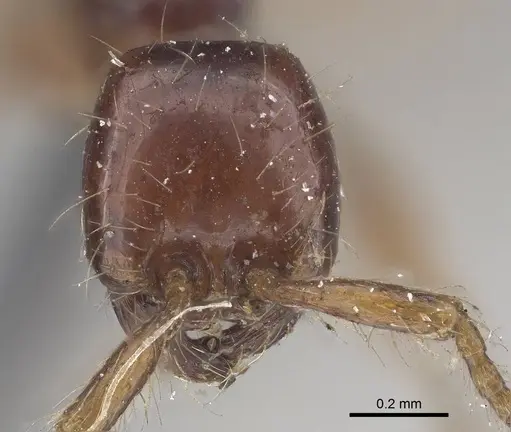
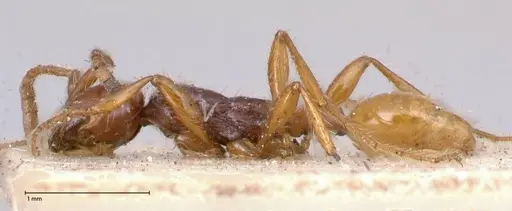
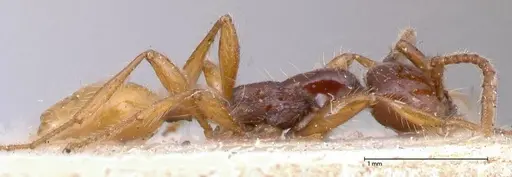
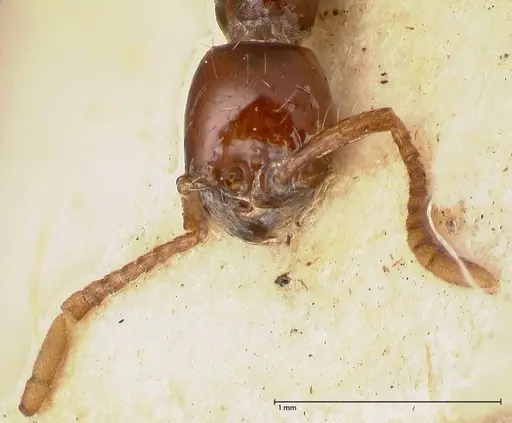
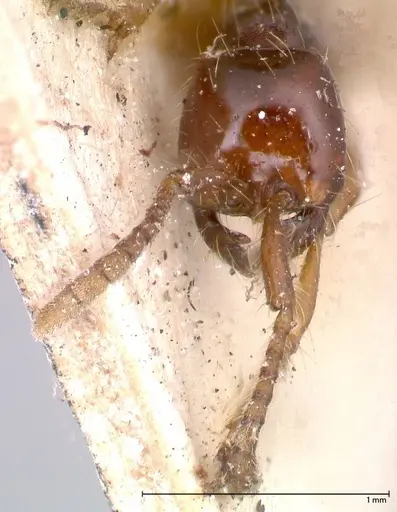
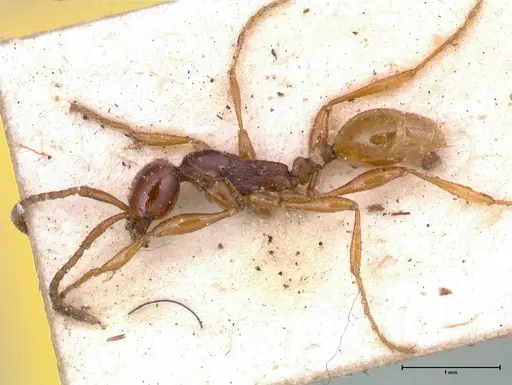
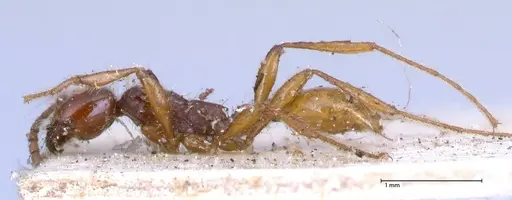
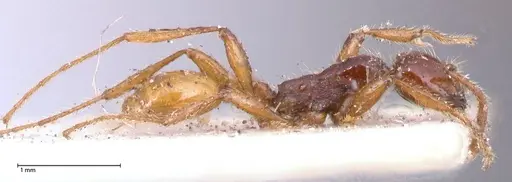
Aenictus decolor is a small army ant from the rainforests of West and Central Africa, with workers measuring just under 3mm [1]. These orange-brown ants are instantly recognizable by their distinctive mandibles featuring a large, rounded second tooth midway along the inner edge, a trait unique among African Aenictus species [1]. Unlike the famous swarm-raiding army ants of the New World, these are column-hunting ants that forage in organized trails through leaf litter and soil [2]. They live in forests from Nigeria to Gabon, and have even been found in cocoa plantations and occasionally inside houses [1][3].
What makes this species unusual even among army ants is their queen. While most army ant queens have simple mandibles without teeth, Aenictus decolor queens possess the same distinctive subapical teeth as their workers, along with defensive spines on the tip of their abdomen [1]. This is a rare evolutionary throwback that helps distinguish them from other African army ants. However, like all army ants, they present extreme challenges for captive care due to their nomadic lifestyle and massive space requirements.
Quick Summary
- Difficulty: Expert
- Origin & Habitat: West and Central African rainforests, including coastal lowland rainforest, primary forest, and cocoa plantations in Nigeria, Cameroon, Gabon, Ghana, Guinea, Ivory Coast, and Kenya [1][4].
- Colony Type: Unknown, army ant biology differs from standard colony structures. Likely single-queen with very large colony sizes typical of the genus, but specific colony structure unconfirmed.
- Size & Growth:
- Queen: 6.69-7.30 mm [1]
- Worker: 2.90-3.28 mm [1]
- Colony: Unknown, likely thousands to tens of thousands based on typical Aenictus biology, but exact maximum unconfirmed.
- Growth: Unknown
- Development: Unknown, army ants often have synchronized brood development cycles that differ from standard ant keeping timelines. (Development timing is unconfirmed for this species. Army ants typically exhibit rapid brood development when well-fed at tropical temperatures.)
- Antkeeping:
- Temperature: Warm and stable, roughly 24-28°C based on tropical rainforest habitat. Avoid fluctuations.
- Humidity: High humidity required, nest substrate should remain consistently damp, mimicking rainforest floor conditions.
- Diapause: No, tropical species that remains active year-round.
- Nesting: Not applicable to standard keeping, army ants are nomadic and do not build permanent nests. They require massive foraging spaces incompatible with typical formicaria.
- Behavior: Column-hunting army ant that forages in organized trails rather than swarms [2]. Blind workers (no eyes) rely on chemical trails and tactile communication [1]. Highly predatory and nomadic, requiring constant movement and fresh hunting grounds. Escape risk is extreme due to tiny size (under 3mm) and persistent exploratory behavior.
- Common Issues: army ants cannot be housed in standard test tubes or formicaria due to nomadic lifestyle and space requirements., tiny worker size (under 3mm) means they escape through the smallest gaps in any standard enclosure., require constant supply of live prey, specifically other ants and small arthropods, which is difficult to maintain., colonies likely require hundreds of square meters of foraging space to exhibit natural behaviors and survive long-term., wild-caught colonies may carry parasites or diseases that spread to other ant colonies in your collection.
Army Ant Biology and Captive Challenges
Aenictus decolor belongs to the Old World army ants (Dorylinae), which live fundamentally differently from the ants typically kept in captivity [1]. These are obligate army ants with a nomadic phase where the entire colony moves regularly to new hunting grounds. Unlike standard ants that defend a territory around a permanent nest, army ants carry their brood with them and bivouac in temporary shelters.
This biology makes them nearly impossible to house in standard ant keeping setups. They require enormous foraging areas, in nature, colonies may traverse areas measured in hundreds of square meters daily. Confining them to a typical formicarium results in stress, cannibalism, and rapid colony decline. The column-hunting strategy [2] means they forage in narrow trails rather than spreading out, requiring long, linear spaces rather than open outworlds.
Additionally, these ants are tiny, workers are just 3mm long, and completely blind [1]. This combination means they explore every crack and crevice constantly, making escape prevention nearly impossible in standard enclosures.
Feeding and Diet
As army ants, Aenictus decolor are specialist predators that hunt live prey. In the wild, they forage through leaf litter and soil columns, preying on other ants, termites, and small soil arthropods [1]. They do not accept dead insects or sugar water, they require constant live food.
In captivity, this means maintaining cultures of springtails, small crickets, fruit flies, or most appropriately, other ant species as prey. This creates ethical and practical challenges for most keepers. The colony requires daily feeding of substantial amounts of live prey, army ants have high metabolic rates and large colonies consume massive quantities of food.
Without a constant supply of appropriate live prey, colonies will quickly starve or turn to cannibalism. This is one of the primary reasons these ants are not recommended for captive keeping, the food requirements alone exceed what most hobbyists can sustainably provide.
Housing Requirements
Standard ant keeping equipment is completely unsuitable for Aenictus decolor. Test tubes, Y-tong nests, plaster formicaria, and acrylic nests all fail to meet their biological needs. These ants require specialized army ant enclosures, essentially large terrariums with extensive substrate for tunneling and massive foraging areas.
If one were to attempt keeping them, the setup would need to be several meters in length to accommodate their column foraging behavior [2]. The enclosure must maintain high humidity (damp substrate throughout) while providing ventilation to prevent mold. Heating should create a gentle gradient, but given their small size and tropical origin, room temperature with a slight boost may suffice.
Escape prevention is critical and extremely difficult. At 3mm, workers pass through standard mesh and most barriers. Fluon (PTFE) barriers may work temporarily but require constant reapplication as these ants are persistent explorers. Any lid must seal completely with no gaps.
Queen and Reproduction
Aenictus decolor queens are large (nearly 7mm) and unusual among army ants for possessing toothed mandibles and defensive spines on their abdomen [1]. Most army ant queens have reduced, toothless mandibles, making this species distinct.
However, army ant reproduction differs from standard ants. New colonies typically form by fission, a mature colony splits, with one portion following a new queen. This means you cannot simply pair a lone queen with workers to start a colony. Captive propagation requires already-established colonies that are large enough to split, which is impractical for most keepers.
The presence of winged queens suggests colonies can produce sexuals, but the timing and conditions for nuptial flights are unknown. In the wild, colonies are found across West and Central Africa from sea level up to at least 800 meters elevation [5].
Frequently Asked Questions
Can I keep Aenictus decolor in a test tube?
No. Army ants cannot be kept in test tubes. They are nomadic ants that require massive foraging spaces and constant movement. A test tube would kill the colony through stress and starvation within days.
Are Aenictus decolor good for beginners?
Absolutely not. These are expert-level ants that are effectively impossible to maintain in standard captivity. They require specialized equipment, constant live food supplies, and enormous space that most keepers cannot provide.
What do Aenictus decolor ants eat?
They are specialist predators that hunt live prey. They require other ants, termites, and small arthropods. They do not accept sugar water, honey, or dead insects. You would need to maintain live prey cultures or collect wild prey daily.
How big do Aenictus decolor colonies get?
Exact colony size is unknown for this species, but Aenictus colonies typically contain thousands to tens of thousands of workers. They are not small colony ants.
Do Aenictus decolor ants sting?
Army ants in the genus Aenictus bite with their powerful mandibles rather than sting. Their mandibles feature a distinctive large second tooth that can deliver a painful pinch relative to their size, but they lack the stingers seen in some other ant groups.
Do Aenictus decolor need hibernation?
No. They are tropical ants from African rainforests and remain active year-round. They should be kept at stable warm temperatures (around 24-28°C) without any cooling period.
How long until Aenictus decolor gets their first workers?
This is unknown and likely not applicable. Army ants typically reproduce by colony fission rather than single queen founding. You cannot start a colony with just a queen and wait for workers, you need an established colony that splits.
Can I keep multiple Aenictus decolor queens together?
Unknown for this species, but unlikely to be relevant. Army ant colonies typically have one queen, and new colonies form when existing colonies split rather than by combining queens. Attempting to house multiple unrelated queens would likely result in fighting.
Why are my Aenictus decolor dying?
Captive mortality is extremely high for army ants. Common causes include insufficient space (they need meters of foraging trails, not centimeters), lack of live prey, improper humidity (they need damp tropical conditions), or escape attempts leading to desiccation. Most colonies die within weeks of capture due to the impossibility of replicating their natural range and hunting needs.
Where do Aenictus decolor live in the wild?
They inhabit rainforests and coastal lowland forests across West and Central Africa, including Nigeria, Cameroon, Gabon, Ghana, Guinea, Ivory Coast, and Kenya. They are found in leaf litter, soil, and rotting wood in primary forests and cocoa plantations, occasionally entering houses [1][4].
References

This caresheet is licensed under CC BY-SA 4.0 .
CASENT0281966
View on AntWeb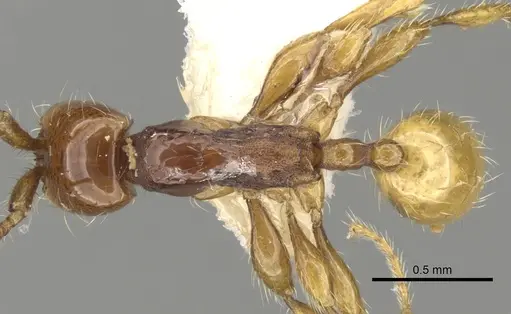
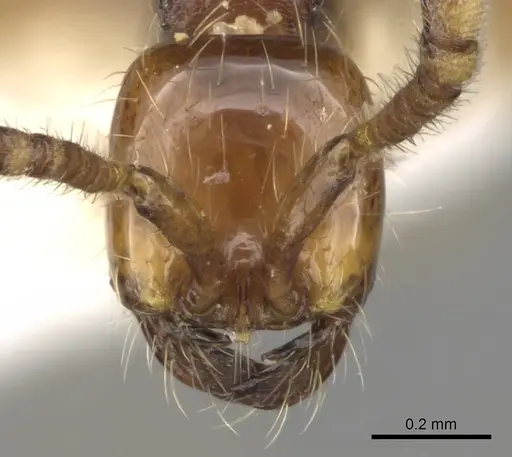
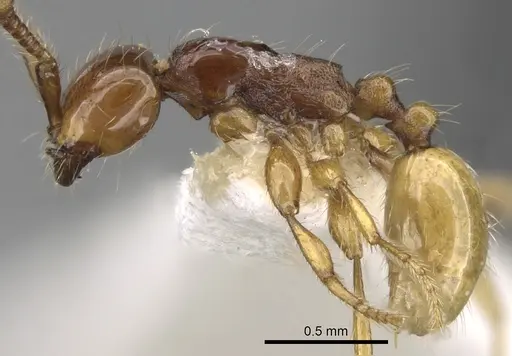
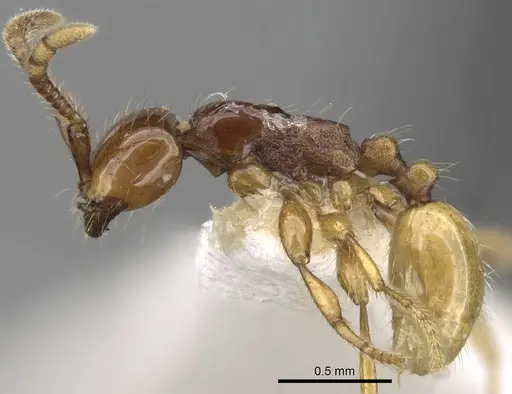
CASENT0317077
View on AntWeb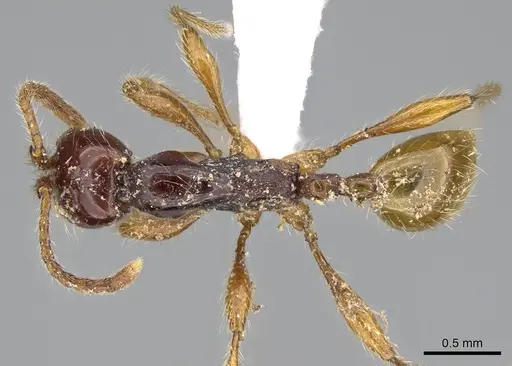


CASENT0902685
View on AntWeb

CASENT0907024
View on AntWeb

CASENT0919639
View on AntWeb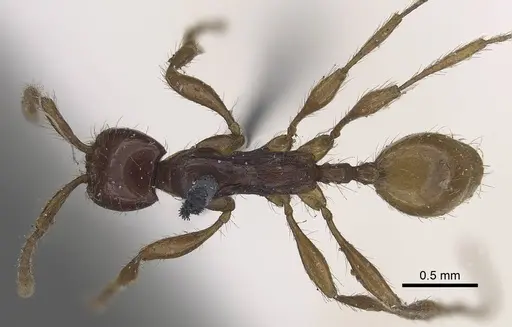

FOCOL0588
View on AntWeb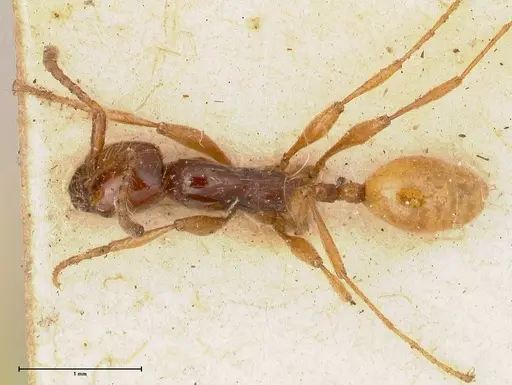

FOCOL0589
View on AntWeb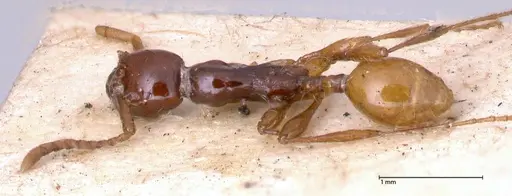

FOCOL0590
View on AntWeb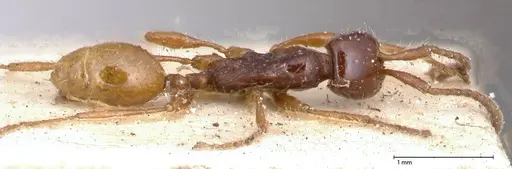
FOCOL0591
View on AntWeb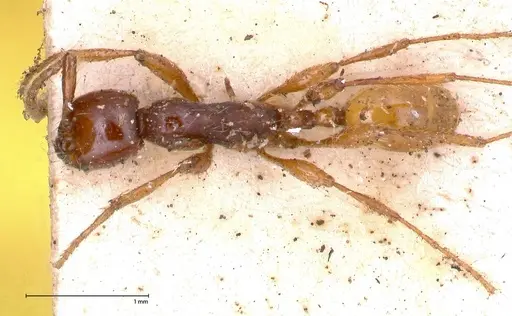

Literature
Loading...Loading products...