

Adelomyrmex vaderi
- Scientific Name
- Adelomyrmex vaderi
- Tribe
- Solenopsidini
- Subfamily
- Myrmicinae
- Author
- Fernández, 2003
- Distribution
- Found in 1 countries
Adelomyrmex vaderi Overview
Adelomyrmex vaderi is an ant species of the genus Adelomyrmex. It is primarily documented in 1 countries , including Colombia. Detailed taxonomic data and occurrence records can be further explored via authoritative databases such as AntWeb or the Global Biodiversity Information Facility (GBIF).
Adelomyrmex vaderi
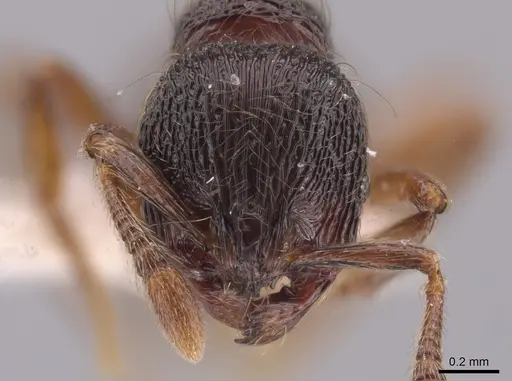
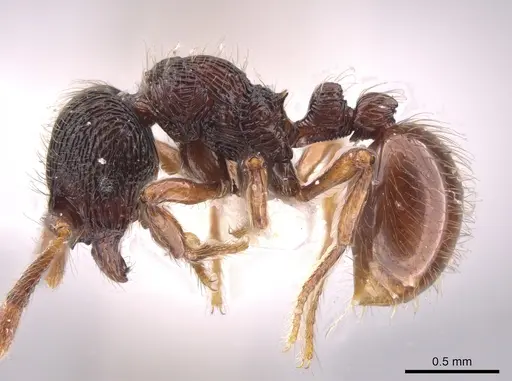
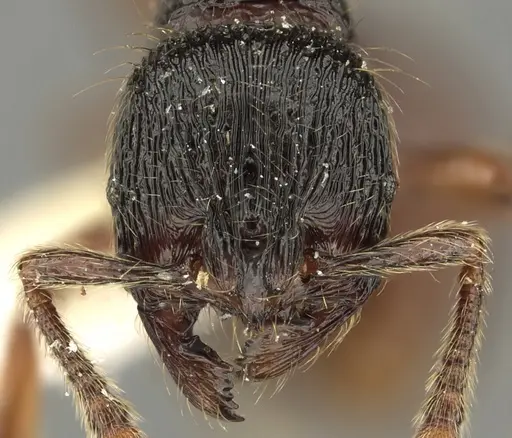
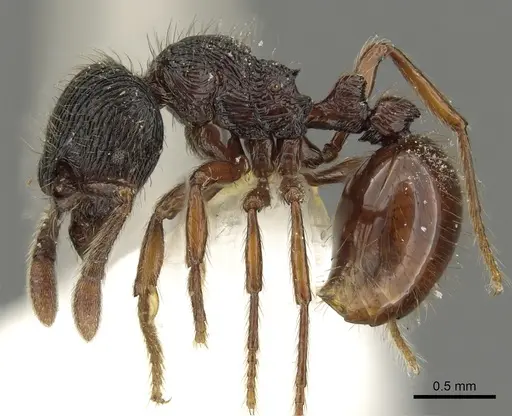
Adelomyrmex vaderi is one of the largest species in its genus, with workers measuring 3.6-4.0 mm and queens reaching 4.2-4.3 mm [1]. They display a striking dark coloration: black bodies with dark brown sides, contrasting against light brown gasters, legs, and antennae [1]. Their most distinctive feature is the long, narrow waist segment (postpetiole) that projects backward over the gaster like a small pointed shelf [2]. The species inhabits montane cloud forests at 1750 meters elevation in the Cordillera east of Bogotá, Colombia [2][3].
This species holds special scientific significance as the first Adelomyrmex in which males were discovered and described, the holotype series contained the only known males for the entire genus at the time of description [4]. They nest inside fallen logs in damp mountain stream valleys [3]. Their scientific name references Darth Vader, fitting their dark armor-like appearance and the helmet-like shape of their heavily sculptured heads.
Quick Summary
- Difficulty: Expert
- Origin & Habitat: Montane cloud forests in Cundinamarca, Colombia, at 1750m elevation [2][3]
- Colony Type: Unconfirmed, likely single-queen based on genus patterns, but not documented
- Size & Growth:
- Queen: 4.24-4.26 mm [1]
- Worker: 3.64-3.99 mm [1]
- Colony: Unknown, likely small based on related Adelomyrmex species, possibly under 100 workers
- Growth: Slow
- Development: Unknown, estimated 8-12 weeks at 20°C based on similar montane myrmicines (Development time is unconfirmed, montane species often develop slower than lowland relatives)
- Antkeeping:
- Temperature: 18-22°C based on montane origin at 1750m elevation, avoid heat above 25°C
- Humidity: High humidity required, keep nest substrate damp like rotting wood, with 60-80% relative humidity
- Diapause: Unknown, possible winter slowdown but not confirmed
- Nesting: Fallen log/rotting wood nests in nature, use Y-tong nests or naturalistic setups with tight chambers and wood components
- Behavior: Cryptic and slow-moving based on montane forest habitat, moderate escape risk due to 4mm size and cryptic coloration
- Common Issues: overheating is a major risk, montane species tolerate heat poorly and need stable cool conditions, desiccation risk, low humidity kills montane cloud forest species quickly, unknown dietary needs may lead to starvation if standard foods are rejected, extreme rarity in the trade makes finding healthy colonies difficult, slow growth tests patience, colonies may take years to reach observable sizes
Discovery and Scientific Significance
Adelomyrmex vaderi was described in 2003 from specimens collected in 1997 at the Gazaunta River in Cundinamarca, Colombia [1]. The type series included workers, queens, and critically, the first males ever described for the genus Adelomyrmex [4]. Before this discovery, males were unknown for the entire genus, making this species pivotal for understanding the group's biology [4].
The species is known only from the eastern foothills of the Eastern Cordillera near Medina, specifically from montane forest sites at 1750 meters altitude [3]. The holotype came from a nest series found in a fallen log beside a stream [3]. This restricted range and specific habitat make them one of the more geographically limited ant species in the hobby, though they remain virtually unknown in captivity.
Nest Preferences and Housing
In nature, Adelomyrmex vaderi nests in fallen logs in damp montane forests [3]. This suggests they prefer tight, wood-based cavities with high humidity and limited airflow.
For captive housing, use a Y-tong (autoclaved aerated concrete) nest or a naturalistic setup with rotting wood components. Chambers should be small and tight-fitting rather than open and spacious. Provide a humidity gradient with one side damp (not wet) and offer pieces of decaying wood or bark for them to nest against. Because they come from cloud forests, avoid dry setups entirely, the substrate should feel damp to the touch consistently.
Temperature and Climate Needs
Coming from 1750 meters elevation in the Colombian Andes, these ants experience cool, stable cloud forest conditions [2]. You should keep them at 18-22°C with minimal fluctuation. Temperatures above 25°C likely stress them, and heat above 28°C may be lethal given their montane adaptation.
Use a heating cable or mat only if your room drops below 18°C, and position it to create a gentle gradient rather than heating the entire nest. Stability matters more than exact temperature, montane species typically experience less daily variation than lowland tropical ants.
Feeding and Diet
The specific diet of Adelomyrmex vaderi is unstudied. Based on related myrmicine ants in the Solenopsidini tribe, they likely accept small live prey and sugar sources.
Offer tiny insects such as springtails, fruit flies, or small cricket nymphs. Provide sugar water or honeydew substitutes constantly in a test tube or liquid feeder. Because their natural history is undocumented, observe carefully to see what they accept, some montane specialists have narrow dietary preferences. Remove uneaten protein within 24 hours to prevent mold in the humid conditions they require.
Colony Founding and Development
Founding behavior is unconfirmed for this species. Queens are winged and likely practice claustral founding (sealing themselves in to raise first workers on stored fat reserves), but this has not been observed.
Development timelines are unknown. Based on similar-sized montane myrmicines, expect egg-to-worker times of 8-12 weeks at 20°C, potentially longer at cooler temperatures. First workers (nanitics) will be smaller than typical workers but should still measure around 3.5 mm. Colonies likely grow slowly, adding only a few workers per month.
Frequently Asked Questions
What temperature should I keep my Adelomyrmex vaderi colony?
Keep them cool and stable at 18-22°C. They come from montane cloud forests at 1750 meters elevation where temperatures are moderate and stable. Avoid heat above 25°C as they are not adapted to hot conditions.
How long until Adelomyrmex vaderi gets their first workers?
The egg-to-worker timeline is unconfirmed. Based on similar montane myrmicine ants, expect roughly 8-12 weeks at 20°C, potentially longer if kept cooler. Development is likely slower than lowland tropical species.
How big do Adelomyrmex vaderi colonies get?
Colony size is unknown. Based on related Adelomyrmex species, they likely remain small, possibly under 100 workers even when mature. They are not a species that produces massive colonies.
Do Adelomyrmex vaderi need hibernation?
Hibernation requirements are unconfirmed. As a montane tropical species, they may experience a dry season slowdown rather than true winter diapause. You can try keeping them active year-round at stable temperatures, or provide a cooler period (15-18°C) for 1-2 months if colony activity drops naturally.
What do Adelomyrmex vaderi eat?
Their specific diet is unstudied. Offer small live prey like springtails or fruit flies along with sugar water. Observe acceptance carefully, as montane specialists sometimes have specific preferences. Remove uneaten food promptly to prevent mold in their humid nest.
Are Adelomyrmex vaderi good for beginners?
No. They are an expert-level species due to their rarity, unknown care requirements, need for cool humid conditions, and likely slow growth. Beginners should start with well-documented species like Lasius niger or Camponotus species.
Can I keep multiple Adelomyrmex vaderi queens together?
Combining multiple queens is not recommended. Their colony structure is unconfirmed, and unrelated queens will likely fight. Only attempt if you have excess queens and can monitor for aggression, but expect monogyne (single-queen) behavior based on genus patterns.
Where can I buy Adelomyrmex vaderi?
You likely cannot. They are extremely rare in the ant trade, known only from a few localities in Colombia. Most specimens in collections came from scientific expeditions. If available, they would only come from specialized breeders working with Neotropical species.
References

This caresheet is licensed under CC BY-SA 4.0 .
CASENT0653698
View on AntWeb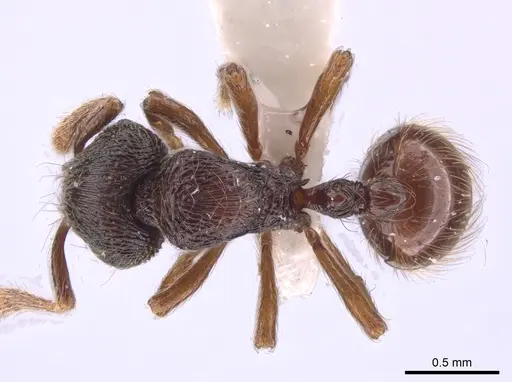
CASENT0901016
View on AntWeb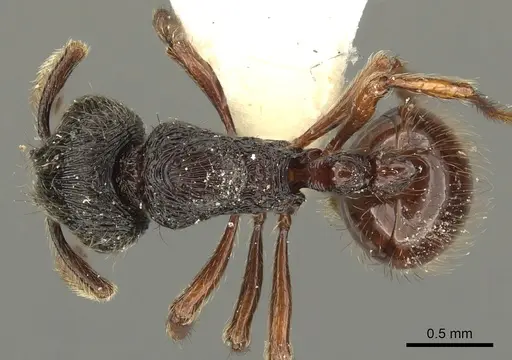
Literature
Loading...Loading products...