

Adelomyrmex marginodus
- Scientific Name
- Adelomyrmex marginodus
- Tribe
- Solenopsidini
- Subfamily
- Myrmicinae
- Author
- Longino, 2012
- Distribution
- Found in 4 countries
Adelomyrmex marginodus Overview
Adelomyrmex marginodus is an ant species of the genus Adelomyrmex. It is primarily documented in 4 countries , including Guatemala, Honduras, Mexico. Detailed taxonomic data and occurrence records can be further explored via authoritative databases such as AntWeb or the Global Biodiversity Information Facility (GBIF).
Adelomyrmex marginodus
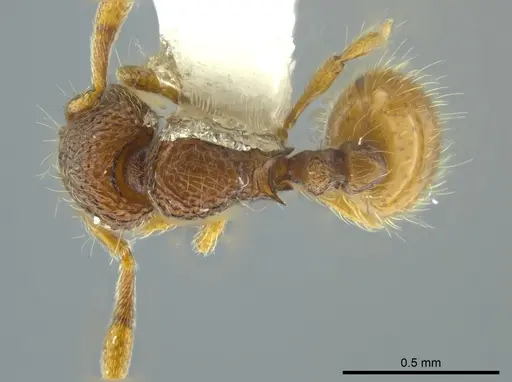
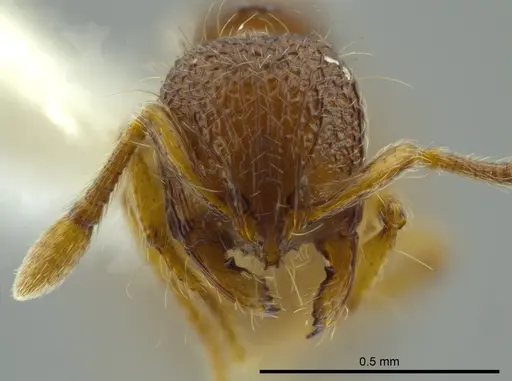
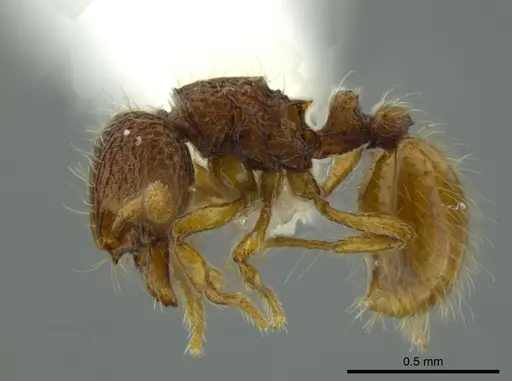
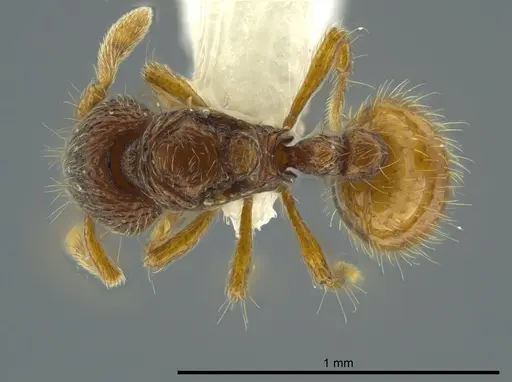
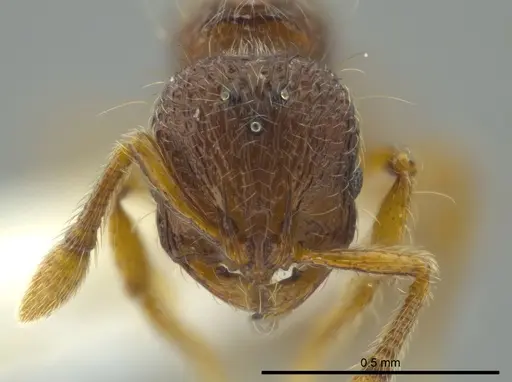
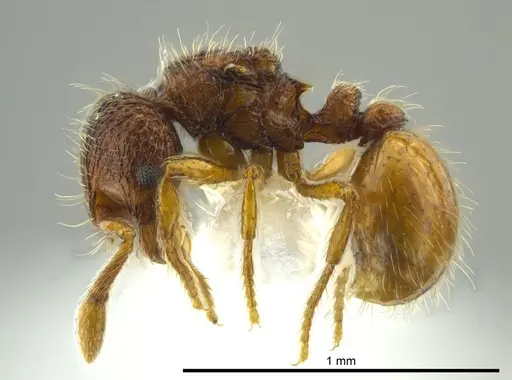
Adelomyrmex marginodus is a tiny leaf litter ant found across Central America, from southern Mexico through Guatemala, Honduras, and Nicaragua. Workers measure just 0.44-0.50mm, making them among the smaller ants you'll encounter [1]. They have a distinctive reddish-brown coloration with the head and mesosoma red and the gaster a lighter yellow-red [1]. These ants live in lowland rainforest environments at elevations from sea level to 400 meters, typically nesting in sifted leaf litter collected using Winkler samplers [1].
What makes A. marginodus interesting is its subtle but consistent differences from the similar Adelomyrmex longinoi, specifically a sharper angle between the anterior and dorsal faces of the pronotum and a pronounced transverse rim on the postpetiole [1]. While typically rare in collections, at one Honduran site they appeared in 17% of samples, suggesting they can be locally common [1]. This is a rarely kept species in captivity due to its tiny size and specific habitat requirements.
Quick Summary
- Difficulty: Expert
- Origin & Habitat: Lowland rainforest of Central America (southern Mexico, Guatemala, Honduras, Nicaragua), from sea level to 400m elevation [1]. Found in sifted leaf litter in tropical forest habitats.
- Colony Type: Likely single-queen colonies based on typical Solenopsidini patterns. Colony structure is inferred from tribe-level data rather than directly studied for this species.
- Size & Growth:
- Queen: Unconfirmed, likely similar to worker size given the tiny dimensions of this species (workers are 0.44-0.50mm) [1]
- Worker: 0.44-0.50mm [1]
- Colony: Unknown, likely small colonies typical of leaf litter ants (dozens to low hundreds)
- Growth: Unknown, likely moderate based on small Myrmicinae patterns
- Development: Estimated 4-8 weeks at optimal temperature based on typical tropical Myrmicinae development (No direct development data exists for this species. Estimates based on related small Myrmicinae in tropical habitats.)
- Antkeeping:
- Temperature: Keep warm at 24-28°C, these are lowland tropical ants requiring stable warmth
- Humidity: High humidity (70-85%), they inhabit damp rainforest leaf litter. Keep substrate consistently moist but not waterlogged
- Diapause: Unlikely, being a lowland tropical species from sea level to 400m, they probably don't require true hibernation. May have seasonal activity variation based on wet/dry cycles
- Nesting: Leaf litter ants need a naturalistic setup with fine substrate. A small test tube setup with moist substrate or a miniature naturalistic terrarium works well. They require tight chambers scaled to their tiny size
- Behavior: These are tiny, cryptic leaf litter ants that are rarely seen above ground. They likely have docile temperament and are not aggressive. Their tiny size means excellent escape prevention is absolutely critical, they can squeeze through impossibly small gaps. They are probably slow-moving and secretive. Workers have reduced eyes (only 1-4 ommatidia), suggesting they rely more on chemical cues than vision [1].
- Common Issues: escape prevention is critical due to their tiny 0.44mm size, use fine mesh and tight-fitting barriers, very small size makes feeding challenging, offer tiny prey items like springtails or fruit fly parts, high humidity requirements can lead to mold problems if ventilation is poor, leaf litter species are sensitive to drying out, monitor substrate moisture closely, this species is rarely kept and poorly documented in captivity, expect a learning curve
Housing and Setup
Adelomyrmex marginodus requires a setup scaled to their tiny size. These are leaf litter ants, so a naturalistic terrarium with a fine substrate layer works best. Use a small container, even a small plastic terrarium or a modified test tube setup can work. The substrate should be moist but not waterlogged, mimicking the damp forest floor they naturally inhabit. Because workers are only 0.44-0.50mm, you'll need to use very fine materials, avoid coarse gravel or large soil particles that could injure or trap them. A layer of moist coconut fiber or peat moss mixed with small pieces of decaying leaves provides ideal conditions. Escape prevention is absolutely critical, these ants can squeeze through gaps you wouldn't believe. Use containers with tight-fitting lids and consider fine mesh on any air holes. [1]
Feeding and Diet
Like most small Myrmicinae, Adelomyrmex marginodus likely has a varied diet including small arthropods and likely tends aphids or scale insects for honeydew. In captivity, you should offer tiny prey items, springtails, fruit fly parts, small mealworms, or other micro-arthropods are appropriate. Given their tiny size, prey items should be no larger than they can handle. They may accept sugar sources like honey or sugar water, though this is unconfirmed for this species. Feed small amounts every few days and remove any uneaten prey to prevent mold. Because they're so small, even a fruit fly leg is a substantial meal for them.
Temperature and Humidity
As a lowland tropical ant from elevations of 0-400m in Central America, Adelomyrmex marginodus needs warm, humid conditions. Keep temperatures in the 24-28°C range, stable warmth is more important than exact numbers. A small heat mat on one side of the enclosure can create a temperature gradient. Humidity should be high (70-85%), these ants naturally live in damp rainforest leaf litter. Keep the substrate consistently moist but not sitting in water. A small water tube or reservoir connected to the nest area helps maintain humidity. Avoid both drying out and waterlogging, aim for damp substrate that doesn't drip. Good ventilation is important to prevent mold while maintaining humidity. [1]
Colony Behavior and Observation
Adelomyrmex marginodus is a cryptic species that's rarely seen above ground. Workers have very small eyes (only 1-4 ommatidia), suggesting they rely primarily on chemical signals rather than vision [1]. This means they'll be more responsive to pheromone trails than visual cues. Colonies are likely small and secretive, with workers spending most of their time within the substrate or under leaf litter. You probably won't see dramatic foraging raids or aggressive defense, these are quiet, subtle ants. Observation requires patience and likely a magnifying glass given their tiny size. The workers have distinctive erect setae (bristles) on various body parts, which you may be able to see under magnification.
Challenges and Considerations
This is an expert-level species to keep, primarily because of its tiny size and specific requirements. Finding appropriate food items for such small ants is challenging, standard ant food is too large. Escape prevention requires extraordinary attention to detail. They're also very rarely kept in captivity, so there's little established husbandry knowledge. If you find a colony, it will likely come from a wild-caught queen or a small fragment from a leaf litter sample. Expect slow growth and don't be surprised if the colony remains small. These ants are best suited for antkeepers with experience keeping other leaf litter species or very small Myrmicinae.
Frequently Asked Questions
How long does it take for Adelomyrmex marginodus to produce first workers?
The exact timeline is unknown, but based on typical tropical Myrmicinae development, expect 4-8 weeks from egg to worker at optimal temperature (around 24-28°C).
What do Adelomyrmex marginodus ants eat?
They likely eat small arthropods and may accept honeydew from aphids. In captivity, offer tiny prey like springtails, fruit fly parts, or small mealworms. Sugar sources like honey water may also be accepted.
Do Adelomyrmex marginodus ants sting?
Given their tiny size (0.44mm), any sting would be negligible to humans. Most Myrmicinae have stingers but they're often too small to penetrate human skin effectively.
Are Adelomyrmex marginodus good for beginners?
No, this is an expert-level species due to their tiny size, specific humidity requirements, and the challenge of finding appropriately small food. They're rarely kept in captivity.
How big do Adelomyrmex marginodus colonies get?
Colony size is not documented, but based on typical leaf litter ants, colonies likely reach dozens to a few hundred workers rather than large colonies.
Do Adelomyrmex marginodus need hibernation?
No, being a lowland tropical species from sea level to 400m elevation, they don't require true hibernation. They may have seasonal activity changes based on wet/dry cycles rather than temperature.
What temperature should I keep Adelomyrmex marginodus at?
Keep them warm at 24-28°C. These are lowland tropical ants that need stable warmth. A small heat mat on one side of the enclosure can provide a gradient.
How do I prevent Adelomyrmex marginodus from escaping?
Excellent escape prevention is critical, these ants are only 0.44mm and can squeeze through microscopic gaps. Use tight-fitting lids, seal any openings with silicone, and use fine mesh (at least 0.5mm or smaller) for ventilation holes.
Can I keep multiple Adelomyrmex marginodus queens together?
This is unconfirmed. Based on typical Solenopsidini patterns, they likely form single-queen colonies. Combining unrelated queens is not recommended without evidence they can coexist.
Where does Adelomyrmex marginodus live in the wild?
They inhabit lowland rainforests in Central America (Mexico, Guatemala, Honduras, Nicaragua) at elevations from sea level to 400m. They live in sifted leaf litter on the forest floor.
References

This caresheet is licensed under CC BY-SA 4.0 .
Literature
Loading...Loading products...