

Acropyga stenotes
- Scientific Name
- Acropyga stenotes
- Tribe
- Plagiolepidini
- Subfamily
- Formicinae
- Author
- LaPolla, 2004
- Distribution
- Found in 1 countries
Acropyga stenotes Overview
Acropyga stenotes is an ant species of the genus Acropyga. It is primarily documented in 1 countries , including Guyana. Detailed taxonomic data and occurrence records can be further explored via authoritative databases such as AntWeb or the Global Biodiversity Information Facility (GBIF).
Acropyga stenotes
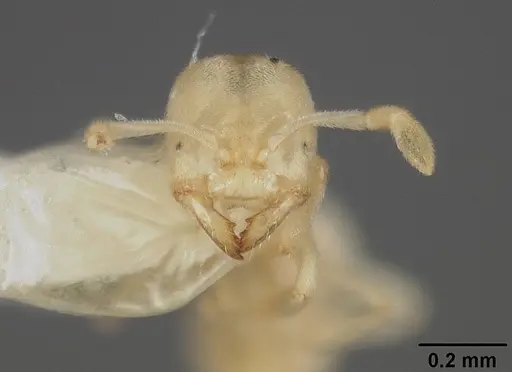
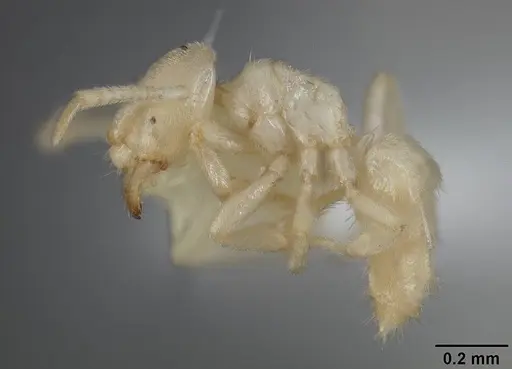
Acropyga stenotes is an exceptionally tiny yellow ant species known only from the base of Mt. Ayanganna in western Guyana. Workers measure just 1.53mm in total length, making them among the smallest ants in the genus. They are easily recognized by their distinctly narrow, elongated head and 11-segmented antennae, a unusual trait since most related species have fewer segments. These ants were collected from leaf litter in Dicymbe-dominated forest at approximately 695m elevation. Like all Acropyga species, they maintain a trophobiotic relationship with mealybugs (genus Neochavesia), tending these scale insects for their honeydew secretions. This species remains known only from the worker caste, with queens and males yet to be discovered or described.
Quick Summary
- Difficulty: Expert
- Origin & Habitat: Known only from the type locality at the base of Mt. Ayanganna in western Guyana, South America. They were collected from leaf litter in lowland tropical forest dominated by Dicymbe trees at approximately 695m elevation [1].
- Colony Type: Unknown, only worker caste has been described. The colony structure (single queen vs. multiple queens) has not been documented. Based on genus patterns, they likely form small colonies associated with mealybugs.
- Size & Growth:
- Queen: Unknown, queen caste has not been described [1]
- Worker: 1.53mm total length (workers are extremely small) [1]
- Colony: Unknown, only 10 specimens have ever been collected [1]
- Growth: Unknown
- Development: Unknown, development has not been studied (This species is known from only 10 collected specimens. No developmental data exists.)
- Antkeeping:
- Temperature: Inferred: Keep at 24-28°C, consistent with lowland tropical Guyanese forest conditions. A gentle heat gradient allows behavioral thermoregulation.
- Humidity: Inferred: High humidity (70-85%) typical of tropical leaf litter environments. Keep substrate consistently moist but not waterlogged.
- Diapause: Unknown, likely no true diapause given tropical origin, but may show reduced activity during dry seasons.
- Nesting: Inferred: Natural nesting occurs in leaf litter and upper soil layers. In captivity, a small test tube setup or mini-formicarium with moist substrate works well. Their tiny size requires tight escape prevention.
- Behavior: Temperament is unknown but likely docile like other Acropyga species. They are specialized mealybug tenders and likely have limited foraging ranges. Their extreme small size makes escape prevention critical, they can squeeze through standard mesh. Workers are yellow and covered in fine hairs. They likely form small, localized colonies centered around mealybug colonies.
- Common Issues: extreme rarity in captivity, this species has never been kept by hobbyists, no queen or male has been described, cannot establish colonies from wild-caught queens, escape prevention is critical due to their tiny 1.5mm size, specialized diet (mealybug honeydew) may be difficult to replicate in captivity, no information on founding behavior or colony development exists
Species Discovery and Rarity
Acropyga stenotes was only discovered in 2002 during an ant bioinventory of Mt. Ayanganna in western Guyana. The species was described by John LaPolla in 2004 based on just 10 worker specimens collected from leaf litter samples. This remains the entire known population of the species, no additional specimens have been documented since. The type locality sits at approximately 695m elevation in forest dominated by Dicymbe trees, a common Neotropical tree genus. What makes this species particularly interesting is its unusual antennae: 11 segments, whereas most closely related Acropyga species have 8 or fewer. This, combined with its distinctly narrow head (the species epithet 'stenotes' means 'narrowness' in Greek), makes it relatively easy to identify under magnification. However, its tiny size means it would be easily overlooked in sampling, so it may have a wider distribution than currently known. [1]
Trophobiotic Relationship with Mealybugs
All Acropyga species maintain obligate relationships with mealybugs (Pseudococcidae), primarily the genus Neochavesia. This trophobiotic relationship is central to their ecology: the ants tend mealybug colonies, protecting them from predators, and in return the mealybugs secrete honeydew, a sugar-rich liquid that forms the primary food source for the ants. This relationship is so specialized that Acropyga ants are rarely found far from their mealybug partners. In captivity, replicating this relationship is challenging but essential. You would need to culture Neochavesia mealybugs (which are themselves poorly known) or provide alternative sugar sources. The ants likely supplement their diet with small insects, but honeydew is the staple. This specialized diet is one reason Acropyga stenotes is considered an expert-level species, standard ant keeping approaches focusing on sugar water and protein prey may not sustain them long-term.
Challenges in Captive Care
Acropyga stenotes presents extraordinary challenges for ant keeping that cannot be overstated. First, this species has never been kept in captivity, there are no established husbandry protocols or success stories to draw from. Second, only the worker caste is known, no queen or male has ever been described, meaning you cannot establish a colony from wild-caught queens. Third, even if you obtained workers, their tiny 1.5mm size means they require specialized housing with sub-millimeter escape prevention. Fourth, their specialized mealybug-tending ecology means their dietary needs are uncertain, they may refuse standard sugar water and require live mealybugs or a precise honeydew substitute. For all these reasons, this species is best considered a 'documentary species', one to appreciate from published research rather than attempt to keep. If you are determined to work with Acropyga, consider more commonly available species in the genus that have established care protocols. [1]
Related Species and Comparative Biology
Acropyga stenotes appears related to Acropyga guianensis based on morphological features, particularly the rounded mesosomal dorsum and long head shape. Both species are known from Guyana and remain poorly studied. Another close relative, Acropyga oreithauma, was described from Panama in 2017 and is confirmed to tend Neochavesia mealybugs, supporting the likely relationship between A. stenotes and the same mealybug genus. The entire Acropyga genus is notable for being among the few ant lineages that have never been observed conducting nuptial flights, mating likely occurs within the nest. This, combined with their specialized ecology, makes field collection of founding queens extremely difficult. The genus likely represents an ancient lineage that diversified alongside their mealybug partners, with most species remaining discovery-limited due to their cryptic, litter-dwelling habits. [1]
Frequently Asked Questions
Can I keep Acropyga stenotes in a test tube?
Technically yes, but this species has never been kept in captivity and no established protocol exists. The main challenge is that only workers are known, no queen has been described, so you cannot establish a colony. If you obtained workers, a small test tube with moist cotton would work, but their 1.5mm size requires exceptional escape prevention.
What do Acropyga stenotes eat?
Like all Acropyga species, they are specialized mealybug tenders that primarily feed on honeydew secreted by Neochavesia mealybugs. In captivity, you would need to culture these mealybugs or provide alternative sugar sources. They likely also accept small insects for protein, but their diet is dominated by the trophobiotic relationship with scale insects.
How big do Acropyga stenotes colonies get?
Unknown, only 10 worker specimens have ever been collected. Based on related species and their specialized ecology, colonies are likely small (possibly under 100 workers) and highly localized around mealybug colonies.
Where is Acropyga stenotes found?
Only known from the type locality at the base of Mt. Ayanganna in western Guyana, South America, at approximately 695m elevation. They were collected from leaf litter in Dicymbe-dominated tropical forest.
Are Acropyga stenotes good for beginners?
No. This is an expert-level species that has never been kept in captivity. No queen has been described, so colonies cannot be established. Their specialized mealybug-tending diet and extreme rarity make them unsuitable for any keeper. Consider more commonly available ant species instead.
How long does it take for Acropyga stenotes to develop from egg to worker?
Unknown, this species has never been studied in captivity and only the worker caste has been described. No developmental timeline or breeding data exists.
Do Acropyga stenotes need hibernation?
Unknown, unlikely given their tropical origin in lowland Guyana. They may show reduced activity during seasonal dry periods, but no true diapause has been documented.
Can I find Acropyga stenotes in the wild?
Extremely unlikely. This species is known from only 10 specimens collected during a single research expedition in 2002. The type locality (Mt. Ayanganna) is remote and the species has not been recorded since. Even professional myrmecologists have not found additional specimens.
Why is Acropyga stenotes so hard to find?
Their tiny 1.5mm size makes them easily overlooked in leaf litter sampling. Additionally, they likely form small, localized colonies centered around mealybug hosts, making them patchily distributed even within suitable habitat. The remote location (remote western Guyana) further limits research effort.
References

This caresheet is licensed under CC BY-SA 4.0 .
USNMENT00418290
View on AntWeb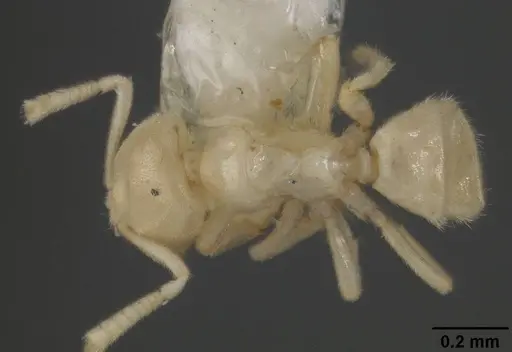
Literature
Loading...Loading products...