

Acanthostichus texanus
- Scientific Name
- Acanthostichus texanus
- Subfamily
- Dorylinae
- Author
- Forel, 1904
- Distribution
- Found in 2 countries
Acanthostichus texanus Overview
Acanthostichus texanus is an ant species of the genus Acanthostichus. It is primarily documented in 2 countries , including Mexico, United States of America. Detailed taxonomic data and occurrence records can be further explored via authoritative databases such as AntWeb or the Global Biodiversity Information Facility (GBIF).
Acanthostichus texanus
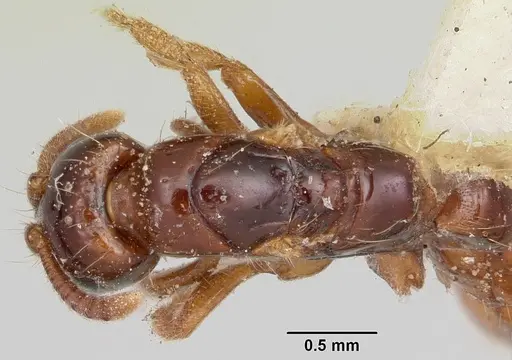
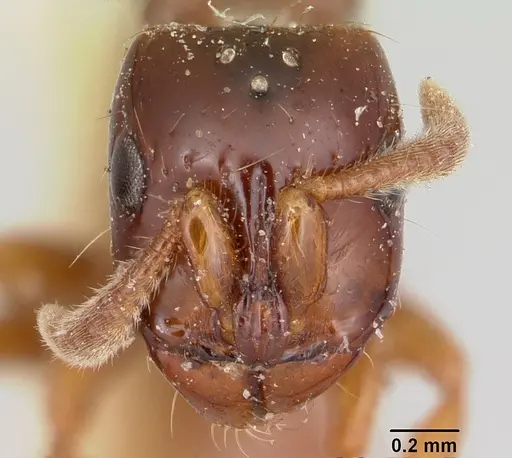
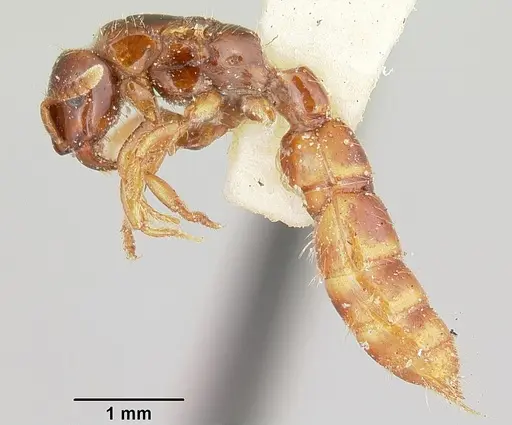
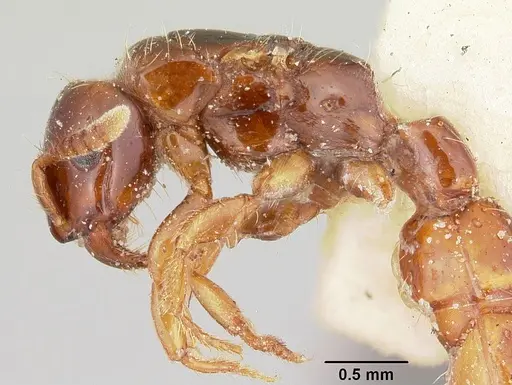
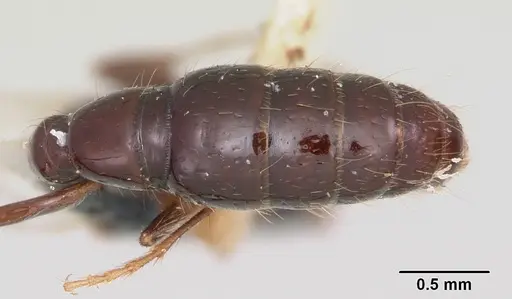
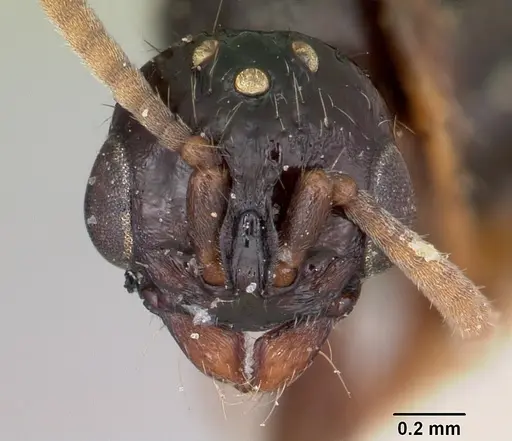
These small reddish-brown ants live underground in the borderlands of Texas and Mexico. Workers have head widths of 0.83-0.96mm with smooth, shiny upper waist segments and relatively large eyes for their genus [1]. You can find them in southeastern Texas around Brownsville and south into northeastern Mexico including Nuevo León and Tamaulipas states [1][2][3][4]. Unlike most ants you can feed sugar water and mealworms, Acanthostichus texanus are specialized termite predators. They hunt specifically Gnathamitermes tubiformans termites and have been found under cow manure pats where these termites occur [1]. Workers are most often seen in autumn and winter from October through December, while males have been collected in May and November [1].
Quick Summary
- Difficulty: Expert
- Origin & Habitat: Southeastern Texas (Brownsville) and northeastern Mexico (Nuevo León, Tamaulipas, Chihuahua), subterranean in soil, often under cow manure in areas with termite prey [1][2][3][4][5]
- Colony Type: Unknown, queen number and social structure not documented
- Size & Growth:
- Antkeeping:
- Temperature: Likely 20-28°C based on subtropical distribution, workers active in autumn and winter (October-December) suggesting tolerance for cooler conditions [1]
- Humidity: High, subterranean species requiring consistently moist soil or nest material [1]
- Diapause: Unknown, seasonal activity patterns unclear
- Nesting: Subterranean in dark, humid soil, requires deep substrate or naturalistic setup with termite prey present
- Behavior: Subterranean and secretive, specialized termite predators, small size requires excellent escape prevention, non-aggressive toward humans but mandibles functional for prey capture
- Common Issues: cannot survive without a constant supply of live termites (Gnathamitermes tubiformans)., subterranean habits make observation difficult in standard formicaria with clear viewing areas., tiny size allows escape through the smallest gaps in barriers., founding biology unknown, captive colony establishment from queens has not been documented.
Natural History and Distribution
Acanthostichus texanus inhabits the Nearctic-Neotropical transition zone around the Texas-Mexico border. You can find them in southeastern Texas near Brownsville and southward into the Mexican states of Nuevo León, Tamaulipas, and Chihuahua [1][2][3][4][5]. They live underground in soil and are strongly associated with termite prey. Researchers have found workers most commonly by turning over cow manure pats in pastures, where the ants prey on termites living in the moist organic matter underneath [1]. They have also been found in soil excavations, including inside Pogonomyrmex barbatus nest mounds [1]. This subterranean lifestyle means they are rarely seen on the surface except during specific conditions.
Diet and Feeding - The Critical Challenge
These ants are obligate termite predators. In nature, they prey specifically on Gnathamitermes tubiformans termites [1]. This specialization makes them extremely difficult to maintain in captivity. You cannot substitute their diet with standard ant foods like mealworms, crickets, or sugar water. To keep a colony, you would need a constant supply of live termites of the correct species. The ants hunt underground, likely entering termite galleries or ambushing workers at tunnel openings. If the termite supply runs out, the colony will starve. This dietary requirement places them firmly in the expert category and explains why virtually no captive care records exist.
Nest Preferences
In nature, they nest in underground soil chambers, often under cow manure or in association with other ant nests [1]. For captive care, this means you need a naturalistic setup with deep, moist soil or a thick layer of plaster or Y-tong with narrow chambers. Standard acrylic formicaria with open spaces will not work. The nest must stay dark and humid, mimicking the conditions under manure pats or in soil. Provide at least 5-10cm of substrate depth to allow normal burrowing behavior. Because they are subterranean, you will rarely see them unless you disturb the nest, making them a poor choice if you want to observe ant activity.
Temperature and Seasonal Activity
Based on their distribution around Brownsville, Texas, they likely prefer warm conditions roughly between 20-28°C. However, collection records show workers are most active in autumn and winter (October through December), with males collected in May and November [1]. This suggests they may tolerate or even prefer cooler conditions than typical tropical ants, or they may follow seasonal patterns tied to termite activity. Start with temperatures around 22-25°C and observe activity levels. If workers appear sluggish, adjust accordingly. The winter activity pattern suggests they may not require a full hibernation, but seasonal cooling might trigger natural behavioral cycles.
Finding and Collecting
If you want to find these ants in the wild, search under cow manure pats in pastures during autumn and winter (October through December) in southern Texas or northeastern Mexico [1]. Look for areas with Gnathamitermes tubiformans termite activity. You can also try excavating soil in areas where Pogonomyrmex barbatus nests occur, as they have been found in such excavations [1]. Finding queens is extremely difficult as their nesting habits and nuptial flight timing are unknown. Males fly in May and November, suggesting mating may occur during these months, but specific flight conditions remain unconfirmed.
Behavior and Temperament
Acanthostichus texanus are secretive, underground hunters. They are not aggressive toward humans and their small size means they likely cannot penetrate skin even if they attempt to bite [1]. Their behavior centers entirely on termite predation. They are not escape artists in the traditional sense of climbing smooth surfaces, but their tiny size (workers around 3-4mm) means they can squeeze through incredibly small gaps. Any ventilation mesh must be extremely fine, and lid seals must be tight. They show no interest in human food or standard ant feeds, focusing exclusively on their termite prey.
Frequently Asked Questions
Can I keep Acanthostichus texanus in a test tube?
Test tubes are not suitable. These ants need subterranean conditions with deep, moist soil or substrate to create their natural underground chambers. They also require live termites, which would quickly escape or die in a standard test tube setup.
What do Acanthostichus texanus eat?
They are specialized predators of termites, specifically Gnathamitermes tubiformans. They will not accept standard ant foods like mealworms, crickets, sugar water, or honey. You must provide live termites of the correct species to maintain a colony.
Are Acanthostichus texanus good for beginners?
No. They are expert-level ants due to their specialized termite diet and subterranean nesting requirements. Beginners should start with generalist feeders like Lasius or Camponotus species.
How long until first workers for Acanthostichus texanus?
The egg-to-worker timeline is unknown. Founding behavior has not been documented, so we do not know if queens seal themselves in to raise the first generation or if they require food during founding.
Can I keep multiple Acanthostichus texanus queens together?
This is unknown. Whether colonies have one queen or multiple queens has not been documented, and attempts to combine unrelated queens have not been studied. Do not attempt to house multiple queens together.
Where can I find Acanthostichus texanus in the wild?
Search under cow manure pats in pastures during autumn and winter (October through December) in southeastern Texas (Brownsville area) or northeastern Mexico (Nuevo León, Tamaulipas). Look for areas with termite activity.
Do Acanthostichus texanus need hibernation?
It is unknown if they require hibernation. However, workers are active in autumn and winter (October-December), suggesting they remain active during cooler months rather than entering full dormancy. You likely do not need to hibernate them, but providing seasonal temperature variations may trigger natural behaviors.
How big do Acanthostichus texanus colonies get?
Colony size is unknown. No studies have documented how many workers these colonies contain in the wild or captivity.
Why are my Acanthostichus texanus dying?
Death in captivity almost certainly relates to diet. These ants cannot survive without live termites (Gnathamitermes tubiformans). If you are attempting to feed them standard ant foods, they will starve. They may also die if kept too dry, as they require moist, subterranean conditions.
What nest type works best for Acanthostichus texanus?
Use a naturalistic setup with deep, moist soil or a thick plaster nest with narrow chambers. Standard acrylic formicaria with open spaces and clear viewing areas will not suit their subterranean habits. The nest must maintain high humidity and darkness.
References

This caresheet is licensed under CC BY-SA 4.0 .
CASENT0103130
View on AntWeb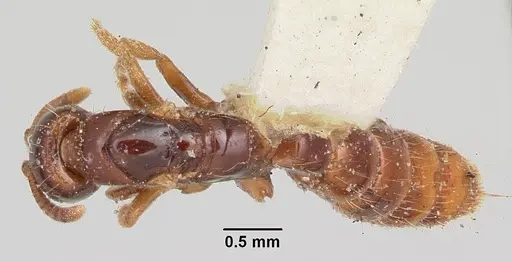
CASENT0103131
View on AntWeb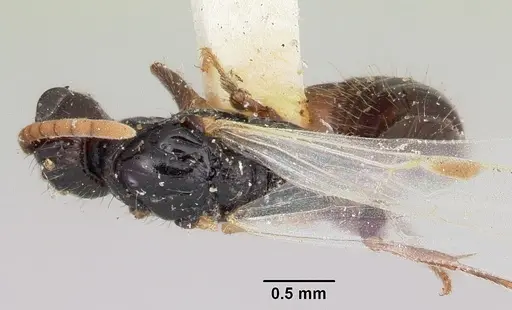
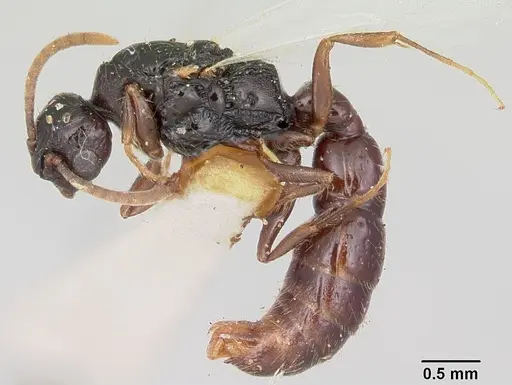
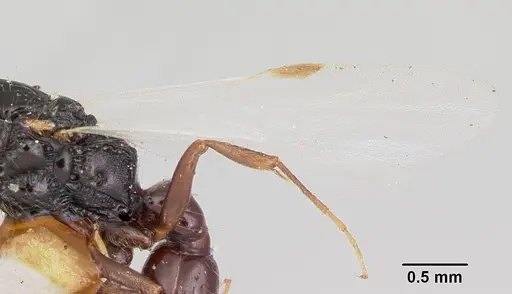
CASENT0105577
View on AntWeb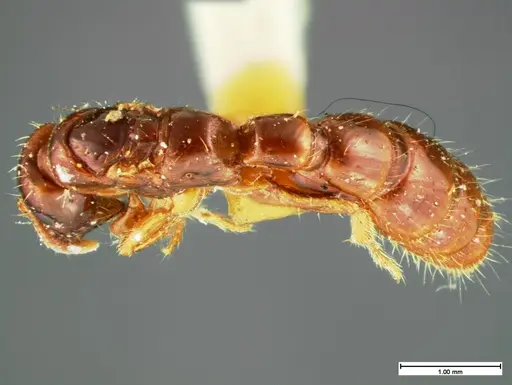
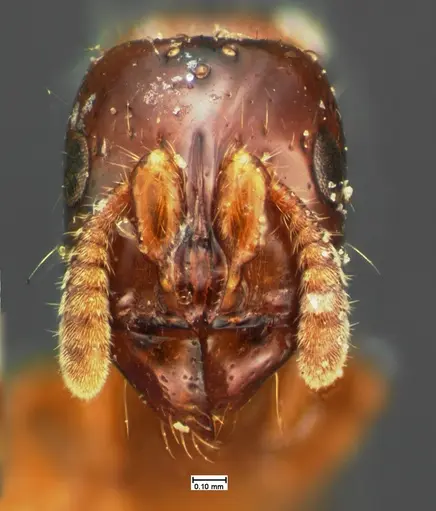
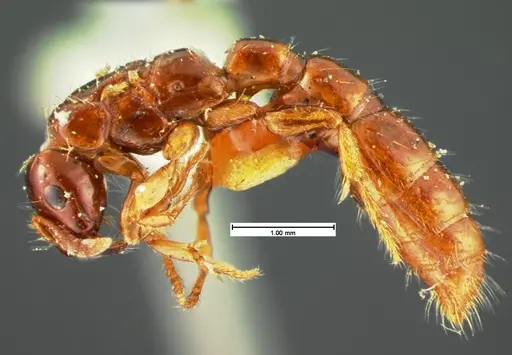
CASENT0105578
View on AntWeb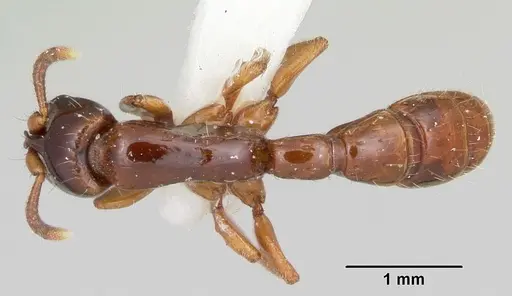
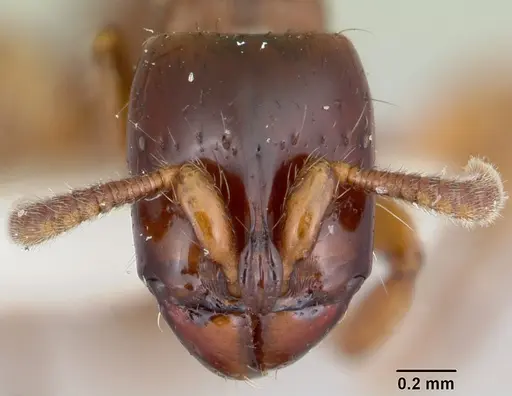
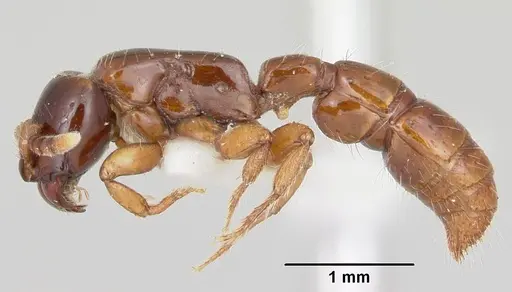
CASENT0923569
View on AntWeb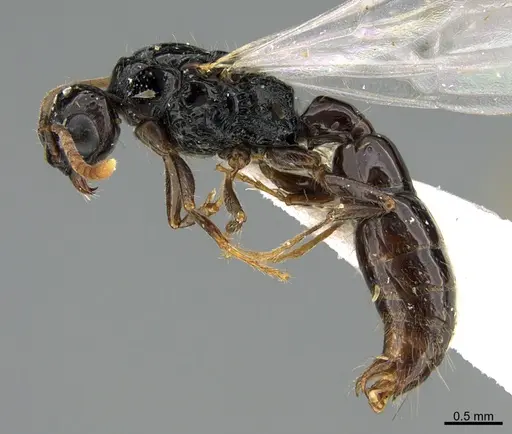
Literature
Loading...Loading products...