

Acanthomyrmex luciolae
- Scientific Name
- Acanthomyrmex luciolae
- Tribe
- Crematogastrini
- Subfamily
- Myrmicinae
- Author
- Emery, 1893
- Distribution
- Found in 1 countries
Acanthomyrmex luciolae Overview
Acanthomyrmex luciolae is an ant species of the genus Acanthomyrmex. It is primarily documented in 1 countries , including Sri Lanka. Detailed taxonomic data and occurrence records can be further explored via authoritative databases such as AntWeb or the Global Biodiversity Information Facility (GBIF).
Acanthomyrmex luciolae
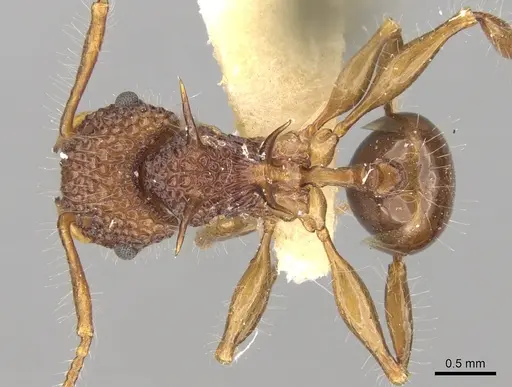
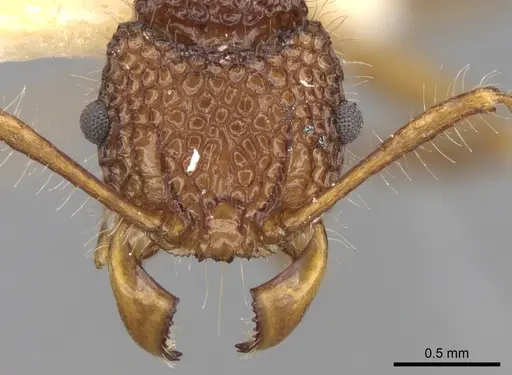
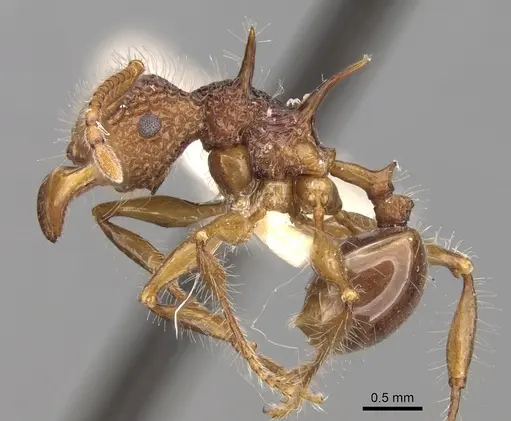
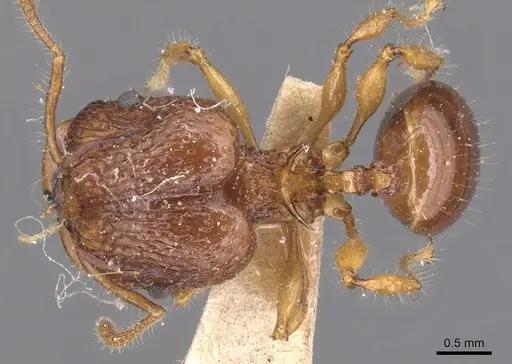
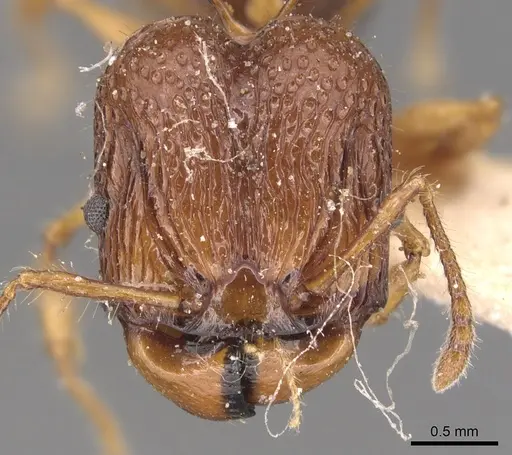
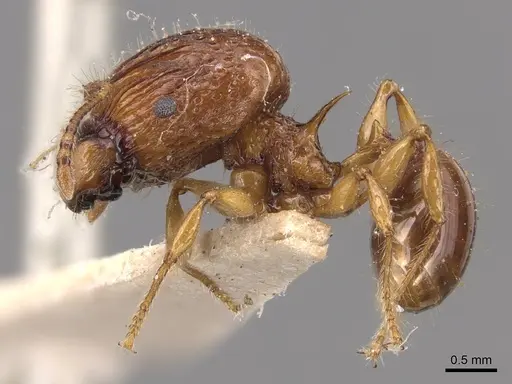
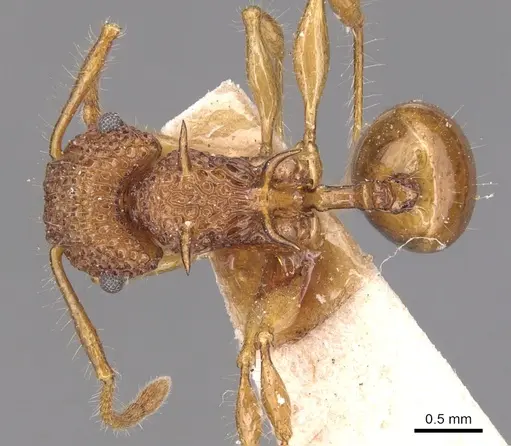
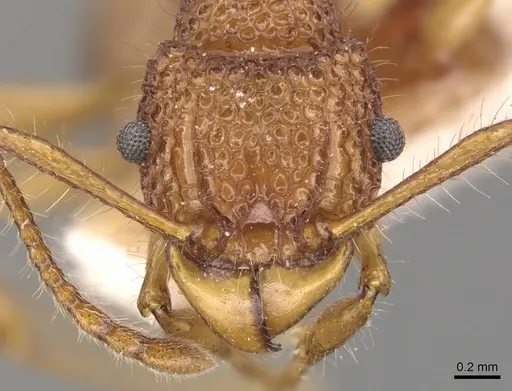
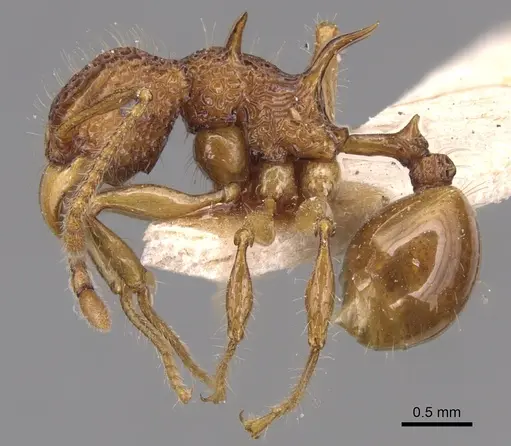
Acanthomyrmex luciolae is a rarely encountered ant from the wet forests of Sri Lanka and southern China. Workers come in two distinct sizes: smaller minors with deeply concave heads and larger majors with noticeable ridged patterns on their heads. Both castes sport long, slender spines on their thorax. Minors are light orange-yellow while majors are deeper orange [1]. Despite being the type species for the genus Acanthomyrmex, essentially nothing is known about their biology in the wild [1]. They appear to be extremely rare, studies in Sri Lanka found only 0.03 nests per square meter in primary forest reserves [2]. They are strictly limited to primary lowland wet forest and do not survive in disturbed habitats like rubber plantations [3].
Quick Summary
- Difficulty: Expert
- Origin & Habitat: Sri Lanka and Yunnan Province, China, primary lowland wet forest [3][4]
- Colony Type: Unknown, likely small colonies based on related species [5]
- Size & Growth:
- Queen: Unknown
- Worker: Minor workers ~2.5-3mm, major workers ~4.5-5.5mm (estimated from head length measurements) [1]
- Colony: Unknown, likely under 100 workers based on congener Acanthomyrmex careoscrobis [5]
- Growth: Unknown/Slow
- Development: Unknown, estimated 8-12 weeks at 25°C based on typical Myrmicinae development, but unconfirmed for this species (Timeline is speculative, no direct observations published)
- Antkeeping:
- Temperature: 24-28°C (inferred from tropical lowland wet forest habitat) [3]
- Humidity: High humidity 70-80%, keep nest substrate moist but not waterlogged (inferred from wet forest habitat) [3]
- Diapause: Unknown, likely not required for tropical species
- Nesting: Small cavities in dead twigs, rotten wood, or under stones (inferred from nesting habits of related species) [5]
- Behavior: Unknown, extremely small size means escape prevention must be excellent [1]
- Common Issues: biology completely unknown, no published care information exists for this species, extremely rare in nature, collection may impact wild populations, tiny worker size requires specialized equipment to prevent escapes, primary forest specialist, may not adapt to artificial conditions, unknown dietary requirements, related species store seeds but specific needs are unconfirmed
Rarity and Biological Mystery
Acanthomyrmex luciolae remains one of the most poorly known ants in captivity. AntWiki explicitly states that nothing is known about the biology of this species [1]. Field studies in Sri Lanka recorded extremely low nest densities of only 0.03 nests per square meter, with the species appearing in just 0.5% of forest observations [2]. This makes them a true rarity even in their native range. They serve as the type species for the genus Acanthomyrmex, meaning they define the genus characteristics, yet their ecology remains a blank slate [6].
Natural Habitat and Range
These ants inhabit primary lowland wet forests in Sri Lanka and have also been recorded in Yunnan Province, China [4]. They are habitat specialists restricted to undisturbed primary forest and are absent from secondary forests and rubber plantations [3]. This specialization suggests they require stable, humid conditions with intact forest floor litter and decaying wood. In Sri Lanka, they have been identified in lowland wet forest reserves using specialized keys [7][8].
Housing and Nest Requirements
Since no captive colonies have been documented, housing recommendations rely on inferences from the related species Acanthomyrmex careoscrobis. That species nests in small cavities in dead twigs, rotten wood, under stones, and in leaf litter on the forest floor [5]. For Acanthomyrmex luciolae, you should provide small, tight-fitting cavities with high humidity. A naturalistic setup with rotting wood pieces, flat stones, and leaf litter might replicate their natural microhabitat. Avoid large open spaces, these are small ants that likely prefer confined spaces.
Feeding and Diet
The diet of Acanthomyrmex luciolae is unknown. Related species store tiny seeds in their nests, suggesting they may collect seeds or prey on small arthropods in the leaf litter [5]. They might also tend small insects for honeydew like many forest floor ants. If attempting to keep this species, offer a variety of foods including tiny seeds, sugar water, and small live prey such as springtails or fruit flies. However, acceptance is purely speculative, they may have specialized dietary needs not yet identified.
Temperature and Humidity
Based on their occurrence in tropical lowland wet forests, maintain temperatures around 24-28°C with minimal fluctuation [3]. They likely require high humidity around 70-80%, matching the moist conditions of primary forest floors. The nest substrate should feel damp to the touch but not waterlogged. Provide ventilation to prevent mold while maintaining humidity. As a tropical species, they likely do not require hibernation or diapause, though this is unconfirmed.
Why This Species Is Not Recommended
This species is suitable only for expert antkeepers willing to accept high failure rates. The complete absence of biological data means every aspect of care involves guesswork. Their extreme rarity in the wild raises ethical concerns about collection. Their tiny size, minors have heads less than 1mm long, requires specialized barriers to prevent escapes [1]. Without knowing their founding type, queen care is a gamble. Until basic biological studies are published, this species remains a research subject rather than a pet.
Frequently Asked Questions
Can I keep Acanthomyrmex luciolae in a test tube?
Unknown. Their founding type (whether queens seal themselves in or need to forage) has never been documented. If you obtain a queen, you would need to experiment with both test tube setups and small foraging areas to determine her needs.
How long does Acanthomyrmex luciolae take from egg to worker?
Unknown. No development timeline has been published for this species. Based on related Myrmicinae ants, you might expect 8-12 weeks at 25°C, but this is purely an estimate.
What do Acanthomyrmex luciolae eat?
Unknown. Related species store tiny seeds in their nests, so they may be seed-collectors or generalist predators. Offer small seeds, sugar water, and tiny live prey, but be prepared for the possibility that they require specialized foods not yet identified.
Do Acanthomyrmex luciolae need hibernation?
Probably not. They come from tropical lowland wet forests in Sri Lanka and China where temperatures remain warm year-round. However, this is unconfirmed.
Are Acanthomyrmex luciolae good for beginners?
Absolutely not. This is an expert-only species. Nothing is known about their biology, care requirements, or colony founding. They are extremely rare in the wild and difficult to keep alive in captivity.
How big do Acanthomyrmex luciolae colonies get?
Unknown, but likely small. A related species, Acanthomyrmex careoscrobis, typically forms colonies with fewer than 100 workers [5].
Can I keep multiple Acanthomyrmex luciolae queens together?
Unknown. Whether this species accepts multiple queens in one nest has never been studied. Combining queens would be experimental and risky.
Where should I put the heating cable for Acanthomyrmex luciolae?
If using a heating cable, place it on one side of the nest to create a temperature gradient. Keep the warm side around 26-28°C and the cool side around 22-24°C, allowing the ants to choose their preferred spot. Monitor carefully as their exact thermal preferences are unknown.
References

This caresheet is licensed under CC BY-SA 4.0 .
Literature
Loading...Loading products...