

Acanthomyrmex basispinosus
- Scientific Name
- Acanthomyrmex basispinosus
- Tribe
- Crematogastrini
- Subfamily
- Myrmicinae
- Author
- Moffett, 1986
- Distribution
- Found in 1 countries
Acanthomyrmex basispinosus Overview
Acanthomyrmex basispinosus is an ant species of the genus Acanthomyrmex. It is primarily documented in 1 countries , including Indonesia. Detailed taxonomic data and occurrence records can be further explored via authoritative databases such as AntWeb or the Global Biodiversity Information Facility (GBIF).
Acanthomyrmex basispinosus
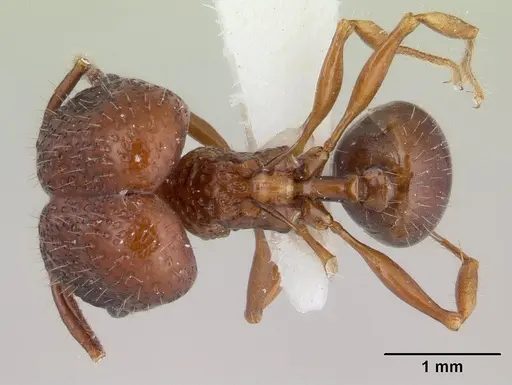
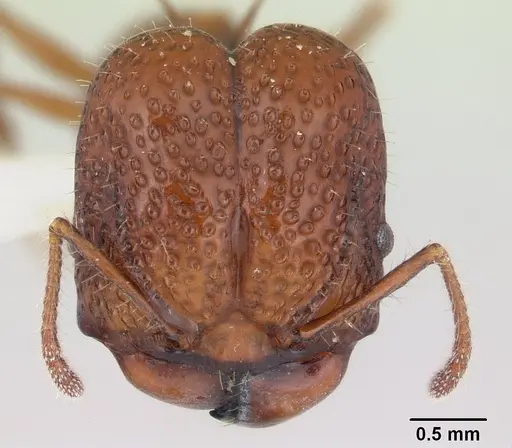
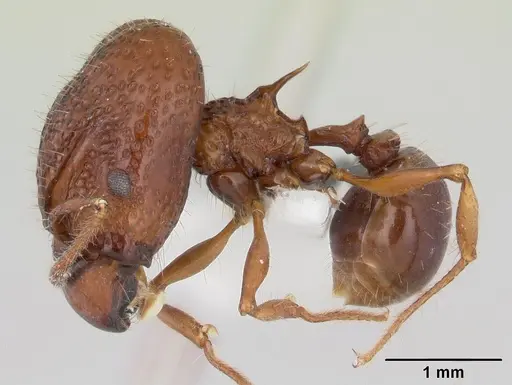
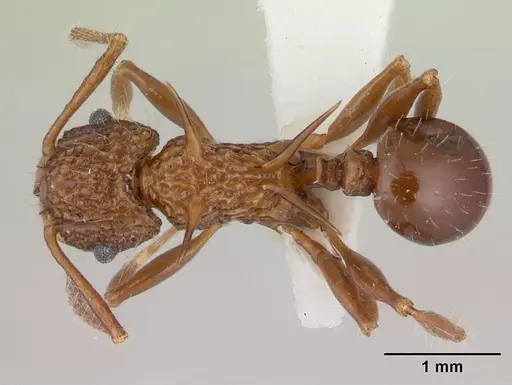
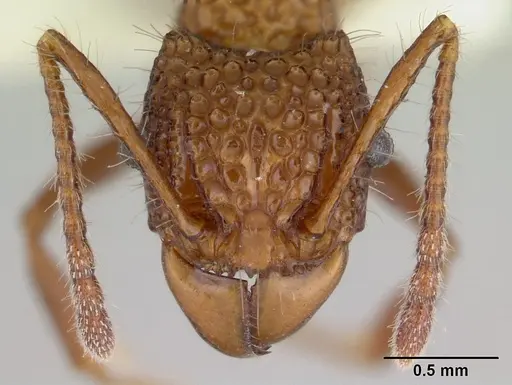
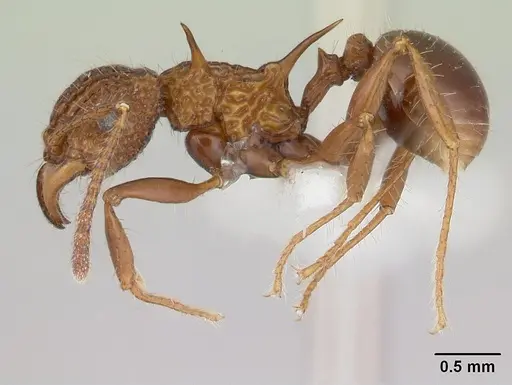
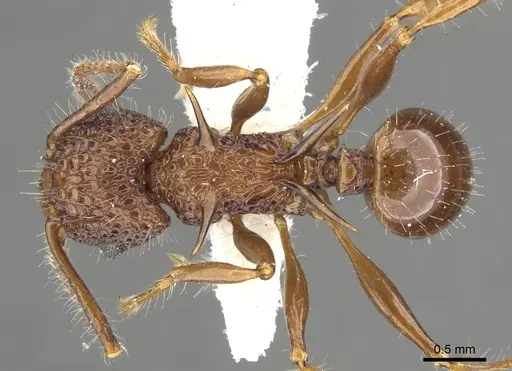
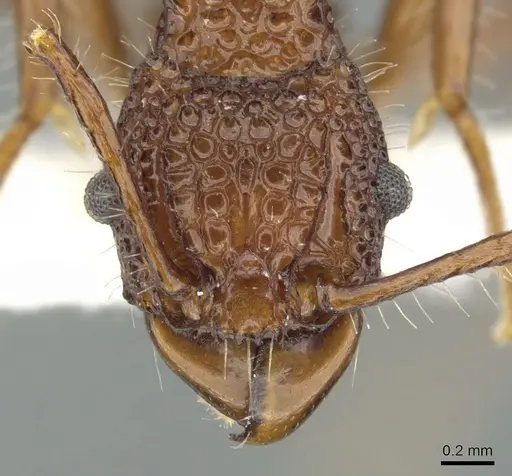
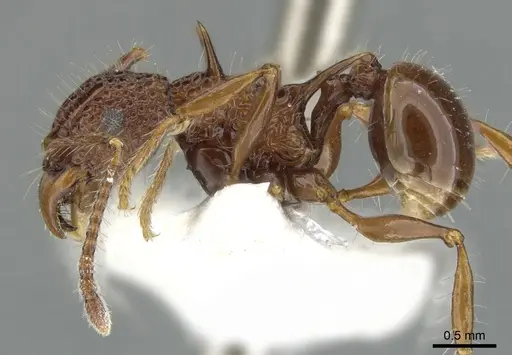
Acanthomyrmex basispinosus is a small, dimorphic ant native to the rainforests of Sulawesi, Indonesia. Minor workers have head widths of 0.98-1.13mm, with major workers larger and more robust [1]. Both castes carry distinctive propodeal spines with noticeably widened bases, a feature that gives this species its name [1]. The original specimens came from rotten wood in rainforest habitat at roughly 350 meters elevation [1].
Very little is known about the biology of this species. While not directly studied, related species such as Acanthomyrmex careoscrobis suggest colonies likely remain small with fewer than 100 workers, nesting in pre-existing cavities in dead twigs or rotten wood [2]. Queens may be ergatoid (wingless and worker-like) as seen in other members of the genus, though this remains unconfirmed for basispinosus specifically [2].
Quick Summary
- Difficulty: Expert
- Origin & Habitat: Sulawesi, Indonesia, rainforest rotten wood at mid elevations [1][3]
- Colony Type: Unknown, likely small single-queen colonies based on related species [2]
- Size & Growth:
- Queen: Unknown
- Worker: Minor workers: head width 0.98-1.13mm [1]
- Colony: Likely under 100 workers based on related Acanthomyrmex species [2]
- Growth: Unknown, estimated slow
- Development: Unknown, estimated 6-10 weeks at 25-28°C based on similar tropical Myrmicinae (Timeline is unconfirmed, tropical temperatures likely speed development compared to temperate ants)
- Antkeeping:
- Temperature: Keep warm and stable, roughly 24-28°C, based on their tropical rainforest origin
- Humidity: Keep the nest material consistently moist but not waterlogged, mimicking rainforest rotten wood conditions
- Diapause: No, tropical species do not require winter rest [1]
- Nesting: Pre-existing cavities in rotten wood or twigs, small tight chambers required [1][2]
- Behavior: Unknown specifically, likely slow-moving and cryptic given their habitat. Their tiny size means escape prevention must be excellent.
- Common Issues: extreme rarity in captivity means most care protocols are experimental and unproven., tiny worker size requires excellent escape prevention, they can squeeze through minute gaps., unknown founding biology makes initial colony establishment risky for keepers., tropical humidity requirements can lead to mold if ventilation is inadequate.
Natural History and Distribution
Acanthomyrmex basispinosus comes from Southeast Sulawesi, Indonesia, specifically from rainforest areas near Wolasi at approximately 350 meters elevation [1]. Mark Moffett described this species in 1986 based on specimens collected from rotten wood [1]. The species belongs to the luciolae species group within the genus, characterized by specific spine morphology [1].
Sulawesi sits in the Indomalaya region and maintains warm, stable temperatures year-round with high rainfall. The type locality description mentions rainforest habitat, suggesting these ants prefer humid, shaded environments with abundant decaying wood [1]. No seasonal data exists, but tropical ants typically remain active year-round without winter dormancy.
Nest Preferences
In nature, Acanthomyrmex basispinosus nests in rotten wood cavities [1]. While not directly studied, related species such as Acanthomyrmex careoscrobis use pre-existing cavities in dead twigs, rotten wood, or spaces under stones on the forest floor [2].
In captivity, provide small chambers that mimic these tight cavities. Y-tong (autoclaved aerated concrete) nests with narrow passages, or naturalistic setups with rotting wood pieces, work best. Avoid large open spaces, these ants likely prefer cramped quarters where they can touch the walls. The nest material should hold moisture well but drain excess water to prevent flooding.
Temperature and Humidity
As a tropical rainforest species from Sulawesi, Acanthomyrmex basispinosus needs warm, stable conditions. Keep the nest area around 24-28°C. You can use a heating cable on one side of the nest to create a gentle gradient, allowing the ants to choose their preferred spot. Place the heating element on top of the nest rather than underneath to avoid drying out the water reservoir.
Humidity should remain high, think damp forest floor, not dry bedroom. Keep the nest substrate moist but not waterlogged. You should see slight condensation on the glass or acrylic walls, but not pools of water. Provide adequate ventilation while maintaining moisture to prevent mold growth, which can kill small colonies quickly. [1]
Feeding and Diet
The specific diet of Acanthomyrmex basispinosus remains unknown. However, related species store tiny seeds in their nests, suggesting they may be partially granivorous [2].
Offer a varied diet including small live insects (springtails, fruit flies, or tiny cricket nymphs), sugar water or honey water, and small seeds such as chia or millet. Observe what they accept and remove uneaten food promptly to prevent mold. Because colonies likely remain small, they need only small amounts of food.
Colony Founding and Development
Founding behavior for Acanthomyrmex basispinosus is unconfirmed. The queen has not been described in the available literature, making it impossible to determine if she seals herself in (claustral founding) or must hunt during founding (semi-claustral). Based on typical patterns in the genus, claustral founding is more likely, but this remains speculative.
Development time from egg to worker is also unknown. Based on similar tropical Myrmicinae ants, expect roughly 6-10 weeks at 25-28°C, though this is an estimate only. The first workers (nanitics) may be smaller than subsequent generations.
Rarity and Captive Care
Acanthomyrmex basispinosus is extremely rare in antkeeping. Most available information comes from museum specimens rather than field studies or captive colonies. This makes them suitable only for expert keepers willing to experiment with unproven care methods.
If you obtain a colony, document everything, temperature, humidity, feeding preferences, and development times. This helps build knowledge for future keepers. Ensure any specimens come from ethical sources within their native range, as introducing tropical ants to non-native habitats poses ecological risks. [1]
Frequently Asked Questions
Can I keep Acanthomyrmex basispinosus in a test tube?
Test tubes can work for small colonies, but the high humidity requirements of this tropical species increase mold risk. If using test tubes, ensure excellent ventilation and check frequently for mold. Small Y-tong or naturalistic setups with rotting wood may be safer long-term.
How big do Acanthomyrmex basispinosus colonies get?
Unknown exactly, but based on related Acanthomyrmex careoscrobis, colonies likely remain small with fewer than 100 workers [2].
What do Acanthomyrmex basispinosus eat?
Unknown specifically. Based on related species, they may collect tiny seeds and likely accept small insects and sugar sources [2]. Offer small live prey, honey water, and seeds, then observe acceptance.
Do Acanthomyrmex basispinosus need hibernation?
No. They come from tropical Sulawesi and do not require winter rest or diapause [1].
How long until Acanthomyrmex basispinosus get their first workers?
Unknown. Based on similar tropical ants, estimate 6-10 weeks at 25-28°C, but this is unconfirmed for this species.
Are Acanthomyrmex basispinosus good for beginners?
No. They are extremely rare, poorly studied, and require expert-level care with experimental protocols.
Do Acanthomyrmex basispinosus sting?
Unknown, but unlikely to be medically significant given their small size. Most small Myrmicinae ants have stingers too small to penetrate human skin.
Can I keep multiple Acanthomyrmex basispinosus queens together?
Not recommended. Combining unrelated queens has not been documented for this species and likely leads to fighting.
Why are my Acanthomyrmex basispinosus dying?
Common causes include inadequate humidity, temperature fluctuations, or poor ventilation leading to mold. Wild-caught colonies may also carry parasites. Because this species is poorly studied, mortality causes are often speculative.
References

This caresheet is licensed under CC BY-SA 4.0 .
Literature
Loading...Loading products...