

Yunodorylus sexspinus
- Scientific Name
- Yunodorylus sexspinus
- Subfamily
- Dorylinae
- Author
- Xu, 2000
- Distribution
- Found in 1 countries
Yunodorylus sexspinus Overview
Yunodorylus sexspinus is an ant species of the genus Yunodorylus. It is primarily documented in 1 countries , including China. Detailed taxonomic data and occurrence records can be further explored via authoritative databases such as AntWeb or the Global Biodiversity Information Facility (GBIF).
Yunodorylus sexspinus
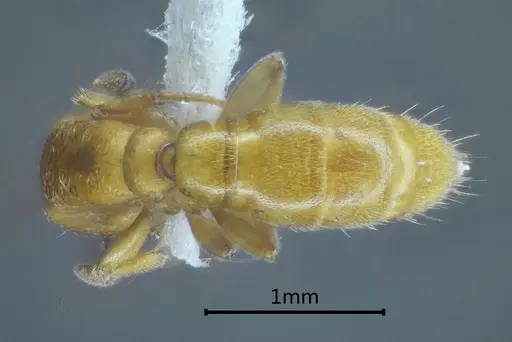
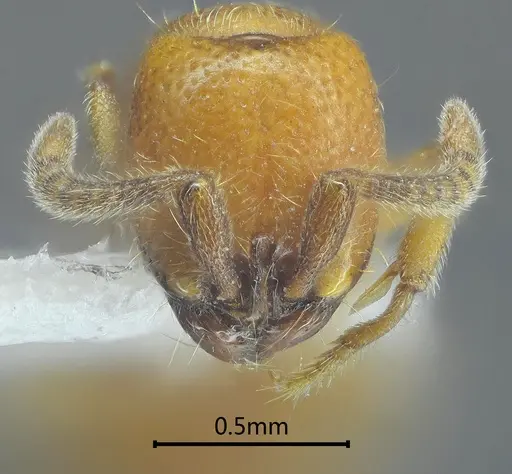
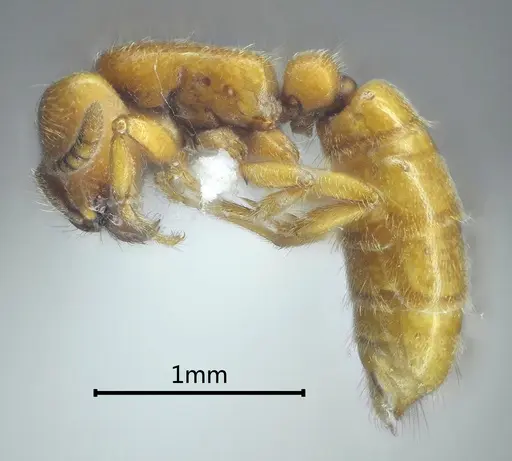
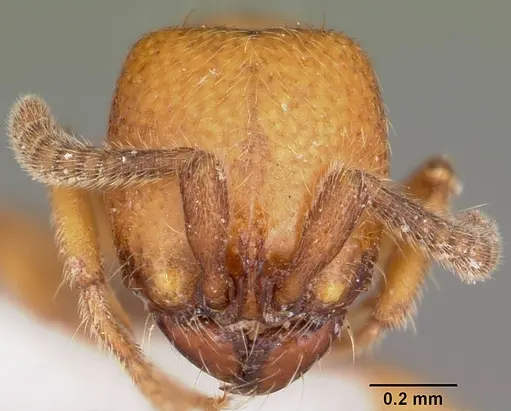
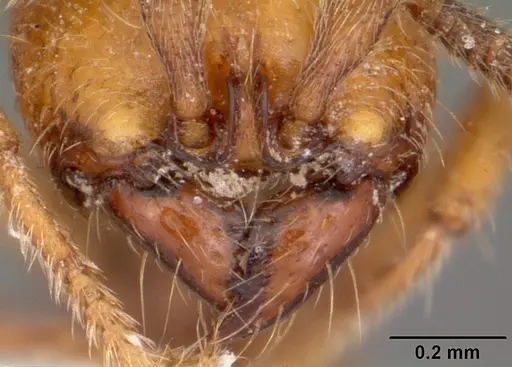
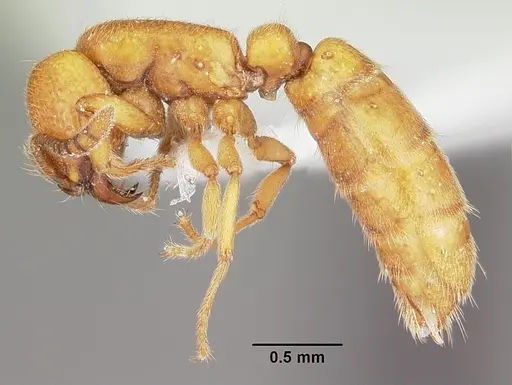
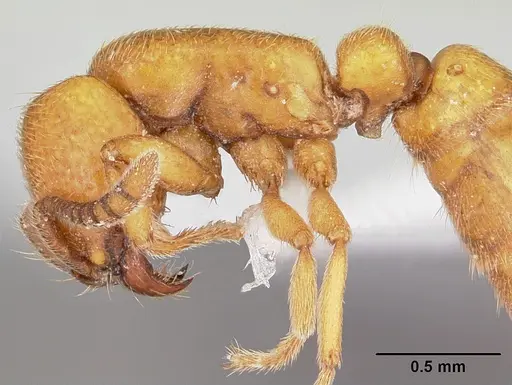
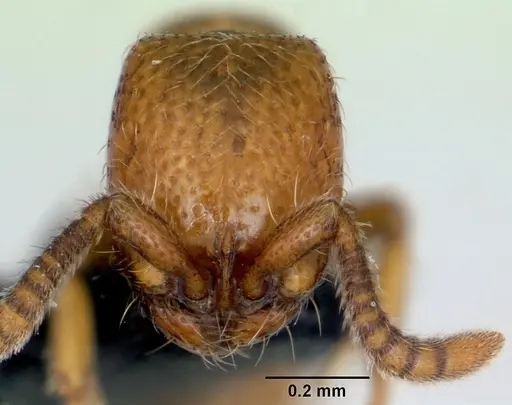
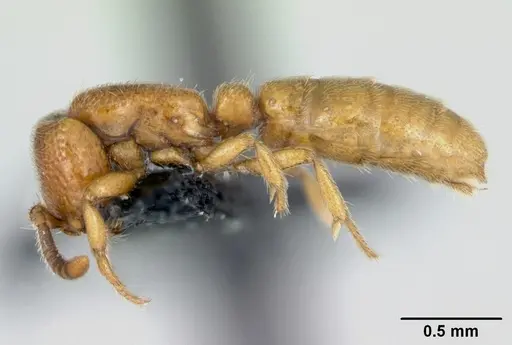
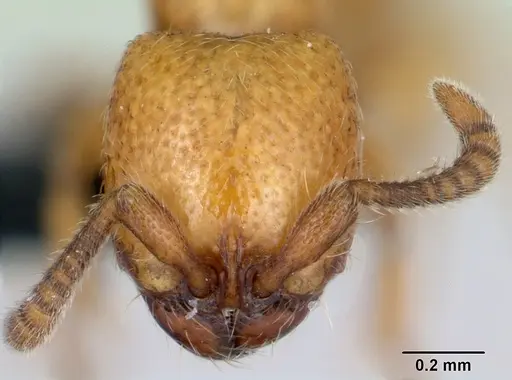
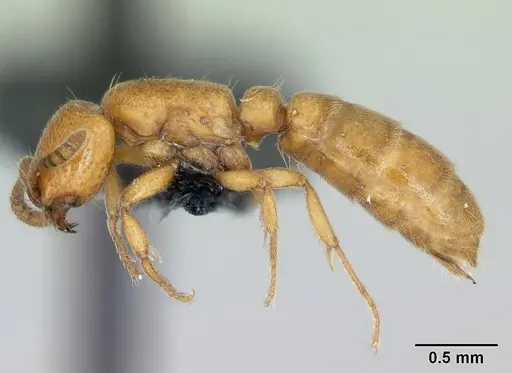
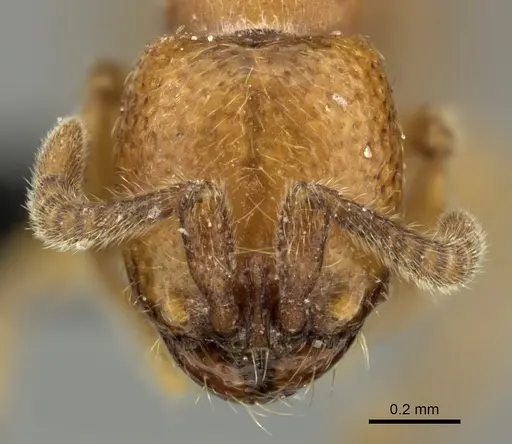
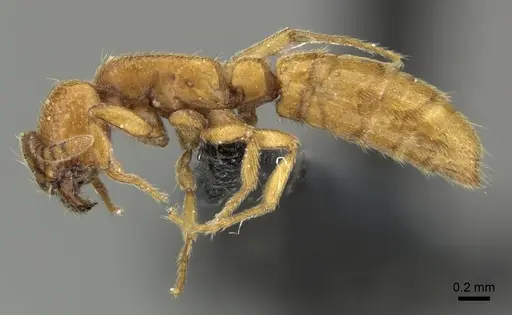
Yunodorylus sexspinus is a small, soil-dwelling ant belonging to the Dorylinae subfamily, which includes army ants and their relatives. Workers measure 2.3-3.6mm and are weakly polymorphic, meaning there's some size variation among workers but not the dramatic differences seen in some ant species [1]. They have a distinctive yellowish body color with dark reddish-brown mandibles and antennae [1]. Unlike most ants, they lack eyes entirely, this is a common trait in some Dorylinae that forage underground [1]. Their abdomen has a row of tiny, peg-like spines on each side of the pygidium, which gives them their species name 'sexspinus' (six spines) [2]. These ants construct nests in soil and forage through soil and under leaf litter [2]. They are found only in Yunnan Province, China, at elevations between 730-1280 meters [2].
What makes this species interesting is its position in ant evolution, it belongs to the Dorylinae subfamily but represents a lineage separate from true army ants [3]. Unlike the famous army ant colonies that can reach millions of workers, Y. sexspinus forms relatively small colonies of 20-385 individuals [2]. They have a functional sting, though it's short [1]. This species was originally described as Yunodorylus sexspinus in 2000,later moved to Cerapachys, and then returned to Yunodorylus after taxonomic revisions [4].
Quick Summary
- Difficulty: Medium
- Origin & Habitat: Yunnan Province, China (Mengla County, Menghai County, Jinghong County). Found in seasonal rain forest, deciduous monsoon forest, mountain rain forest, and warm deciduous broad-leaf forest at elevations of 730-1280m [2][1].
- Colony Type: Colony structure is not well documented in scientific literature. Observed colony sizes range from 20 to 385 workers in natural nests [2]. The colony type (single queen vs multiple queens) has not been confirmed.
- Size & Growth:
- Queen: Not described in available literature, queen caste has not been documented [1].
- Worker: 2.3-3.6 mm [1][2]. Holotype worker measures 3.4mm total length [1].
- Colony: Up to 385 workers observed in natural colonies [2]. This is a small to medium-sized colony for a Dorylinae species.
- Growth: Growth rate is unconfirmed. Based on related Dorylinae species, expect moderate growth.
- Development: Unconfirmed, no direct developmental studies exist for this species. Based on typical Dorylinae patterns and similar small ant species, estimate 6-10 weeks at optimal temperature [1]. (Development time is estimated based on related species. Direct observations of egg-to-worker development are lacking for this species.)
- Antkeeping:
- Temperature: Keep at 20-24°C. This species comes from moderate elevations in Yunnan, which has a subtropical climate. They likely prefer temperatures in the low-to-mid 20s Celsius range. A heating cable on one side of the nest can create a gradient if room temperature is lower [2].
- Humidity: Keep the nest substrate consistently moist but not waterlogged. In nature they inhabit seasonal rain forests and monsoon forests, indicating they prefer damp conditions. The substrate should feel damp to the touch with some slightly drier areas available [2].
- Diapause: Unknown, no specific studies on overwintering requirements exist. Yunnan has mild winters, so they may not require a true diapause. However, related Dorylinae species often reduce activity in cooler months. Consider reducing temperatures slightly (to around 15-18°C) during winter months rather than a full hibernation [2].
- Nesting: Use a naturalistic setup with moist soil or a plaster/acrylic nest with soil chambers. They are soil-nesting ants that forage through soil and leaf litter, so a nest that allows them to create tunnels in substrate works well. A Y-tong nest with a soil chamber or a custom dirt setup is appropriate [2].
- Behavior: These ants are predatory, like other Dorylinae species. They likely hunt small invertebrates in soil and under leaf litter. Workers are small (2.3-3.6mm) and may be able to escape through small gaps, use fine mesh for escape prevention. They have a functional sting but it's described as short [1]. Their lack of eyes means they rely on chemical and tactile cues to navigate. They are not aggressive toward humans but will sting if threatened. Colonies are relatively small (under 400 workers) so they won't produce the massive swarms associated with army ants. Workers likely forage individually or in small groups rather than in large raiding columns.
- Common Issues: small size means escapes are likely without fine mesh barriers, predatory diet requires live prey, failure to provide appropriate food leads to colony decline, humidity requirements are high, dry conditions cause mortality, colony size is small and slow-growing, beginners may lose patience, lack of documented care information means keepers must experiment with conditions
Housing and Nest Setup
Yunodorylus sexspinus is a soil-nesting ant that requires a setup allowing for moist substrate. A naturalistic setup with a soil chamber works best, this allows the ants to create their own tunnels like they would in the wild. You can use a Y-tong (AAC) nest with a dirt insert, or a custom acrylic formicarium filled with moist soil or sand-soil mix [2]. The nest should have chambers that the ants can excavate or move through. Because they lack eyes and forage in soil, they don't need light, they navigate using chemical signals. Keep the nest humid but ensure some ventilation to prevent mold. A water reservoir or moisture gradient through the nest helps maintain appropriate humidity [2].
Feeding and Diet
As a Dorylinae ant, Y. sexspinus is predatory and needs live prey. In the wild, they hunt small soil invertebrates like springtails, mites, and other tiny arthropods [2]. In captivity, offer small live prey such as springtails, fruit flies, small mealworms, and other appropriately-sized insects. Feed small prey items that match the worker size (2-3mm prey is appropriate). They likely accept protein sources readily but may not take sugar, while some Dorylinae will drink honey water, this species' diet is primarily predatory. Offer food 2-3 times per week, removing uneaten prey after 24 hours. A varied diet helps ensure colony health. Do not rely on sugar water unless you observe them accepting it [2].
Temperature and Seasonal Care
Keep Yunodorylus sexspinus at 20-24°C. This species comes from moderate elevations in Yunnan Province where temperatures are mild year-round. A gradient of 20-24°C through the nest allows ants to choose their preferred temperature. If your room is cooler, use a heating cable on one side of the nest, but never place heating directly on water reservoirs as it causes rapid evaporation [2]. During winter, reduce temperatures slightly to around 15-18°C rather than a full hibernation. Yunnan winters are mild, so these ants may not need a true diapause. Monitor colony activity, if workers become less active in winter, this is normal. Avoid sudden temperature changes as this stresses the colony [2].
Handling and Defense
Yunodorylus sexspinus has a functional sting, though it's described as short [1]. The sting is not dangerous to humans but may cause mild irritation. These ants are not aggressive and will flee rather than attack when disturbed. However, they may sting if directly handled or if their nest is threatened. Because they lack eyes, they are less likely to detect human movement and may be calmer to observe than many ants. Use standard ant keeping precautions, avoid handling with bare hands, and use escape prevention when working with the colony. Their small size (under 4mm) means they can slip through standard barrier setups easily, use fine mesh or fluon on edges [2].
Colony Growth and Expectations
Natural colonies contain 20-385 workers, with the larger nest found in seasonal rain forest [2]. This is relatively small compared to many ants and far smaller than army ant colonies that can reach millions. Expect slow, steady growth rather than explosive colony expansion. The colony is weakly polymorphic, workers vary somewhat in size but not dramatically [2]. First workers (nanitics) will likely be smaller than mature workers. Development from egg to worker is estimated at 6-10 weeks based on related species, but no direct observations exist for this species. Be patient, small colonies take time to grow, and overfeeding can lead to mold problems in small colonies. A healthy mature colony might reach 300-400 workers over several years [2].
Frequently Asked Questions
How long does it take for Yunodorylus sexspinus to raise their first workers?
The exact development time is unconfirmed for this species. Based on typical Dorylinae and similar small ant species, estimate 6-10 weeks from egg to worker at optimal temperature (around 22°C). This is an estimate, no direct studies of their development exist [1].
What do Yunodorylus sexspinus ants eat?
They are predatory ants that need live prey. In captivity, feed small live insects like springtails, fruit flies, and tiny mealworms. They may accept other small invertebrates. Sugar sources are not a reliable food source, they are primarily predators [2].
Can I keep Yunodorylus sexspinus in a test tube?
A test tube setup can work for a founding queen or small colony, but they are soil-nesting ants that prefer a naturalistic setup with moist substrate. For long-term housing, a dirt nest or Y-tong with soil chambers is more appropriate [2].
How big do Yunodorylus sexspinus colonies get?
The largest observed natural colony had 385 workers [2]. This is a relatively small colony size. In captivity, expect a mature colony of similar size, probably 300-400 workers at maximum [2].
Are Yunodorylus sexspinus good for beginners?
This species is rated as Medium difficulty. They have specific humidity requirements and need a predatory diet, which makes them more challenging than seed-eating ants. However, their small colony size and relatively simple nesting needs make them manageable for intermediate antkeepers. Lack of documented care information means some experimentation may be needed [2].
Do Yunodorylus sexspinus need hibernation?
Diapause requirements are not confirmed. Yunnan has mild winters, so they may not need a true hibernation. Consider reducing temperatures to 15-18°C during winter months rather than a full hibernation. Monitor colony activity, if they slow down, this is normal [2].
Why are my Yunodorylus sexspinus dying?
Common causes include: dry conditions (they need moist soil), lack of live prey (they are predatory), escape through small gaps (they are tiny), and temperature stress. Ensure humidity is high, provide appropriate live prey, use fine mesh barriers, and maintain stable temperatures in the 20-24°C range [2].
When should I move Yunodorylus sexspinus to a formicarium?
Move them when the test tube or founding setup becomes crowded. For this small species, that may be around 50-100 workers. A naturalistic setup with soil chambers works best. They prefer to forage through substrate rather than on exposed surfaces [2].
Can I keep multiple queens together?
Colony structure (single queen vs multiple queens) has not been documented for this species. Do not combine unrelated queens, this has not been studied and could result in fighting [2].
References

This caresheet is licensed under CC BY-SA 4.0 .
ANTWEB1060527
View on AntWeb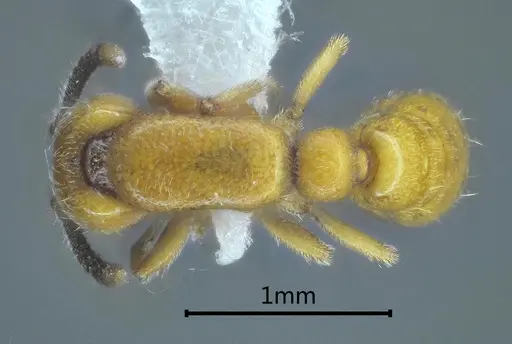
CASENT0104984
View on AntWeb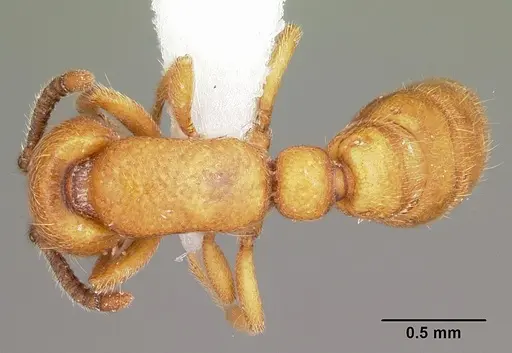
CASENT0173069
View on AntWeb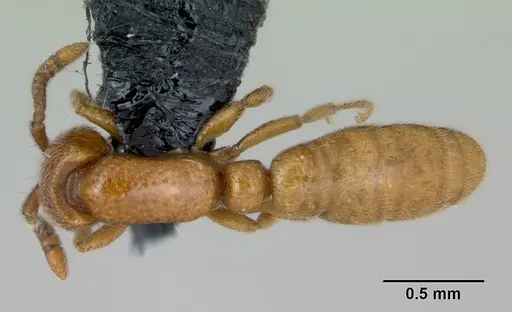
CASENT0173070
View on AntWeb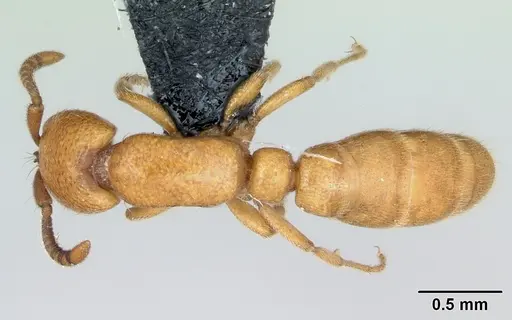
CASENT0235338
View on AntWeb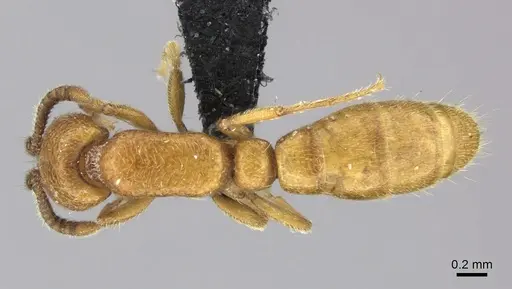
Literature
Loading...Loading products...