

Yunodorylus paradoxus
- Scientific Name
- Yunodorylus paradoxus
- Subfamily
- Dorylinae
- Author
- Borowiec, 2009
- Distribution
- Found in 1 countries
Yunodorylus paradoxus Overview
Yunodorylus paradoxus is an ant species of the genus Yunodorylus. It is primarily documented in 1 countries , including Brunei Darussalam. Detailed taxonomic data and occurrence records can be further explored via authoritative databases such as AntWeb or the Global Biodiversity Information Facility (GBIF).
Yunodorylus paradoxus
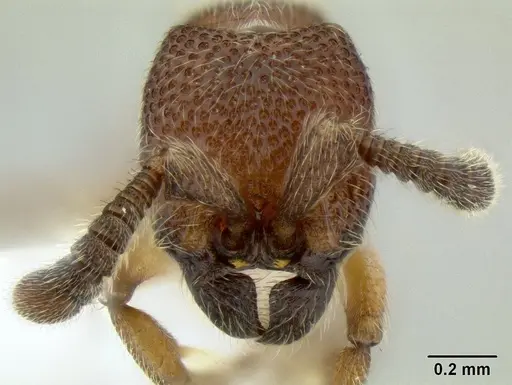
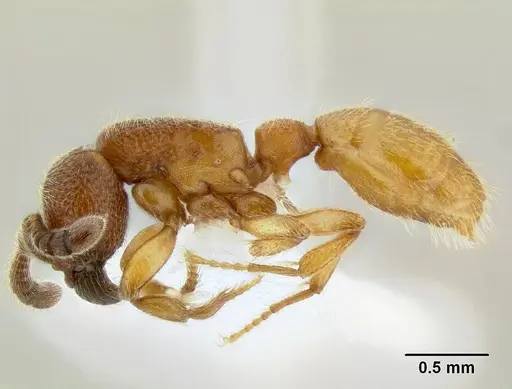
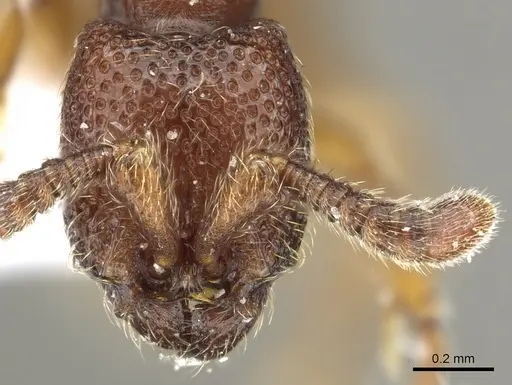
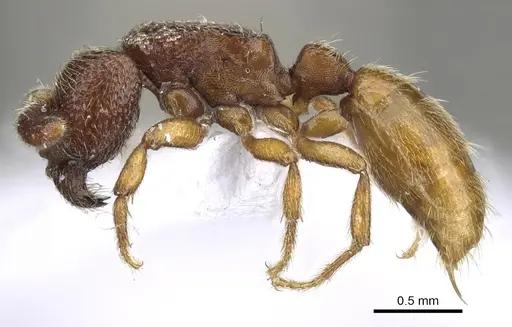
Yunodorylus paradoxus is an extremely rare doryline ant species known only from Borneo, specifically the Kerangas forests of Sarawak's Gunung Mulu National Park [1]. Workers are tiny at just 0.42-0.67mm, making them among the smallest ants in the Dorylinae subfamily [1]. They are polymorphic, meaning workers vary considerably in size within a colony [1]. Coloration is distinctive: larger workers have brownish antennae, mandibles, and head, with lighter posterior mesosoma and petiole, while legs and gaster are yellowish, smaller workers may be entirely yellowish [1]. This species is unique within its genus as the only member having 11-segmented antennae and several unusual morphological features including a modified clypeus with semi-translucent lamellae and teeth overhanging the mandibles [1]. As a doryline ant related to army ants, they are likely predatory on small invertebrates, though their exact behavior remains unstudied in the wild [2].
Quick Summary
- Difficulty: Expert
- Origin & Habitat: Known only from the Kerangas forests of Sarawak, Borneo (Malaysia), specifically Gunung Mulu National Park [1]. Kerangas forests are heath forests characterized by acidic, sandy, nutrient-poor soils [1].
- Colony Type: Unknown, only worker caste has been collected, colony structure (single queen vs multiple queens) has not been documented [1].
- Size & Growth:
- Queen: Unknown, queens have never been described or collected [1]
- Worker: 0.42-0.67mm head width (very small ants) [1]
- Colony: Unknown, colony size has not been documented [1]
- Growth: Unknown
- Development: Unknown, development timeline has not been studied [1] (No brood development data exists for this species. Related Yunodorylus eguchii has been studied but specific development times are not available.)
- Antkeeping:
- Temperature: Inferred from related doryline ants: aim for 24-28°C (warm tropical conditions). No species-specific data exists [2].
- Humidity: Inferred from Kerangas forest habitat: likely requires high humidity (70-85%). Keep substrate consistently moist but not waterlogged [1].
- Diapause: Unlikely, being a tropical species from Borneo, they probably do not require a diapause period [2].
- Nesting: No direct data exists. Based on collection method (soil core) and related species, they likely nest in soil or small cavities. A naturalistic setup with moist substrate or a small acrylic/plaster nest would be appropriate [1].
- Behavior: Behavior is unstudied. As a doryline ant, they are likely predatory on small invertebrates like other army ant relatives [2]. Their tiny size (0.42-0.67mm) means excellent escape prevention is critical, they can easily slip through standard barrier setups. No aggression or stinging data exists for this species. Based on subfamily (Dorylinae), they likely have functional stingers but are too small to pose any danger to humans.
- Common Issues: No captive husbandry information exists, this species has never been kept in captivity, Only worker caste known, queens have never been collected, making propagation from wild colonies essentially impossible, Extremely small size creates significant escape risk, standard barriers may be inadequate, No dietary acceptance data exists, what foods they will accept is completely unknown, Wild-caught colonies may have parasites or diseases with no documented treatment protocols
Species Overview and Identification
Yunodorylus paradoxus is one of the rarest ant species in the ant-keeping hobby, known only from a handful of worker specimens collected in Borneo's Gunung Mulu National Park [1]. Originally described as Yunodorylus paradoxus in 2009 by Marek Borowiec, it was later transferred to the genus Yunodorylus when the genus was revised [1]. The species is easily recognized by several unique characteristics: it is the only member of the genus with 11-segmented antennae, has a distinctly modified clypeus with semi-translucent lamellae, and possesses a petiole with a dorsal surface that slopes evenly into the posterior end without a well-differentiated perpendicular face [1]. Workers are tiny at 0.42-0.67mm head width and are polymorphic, showing considerable size variation within colonies [1]. The coloration varies with size: larger workers are bicolored with brownish anterior parts and yellowish posterior parts, while smaller workers may be entirely yellowish [1].
Distribution and Natural Habitat
This species is known only from the Kerangas forests of Sarawak, Borneo (Malaysia), specifically from soil core samples taken in Gunung Mulu National Park in December 1978 [1]. Kerangas forests are a type of heath forest characterized by highly acidic, sandy, and nutrient-poor soils, typically found on white sand or sandstone-derived substrates [1]. These forests are distinct from typical tropical rainforests and support specialized flora adapted to harsh conditions. The type series was collected from a soil core, indicating this species nests in soil or leaf litter layer rather than in decaying wood or on vegetation [1]. The entire known distribution is limited to this single locality in Malaysian Borneo [1].
Taxonomy and Relatives
Yunodorylus paradoxus belongs to the subfamily Dorylinae, which includes army ants and their predatory relatives [2]. The genus Yunodorylus was originally described as separate from Cerapachys, and this was confirmed through phylogenetic analysis showing it represents an independent clade separate from army ants [3][4]. The genus contains several species distributed throughout the Oriental region, with Y. paradoxus being the most western known species [1]. A related species, Yunodorylus eguchii, has been more thoroughly studied in recent years, providing insights into colony composition and prey preferences of this genus [5]. However, Y. paradoxus specifically remains poorly known since only the worker caste has been collected [1].
Keeping Yunodorylus paradoxus - Challenges and Considerations
Keeping Yunodorylus paradoxus in captivity presents extreme challenges, primarily because this species has never been successfully maintained by antkeepers and almost no biological or husbandry information exists. Queens have never been collected or described, meaning propagation depends on finding a colony in the wild, which is exceptionally unlikely given its restricted distribution and the difficulty of locating such tiny ants [1]. If a colony were somehow obtained, care would need to be inferred from related doryline species: provide warm temperatures (24-28°C), high humidity (70-85%), and likely feed small live prey such as springtails or pinhead crickets [2]. The extremely small worker size (0.42-0.67mm) means escape prevention must be excellent, even standard fine mesh may be inadequate. For nesting, a naturalistic setup with moist soil or a small acrylic/plaster nest with tight chambers would be appropriate [1]. This species is recommended only for expert antkeepers with specific research interests and the ability to document their findings.
Behavior and Defense Mechanisms
The behavior of Yunodorylus paradoxus remains completely unstudied in the wild [1]. However, being a member of the Dorylinae subfamily, it likely shares behavioral traits with other predatory doryline ants, which are typically specialized hunters of small invertebrates [2]. The related Yunodorylus eguchii has been documented to have specific prey preferences, suggesting some degree of dietary specialization within the genus [5]. Workers likely use their stinger for prey subjugation, though given their tiny size (0.42-0.67mm), they would be unable to penetrate human skin. The metatibial gland visible in specimens may play a role in chemical communication or defense [1]. No observations exist on colony activity patterns, foraging behavior, or any defensive behaviors. Any keeper attempting to maintain this species would be making entirely novel observations.
Frequently Asked Questions
Can I keep Yunodorylus paradoxus in a test tube?
While test tubes are commonly used for small ant species, no specific data exists for this species. However, given their tiny worker size (0.42-0.67mm), standard test tube setups may not provide adequate moisture retention or space. If attempted, use a small test tube with a cotton-plugged water reservoir and ensure escape prevention is exceptional, these tiny ants can slip through gaps invisible to the naked eye. However, there is no documented successful captive maintenance of this species [1].
How long does it take for Yunodorylus paradoxus to develop from egg to worker?
The development timeline is completely unknown. No brood development data exists for this species, and queens have never been collected, making captive breeding impossible at this time [1]. Even related species like Yunodorylus eguchii do not have specific egg-to-worker development times published. Any development timeline would be a pure guess based on general doryline ant patterns [2].
Are Yunodorylus paradoxus good for beginners?
No. This species is not suitable for beginners or even intermediate antkeepers. It has never been kept in captivity, no husbandry information exists, queens have never been collected, and the entire colony structure is unknown. This is an expert-only species for those conducting research, and even finding a colony would require fieldwork in Borneo's Gunung Mulu National Park [1].
What do Yunodorylus paradoxus eat?
Diet is completely unstudied. As doryline ants related to army ants, they are likely predatory on small invertebrates such as springtails, mites, or other micro-arthropods [2]. No data exists on what prey they accept in captivity or what they hunt in the wild. Any feeding recommendations would be speculative inferences from related species [5].
What temperature do Yunodorylus paradoxus need?
No specific temperature requirements exist for this species. Being from tropical Borneo, they likely require warm conditions in the range of 24-28°C. Related doryline ants typically prefer warm, stable temperatures. Without any captive data, these are educated inferences rather than confirmed requirements [2].
Do Yunodorylus paradoxus need hibernation?
Unlikely. As a tropical species from Borneo's Kerangas forests, they would not experience cold winters that would trigger diapause. No data exists on their seasonal biology, but hibernation is not recommended based on their natural habitat [1].
How big do Yunodorylus paradoxus colonies get?
Colony size is completely unknown. Only a handful of workers have ever been collected, and no colony size data exists. Related doryline species vary from small colonies of dozens to large colonies of thousands, but no inference can be made for this specific species [1].
Can I keep multiple queens together?
No data exists on colony structure. Queens have never been collected or described for this species, so whether they are monogyne (single queen), polygyne (multiple queens), or have any other colony structure is completely unknown [1].
Why is Yunodorylus paradoxus so rare in the antkeeping hobby?
This species has never been successfully kept in captivity. Queens have never been collected or described, meaning no source exists for obtaining colonies. The only known specimens were collected in 1978 from soil cores in Borneo, and the species has not been found since. Its extremely restricted distribution in Gunung Mulu National Park also makes wild collection impractical [1].
References

This caresheet is licensed under CC BY-SA 4.0 .
CASENT0106182
View on AntWeb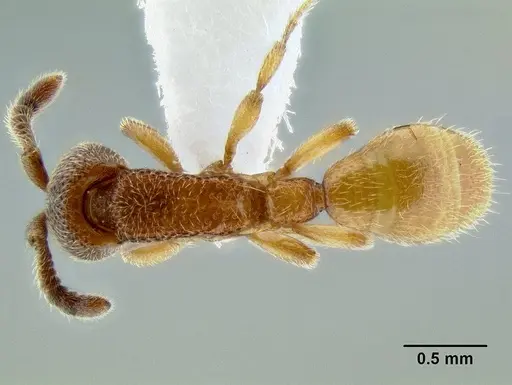
CASENT0902716
View on AntWeb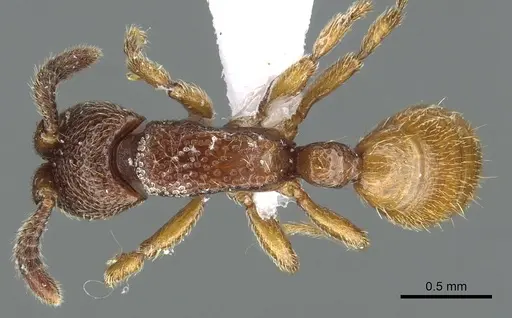
Literature
Loading...Loading products...