

Vombisidris tibeta
- Scientific Name
- Vombisidris tibeta
- Tribe
- Crematogastrini
- Subfamily
- Myrmicinae
- Author
- Xu & Yu, 2012
- Distribution
- Found in 1 countries
Vombisidris tibeta Overview
Vombisidris tibeta is an ant species of the genus Vombisidris. It is primarily documented in 1 countries , including Lao People's Democratic Republic. Detailed taxonomic data and occurrence records can be further explored via authoritative databases such as AntWeb or the Global Biodiversity Information Facility (GBIF).
Vombisidris tibeta
Vombisidris tibeta is a rare myrmicine ant species described from Tibet, China. Workers are small at 3.9-4.1mm with a distinctive appearance: brownish-yellow body, black middle portion of the abdomen (gaster), and yellow legs. They have large eyes,12-segmented antennae with a 3-segmented club, and notably long propodeal spines that curve downward. This species is known only from the worker caste, the queens and males have never been described. [1]
What makes V. tibeta special is its extreme rarity and arboreal lifestyle. Only three workers have ever been collected, all from canopy samples in a valley tropical rainforest at 1200m elevation in Medog County, Tibet. This is one of the least-studied ants in the world, making it an intriguing but challenging species for advanced antkeepers who manage to obtain a colony. [1]
Quick Summary
- Difficulty: Expert
- Origin & Habitat: Valley tropical rainforest in Medog County, Tibet, China at 1200m elevation. All known specimens were collected from canopy samples, indicating this is an arboreal species that forages in trees. [1]
- Colony Type: Unknown, only workers have been collected. Colony structure (single queen vs multi-queen) has not been determined. No queens or males have been described in scientific literature.
- Size & Growth:
- Antkeeping:
- Temperature: Inferred: Based on its tropical rainforest origin in Tibet (1200m elevation), aim for warm conditions around 22-26°C. The Medog Valley is known for warm, humid tropical conditions. [1]
- Humidity: High humidity required, think damp rainforest canopy. Keep nest substrate consistently moist but not waterlogged. Mist occasionally and provide a water source.
- Diapause: Unknown, likely minimal or none given the tropical origin, but no research exists on overwintering behavior.
- Nesting: Arboreal species, they forage on plants and likely nest in tree hollows or under bark in the wild. In captivity, a naturalistic setup with wood pieces, cork bark, or a Y-tong/plaster nest with high humidity works best. Avoid dry, ground-level setups.
- Behavior: Arboreal and likely nocturnal or crepuscular based on their large eyes. Foraging occurs on plants in the canopy. One paratype had a sting extruding, indicating they possess a functional stinger. [1] Escape risk is moderate due to their small size, use standard barriers.
- Common Issues: extreme rarity means virtually no captive colonies exist, this species is essentially unavailable to hobbyists, no established care protocols exist, all advice is inferred from habitat and related species, queen and colony founding behavior completely unknown, only 3 workers have ever been collected in scientific history, wild colonies are exceptionally rare
Rarity and Availability
Vombisidris tibeta is one of the rarest ants in the world. Only three workers have ever been collected, all from canopy samples in Medog County, Tibet in 2011. [1] This species is essentially unavailable in the antkeeping hobby, there are no established captive colonies. If you somehow obtain specimens, you would be working with the very first captive examples of this species ever kept. This makes it an expert-level species for those interested in contributing to scientific knowledge, not a species for beginners or even intermediate antkeepers.
Natural History and Habitat
This species is known only from the valley tropical rainforest of Medog County in Tibet, China at approximately 1200m elevation. [1] The Medog Valley is a biodiversity hotspot in the eastern Himalayas, featuring warm, humid conditions year-round. All three type specimens were collected from separate canopy samples, meaning this is an arboreal species that lives and forages in the forest canopy rather than on the ground. Their large eyes suggest they may be active during lower light conditions. The black marking on the middle of their gaster is distinctive among Vombisidris species. [1]
Housing and Nesting
As an arboreal rainforest species, V. tibeta requires a setup that mimics canopy conditions. A naturalistic terrarium-style formicarium with live plants, branches, and cork bark would be ideal. The nest chamber should be kept humid but with some ventilation to prevent mold. Y-tong (AAC) nests can work if kept moist, but the ants will likely prefer climbing on branches and surfaces rather than staying in enclosed chambers. Provide multiple horizontal platforms or stems for foraging. Room temperature is likely acceptable given their tropical origin, but a slight heat gradient may be appreciated. [1]
Feeding and Diet
No direct data exists on what V. tibeta eats. As a Myrmicinae ant from a tropical rainforest canopy, they likely forage for honeydew and small insects like other arboreal myrmicines. Based on related Vombisidris species and typical canopy ant behavior, they probably tend aphids or scale insects for honeydew and hunt small soft-bodied prey. Offer sugar water or honey as a carbohydrate source, and small live prey like fruit flies, pinhead crickets, or springtails for protein. Given their small size (under 4mm), prey should be appropriately sized.
Temperature and Seasonal Care
Based on the tropical rainforest habitat in Medog Valley (which maintains warm temperatures year-round), keep this species at 22-26°C. They likely do not require hibernation or diapause. The 1200m elevation suggests they are adapted to slightly cooler conditions than true lowland tropical ants, but still well within the warm range. Avoid temperatures below 18°C or above 30°C. Stable temperatures are likely important, avoid drafts and sudden fluctuations. [1]
Defense and Handling
One paratype specimen had a sting extruding, confirming that Vombisidris tibeta possesses a functional stinger. [1] However, given their tiny size (under 4mm), any sting would be negligible to humans. They are not aggressive and will likely flee rather than fight when disturbed. Standard handling precautions apply, wash hands after handling and avoid letting them crawl on bare skin.
Frequently Asked Questions
Is Vombisidris tibeta available in the antkeeping hobby?
No. This is one of the rarest ant species in the world with only three workers ever collected. There are no captive breeding programs or established colonies in the hobby. Obtaining this species would require extraordinary circumstances and scientific connections.
How big do Vombisidris tibeta workers get?
Workers are 3.9-4.1mm in total length, making them small ants. [1]
Do Vombisidris tibeta ants sting?
Yes, they possess a functional stinger as evidenced by one paratype having the sting extruded. However, at 4mm in size, any sting would be negligible to humans and they are not aggressive. [1]
What do Vombisidris tibeta ants eat?
No direct data exists, but as an arboreal rainforest ant, they likely feed on honeydew from aphids or scale insects and small soft-bodied prey. Offer sugar water/honey and appropriately sized live prey like fruit flies or springtails.
What temperature do Vombisidris tibeta ants need?
Based on their tropical rainforest origin in Medog Valley, aim for 22-26°C. They likely do not require hibernation or diapause.
Are Vombisidris tibeta good for beginners?
No. This species is Expert-level due to extreme rarity, complete lack of established care protocols, and the fact that only three workers have ever been documented. There are no captive colonies to learn from.
Where is Vombisidris tibeta found?
Only known from Medog County, Tibet, China at 1200m elevation in valley tropical rainforest. All specimens were collected from canopy samples. [1]
How many queens does Vombisidris tibeta have?
Unknown. Queens have never been described, only three worker specimens exist in scientific collections. Colony structure is completely unstudied.
Can I keep Vombisidris tibeta in a test tube?
Not recommended. As an arboreal species that forages on plants, they would fare better in a naturalistic setup with branches, cork bark, and live plants. A test tube would not allow them to exhibit natural arboreal behavior.
How fast do Vombisidris tibeta colonies grow?
Unknown. No colony development data exists for this species. There are no captive colonies to observe.
Do Vombisidris tibeta need high humidity?
Yes, based on their tropical rainforest canopy origin. Keep nest substrate consistently moist but not waterlogged, and provide humidity in the 70-80% range.
What is the egg to worker timeline for Vombisidris tibeta?
Unknown. No development data exists for this species or any closely related Vombisidris species in captivity.
References

This caresheet is licensed under CC BY-SA 4.0 .
ANTWEB1060609
View on AntWeb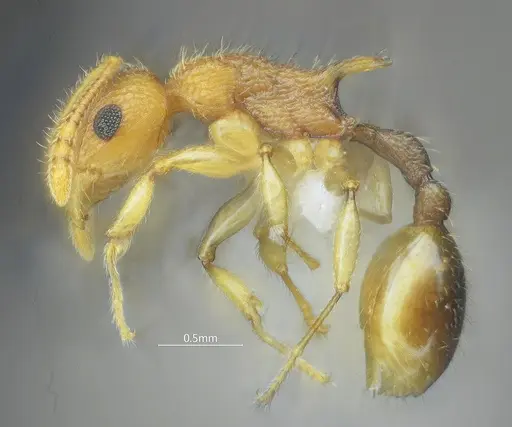
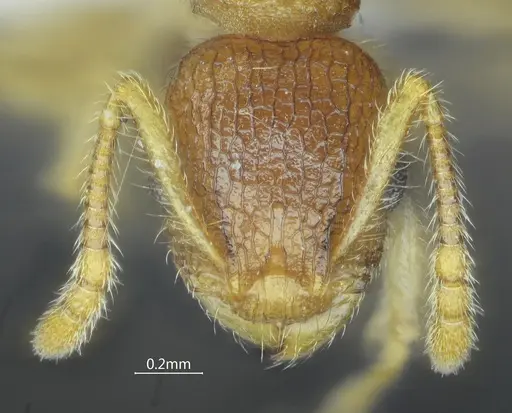
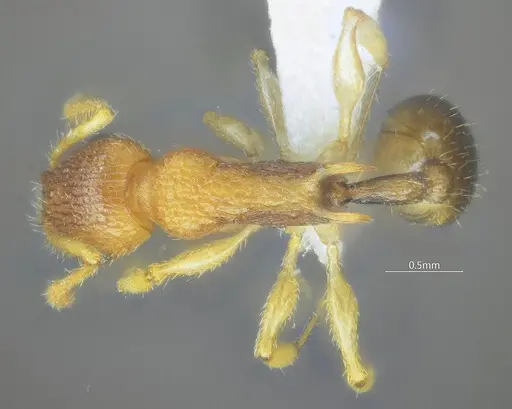
Literature
Loading...Loading products...