

Vombisidris renateae
- Scientific Name
- Vombisidris renateae
- Tribe
- Crematogastrini
- Subfamily
- Myrmicinae
- Author
- Taylor, 1989
- Distribution
- Found in 1 countries
Vombisidris renateae Overview
Vombisidris renateae is an ant species of the genus Vombisidris. It is primarily documented in 1 countries , including Australia. Detailed taxonomic data and occurrence records can be further explored via authoritative databases such as AntWeb or the Global Biodiversity Information Facility (GBIF).
Vombisidris renateae
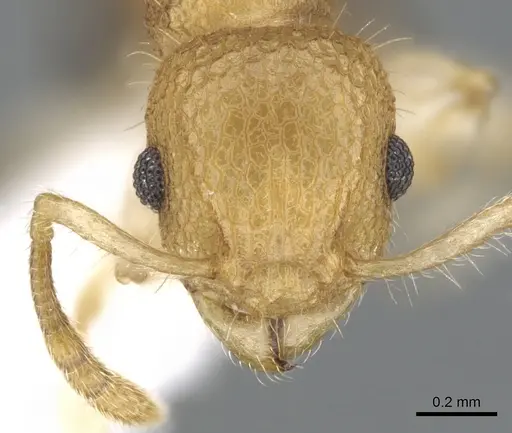
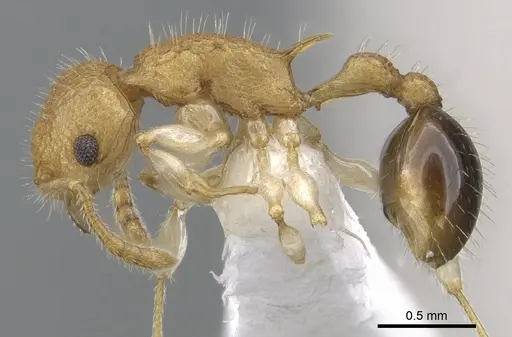
Vombisidris renateae is a small, arboreal ant species native to the rainforests of Queensland, Australia. Workers are modest in size with the characteristic features of the genus: relatively long propodeal spines that exceed the propodeal declivity, a concave ventral face on the petiole, and moderate long tapered hairs on the dorsal mesosoma [1][2]. The genus Vombisidris is known for its arboreal lifestyle, these ants nest and forage in the canopy rather than on the forest floor [3]. This species was originally described in 1989 from rainforest litter samples collected in the Cape Tribulation and Mt. Tozer areas of far north Queensland.
Quick Summary
- Difficulty: Medium
- Origin & Habitat: Endemic to Queensland, Australia, specifically the Cape Tribulation and Mt. Tozer regions in the far north. Found in tropical rainforest habitats, both in litter and arboreally[3].
- Colony Type: Colony structure is unconfirmed. Based on genus patterns, likely single-queen colonies, though this has not been directly studied for this species.
- Size & Growth:
- Queen: Approximately 5-6mm (estimated from genus patterns and related species)
- Worker: Approximately 3-4mm (from type description)
- Colony: Unknown, no colony size data available for this species
- Growth: Unknown
- Development: 6-10 weeks (estimated based on typical Myrmicinae development at optimal temperatures) (Development time is unconfirmed for this species, estimates based on related Myrmicinae patterns)
- Antkeeping:
- Temperature: Keep at 22-26°C, aim for warm, stable conditions typical of tropical rainforest. A gentle gradient allows ants to regulate their temperature [3].
- Humidity: High humidity required, these are rainforest ants. Keep nest substrate consistently moist but not waterlogged. Provide a water source.
- Diapause: Unlikely, being a tropical Australian species, they probably do not require a true diapause. However, a slight reduction in temperature during winter months may be beneficial.
- Nesting: Arboreal nesting preference, they naturally nest in hollow twigs, under bark, and in tree cavities. In captivity, a Y-tong (AAC) nest or plaster formicarium with small chambers works well. Provide climbing structures and branches.
- Behavior: Generally peaceful and non-aggressive. They are arboreal foragers, actively hunting for small prey and tending honeydew-producing insects in trees. Workers are modest in size but agile climbers. Escape risk is moderate, their small size means they can squeeze through small gaps, so use fine mesh barriers.
- Common Issues: high humidity management without mold, rainforest species are prone to mold problems in poorly ventilated nests, escape prevention, small size and arboreal nature means they are good climbers and can escape through tiny gaps, limited availability, this species is rarely available in the antkeeping hobby due to its restricted range, unknown founding behavior, claustral vs semi-claustrl founding is unconfirmed, requiring experimental approach, slow colony growth, like many arboreal Myrmicinae, colonies may develop slowly making patience essential
Housing and Nest Setup
Vombisidris renateae is an arboreal species, so your setup should reflect their natural tree-dwelling lifestyle. A Y-tong (AAC) nest with narrow chambers works well, or you can use a plaster formicarium with small passages. Include climbing structures like twigs, cork bark, or artificial branches, these ants will readily climb and forage vertically. Since they're found in rainforest litter and arboreally, they need access to both a moist nesting area and a foraging area. A test tube setup with a cotton barrier works for founding colonies, but ensure there's room for them to climb and forage. Use fine mesh on all openings, these small ants can squeeze through surprisingly small gaps. [3]
Feeding and Diet
Like most Myrmicinae, Vombisidris renateae is omnivorous with a preference for protein. Offer small live prey like fruit flies, pinhead crickets, and small mealworms. They will also accept sugar sources, a drop of honey water or sugar water can be offered occasionally. In the wild, arboreal Vombisidris species have been observed harvesting food bodies from plants and tending hemipteran trophobionts [3]. Feed protein prey 2-3 times per week, and provide a constant sugar source. Remove uneaten prey after 24 hours to prevent mold.
Temperature and Humidity
Keep your colony at 22-26°C, these are tropical rainforest ants from Queensland, Australia, and they need warmth to thrive. A small heating cable on one side of the nest can create a gentle gradient, but avoid direct heat that could dry them out. High humidity is essential, aim for 70-80% relative humidity. The nest substrate should remain consistently moist but never waterlogged. Mist the outworld occasionally and provide a water source. Good ventilation is important to prevent mold while maintaining humidity. [3]
Behavior and Colony Dynamics
This is a peaceful arboreal ant species. Workers are modest-sized and relatively slow-moving compared to some ground-dwelling Myrmicinae. They are primarily nocturnal foragers in the wild, studies show Vombisidris species harvest food bodies at night [3]. In captivity, they will remain active throughout the day but may be more active in evening hours. Colonies appear to grow moderately, expect slow but steady growth over months rather than explosive expansion. Queens are likely claustral founders (queen seals herself in and raises first workers alone), though this is inferred from genus patterns rather than confirmed for this specific species.
Acquisition and Availability
Vombisidris renateae is rarely available in the antkeeping hobby. Its range is restricted to the rainforests of far north Queensland, Australia, and it is not commonly collected. If you do acquire a colony, it will likely be a small wild-caught colony or a founding queen. Never collect from or release this species outside its native Australia range, it is not established elsewhere and should remain in its endemic region. Check with specialized Australian ant dealers or exporters for legal acquisition options.
Frequently Asked Questions
How long does it take for Vombisidris renateae to raise first workers?
The exact timeline is unconfirmed for this species. Based on typical Myrmicinae development, expect 6-10 weeks from egg to first worker at optimal temperatures (22-26°C). Patience is essential as this species appears to grow slowly.
Can I keep Vombisidris renateae in a test tube setup?
Yes, test tubes work well for founding colonies. Use a standard test tube setup with a water reservoir sealed with cotton. Ensure the tube has enough width for the queen and her brood, and provide a separate foraging area once workers emerge.
Do Vombisidris renateae ants sting?
Vombisidris belongs to the subfamily Myrmicinae, which includes many species with functional stingers. However, this genus is not known for aggressive stinging behavior. They are generally peaceful and will flee rather than engage. The sting, if present, would be mild.
Are Vombisidris renateae good for beginners?
This species is rated as Medium difficulty. While not aggressive, it is rarely available and we know little about its specific care requirements. Beginners may find the limited information and slow growth challenging. Start with more common species if you're new to antkeeping.
What do Vombisidris renateae eat?
They are omnivorous with a protein preference. Feed small live prey like fruit flies, small crickets, and mealworms. They will also accept sugar sources like honey water or sugar water. In the wild, they forage arboreally and harvest food bodies from plants.
Do Vombisidris renateae need hibernation?
Unlikely. Being a tropical species from Queensland rainforests, they probably do not require true hibernation. You may reduce temperatures slightly during winter months (to around 20°C), but a full diapause is not necessary and could be harmful.
How big do Vombisidris renateae colonies get?
Colony size is unknown, no wild colony data exists for this species. Based on related arboreal Myrmicinae, colonies likely reach several hundred workers at most, not the massive colonies seen in some ground-dwelling species.
When should I move Vombisidris renateae to a formicarium?
Move them when the test tube becomes crowded or the water reservoir needs frequent refilling. For arboreal species, ensure the formicarium provides climbing structures and vertical space. A Y-tong nest with connected outworld works well.
Why are my Vombisidris renateae dying?
Common causes include: low humidity (they need 70-80%), temperatures outside their 22-26°C range, mold from poor ventilation, escape through small gaps, or poor nutrition. Review each parameter and adjust accordingly. Wild-caught colonies may also carry parasites.
References

This caresheet is licensed under CC BY-SA 4.0 .
CASENT0901993
View on AntWeb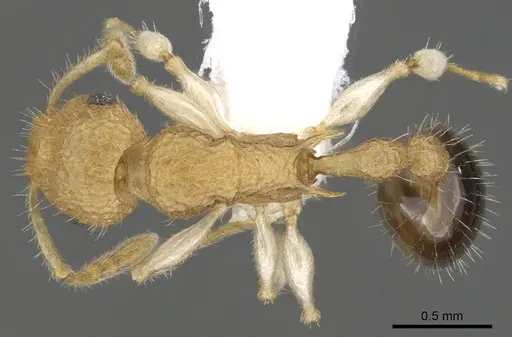
Literature
Loading...Loading products...