

Vombisidris occidua
- Scientific Name
- Vombisidris occidua
- Tribe
- Crematogastrini
- Subfamily
- Myrmicinae
- Author
- Bolton, 1991
- Distribution
- Found in 1 countries
Vombisidris occidua Overview
Vombisidris occidua is an ant species of the genus Vombisidris. It is primarily documented in 1 countries , including India. Detailed taxonomic data and occurrence records can be further explored via authoritative databases such as AntWeb or the Global Biodiversity Information Facility (GBIF).
Vombisidris occidua
Vombisidris occidua is a small myrmicine ant endemic to India, specifically found in Karnataka state around the Mudigere region. Workers measure about 4mm in total length, with a dark brown head and alitrunk (the middle body section) contrasting against a lighter brown gaster (abdomen) and distinctive yellow legs [1]. The type specimen was collected by sweeping from low vegetation, suggesting this species forages in shrubs and plants rather than on the ground [2]. This ant belongs to the Crematogastrini tribe within Myrmicinae and is the only Vombisidris species known from India for a long time, though recent discoveries have added more to the genus in the region [1][3].
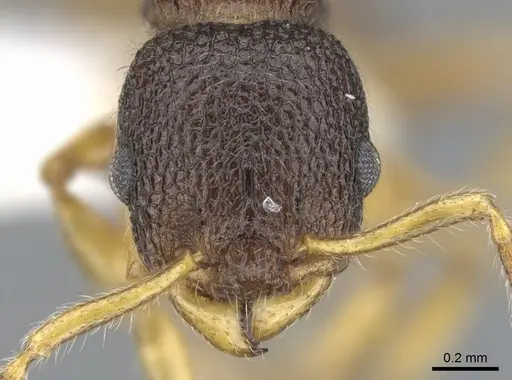
What makes Vombisidris occidua interesting is its arboreal lifestyle, these ants live and forage in vegetation rather than on the forest floor. The genus Vombisidris is known for having complete subocular grooves and distinctive petiole shapes, and V. occidua specifically has vestigial basigastral costulae (fine lines near the gaster base) and a triangular petiolar node when viewed from the side [1][4]. This is a rarely kept species in captivity with limited documented care experience.
Quick Summary
- Difficulty: Medium
- Origin & Habitat: Endemic to India, specifically Karnataka state. The type locality near Mudigere is in the Western Ghats region. They inhabit low vegetation and shrubs rather than ground nests [1][3].
- Colony Type: Colony structure is unconfirmed, no research has documented queen number or colony organization for this species. Based on typical Myrmicinae patterns, expect single-queen colonies but this needs confirmation.
- Size & Growth:
- Queen: Undocumented, no queen specimens have been described in the scientific literature
- Worker: Approximately 4mm total length (HL 0.90mm, HW 0.79mm) [1]
- Colony: Unknown, no colony size data exists for this species
- Growth: Unknown, no development studies available
- Development: Unconfirmed, no direct observations of development exist. Based on typical Myrmicinae patterns in tropical regions, estimate 4-8 weeks at warm temperatures, but this is a rough guess. (Development timeline is entirely inferred from related species. No species-specific data available.)
- Antkeeping:
- Temperature: Based on its Indian origin (Western Ghats, tropical latitude), aim for warm conditions around 22-28°C. This is an inference from the species' geographic origin rather than direct thermal studies.
- Humidity: Likely prefers moderate to high humidity given its association with low vegetation in the Indian subcontinent. Keep nest substrate lightly moist but not waterlogged. Mist occasionally and provide a water source.
- Diapause: Unconfirmed, Indian ants from this region may reduce activity during cooler months but true hibernation is unlikely. Some reduction in feeding during winter months may occur.
- Nesting: Arboreal foragers suggest they do well in setups that allow climbing. Y-tong (AAC) nests or naturalistic setups with plants work well. They were collected from vegetation, so vertical space and climbing opportunities are important.
- Behavior: These ants are arboreal foragers, they travel through plants and shrubs rather than crawling on the ground. Workers are relatively small at 4mm and likely have moderate escape risk. No documented aggression or stinging behavior studies exist, but Myrmicinae ants can defend themselves if threatened. Their yellow legs and contrasting dark body make them visually distinctive.
- Common Issues: limited availability, this species is rarely available in the antkeeping hobby, no documented captive breeding success to reference, keepers are essentially pioneering care, escape prevention needed due to small worker size, unknown dietary preferences, must experiment with foods, lack of species-specific guidance means keepers must adapt from related ants
Housing and Nest Setup
Vombisidris occidua was collected from low vegetation, indicating an arboreal or semi-arboreal lifestyle. For captivity, provide a setup that allows for climbing and foraging in plants rather than a traditional ground-based nest. A Y-tong (AAC) nest works well, or you could use a naturalistic terrarium-style setup with live or artificial plants. Since they're small (around 4mm), ensure escape prevention is adequate, they can squeeze through small gaps. Provide multiple chambers connected by tubes to give them options. A small outworld connected to the nest allows for feeding and exploration. [2]
Feeding and Diet
Diet preferences are unconfirmed for this species. Based on typical Myrmicinae behavior and the fact they were found in vegetation, they likely forage for small insects and honeydew from aphids or scale insects. Start with offering sugar water or honey as an energy source, plus small protein sources like fruit flies, pinhead crickets, or other tiny arthropods. Observe what they accept and adjust accordingly. Since this species has rarely been kept in captivity, be prepared to experiment with different food types. Offer fresh food regularly and remove uneaten portions to prevent mold.
Temperature and Humidity
Being from Karnataka, India (tropical latitude), these ants prefer warm conditions. Aim for temperatures in the 22-28°C range, room temperature is likely suitable for most keepers. A slight temperature gradient allows the colony to choose their preferred zone. For humidity, moderate levels are probably best, the Western Ghats region has seasonal monsoons but also dry periods. Keep the nest substrate lightly moist with occasional misting, but avoid waterlogging. A small water dish in the outworld provides drinking water. Monitor your colony's activity to fine-tune conditions.
Colony Establishment
If you acquire a queen, expect standard claustral founding typical of Myrmicinae, she will seal herself in a chamber and raise the first workers alone on stored energy reserves. However, since colony structure is unconfirmed, there's no guarantee this species follows that pattern. The first workers (nanitics) will likely be smaller than mature workers. Growth rate is unknown, so be patient, small Myrmicinae colonies can take several months to establish. Avoid disturbing the founding chamber unnecessarily. Once workers emerge, you can gradually expand their space.
Behavior and Observation
These ants are arboreal foragers, so you'll see them traveling up to feeding areas rather than along the ground. Their distinctive yellow legs and dark brown body make them easy to identify. Workers are small at 4mm, so observe through magnifying glasses or photograph with macro settings. No specific defensive behaviors have been documented, but they will likely respond to threats like most ants, by biting or releasing alarm pheromones. Their activity level will increase with warmer temperatures. Since this species is rarely kept, every observation adds to our knowledge of their captive care. [1]
Frequently Asked Questions
How do I keep Vombisidris occidua ants?
This is a rarely kept species, so established care protocols don't exist. Based on their arboreal nature (collected from low vegetation), provide a setup with climbing opportunities like a Y-tong nest or naturalistic terrarium. Keep them warm (22-28°C) with moderate humidity. Offer sugar water and small protein sources, and monitor what they accept.
What do Vombisidris occidua ants eat?
Diet is unconfirmed, no feeding studies exist for this species. Based on typical Myrmicinae behavior, they likely accept sugar sources (honey, sugar water) and small insects. Start with these basics and experiment to see what your colony prefers. Remove uneaten food promptly.
How big do Vombisidris occidua colonies get?
Colony size is unknown, no scientific data exists on maximum colony size for this species. Being a small Myrmicinae from a tropical region, colonies likely reach a few hundred workers at most, but this is an estimate.
Where is Vombisidris occidua found?
This species is endemic to India, specifically Karnataka state in the Western Ghats region. The type locality is near Mudigere. It's the only Vombisidris species known from India for a long time [1][3].
Are Vombisidris occidua ants good for beginners?
No, this species is not recommended for beginners. It's rarely available in the antkeeping hobby, has no established care protocols, and all care must be adapted from related species. Experienced keepers who can experiment and document their results are better suited for this species.
How long does it take for Vombisidris occidua to develop from egg to worker?
Development time is unconfirmed, no direct observations exist. Based on typical Myrmicinae patterns in tropical regions, estimate roughly 4-8 weeks at warm temperatures (around 25°C), but this is a rough guess that needs confirmation through captive breeding.
Do Vombisidris occidua ants sting?
Stinging behavior has not been documented for this species. As a Myrmicinae ant, they have a stinger but its use is situational. Most Myrmicinae will bite and use chemical defenses rather than sting unless severely threatened.
What temperature do Vombisidris occidua ants need?
Based on their Indian origin, aim for warm conditions around 22-28°C. Room temperature is likely suitable for most keepers. A slight temperature gradient allows the colony to regulate their own conditions. This is inferred from their geographic origin rather than direct thermal studies.
Can I keep multiple Vombisidris occidua queens together?
Colony structure is unconfirmed, no research documents whether this species is monogyne (single queen) or polygyne (multiple queens). Combining unrelated queens has not been studied. Do not attempt without understanding their natural colony structure.
Why is Vombisidris occidua so rare in the antkeeping hobby?
This species has a very limited geographic range (only known from Karnataka, India) and was rarely collected even by researchers. The type specimen was collected in 1979,and the species was only documented scientifically in 1991. Limited availability and lack of documented captive care make it uncommon in the hobby.
References

This caresheet is licensed under CC BY-SA 4.0 .
CASENT0901990
View on AntWeb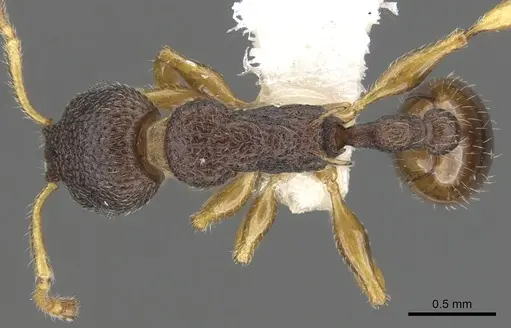
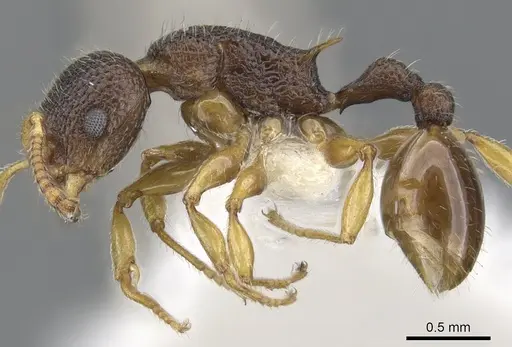
Literature
Loading...Loading products...