

Vombisidris jacobsoni
- Scientific Name
- Vombisidris jacobsoni
- Tribe
- Crematogastrini
- Subfamily
- Myrmicinae
- Author
- Forel, 1915
- Distribution
- Found in 0 countries
Vombisidris jacobsoni Overview
Vombisidris jacobsoni is an ant species of the genus Vombisidris. It is primarily documented in 0 countries . Detailed taxonomic data and occurrence records can be further explored via authoritative databases such as AntWeb or the Global Biodiversity Information Facility (GBIF).
Vombisidris jacobsoni
Vombisidris jacobsoni is a small myrmicine ant native to the Indonesian island of Sumatra, specifically the Simalur Island (Simeulue) region near Sinabang [1]. Workers measure just 2.8-3.8mm in total length, making them a compact species with a distinctive appearance [1]. Their body coloration ranges from light brown to yellow, with noticeably lighter femora and tibiae that appear whitish-yellow except at their darkened bases [1]. The entire body is covered in short, thick, blunt setae, and the head, mesosoma, petiole and postpetiole display a distinctive rugoreticulum pattern [1]. This species belongs to the V. australis group and was originally described as Vombisidris jacobsoni in 1915 before being transferred through Leptothorax and eventually to Vombisidris [1][2].
This species remains poorly studied in captivity, with no published husbandry guidelines available. The genus Vombisidris contains relatively few described species, and most are known primarily from museum specimens rather than behavioral observations [2][3]. What makes this species interesting is its limited known distribution, it appears to be endemic to the Simalur Island region of Indonesia, making it a rarely encountered species in the antkeeping hobby [1][2].
Quick Summary
- Difficulty: Unknown, likely Medium to Hard due to limited data
- Origin & Habitat: Native to Simalur Island (Simeulue), Sumatra, Indonesia in the Indomalaya Region [1][2]. The type locality is Sinabang at coordinates 2° 29′ 0″ N,96° 22′ 30″ E [1]. This is a tropical island environment suggesting warm, humid conditions.
- Colony Type: Colony structure is unconfirmed. No published data exists on whether this species is monogyne (single queen) or polygyne (multiple queens). The genus-level patterns for Vombisidris are not well-documented.
- Size & Growth:
- Queen:{.size-link} Unknown, queen caste has not been described in scientific literature [1]
- Worker:{.size-link} 2.8-3.8mm total length (TL) [1]. Head width 0.73-0.81mm, head length 0.81-0.86mm [1].
- Colony: Unknown, no colony size data exists in available literature
- Growth: Unknown, no development studies available
- Development: Unknown, estimated 4-8 weeks based on typical Myrmicinae patterns at tropical temperatures, but this is a rough inference (No direct development data exists for this species. Estimates based on related Crematogastrini tribe members suggest 4-8 weeks at 24-28°C, but confidence is low.)
- Antkeeping:
- Temperature: Estimated 24-28°C based on tropical Indonesian origin. Provide a gentle gradient allowing workers to self-regulate. Start in this range and observe colony activity patterns.
- Humidity: High humidity expected, tropical island environment. Maintain 70-80% humidity in the nest area with moist but not waterlogged substrate.
- Diapause: Unlikely, tropical species from near the equator experiences minimal seasonal temperature variation. No diapause data available.
- Nesting: No natural nesting data published. Based on genus patterns and morphology (thickened femora/tibiae suggesting ground-active behavior), they likely nest in soil or under debris in forest floor habitats. A naturalistic setup with moist soil or a Y-tong/plaster nest would be appropriate starting points.
- Behavior: Not documented in captivity. Based on morphology (large eyes, thickened leg segments), they are likely ground-foraging and may be nocturnal or crepuscular. Their small size and blunt setae suggest they may be less aggressive than some Myrmicinae. Escape prevention should be adequate for their small 3mm size, standard barriers should work but fine mesh is recommended as a precaution. No stinging behavior documented for this tribe (Crematogastrini), though Myrmicinae generally have functional stingers.
- Common Issues: lack of published care information makes husbandry challenging, be prepared to experiment and document your observations, small colony size means any losses have greater impact, avoid disturbing founding colonies, tropical species may be sensitive to temperature drops, maintain warm conditions year-round, no known feeding preferences documented, start with small live prey and sugar sources and observe acceptance, wild-caught colonies may have parasites or disease with no documented treatment protocols
Appearance and Identification
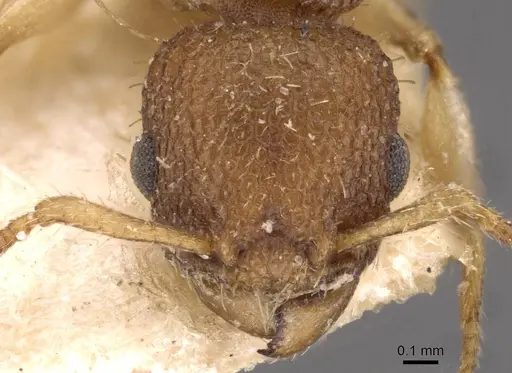
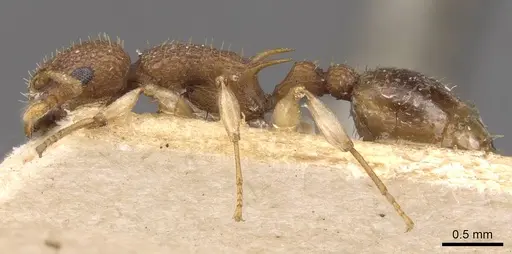
Vombisidris jacobsoni workers are small ants measuring 2.8-3.8mm in total length [1]. Their body coloration is distinctive, ranging from light brown to yellow, with some specimens appearing almost entirely light brown while others are nearly yellow [1]. The femora and tibiae are noticeably lighter than the rest of the body, appearing whitish-yellow except for the darkened bases [1].
One of the most characteristic features is the short, thick, blunt setae covering their entire body, some setae on the postpetiole are even slightly clavate (club-shaped) [1]. The head, dorsum of mesosoma, petiole and postpetiole have a distinct rugoreticulum pattern (network-like ridges), while the spaces between these ridges are mostly smooth and shiny [1]. The eyes are protruding and relatively large, containing 8-10 ommatidia in the longest row [1]. The propodeal spines are long and slightly downcurved when viewed from the side [1]. The legs are relatively short with conspicuously thickened femora and tibiae [1].
Distribution and Habitat
This species is known only from Simalur Island (also spelled Simeulue) off the coast of Sumatra, Indonesia [1]. The type locality is Sinabang, located at approximately 2° 29′ 0″ N,96° 22′ 30″ E [1]. This places the species in the Indomalaya biogeographic region [2].
The original collection was made by E. Jacobson in January 1913,which represents the only documented collection event for this species [1]. No additional field studies have been published, so our understanding of their natural habitat is extremely limited. As a tropical island species near the equator, they likely experience warm temperatures year-round with high humidity. The island of Simeulue has a tropical rainforest climate with minimal seasonal temperature variation.
Housing and Nesting
Since no captive husbandry data exists for this species, recommendations must be based on inference from related species and the limited natural history information available. Given their small worker size (2.8-3.8mm) and the morphological features suggesting ground-active behavior (thickened femora/tibiae), a naturalistic setup with moist soil or a Y-tong style nest would be appropriate starting points [1].
For founding colonies, a standard test tube setup can work, but monitor humidity carefully, tropical species often require more consistent moisture than temperate species. The nest material should retain moisture well without becoming waterlogged. A small formicarium with chambers scaled to their tiny size (3-4mm passages) would suit their dimensions. Ensure escape prevention is adequate, while not extremely small, they can still squeeze through small gaps.
Feeding and Diet
No published dietary information exists for Vombisidris jacobsoni. As a member of the Myrmicinae subfamily and Crematogastrini tribe, they likely have typical omnivorous habits for small ants. Based on related species in this tribe, they probably forage for small arthropods and may tend aphids for honeydew.
For captive care, start with small live prey items appropriate to their size: fruit flies, pinhead crickets, small mealworms, and similar micro-prey. Offer sugar water or honey as a carbohydrate source and monitor acceptance. Given their small size, prey items should be appropriately scaled, nothing larger than their head width. Feed small amounts initially and observe what the colony accepts, adjusting based on consumption patterns.
Temperature and Seasonal Care
As a tropical species from near the equator in Indonesia, Vombisidris jacobsoni likely requires warm, stable temperatures year-round. Based on their origin (Simalur Island at 2° N latitude), estimate an optimal range of 24-28°C with minimal temperature fluctuation.
Provide a temperature gradient within the enclosure so workers can self-regulate by moving between warmer and cooler areas. A heating cable on one side of the nest can create this gradient. Avoid temperatures below 20°C or above 32°C as a precaution. Since they come from a region with minimal seasonal temperature variation, no diapause or hibernation period is expected or recommended [1]. Maintain warm conditions consistently throughout the year.
Challenges and Considerations
This species presents significant challenges for antkeepers due to the complete lack of published captive husbandry information. No care guides, breeding protocols, or behavioral observations exist in the scientific literature or antkeeping community. You will essentially be pioneering the husbandry of this species.
Document your observations carefully, what foods they accept, their activity patterns, how they respond to different humidity and temperature conditions, and colony growth rates. This information would be valuable for the antkeeping community. Expect a learning curve and don't be discouraged if initial attempts require adjustment. The small colony sizes typical of this genus mean that founding colonies are particularly precious and should be handled with extra care.
Frequently Asked Questions
How long does it take for Vombisidris jacobsoni to produce first workers?
The egg-to-worker development time is unknown, no published data exists for this species. Based on typical Myrmicinae development at tropical temperatures (24-28°C), a rough estimate would be 4-8 weeks, but this is highly uncertain. Related species in the Crematogastrini tribe suggest this timeline, but actual development could be faster or slower.
What do Vombisidris jacobsoni ants eat?
No specific dietary data exists for this species. Based on related Myrmicinae, they likely accept small live prey (fruit flies, micro crickets, small mealworms) and sugar sources (honey water, sugar water). Start with small prey items scaled to their 3mm worker size and observe acceptance. Remove uneaten prey to prevent mold issues.
Can I keep Vombisidris jacobsoni in a test tube?
Yes, a test tube setup is appropriate for founding colonies. Use a small diameter tube that allows the queen and workers to remain in contact with the water reservoir. Maintain high humidity by ensuring the water chamber is adequate but not excessive. Cover the setup with a dark cloth during the founding period to reduce stress.
Do Vombisidris jacobsoni ants sting?
Stinging behavior has not been documented for this species. As a member of Myrmicinae, they possess a functional stinger, but the Crematogastrini tribe members are generally not known for aggressive stinging. They are small ants and any sting would be mild. Handle gently regardless.
What temperature do Vombisidris jacobsoni need?
Based on their tropical Indonesian origin (Simalur Island near the equator), estimate 24-28°C as the optimal range. Provide a gentle gradient so workers can self-regulate. Avoid temperatures below 20°C or above 32°C. A small heating cable on part of the nest can help maintain warmth.
Are Vombisidris jacobsoni good for beginners?
This species is not recommended for beginners due to the complete lack of published care information. You will essentially be experimenting with husbandry conditions with no established guidelines to follow. Experienced antkeepers interested in rare species may find the challenge worthwhile, but expect a learning curve.
How big do Vombisidris jacobsoni colonies get?
Colony size is unknown, no published colony data exists for this species. Based on their small worker size (2.8-3.8mm) and limited distribution, colonies are likely to remain relatively small, possibly under 500 workers at maturity. More research is needed to confirm this estimate.
Do Vombisidris jacobsoni need hibernation?
No hibernation is recommended or expected. As a tropical species from near the equator (2° N latitude), they experience minimal seasonal temperature variation. Maintain warm, stable conditions year-round. Temperature drops below 20°C should be avoided.
Why are my Vombisidris jacobsoni dying?
Without established care parameters, colony losses are difficult to diagnose. Common issues may include: temperature stress (too cold or too hot), humidity problems (too dry or waterlogged), inadequate prey size, or stress from disturbance. Document your conditions and adjust one variable at a time. Wild-caught colonies may also carry parasites or diseases with no known treatment.
When should I move Vombisidris jacobsoni to a formicarium?
There are no established guidelines for this species. As a general approach with small Myrmicinae, wait until the colony has at least 20-30 workers and is actively foraging before considering a move. Ensure the formicarium chambers are appropriately sized (3-4mm passages) for their tiny workers. Monitor for acceptance and have a backup plan.
Report an Issue
The current care sheet is based fully on literature. See inconsistencies, or something that's incorrect? Please , it will be resolved after review from an admin. Contributing to the blogs tab also helps providing information, to make us be able to further improve the caresheets. Thank you for your support!
References

This caresheet is licensed under CC BY-SA 4.0 .
CASENT0904730
View on AntWeb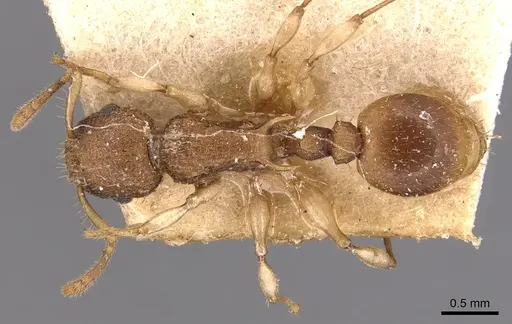
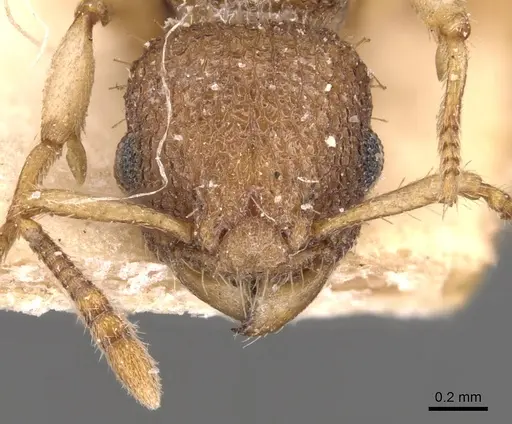
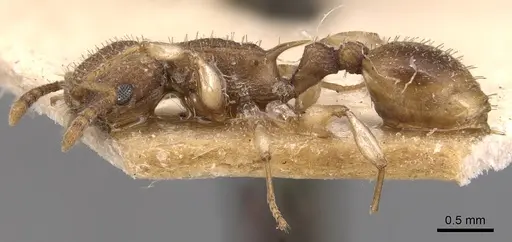
CASENT0908996
View on AntWeb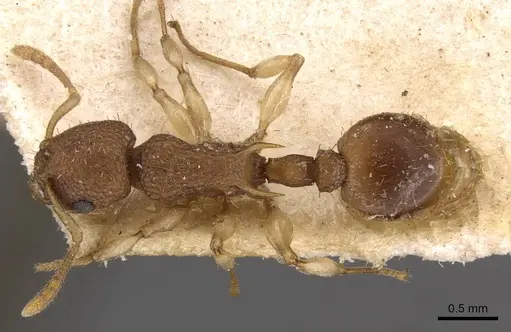
Literature
Loading...Loading products...