

Vombisidris harpeza
- Scientific Name
- Vombisidris harpeza
- Tribe
- Crematogastrini
- Subfamily
- Myrmicinae
- Author
- Bolton, 1991
- Distribution
- Found in 1 countries
Vombisidris harpeza Overview
Vombisidris harpeza is an ant species of the genus Vombisidris. It is primarily documented in 1 countries , including Malaysia. Detailed taxonomic data and occurrence records can be further explored via authoritative databases such as AntWeb or the Global Biodiversity Information Facility (GBIF).
Vombisidris harpeza
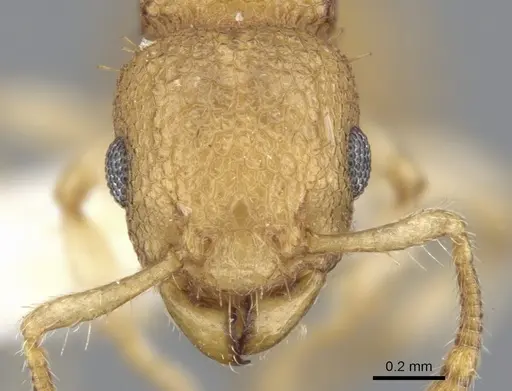
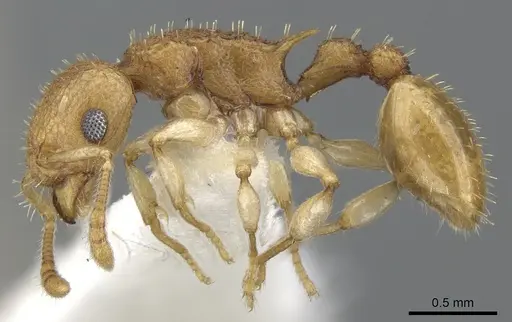
Vombisidris harpeza is a small, bright yellow arboreal ant belonging to the Myrmicinae subfamily. Workers measure approximately 3.5mm in total length, with a head width of 0.75mm and distinctive short blunt erect hairs covering the head and gaster . This species is a member of the australis species group and is known for its weakly impressed metanotal groove and petiole node that differentiates from the peduncle at an obtuse angle [1]. The species was originally described from Sarawak, Borneo and has since been recorded in Brunei, Indonesia, and the Philippines (Palawan Island), making it native to the Indomalaya region [1][2]. These ants are arboreal, typically found walking on tree bark in lowland rainforests and have been collected from forest canopies [2].
Quick Summary
- Difficulty: Medium
- Origin & Habitat: Native to the Indomalaya region including Borneo (Sarawak), Brunei, Indonesia, and the Philippines (Palawan). Found in lowland dipterocarp rainforests and secondary forests, typically arboreal on tree bark and in forest canopies [2][1].
- Colony Type: Single-queen colonies (monogyne). Colony structure is typical of Myrmicinae with claustral founding.
- Colony: Monogyne
- Founding: Claustral
- Size & Growth:
- Queen: Undescribed, estimated 4-5mm based on worker size
- Worker: 3.5mm total length, HW 0.75mm
- Colony: Likely small, under 500 workers based on related species and limited collection data [1]
- Growth: Moderate, estimated based on typical Myrmicinae development
- Development: Estimated 6-8 weeks at optimal temperature based on genus patterns (Development time is inferred from related Myrmicinae species, specific data for V. harpeza is not available)
- Antkeeping:
- Temperature: Keep at 24-28°C, these are tropical forest ants from Southeast Asia. Room temperature (22-26°C) is suitable, with a slight gradient if possible [1].
- Humidity: Require moderate to high humidity (60-80%). Their natural habitat is lowland rainforest, so the nest should be kept moist but not waterlogged. Mist occasionally and provide a water source.
- Diapause: No, as a tropical species from Southeast Asia, they do not require hibernation. Keep temperatures stable year-round.
- Nesting: Arboreal ants that naturally nest in tree bark and rotting wood. In captivity, a Y-tong (AAC) nest or plaster nest works well. Provide small twigs or bark pieces in a naturalistic setup. They prefer tight chambers scaled to their small size.
- Behavior: These are docile, non-aggressive ants that are primarily nocturnal or crepuscular. They forage on tree bark and low vegetation. Workers are small (3.5mm) so escape prevention is important, use fine mesh barriers. They are not known to sting and pose no danger to keepers.
- Common Issues: escape prevention is critical due to their small size, they can squeeze through tiny gaps, tropical humidity requirements mean mold can be an issue in enclosed nests, wild-caught colonies may be stressed from collection and transport, slow founding means colonies take time to establish, patience is needed, arboreal nature means they prefer climbing surfaces over flat ground
Housing and Nest Setup
Vombisidris harpeza is an arboreal ant that naturally lives on tree bark and in canopy microhabitats. For captivity, a Y-tong (AAC) nest or plaster nest works well, providing chambers scaled to their small 3.5mm worker size. Because they are arboreal, they appreciate having climbing structures like small twigs, bark pieces, or artificial plants in their outworld. A naturalistic setup with cork bark or similar materials mimics their natural environment well. Keep the nest substrate moderately moist, these rainforest ants need humidity but avoid waterlogging. A small water tube or cotton ball with fresh water should always be available. [1][2]
Feeding and Diet
In the wild, Vombisidris species are likely omnivorous, foraging for honeydew, small insects, and nectar. In captivity, offer a varied diet including sugar water or honey as a constant energy source, and protein sources like small fruit flies, pinhead crickets, or other tiny insects. Feed protein 2-3 times per week, and keep sugar water available at all times. Remove uneaten prey after 24-48 hours to prevent mold. These small ants need appropriately sized prey, anything larger than their head width may be ignored or difficult to handle.
Temperature and Humidity
As a tropical species from Southeast Asia's lowland rainforests, V. harpeza requires warm and humid conditions. Keep temperatures in the range of 24-28°C. Room temperature (22-26°C) is generally suitable, but avoid cold drafts or air conditioning near the colony. Humidity should be maintained at 60-80%. You can achieve this by misting the nest occasionally and keeping the water reservoir filled. A hygrometer helps monitor conditions. Avoid placing the nest near direct sunlight which can cause temperature spikes and drying. [1][2]
Colony Founding and Growth
Like most Myrmicinae, V. harpeza likely has claustral founding where the queen seals herself in a small chamber and raises the first workers alone on stored fat reserves. The founding process may take 4-8 weeks for the first nanitic workers to emerge. After the first workers (nanitics) arrive, the colony should be fed small amounts of sugar water and tiny prey. Growth is moderate, expect the colony to reach 50-100 workers within the first year under good conditions. These are long-lived ants where a healthy queen can produce workers for many years.
Behavior and Temperament
Vombisidris harpeza is a docile, non-aggressive species that poses no danger to keepers. Workers are small and primarily nocturnal or crepuscular, though they may activity during dim lighting conditions. They are arboreal by nature and prefer to climb rather than walk on flat surfaces. When threatened, they may retreat rather than attack. Their small size means they are excellent climbers and can escape through very small gaps. Always use fine mesh (at least 0.5mm) for any ventilation holes or barriers. Despite their small size, they are active foragers and interesting to watch. [1]
Seasonal Care
As a tropical species from the Indomalaya region, V. harpeza does not require hibernation or diapause. Keep conditions stable year-round with consistent temperature (24-28°C) and humidity (60-80%). Seasonal changes in their native range are minimal, so dramatic temperature fluctuations should be avoided. If your room temperature drops significantly in winter, consider using a small heating mat or thermostat to maintain warmth. Avoid placing the colony near windows or exterior walls that get cold. [2][1]
Frequently Asked Questions
How long does it take for Vombisidris harpeza to have first workers?
Based on typical Myrmicinae development, expect first workers (nanitics) to emerge 6-8 weeks after the queen lays eggs, at optimal warm temperatures (24-28°C). The exact timeline depends on temperature and feeding.
What do Vombisidris harpeza ants eat?
They are omnivorous. Offer sugar water or honey constantly for energy, and small protein sources like fruit flies, pinhead crickets, or other tiny insects 2-3 times per week. Remove uneaten prey after 24-48 hours.
Can I keep Vombisidris harpeza in a test tube?
Yes, test tubes work well for founding colonies. Use a small test tube with a water reservoir sealed with cotton, keeping it horizontal in a dark place. Once the colony reaches 20-30 workers, consider moving to a proper nest like Y-tong or plaster.
Do Vombisidris harpeza ants sting?
No, this species is not known to sting and poses no danger to keepers. They are docile and will flee rather than defend when threatened.
What temperature do Vombisidris harpeza ants need?
Keep them at 24-28°C. As tropical rainforest ants from Southeast Asia, they need warm conditions. Room temperature (22-26°C) is acceptable, but avoid cold drafts.
How big do Vombisidris harpeza colonies get?
Based on limited field data and related species, colonies likely reach several hundred workers at maximum. They are not among the largest Myrmicinae but can live for many years with a healthy queen.
Are Vombisidris harpeza good for beginners?
This species is rated as medium difficulty. While not aggressive and relatively compact, their small size requires good escape prevention, and they need tropical humidity conditions. They are more suited for keepers with some experience.
Do Vombisidris harpeza need hibernation?
No, as a tropical species from Southeast Asia, they do not require hibernation. Keep temperatures stable year-round in the 24-28°C range.
Why are my Vombisidris harpeza escaping?
Their small 3.5mm size means they can squeeze through tiny gaps. Use fine mesh (0.5mm or smaller) on all ventilation, ensure lid seals are tight, and check for any cracks in the setup. Escape prevention is critical for this species.
When should I move Vombisidris harpeza to a formicarium?
Wait until the colony has at least 30-50 workers and the test tube is becoming crowded. A Y-tong or plaster nest with appropriate-sized chambers works well. They also appreciate having climbing structures in the outworld.
References

This caresheet is licensed under CC BY-SA 4.0 .
CASENT0901989
View on AntWeb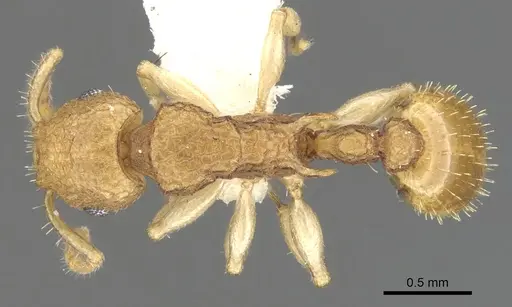
Literature
Loading...Loading products...