

Vollenhovia okinawana
- Scientific Name
- Vollenhovia okinawana
- Tribe
- Crematogastrini
- Subfamily
- Myrmicinae
- Author
- Terayama & Kinomura, 1997
- Distribution
- Found in 1 countries
Vollenhovia okinawana Overview
Vollenhovia okinawana is an ant species of the genus Vollenhovia. It is primarily documented in 1 countries , including Japan. Detailed taxonomic data and occurrence records can be further explored via authoritative databases such as AntWeb or the Global Biodiversity Information Facility (GBIF).
Vollenhovia okinawana
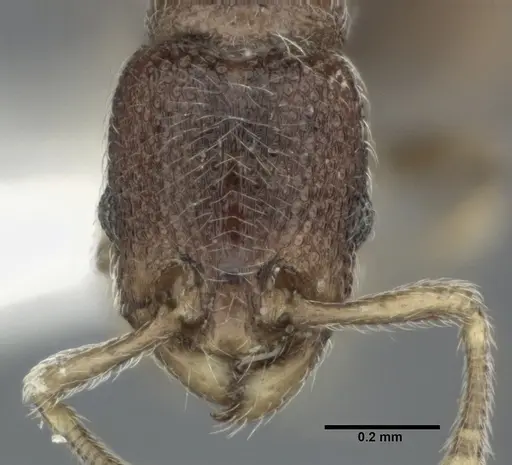
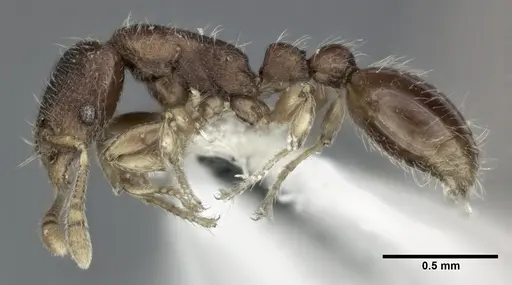
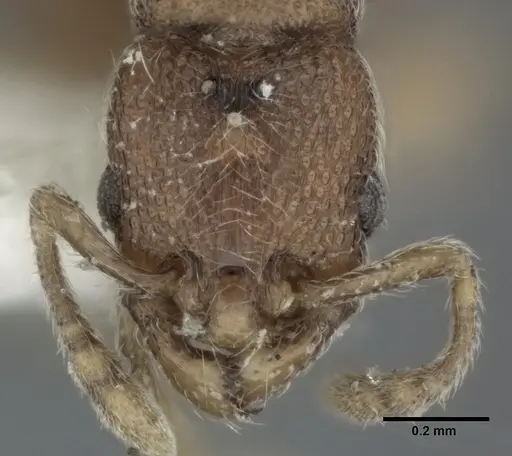
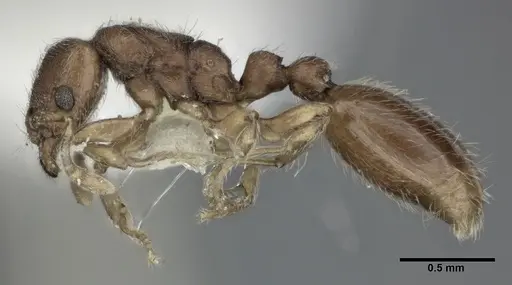
Vollenhovia okinawana is a tiny ant species native to Okinawa Island, Japan. Workers measure just 2.0-2.2mm in total length, making them one of the smaller ant species you'll encounter [1]. They have a reddish-brown body with yellowish-brown mandibles, antennae, and legs. Their most distinguishing feature is the postpetiole, which is highest at the posterior third and has a concave posterodorsal margin, this separates them from the similar V. benzai species [1]. Queens are slightly larger at 2.6mm and are winged [2].
This species is notable for having two distinct reproductive populations on Okinawa. The main population produces normal winged females, while a separate population in the northern part of the island produces only ergatoid (wingless) females as reproductives. Despite this difference, the workers and males appear identical between the two forms [1]. This makes them an interesting species for observing social structure variation within a single species.
Quick Summary
- Difficulty: Medium
- Origin & Habitat: Okinawa Island, Japan, found in decaying wood in forest habitats [2][1]
- Colony Type: Single-queen colonies (monogyne) with documented ergatoid replacement reproductives in some populations [1]
- Colony: Monogyne
- Founding: Claustral
- Size & Growth:
- Queen: 2.6mm TL (HL 0.60mm, HW 0.56mm) [1]
- Worker: 2.0-2.2mm TL (HL 0.48-0.53mm, HW 0.45mm) [1]
- Colony: Small colonies, likely under 500 workers based on similar Vollenhovia species
- Growth: Moderate
- Development: Estimated 6-8 weeks based on typical Myrmicinae development at warm temperatures (Development time is estimated from related species, specific data for V. okinawana is not available)
- Antkeeping:
- Temperature: Keep at 22-26°C, they come from subtropical Okinawa and prefer warm, stable conditions
- Humidity: Moderate to high, they nest in decaying wood in forests, so aim for 60-80% humidity with moist nest materials
- Diapause: Not required, Okinawa has mild winters and the species does not enter true hibernation
- Nesting: Prefers nests in decaying wood or moist test tube setups. A small acrylic nest or Y-tong with narrow chambers works well given their tiny size
- Behavior: These are small, relatively docile ants that typically stay calm during nest inspections. Workers are foragers and likely scavenge for small prey and honeydew. Their tiny size (under 3mm) means escape prevention is critical, they can squeeze through standard test tube cotton if gaps are present. Use fine mesh barriers and ensure all connections are sealed. They are not aggressive and unlikely to sting.
- Common Issues: tiny size makes escape likely without fine mesh barriers, small colony size means they develop slowly and need patience, moisture needs are specific, too dry causes brood loss, too wet causes mold, wild-caught colonies may carry parasites that can devastate captive colonies, very small workers can get stuck in water feeders, use shallow sugar water sources
Housing and Nest Setup
Given their tiny size (workers just 2mm), you'll need to use appropriately scaled nests. Standard test tubes work well for founding colonies, use a small water reservoir and ensure the cotton is packed tightly to prevent escapes. For established colonies, a small acrylic nest or Y-tong with narrow chambers (3-5mm wide) prevents workers from getting lost in large open spaces. These ants naturally nest in decaying wood in forest habitats, so a naturalistic setup with moist wood or cork works well [2]. Avoid tall, open chambers where tiny workers may struggle to navigate. Escape prevention is critical, even the smallest gaps in tubing or lid seals will allow them to escape.
Feeding and Diet
Vollenhovia okinawana is a generalist forager that likely scavenges small insects and collects honeydew in the wild. In captivity, offer small protein sources like fruit flies, pinhead crickets, or tiny mealworms chopped into manageable pieces. They will also accept sugar water or honey as an energy source. Feed small amounts 2-3 times per week, removing any uneaten prey after 24 hours to prevent mold. Because workers are so tiny, ensure prey items are appropriately sized, something larger than their head will go ignored. A constant supply of sugar water is recommended for energy, especially for growing colonies. [2]
Temperature and Seasonal Care
As a subtropical species from Okinawa Island, these ants prefer warm conditions. Maintain nest temperatures between 22-26°C for optimal brood development. A slight temperature gradient allows workers to regulate their own conditions. They do not require hibernation or diapause, Okinawa's mild climate means they remain active year-round with proper heating in cooler climates. If your room temperature drops below 20°C in winter, consider using a heating cable on one side of the nest. Avoid temperature fluctuations above 30°C or below 18°C for extended periods, as this stresses colonies. [2]
Colony Structure and Reproduction
This species has an interesting social structure with two known reproductive forms. The widespread population produces normal winged (alate) females that disperse to start new colonies. A separate population in northern Okinawa produces only ergatoid females, wingless females that serve as replacement reproductives within the nest [1]. In captivity, you will likely have the standard form with a single winged queen. Queens are claustral founders, they seal themselves in a chamber and raise the first brood alone on stored fat reserves. The first workers (nanitics) will be smaller than mature workers but will grow quickly with proper feeding.
Handling and Temperament
These are docile, non-aggressive ants that handle disturbance relatively well. Workers are small and fast-moving, but they rarely show defensive behavior. They are not known to sting. When observing or transferring colonies, work slowly and avoid shaking or jarring the nest. Because of their tiny size, handle them gently, they can easily be crushed if mishandled. Their small size also means they are vulnerable to predation by other insects, so keep them separated from larger ant species. The main handling challenge is preventing escapes rather than dealing with aggression. [1]
Frequently Asked Questions
How long does it take for Vollenhovia okinawana to raise first workers?
Expect first workers (nanitics) to emerge 6-8 weeks after the queen lays eggs, assuming temperatures around 24-26°C. This is an estimate based on related Myrmicinae species, specific development data for V. okinawana is not available. Be patient during founding as small colonies grow slowly.
Can I keep multiple Vollenhovia okinawana queens together?
Not recommended. This species is monogyne (single-queen) in the wild, and combining unrelated queens typically leads to fighting. If you acquire a colony, keep the single queen. Some populations have ergatoid replacement reproductives, but these are replacement reproductives within an established colony, not additional founding queens.
Do Vollenhovia okinawana ants sting?
No, these tiny ants are not known to sting. They are docile and non-aggressive. As Myrmicinae, they have a stinger but it is very small and rarely used. The main concern is their tiny size making escape prevention important, not their defensive capabilities.
What do Vollenhovia okinawana eat?
They are generalist feeders. Offer small live or frozen insects (fruit flies, pinhead crickets, tiny mealworms) for protein, and sugar water or honey for energy. Remove uneaten prey within 24 hours. Because workers are only 2mm, prey must be appropriately sized, very small pieces work best.
Are Vollenhovia okinawana good for beginners?
They are moderate difficulty. Their small size requires careful attention to escape prevention and feeding, but they are docile and do not require hibernation. Patience is needed as colonies grow slowly. If you have experience with other small Myrmicinae like Strumigenys, you should do well with these.
What temperature do Vollenhovia okinawana need?
Keep them warm at 22-26°C. As a subtropical species from Okinawa, they prefer stable warm conditions. A heating cable on one side of the nest can create a gradient if your room is cooler. Avoid temperatures below 18°C or above 30°C for extended periods.
How big do Vollenhovia okinawana colonies get?
Based on similar Vollenhovia species, colonies likely reach 100-500 workers at maturity. They are not large colony formers. Growth is moderate but slow, expect several months to reach 50 workers and over a year for larger colonies.
Do Vollenhovia okinawana need hibernation?
No, they do not require hibernation. As a subtropical species from Okinawa Island with mild winters, they remain active year-round with proper heating. If your room temperature drops significantly in winter, maintain nest heating rather than allowing cold exposure.
Why are my Vollenhovia okinawana escaping?
Their tiny 2mm size means they can squeeze through the smallest gaps. Use fine mesh (at least 0.5mm) on all ventilation, ensure tubing connections are tight, and check lid seals regularly. Even standard test tube cotton can have gaps, pack it firmly or use a water reservoir with a tight-fitting stopper.
When should I move Vollenhovia okinawana to a formicarium?
Wait until the colony has 30-50 workers before moving. For founding colonies, keep them in the test tube setup until the colony is established. Moving too early stresses the queen and can cause colony failure. A small acrylic or Y-tong nest with narrow chambers works best for their tiny size.
References

This caresheet is licensed under CC BY-SA 4.0 .
CASENT0246158
View on AntWeb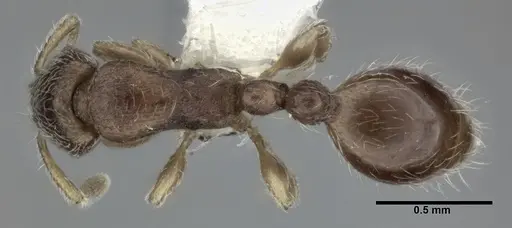
CASENT0246159
View on AntWeb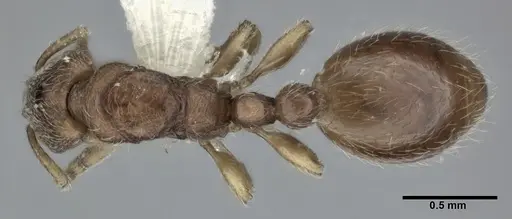
Literature
Loading...Loading products...