

Vitsika disjuncta
- Scientific Name
- Vitsika disjuncta
- Tribe
- Crematogastrini
- Subfamily
- Myrmicinae
- Author
- Bolton & Fisher, 2014
- Distribution
- Found in 1 countries
Vitsika disjuncta Overview
Vitsika disjuncta is an ant species of the genus Vitsika. It is primarily documented in 1 countries , including Madagascar. Detailed taxonomic data and occurrence records can be further explored via authoritative databases such as AntWeb or the Global Biodiversity Information Facility (GBIF).
Vitsika disjuncta
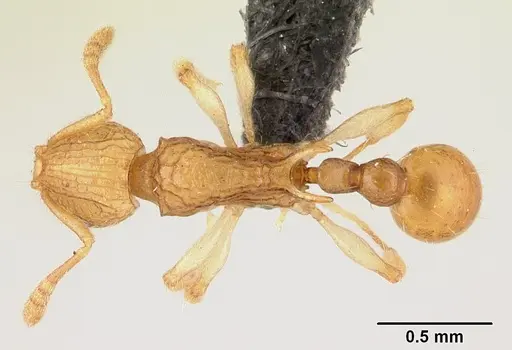
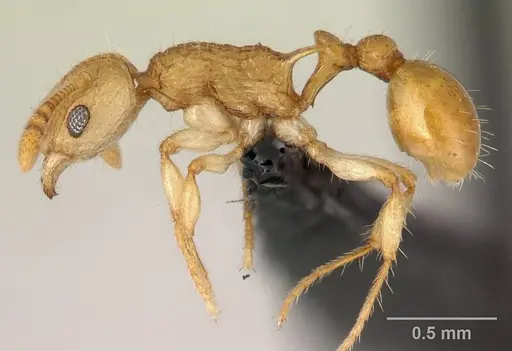
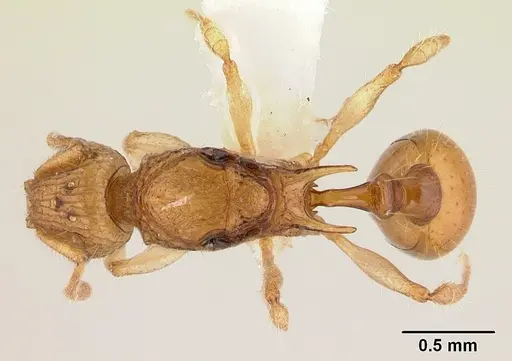
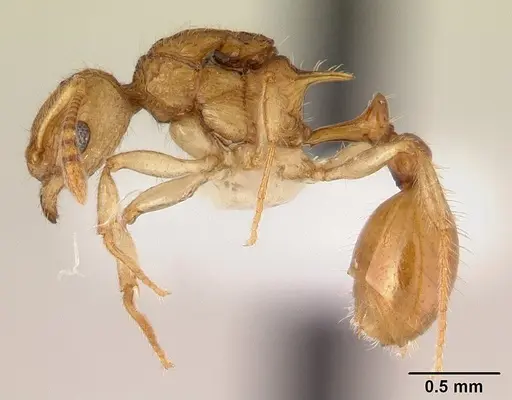
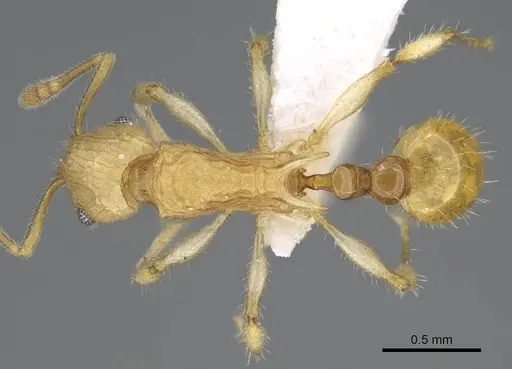
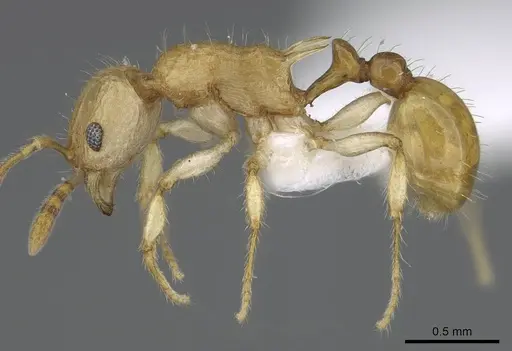
Vitsika disjuncta is a tiny yellow ant endemic to Madagascar, measuring just 2.5-3.1mm in total length [1]. Workers are entirely yellow with a smooth, glossy postpetiole and distinctive propodeal spines that form a raised peak or crest on the dorsal surface, this feature helps distinguish them from the similar Vitsika tenuis, which has strongly downcurved spines [1]. The species was described in 2014 and belongs to the Myrmicinae subfamily within the Crematogastrini tribe. All known specimens have been collected from leaf mold and rotten wood in rainforest habitats at 450m elevation in eastern Madagascar [1]. This is a rarely kept species in the antkeeping hobby, with limited documented captive care information.
Quick Summary
- Difficulty: Unknown, likely Advanced
- Origin & Habitat: Endemic to eastern Madagascar, specifically the Toamasina province region. All material has been collected from litter samples in rainforest habitats (leaf mold, rotten wood) at 450m elevation [1].
- Colony Type: Unknown, colony structure has not been documented. No data on whether colonies are single-queen or multi-queen.
- Size & Growth:
- Queen: Approximately 3.5mm estimated (only a single alate queen known from description: HL 0.67,HW 0.59mm) [1]
- Worker: 2.5-3.1mm total length [1]
- Colony: Unknown, no colony size data available
- Growth: Unknown
- Development: Unknown, no development data available. Based on similar small Myrmicinae from tropical regions, estimate 4-8 weeks at optimal temperature. (Development timeline is unconfirmed. Related Crematogastrini species typically complete development in 4-8 weeks in warm tropical conditions.)
- Antkeeping:
- Temperature: Keep at 22-26°C, this range reflects their Madagascar rainforest origin. A gentle gradient allowing warmer and cooler areas is recommended.
- Humidity: High humidity is essential. These ants live in leaf mold and rotting wood in rainforests, so the nest should be kept consistently moist. Aim for 70-85% humidity with damp substrate.
- Diapause: Unknown, as a tropical species from Madagascar, they likely do not require hibernation. However, seasonal temperature drops may slow activity.
- Nesting: Natural nesting occurs in leaf mold and rotting wood. In captivity, a moist naturalistic setup with substrate suitable for small ants works well. Y-tong nests with tight chambers or plaster nests with good moisture retention are appropriate options.
- Behavior: Behavior is poorly documented. As a tiny litter-dwelling ant, they likely prefer to stay hidden within the nest substrate. Escape prevention is critical due to their very small size, they can easily slip through standard barriers. Exercise caution with any handling as small Myrmicinae can deliver stings, though their sting apparatus is not as developed as in Ponerinae.
- Common Issues: escape prevention is critical due to their very small 2.5-3mm size, standard barriers may not contain them, no documented captive breeding success means keeping this species is experimental, humidity requirements are high, dry conditions will likely kill colonies, colony size is unknown but likely small based on litter-dwelling habit, males have never been collected, suggesting nuptial flight timing or behavior is unusual or poorly understood
Origin and Natural Habitat
Vitsika disjuncta is endemic to Madagascar, known only from the Toamasina province in the eastern rainforest region. The type locality is Sandranantitra at 450m elevation, where specimens were collected by sifting through leaf mold and rotten wood in rainforest habitats [1]. This litter-dwelling habit means they live in the damp, decomposing organic material on the forest floor rather than in soil or under stones. The rainforest environment provides consistently warm temperatures year-round and high humidity from both the canopy and the decomposing leaf litter. The yellow coloration is typical of many shade-dwelling forest ants that live in darker, humid microhabitats where bright coloring may help with visual communication in low-light conditions [1].
Identification and Distinguishing Features
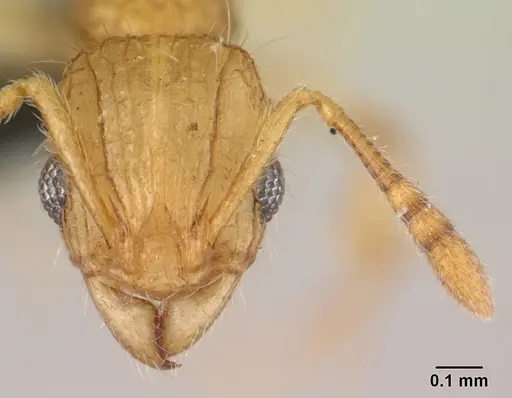
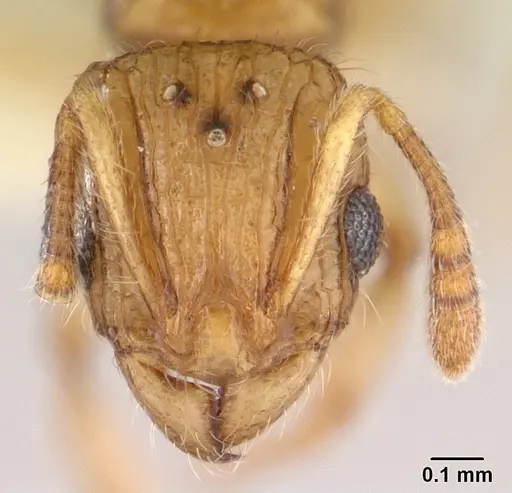
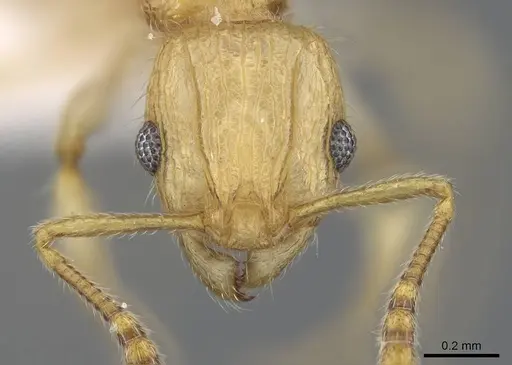
Workers measure 2.5-3.1mm total length and are entirely yellow in color [1]. The most distinctive feature is the propodeum, in profile, the dorsal outline rises to a markedly raised peak or angle just behind the metanotal groove, then drops steeply to the base of the propodeal spines [1]. The propodeal spines themselves are slender, slightly elevated, and weakly curved. The postpetiole (the segment behind the petiole) is smooth and glossy with no sculpturing. The eyes contain 6-7 rows of ommatidia with 8-9 in the longest row [1]. These ants closely resemble Vitsika tenuis, but that species typically has strongly downcurved propodeal spines and lacks the distinctive dorsal peak present in disjuncta [1]. Queens are similar in coloration but larger (HL 0.67mm) with longer, almost horizontal propodeal spines [1].
Temperature and Care
As a tropical rainforest species from Madagascar, Vitsika disjuncta requires warm and humid conditions. Maintain temperatures in the 22-26°C range, which reflects their natural environment in the eastern Madagascar lowland rainforests. A temperature gradient is recommended so the ants can self-regulate, allow one area of the nest to be slightly warmer while keeping another area cooler. Avoid temperatures below 20°C for extended periods. Heating cables or mats placed carefully can help maintain warmth, but ensure they do not dry out the nest too quickly. The key is maintaining both warmth AND humidity simultaneously, this is challenging but essential for this species. Room temperature may be suitable if your home stays in the low-to-mid 20s Celsius year-round.
Humidity and Nesting
High humidity is non-negotiable for this species. In the wild, they live in constantly moist leaf mold and rotting wood where the substrate never fully dries. Keep the nest substrate consistently damp but not waterlogged, there should be moisture visible but no standing water. The goal is similar to a wrung-out sponge. Using a moisture-retaining substrate like a mix of soil and organic material works well. Covering part of the nest setup helps retain humidity while still allowing some ventilation. Plaster nests or acrylic nests with water chambers can maintain humidity well. A hygrometer near the nest should read 70-85%. If you see condensation disappearing quickly or the ants clustering at the moisture source, the environment is too dry.
Feeding and Diet
Feeding behavior has not been documented for this species. As a small Myrmicinae that lives in leaf litter, they likely forage for tiny prey and may tend aphids or collect honeydew like many related Crematogastrini. Start with small protein sources: fruit flies, pinhead crickets, and small mealworms are appropriate sizes given their tiny 2.5-3mm worker size. Offer sugar sources occasionally, a small drop of honey water or sugar water may be accepted, though many litter ants prefer protein. Feed small amounts every 2-3 days and remove uneaten food to prevent mold. Given the lack of captive data, be prepared to experiment with different foods and observe what the colony accepts.
Colony Structure and Reproduction
Very little is known about the colony structure of Vitsika disjuncta. Only a single alate queen has been collected and described, and males have never been observed [1]. This makes it impossible to confirm whether they form single-queen colonies, multi-queen colonies, or something else entirely. The lack of collected males suggests either their nuptial flights occur at unusual times, they mate within the nest, or their reproductive behavior differs from typical ants. In captivity, assume single-queen colonies until proven otherwise. Do not attempt to combine unrelated queens as this has not been studied and would likely result in aggression.
Challenges and Considerations
This is an advanced species to keep due to the lack of captive care documentation. Expect a steep learning curve as you establish what works for this ant. The most critical issues are escape prevention (their tiny size means they can slip through gaps invisible to the eye), humidity maintenance (they will not survive dry conditions), and simply obtaining a colony (this species is rarely traded). Before acquiring this species, ensure you have experience keeping small tropical ants and can maintain high humidity consistently. Consider this an experimental species where you may need to develop your own care protocols based on related ant behavior.
Frequently Asked Questions
How big do Vitsika disjuncta ants get?
Workers are tiny at 2.5-3.1mm total length. Queens are larger at approximately 3.5mm. This makes them one of the smaller ant species kept in captivity [1].
What temperature do Vitsika disjuncta ants need?
Keep them at 22-26°C, reflecting their Madagascar rainforest origin. Avoid temperatures below 20°C.
Do Vitsika disjuncta ants need hibernation?
Probably not. As a tropical species from Madagascar, they likely do not require a diapause period. However, seasonal temperature variations may cause reduced activity.
What do Vitsika disjuncta ants eat?
Diet is unconfirmed. Likely accepts small protein sources like fruit flies and tiny insects. May also accept sugar water or honeydew. Start with small live prey appropriate to their 2.5mm worker size.
Are Vitsika disjuncta good for beginners?
No. This species is not recommended for beginners due to the lack of captive care documentation, their tiny size requiring excellent escape prevention, and high humidity requirements. Consider this an advanced or experimental species.
How long does it take for Vitsika disjuncta to develop from egg to worker?
Unknown, no development data exists for this species. Based on similar small Myrmicinae from tropical regions, estimate 4-8 weeks at optimal temperature, but this is an educated guess only.
Can I keep multiple Vitsika disjuncta queens together?
Unknown, colony structure has not been documented. Do not attempt to combine unrelated queens as this has not been studied and would likely result in fighting.
What type of nest should I use for Vitsika disjuncta?
Use a moist naturalistic setup with substrate suitable for tiny ants, or a Y-tong nest with tight chambers. Plaster nests with good moisture retention also work well. The key is maintaining high humidity.
Where is Vitsika disjuncta found in the wild?
This species is endemic to Madagascar, known only from the Toamasina province in eastern Madagascar. They live in leaf mold and rotting wood in rainforest habitats at 450m elevation [1].
Do Vitsika disjuncta ants sting?
As Myrmicinae, they have a stinger, but given their tiny 2.5mm size, any sting would be negligible. Most small Myrmicinae stings are not noticeable to humans.
How big do Vitsika disjuncta colonies get?
Unknown, no colony size data is available. Based on their litter-dwelling habit and tiny size, colonies are likely small, probably under 100 workers.
Why are Vitsika disjuncta so rarely kept?
This species was only described in 2014 and has a very limited natural distribution in Madagascar. They are rarely collected and even more rarely traded in the antkeeping hobby. Most keepers have never encountered this species for sale.
References

This caresheet is licensed under CC BY-SA 4.0 .
Literature
Loading...Loading products...