

Typhlomyrmex rogenhoferi
- Scientific Name
- Typhlomyrmex rogenhoferi
- Tribe
- Ectatommini
- Subfamily
- Ectatomminae
- Author
- Mayr, 1862
- Distribution
- Found in 13 countries
Typhlomyrmex rogenhoferi Overview
Typhlomyrmex rogenhoferi is an ant species of the genus Typhlomyrmex. It is primarily documented in 13 countries , including Brazil, Colombia, Costa Rica. Detailed taxonomic data and occurrence records can be further explored via authoritative databases such as AntWeb or the Global Biodiversity Information Facility (GBIF).
Typhlomyrmex rogenhoferi
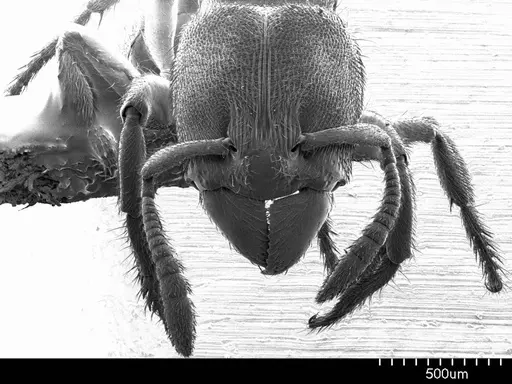
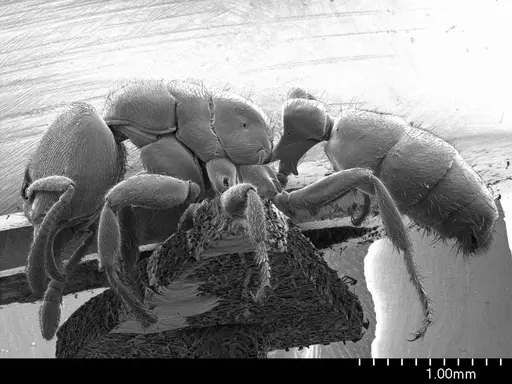
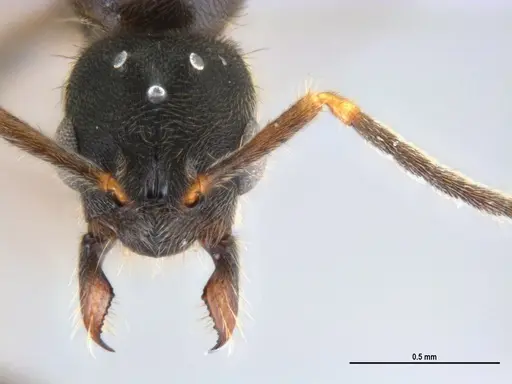
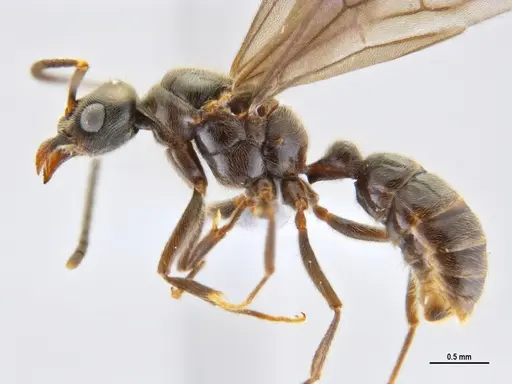
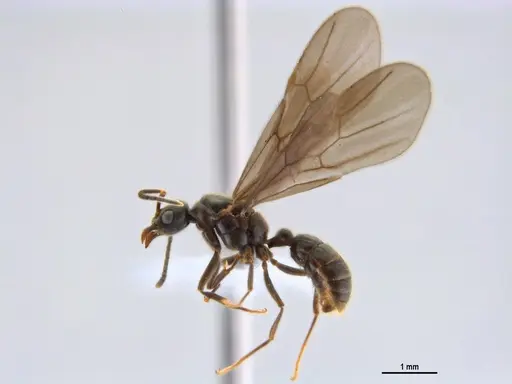
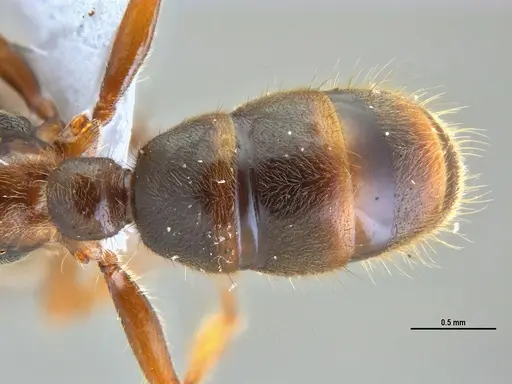
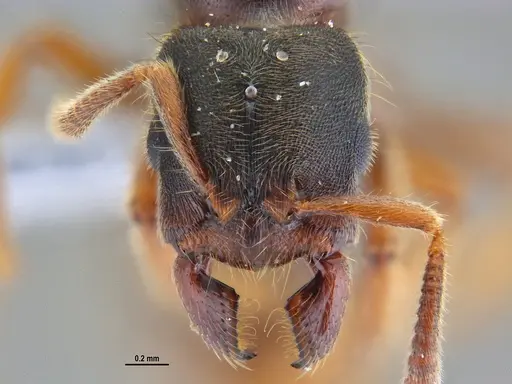
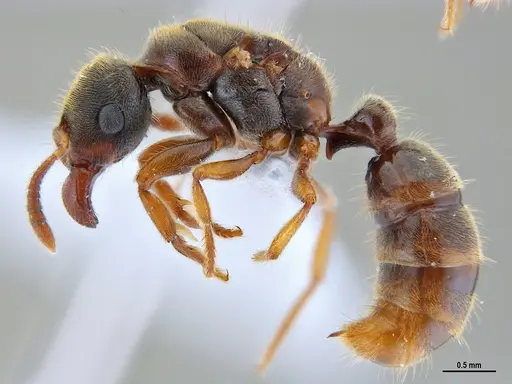
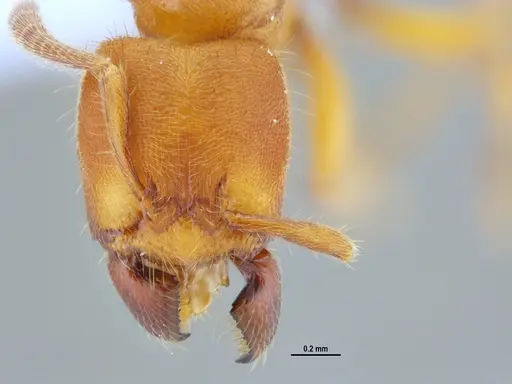
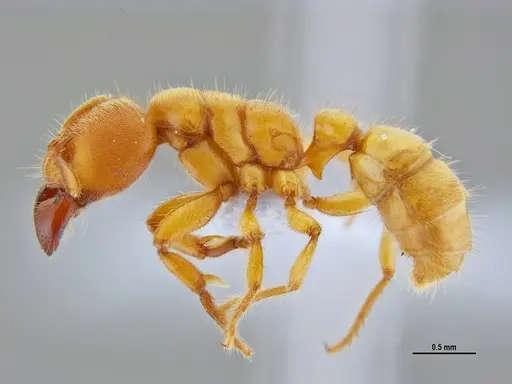
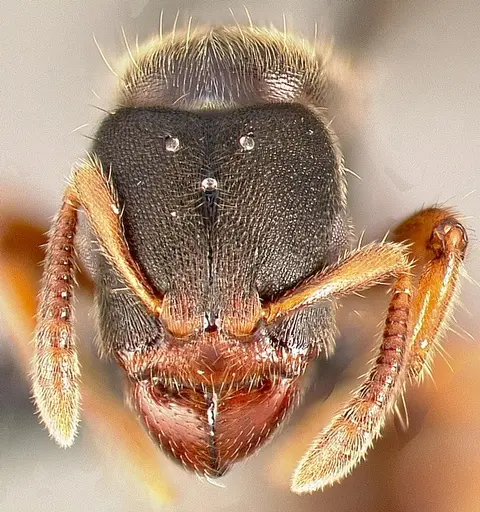
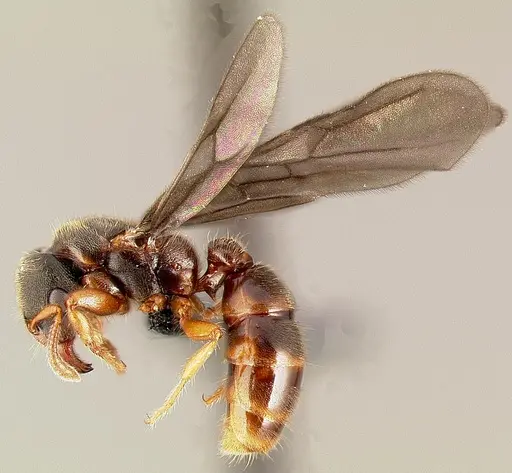
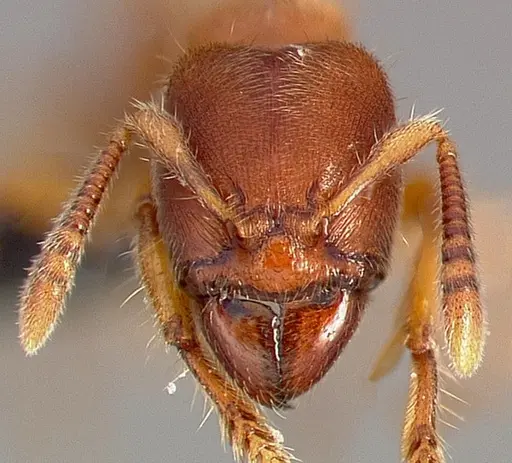
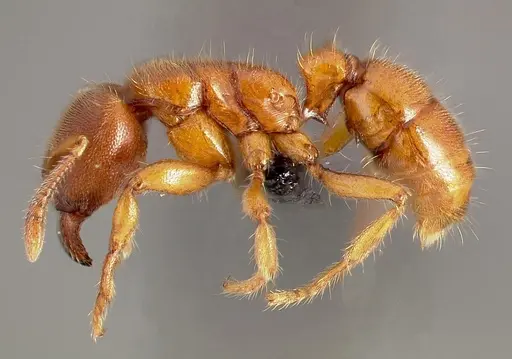
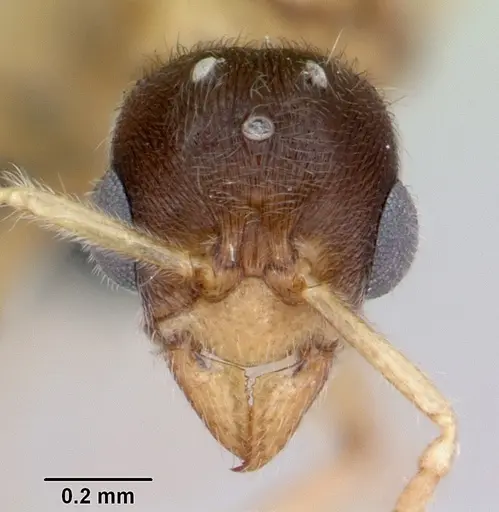
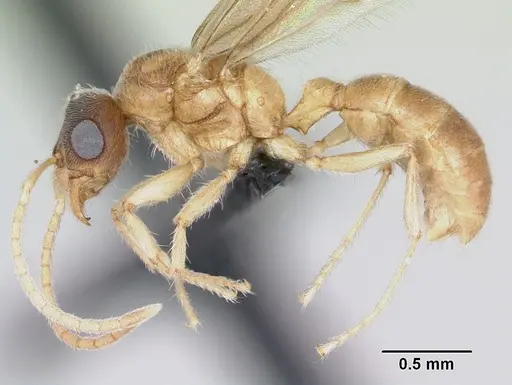
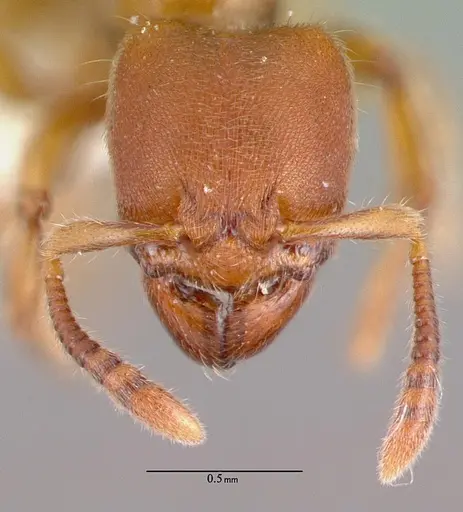
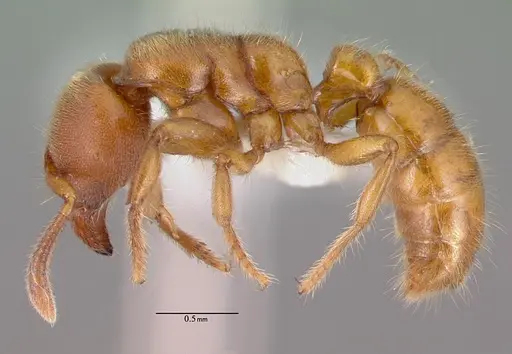
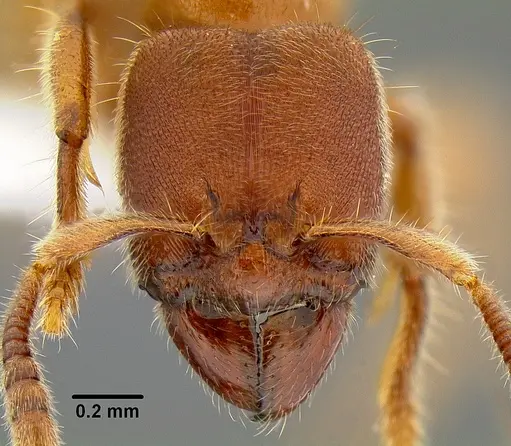
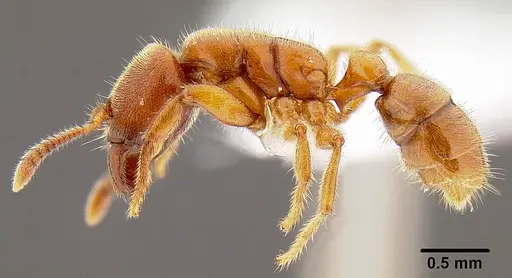
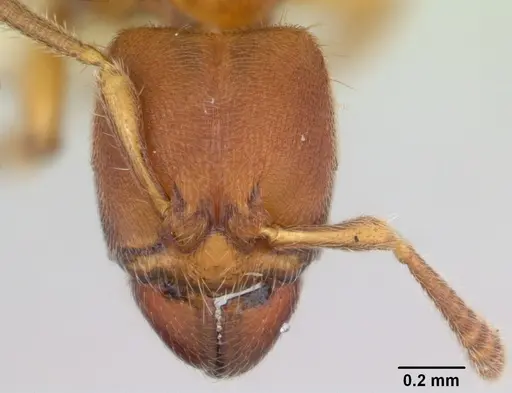
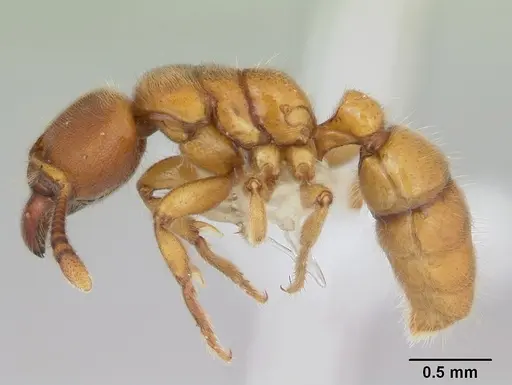
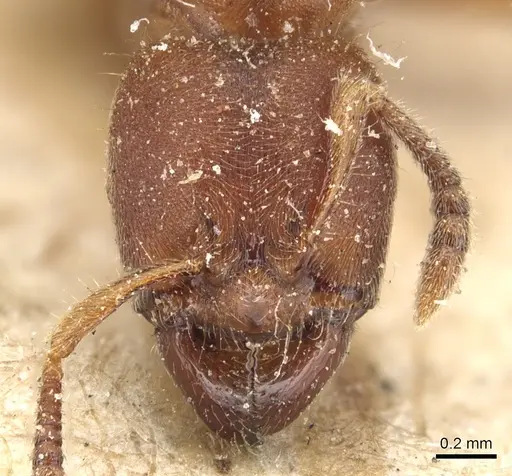
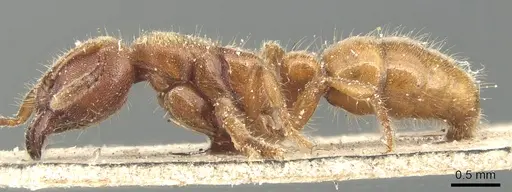
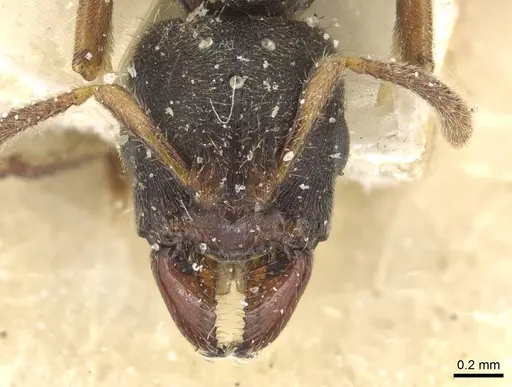
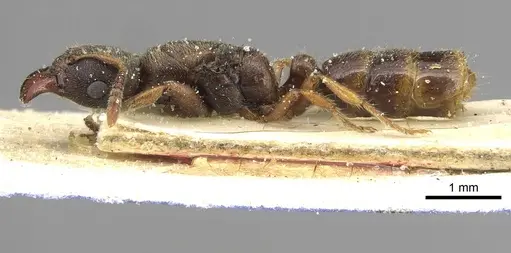
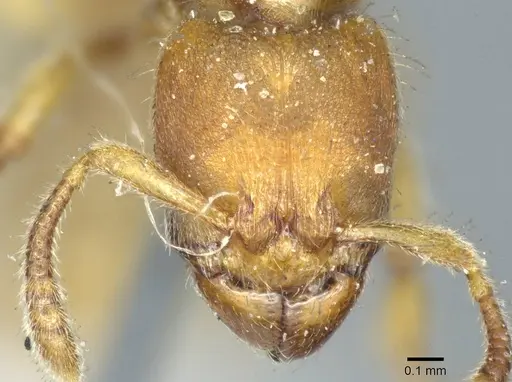
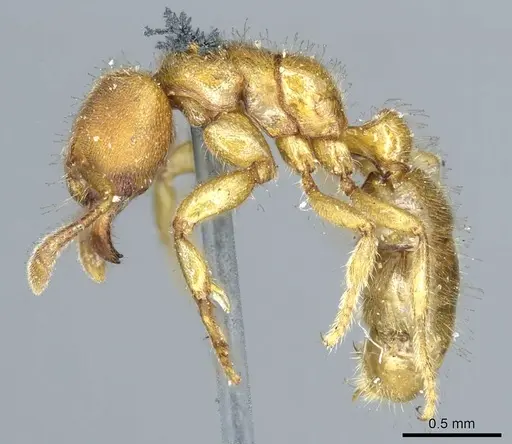
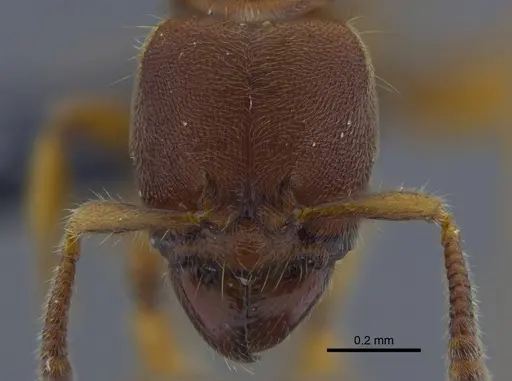
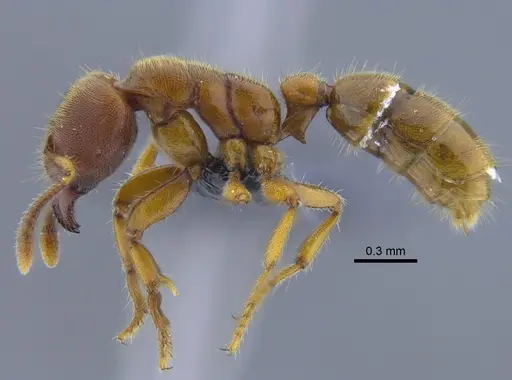
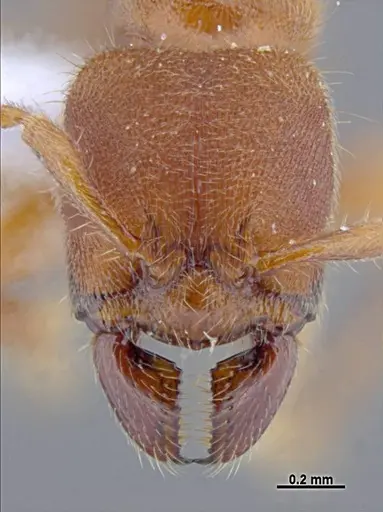
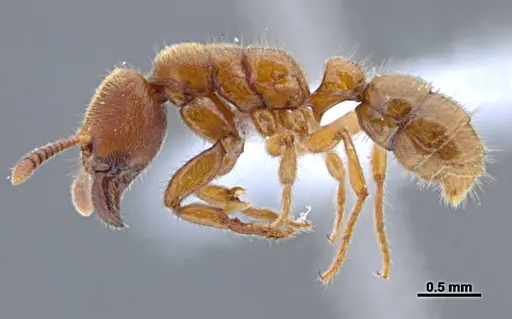
Typhlomyrmex rogenhoferi is a small but striking predatory ant native to the forests of Central and South America. Workers are the largest in the genus, reaching over 5mm in total length, and show remarkable size variation, some workers are nearly twice as big as others within the same colony [1]. They have a distinctive appearance with a somewhat square head,12-segmented antennae, and a pedunculate petiole. Unlike many related ants that nest underground, this species exclusively inhabits dead wood stumps, excavating networks of small chambers connected by narrow galleries [1].
What makes T. rogenhoferi truly unique is its fascinating relationship with firefly beetle larvae (Lampyridae). At least five species of these beetle larvae live inside the ant nests, and workers have been observed licking them for extended periods, one observation lasted over 25 minutes, likely attracted by a secretion from the beetles [1]. This species is also unusual among Ectatomminae for forming large colonies exceeding 2000 workers, when most related ants live in much smaller groups [1][2].
Quick Summary
- Difficulty: Medium
- Origin & Habitat: Neotropical forests from southern Mexico to northern Argentina, between 20°N and 30°S latitude. Found from sea level to over 2100m altitude in various forest types including restinga, ombrophile forest, and cerrado. Nests exclusively inside dead wood stumps of fallen trees [1][2].
- Colony Type: Strictly monogyne, colonies have a single queen. Colony foundation is haplometrotic, meaning a single queen establishes the colony alone. Colonies frequently exceed 2000 workers, which is unusually large for Ectatomminae [1].
- Size & Growth:
- Queen:{.size-link} Estimated 6-7mm based on genus patterns, queen size not specifically documented in available literature
- Worker:{.size-link} 5+mm total length, with marked polymorphism, workers range from single to double size (approximately 2X variation) [1]
- Colony: Frequently exceeds 2000 workers in mature colonies [1][2]
- Growth: Moderate, based on typical Ectatomminae development patterns
- Development: Estimated 6-10 weeks at tropical temperatures based on related Ectatomminae species (Development time is inferred from related species, specific timing for this species has not been directly studied)
- Antkeeping:
- Temperature: Keep at 24-28°C, they are a Neotropical species adapted to warm, humid forest conditions. A gentle gradient allowing workers to self-regulate is ideal
- Humidity: High humidity is essential, think damp forest floor. Keep the nest substrate consistently moist but not waterlogged. These ants naturally live in rotting wood that retains moisture [1]
- Diapause: No true diapause, nuptial flights occur throughout the year in their native range. In captivity, they remain active year-round but may slow slightly during cooler periods [1]
- Nesting: This species REQUIRES wood-based nesting. They will not accept test tubes or standard formicaria. Provide dead wood sections, cork nests, or custom wood setups. Nest chambers should be interconnected with narrow galleries a few millimeters in diameter [1]
- Behavior: These are cryptic, predatory ants that hunt alone inside their wood nests. Workers are not aggressive toward humans but possess a functional stinger, expect mild pain if stung, similar to related Ectatomma species. They show no recruitment behavior, when a worker finds prey, it returns alone without alerting nestmates. Escape prevention is important as they are small and can squeeze through tiny gaps. They are primarily nocturnal but can be active during daylight hours in captivity [1].
- Common Issues: Wood nesting requirement is non-negotiable, they will not thrive in test tubes or standard formicaria, Large colony size means they need significant space, plan for 2000+ workers, No recruitment means feeding can be challenging, prey items may be hoarded rather than shared, High humidity in wood can lead to mold if ventilation is poor, Escape prevention is critical due to their small size
Housing and Nesting
Typhlomyrmex rogenhoferi has very specific nesting requirements that set it apart from most commonly kept ants. In the wild, they nest exclusively inside dead wood stumps, not in soil, not under stones, but specifically within rotting wood [1]. This means standard test tube setups and typical formicaria will not work. You need to provide a wood-based nest.
The best options are: natural cork nests (readily available from ant suppliers), sections of dead hardwood with chambers carved or naturally present, or custom acrylic nests designed to simulate wood cavities. The nest should have multiple small chambers (roughly centimeter-sized) connected by narrow galleries just a few millimeters in diameter, this matches their natural nest architecture [1].
The outworld should also include wood pieces or cork bark so they can explore and forage in a more natural setting. A naturalistic setup with some soil and decaying wood pieces works well. Place the nest in a dark area or provide a dark cover, these are cryptic ants that prefer dim conditions [1].
Feeding and Diet
These are generalist predators that hunt small arthropods inside their wood nests. In laboratory feeding trials, they accepted various prey including beetles (Coleoptera), flies (Diptera), grasshoppers (Orthoptera), and harvestmen (Opilionida), showing a marked preference for fruit flies (Drosophila) [1].
Feed them small live or frozen prey items. Fruit flies (both wingless and regular) are an excellent staple, they're small enough for workers to handle and this species shows strong preference for them. Other suitable prey includes small crickets, mealworm pieces, and other tiny insects. Offer prey 2-3 times per week, adjusting based on colony size and consumption.
Unlike many ants, T. rogenhoferi does not use recruitment, when a worker finds prey, it returns alone without alerting others [1]. This means you may see workers hoarding prey items individually rather than the colony swarming around food. A small colony may take longer to consume prey items, so remove uneaten prey after 24-48 hours to prevent mold.
Sugar sources are not a primary part of their diet but may be occasionally accepted. Focus on protein-rich prey.
Temperature and Humidity
As a Neotropical species found from sea level to over 2100m elevation across diverse forest types, T. rogenhoferi prefers warm, humid conditions. Keep the nest area at 24-28°C, this falls within their natural range in Central and South American forests. A slight temperature gradient allows workers to self-regulate, with warmer chambers for brood development.
Humidity is critical. These ants live in rotting wood that naturally holds moisture, the nest substrate should feel damp to the touch. However, avoid standing water or waterlogging, which promotes mold. A well-hydrated wood nest will naturally maintain appropriate humidity. Check the wood periodically and rehydrate by adding water to a reservoir or misting very lightly if the wood starts drying out.
Unlike temperate species, they do not require hibernation or diapause. In their native range, nuptial flights occur throughout the year [1]. Your colony will remain active year-round, though they may be slightly less active during cooler periods.
Colony Structure and Growth
Typhlomyrmex rogenhoferi forms large colonies that can exceed 2000 workers, this is unusually large for Ectatomminae ants, most of which live in much smaller groups [1][2]. Colonies are strictly monogyne, meaning they have a single queen who is the sole egg-layer.
The species shows striking polymorphism, worker size can vary by nearly 2X between the smallest and largest workers in the same colony [1]. This size variation likely serves different roles within the nest, with larger workers potentially handling larger prey or nest maintenance.
Colony foundation appears to be haplometrotic, meaning a single queen establishes the colony alone [1]. After mating, the queen locates a suitable piece of dead wood, seals herself in a chamber, and raises her first brood using stored fat reserves until the nanitic (first) workers emerge.
Growth is moderate, expect several months from founding to first workers, then gradual expansion over 1-2 years to reach several hundred workers, and several more years to reach the 2000+ worker range.
Unique Associations
One of the most fascinating aspects of T. rogenhoferi is its relationship with firefly beetle larvae (Lampyridae). At least five species of these beetle larvae have been found living inside the ant nests, and the association appears to be mutualistic or at least peaceful, there's no predation of ant brood or adults by the beetles [1].
Workers have been observed licking the lampyrid larvae for extended periods, sometimes over 25 minutes at a time. Scientists believe this behavior is triggered by an attractive secretion produced by the beetle larvae [1]. This is a remarkable example of ant-beetle symbiosis.
In captivity, you are unlikely to replicate this association, but it highlights that this species is not a typical ant, they have complex ecological relationships. They are also known hosts for other beetle guests, including Apteranillus Foreli and Mesotrochus paradoxus [3][4].
Behavior and Temperament
These are cryptic, secretive ants that spend most of their time inside the dark chambers of their wood nests. Workers are not particularly aggressive and will flee rather than engage when disturbed. However, they possess a functional stinger inherited from their Ectatomminae ancestry, if threatened or handled roughly, they may sting.
The sting is not dangerous to healthy humans but causes mild pain similar to a mosquito bite or minor bee sting. Pain typically lasts a few minutes to an hour. Those with insect venom allergies should exercise caution.
A notable behavioral trait is their lack of recruitment. When a forager finds prey, it returns alone without leading other workers to the food source [1]. This is unusual among ants and means you won't see the dramatic swarming behavior seen in species like fire ants. Each worker operates somewhat independently.
They are primarily nocturnal in the wild but can be active at any time in captivity, especially if the nest is illuminated for observation.
Frequently Asked Questions
Can I keep Typhlomyrmex rogenhoferi in a test tube?
No. This species absolutely requires wood-based nesting. In the wild, they nest exclusively inside dead wood stumps, excavating chambers connected by narrow galleries. They will not thrive in test tubes, acrylic nests with plaster, or soil-based formicaria. Use cork nests, sections of dead hardwood, or custom wood-simulated setups [1].
How long does it take for the first workers to emerge?
Based on related Ectatomminae species, expect approximately 6-10 weeks from egg to first worker at warm tropical temperatures (around 26°C). The exact timeline for this species has not been directly studied, so this is an estimate. Queen founding appears to be haplometrotic, with the queen sealing herself in to raise the first brood alone [1].
Do Typhlomyrmex rogenhoferi ants sting?
Yes, they have a functional stinger. As members of Ectatomminae (the same subfamily as the well-known Ectatomma ants), they possess stingers. However, they are not aggressive and will flee rather than attack. If stung, expect mild pain similar to a mosquito bite, not dangerous but uncomfortable for a few minutes [1].
How big do colonies get?
Colonies frequently exceed 2000 workers, which is unusually large for Ectatomminae ants [1][2]. This makes them one of the larger colony species in their subfamily. A mature colony will need significant space and multiple wood nest sections to accommodate all workers.
What do Typhlomyrmex rogenhoferi eat?
They are generalist predators of small arthropods. In captivity, they accept various small insects but show a strong preference for fruit flies (Drosophila). Other suitable prey includes small crickets, mealworm pieces, and tiny insects. Feed them prey 2-3 times per week. They do not rely on sugar sources like honeydew, protein from prey is their primary nutrition [1].
Are these ants good for beginners?
Not ideal for beginners. Their specific wood-nesting requirement, large colony size needs, and the fact that they are not commonly available make them a more advanced species. They also require high humidity and warm temperatures year-round. If you're experienced with predatory ants like Amblyopone or Proceratium, you may find these manageable, but they are not a good first species [1].
Do they need hibernation or diapause?
No. In their native Neotropical range, nuptial flights occur throughout the year with no seasonal dormancy [1]. In captivity, they remain active year-round. You do not need to cool them down for winter, maintain warm temperatures (24-28°C) consistently.
Why do workers lick the beetle larvae in their nest?
This is one of the most fascinating aspects of the species. Workers frequently lick Lampyridae (firefly) beetle larvae that live in their nests, sometimes for 25 minutes or longer. Scientists believe the beetles produce an attractive secretion that the ants consume. This is a unique symbiotic relationship not commonly seen in other ant species [1].
Can I keep multiple queens together?
No. This species is strictly monogyne, colonies have a single queen. Colony foundation is haplometrotic, meaning a single queen establishes the colony alone. Multiple unrelated queens will fight, and there is no benefit to attempting pleometrosis (multiple queen founding) with this species [1].
When do nuptial flights occur?
Unlike temperate species with seasonal flights, T. rogenhoferi swarms throughout the year in its native range, apparently during daylight hours [1]. In captivity, if you have a mature colony, you may see alates (reproductives) emerge periodically rather than at a specific season.
Report an Issue
The current care sheet is based fully on literature. See inconsistencies, or something that's incorrect? Please , it will be resolved after review from an admin. Contributing to the blogs tab also helps providing information, to make us be able to further improve the caresheets. Thank you for your support!
References

This caresheet is licensed under CC BY-SA 4.0 .
ANTWEB1008599
View on AntWeb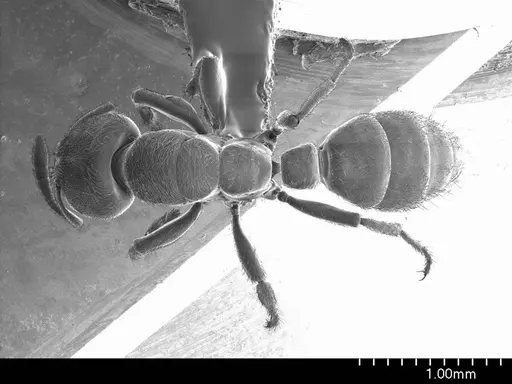
ANTWEB1047302
View on AntWeb
ANTWEB1047303
View on AntWeb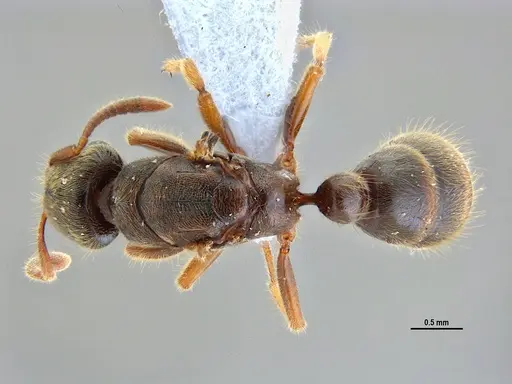
ANTWEB1047304
View on AntWeb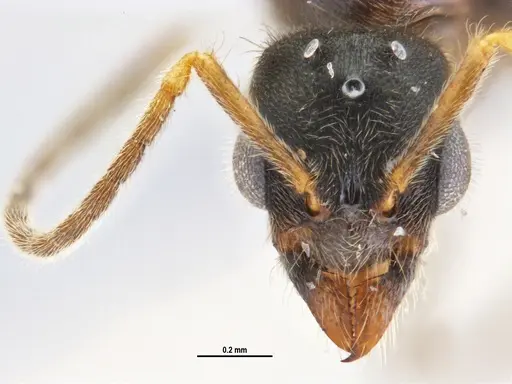
ANTWEB1047305
View on AntWeb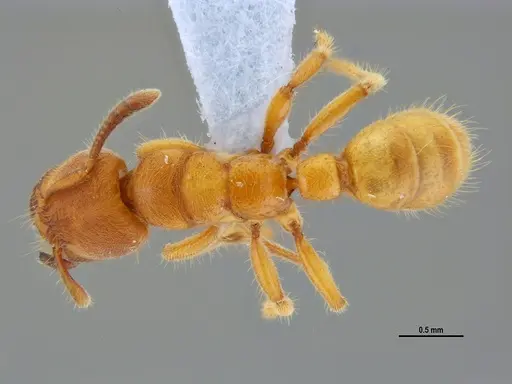
ANTWEB1062804
View on AntWeb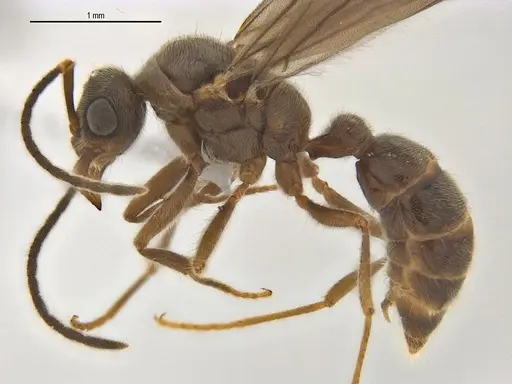
CASENT0000005
View on AntWeb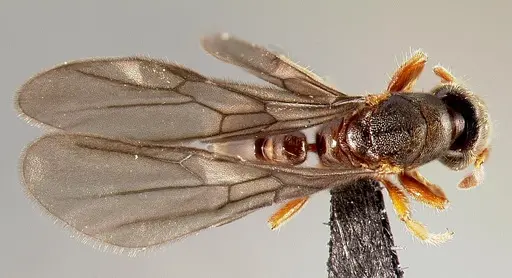
CASENT0004700
View on AntWeb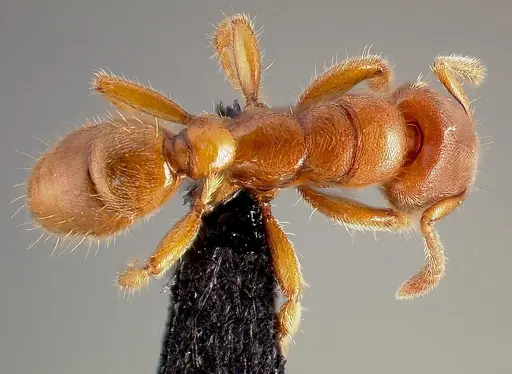
CASENT0006787
View on AntWeb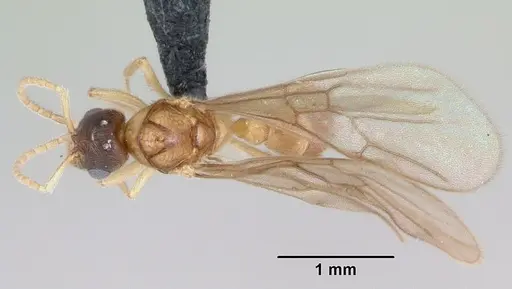
CASENT0010872
View on AntWeb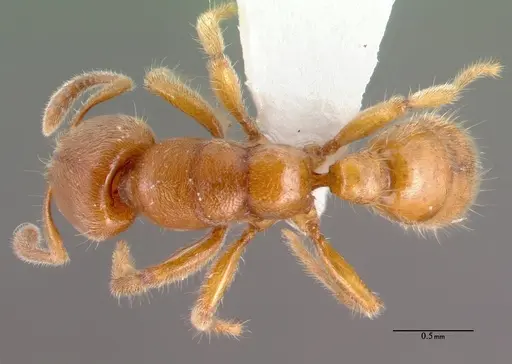
CASENT0106082
View on AntWeb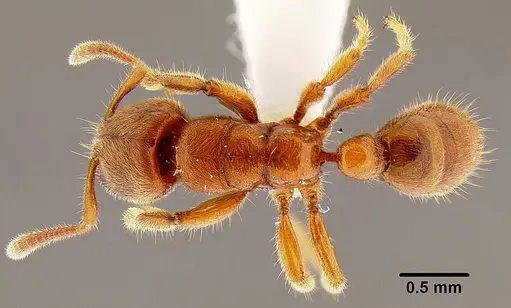
CASENT0173390
View on AntWeb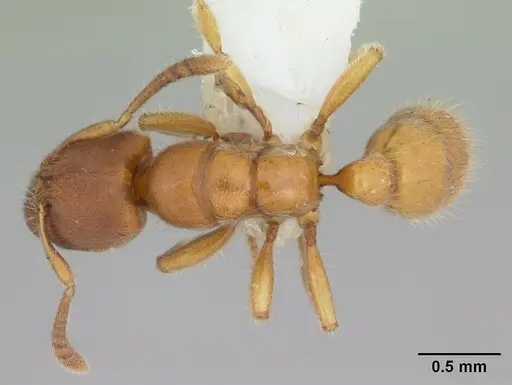
CASENT0903806
View on AntWeb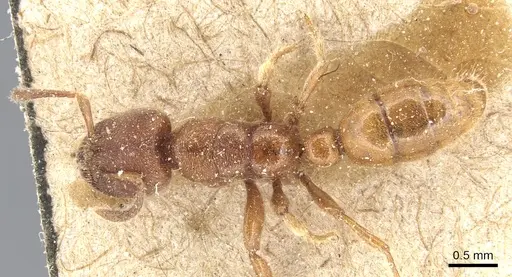
CASENT0915319
View on AntWeb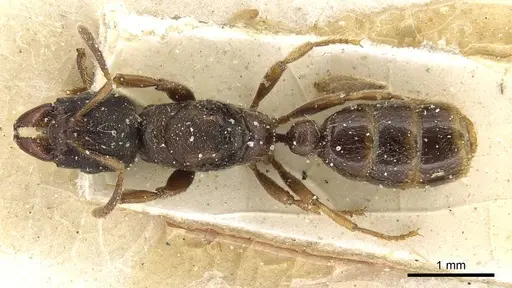
CASENT0915929
View on AntWeb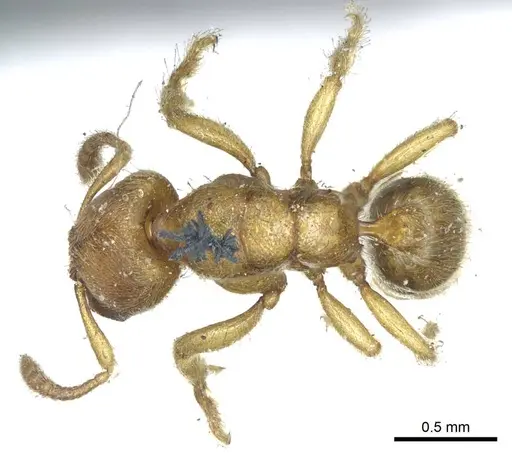
CBUMAGENT41771
View on AntWeb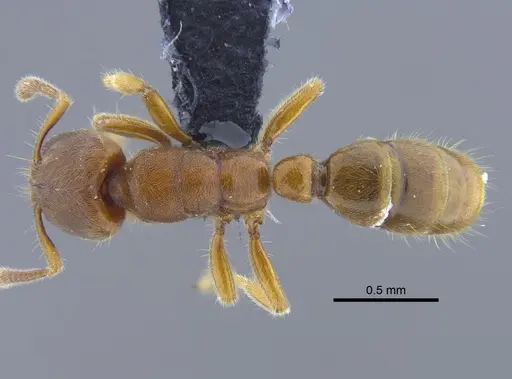
UFV-LABECOL-006013
View on AntWeb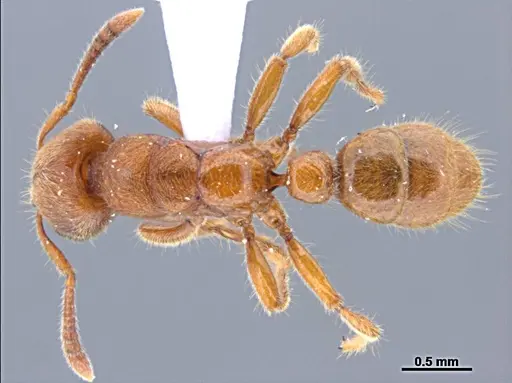
Literature
Loading...Loading products...