

Turneria dahlii
- Scientific Name
- Turneria dahlii
- Tribe
- Leptomyrmecini
- Subfamily
- Dolichoderinae
- Author
- Forel, 1901
- Distribution
- Found in 3 countries
Turneria dahlii Overview
Turneria dahlii is an ant species of the genus Turneria. It is primarily documented in 3 countries , including Papua New Guinea, Solomon Islands, Vanuatu. Detailed taxonomic data and occurrence records can be further explored via authoritative databases such as AntWeb or the Global Biodiversity Information Facility (GBIF).
Turneria dahlii
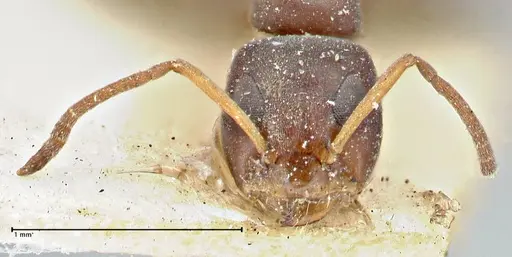
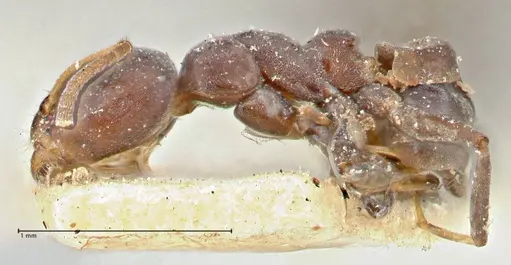
Turneria dahlii is a small arboreal ant species native to the Australasian region, found throughout New Guinea, the Solomon Islands, and Vanuatu. Workers are tiny at just 0.67-0.86mm in head length, with relatively large eyes and a uniform dark brown coloration. This species is one of the dominant arboreal ants in Pacific island rainforests, living high in the forest canopy where it nests in trees and plants like Hydnophytum. The species shows considerable morphological variation across its range, particularly in the shape of the mesonotum and propodeum. Queens are slightly larger with characteristic elongated heads and measure around 6-7mm total length. As a Dolichoderine ant, they lack a functional stinger and instead defend themselves by spraying formic acid.
Quick Summary
- Difficulty: Medium
- Origin & Habitat: New Guinea, Solomon Islands, and Vanuatu in tropical rainforests. Found on trees from sea level to 1000 meters elevation, most commonly below 100 meters. Often nests in epiphytic plants like Hydnophytum [1][2].
- Colony Type: Likely monogyne (single queen colonies), though colony structure is not well documented in scientific literature.
- Colony: Monogyne
- Size & Growth:
- Queen: Approximately 6-7mm (estimated from related Dolichoderines)
- Worker: 0.67-0.86mm head length [1]
- Colony: Unknown, no colony size data available
- Growth: Moderate, inferred from related tropical Dolichoderines
- Development: 6-10 weeks (estimated based on typical Dolichoderine development at 24-28°C) (Development timeline is unconfirmed for this specific species. Estimates based on genus-level patterns for tropical arboreal ants.)
- Antkeeping:
- Temperature: Keep at 24-28°C, these are tropical arboreal ants from rainforest environments. A gentle temperature gradient allows workers to regulate their body temperature.
- Humidity: High humidity (70-85%), rainforest canopy dwellers need consistently moist conditions. Provide water through moist substrate and occasional misting.
- Diapause: No, as a tropical species, they do not require hibernation. Keep temperatures stable year-round.
- Nesting: Arboreal setup works best, provide climbing structures like branches, cork bark, or artificial plants. A naturalistic setup with vertical climbing space mimics their natural canopy habitat. Test tubes can work for founding colonies but will need expansion space.
- Behavior: Generally peaceful and non-aggressive compared to many ants. They are arboreal and spend most of their time climbing on vegetation and structures rather than walking on the ground. Workers are small but active foragers. They likely tend honeydew-producing insects and collect nectar, typical of Dolichoderines. Escape prevention is critical due to their tiny size, they can squeeze through remarkably small gaps. Use fine mesh and tight-fitting lids.
- Common Issues: tiny size makes escape likely without fine mesh barriers, high humidity requirements can lead to mold if ventilation is poor, limited information means care is based on genus-level inference rather than species-specific research, tropical species may be sensitive to temperature drops below 24°C, wild-caught colonies may carry parasites that can devastate captive colonies
Housing and Nest Setup
Turneria dahlii is an arboreal species, meaning it lives in trees and spends most of its time climbing rather than walking on ground. Your setup should reflect this. Provide plenty of vertical space with branches, cork bark rounds, or artificial plants for them to climb on. A naturalistic terrarium-style formicarium works well, you can attach twigs and leaves to the walls as climbing routes. For founding colonies, a test tube setup can work, but add some small twigs or mesh inside so workers have surfaces to grip. Unlike ground-nesting ants, they don't need deep substrate, focus on vertical climbing space instead. Escape prevention is critical because these ants are tiny and can squeeze through gaps you might not notice. Use fine mesh (at least 0.5mm) on any ventilation holes and ensure all lids fit tightly. [1]
Feeding and Diet
Like other Dolichoderine ants, Turneria dahlii likely has a diet centered on honeydew, nectar, and small insects. In captivity, offer a mix of sugar sources (honey water, sugar water, or commercial ant nectar) and protein (small fruit flies, pinhead crickets, or other tiny insects). They are small ants, so prey items should be appropriately sized, wingless fruit flies and small mealworms work well. Provide sugar water constantly in a small test tube or cotton ball feeder. Feed protein 2-3 times per week, removing any uneaten prey after 24 hours to prevent mold. Fresh fruit like small pieces of apple or banana can also be offered occasionally. Observe your colony to determine their preferences and adjust feeding accordingly. [1]
Temperature and Humidity
As a tropical species from New Guinea and Solomon Islands rainforests, Turneria dahlii needs warm and humid conditions. Keep temperatures in the range of 24-28°C. You can use a low-wattage heating mat on one side of the enclosure to create a gentle gradient, but avoid direct heat that could dry them out. Place the heating mat on the side of the formicarium, not under it, to prevent excessive drying. Humidity should be high, aim for 70-85%. Mist the enclosure occasionally and keep water sources available. However, balance humidity with adequate ventilation to prevent mold growth, which can be deadly to ant colonies. If you see condensation constantly pooling on the walls, increase ventilation. If the substrate dries out quickly between mistings, increase humidity or mist more frequently. [1]
Behavior and Colony Dynamics
Turneria dahlii is an arboreal ant species, which means they have different behavior patterns than ground-nesting ants you're probably used to. Workers are small but active, constantly climbing on vegetation and structures within their enclosure. They are generally peaceful and less aggressive than many ant species, they rely more on chemical defense (formic acid spray, typical of Dolichoderines) than biting or stinging. Colonies likely grow at a moderate pace. Queens are not known to be particularly aggressive toward each other, but since colony structure is not well documented, it's best to start with a single queen if possible. These ants are not dangerous to humans, they lack a functional stinger and their formic acid spray is mild at the concentrations produced by small workers. [1]
Acquiring and Establishing Colonies
Finding Turneria dahlii for sale may be challenging since this is not a common species in the antkeeping hobby. If you do acquire a colony, it was likely wild-caught. Be aware that wild-caught colonies often carry parasites or diseases that can kill them in captivity. Quarantine new colonies and monitor them closely for the first few weeks. When establishing a founding queen, provide a small test tube with a water reservoir and a small piece of cotton to create humidity. Place the tube in a dark, quiet location and avoid disturbing her for 2-3 weeks. Once workers emerge, you can slowly introduce small prey items and connect the founding setup to a larger enclosure as the colony grows. [1]
Frequently Asked Questions
How long does it take for Turneria dahlii to raise their first workers?
The exact development time is unconfirmed for this species. Based on typical Dolichoderine development patterns at warm temperatures (24-28°C), expect around 6-10 weeks from egg to first worker. The queen will remain in her sealed chamber while eggs develop into larvae and pupae, then emerge as tiny first workers (nanitics).
Can I keep multiple Turneria dahlii queens together?
Colony structure is not well documented for this species, but it likely forms single-queen colonies like most Turneria species. Combining unrelated queens is not recommended since aggressive interactions could result in queen deaths. If you acquire a colony, assume it is a single-queen colony and house it accordingly.
Are Turneria dahlii good for beginners?
This species is rated as medium difficulty. While not the hardest species to keep, there is limited species-specific care information available, and their small size and high humidity requirements present challenges. Beginners might want to gain experience with more common species first. However, if you can provide the warm, humid, arboreal setup they need, they can be rewarding to keep.
Why are my Turneria dahlii escaping?
Their small size means they can escape through remarkably tiny gaps. Check all ventilation holes, lid seams, and connection points. Use fine mesh (0.5mm or smaller) on any openings. Even a gap the width of a hair can allow escape. Also ensure the enclosure is not too dry, stressed ants are more likely to explore and escape.
Do Turneria dahlii need hibernation?
No. As a tropical species from New Guinea and the Solomon Islands, they do not experience cold winters and do not require hibernation or diapause. Keep temperatures stable year-round in the 24-28°C range.
What do Turneria dahlii eat?
They likely feed on honeydew, nectar, and small insects like other Dolichoderines. In captivity, offer sugar water or honey water as a constant food source, and supplement with small protein sources like fruit flies, small mealworms, or tiny crickets 2-3 times per week.
How big do Turneria dahlii colonies get?
Colony size is not well documented in scientific literature. Based on related arboreal Dolichoderines, colonies likely reach several hundred to a few thousand workers over several years. Growth is moderate rather than explosive.
References

This caresheet is licensed under CC BY-SA 4.0 .
CASENT0909497
View on AntWeb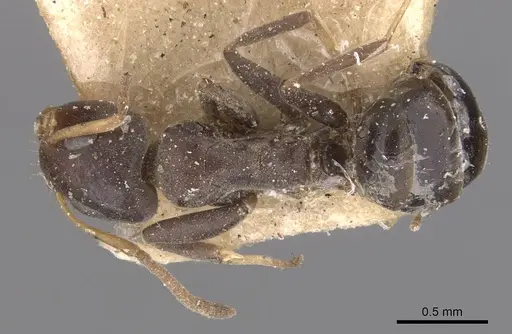
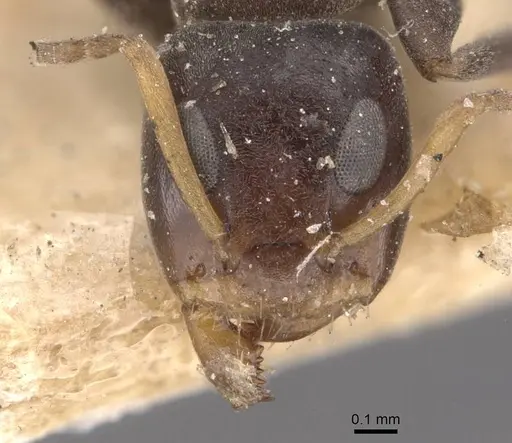
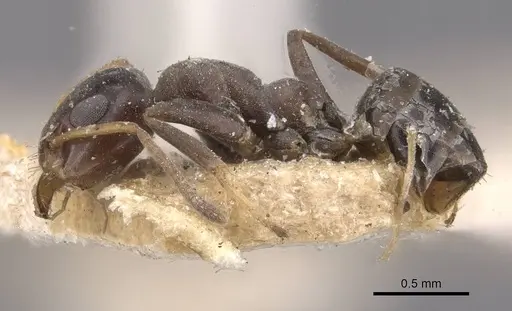
FOCOL2790
View on AntWeb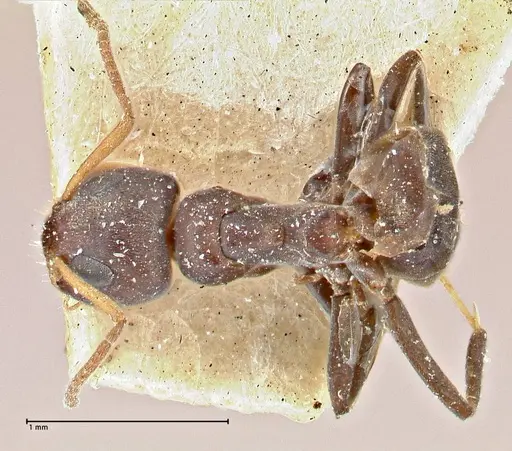
Literature
Loading...Loading products...