

Tropidomyrmex elianae
- Scientific Name
- Tropidomyrmex elianae
- Tribe
- Solenopsidini
- Subfamily
- Myrmicinae
- Author
- Silva <i>et al.</i>, 2009
- Distribution
- Found in 1 countries
Tropidomyrmex elianae Overview
Tropidomyrmex elianae is an ant species of the genus Tropidomyrmex. It is primarily documented in 1 countries , including Brazil. Detailed taxonomic data and occurrence records can be further explored via authoritative databases such as AntWeb or the Global Biodiversity Information Facility (GBIF).
Tropidomyrmex elianae
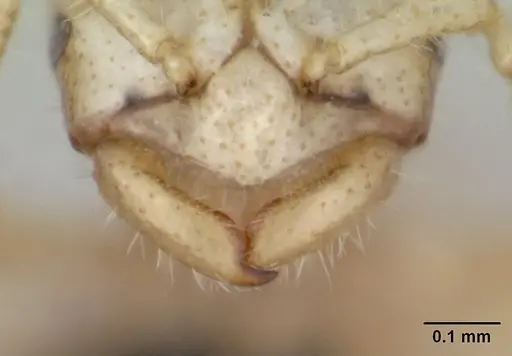
Tropidomyrmex elianae is the sole species in its genus, making it a true treasure for ant enthusiasts lucky enough to encounter it. Workers are tiny at just 2.4-2.6mm, with a distinctive pale yellowish body and remarkably thin, almost translucent integument [1]. The genus is instantly recognizable by its bilobed subpostpetiolar process, a unique feature among Solenopsidini ants, and its unusual mandibles bearing only a single curved apical tooth [1]. These ants are native to southeastern and central Brazil, specifically the Minas Gerais and Tocantins regions [1][2].
What makes T. elianae absolutely extraordinary is its lifestyle: this is one of the few ant species that lives directly alongside termites in perfect harmony. The type colony was discovered inside chambers of the termite Anoplotermes pacificus, where ants and termites shared the same spaces without any aggression, they were even observed antennating each other [1]. This peaceful co-habitation is remarkably rare, as most ant species that inhabit termite nests maintain separate cavities. The colony contained workers, ergatoid (wingless) queens, males, and brood all living together with their termite hosts [1].
Quick Summary
- Difficulty: Expert
- Origin & Habitat: Southeastern and central Brazil (Minas Gerais and Tocantins states). Found in montane rocky scrubland at 1267m elevation, and in leaf litter from secondary gallery forest and altered Cerrado areas [1][3][4][5].
- Colony Type: Ergatoid queen system, queens are wingless and virtually identical to workers, differing only in the presence of small ocelli and wing buds [1]. The colony fragment found had 3 workers,6 ergatoid gynes,10 alate males,19 male pupae, and 4 larvae [1]. Multiple ergatoid queens suggest a multi-queen colony structure.
- Colony: Polygyne
- Size & Growth:
- Queen: 2.24-2.95 mm (ergatoid gyne) [1]
- Worker: 2.42-2.57 mm [1]
- Colony: Small, only a few workers known from field collections [1]
- Growth: Unknown, no captive breeding data available
- Development: Unknown, no development data exists for this species (No captive breeding has been documented. Development timeline cannot be estimated from related species due to unique biology.)
- Antkeeping:
- Temperature: Unknown, no captive temperature data exists. Based on Brazilian tropical to subtropical distribution (Minas Gerais, Tocantins), aim for 22-28°C and monitor colony activity.
- Humidity: Likely requires moderate to high humidity given its association with termite nests in underground chambers. Keep substrate consistently moist but not waterlogged.
- Diapause: Unknown, no overwintering data exists. Brazil experiences mild winters, so significant dormancy is unlikely.
- Nesting: Cannot be recommended for captive keeping. This species has never been kept in captivity and depends on living with termites, a requirement impossible to replicate in a formicarium.
- Behavior: No behavioral observations from captive colonies exist. In the wild, they are peaceful symbionts living alongside termites without aggression [1]. Workers likely forage in leaf litter given the two workers collected from Winkler extractor samples [1]. Escape risk cannot be assessed but their small size suggests some risk.
- Common Issues: This species has never been kept in captivity, no husbandry protocols exist, Dependent on living with termites (Anoplotermes pacificus), impossible to replicate in captivity, Extremely rare in the wild with only a handful of specimens ever collected, Ergatoid queens mean nuptial flight behavior is unknown, no mating flights to catch alates, No captive breeding data means no guidance on colony establishment or growth
The Termite Relationship
Tropidomyrmex elianae is one of the most remarkable ant discoveries of recent decades, it lives in peaceful association with the termite Anoplotermes pacificus. The type colony was found inside small chambers (approximately 2 x 1cm) of a ground termite nest in Serra de São José, Minas Gerais, Brazil [1]. Unlike most ant species that inhabit termite nests in isolated cavities, T. elianae ants and termites shared the exact same nest chambers [1]. Researchers observed the ants and termites interacting without any agonistic behavior, they even antennated each other, a form of chemical communication [1]. This is an extraordinary symbiosis that has never been replicated in captivity and cannot be recommended for antkeepers. The colony contained workers, ergatoid (wingless) queens, males, and brood all coexisting with their termite hosts [1]. This relationship appears obligate, the ants have never been found nesting independently.
Unique Morphology
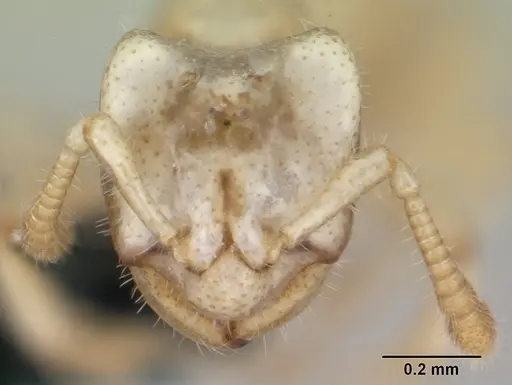
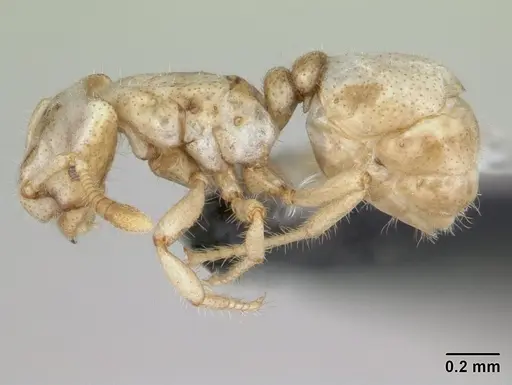
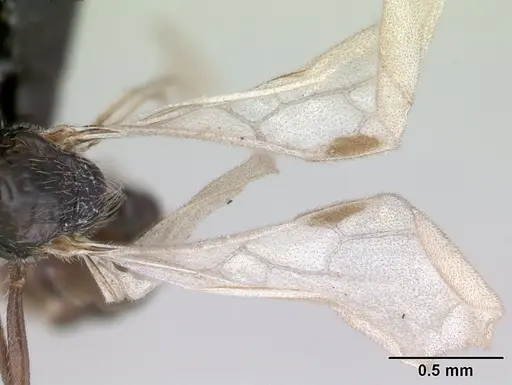
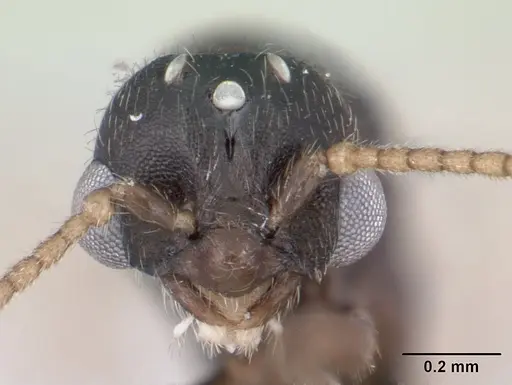
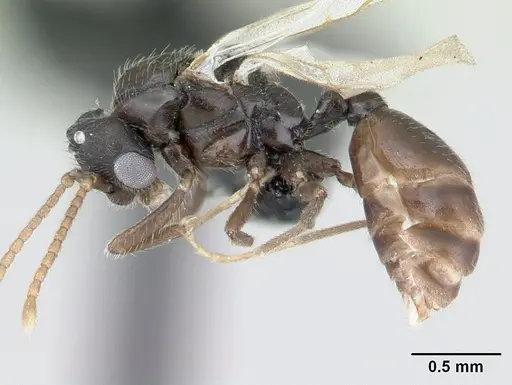
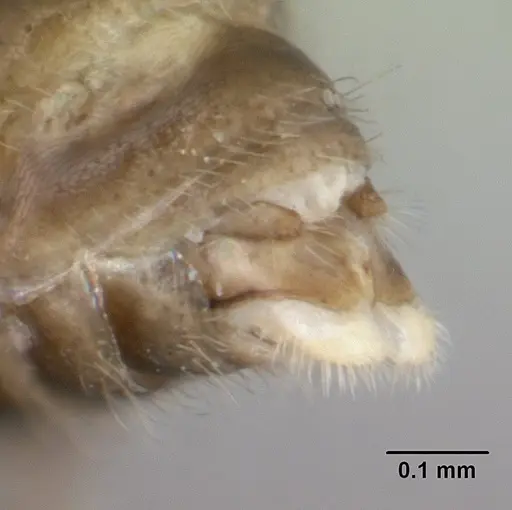
Tropidomyrmex is a genus of extreme morphological reductions, possibly adaptations to its specialized lifestyle [1]. Workers are tiny at 2.4-2.6mm with an extremely thin, pale yellowish integument that appears almost translucent [1]. The genus can be easily distinguished from all other ant genera by its bilobed subpostpetiolar process, a distinctive feature on the underside of the postpetiole [1]. Within the Solenopsidini tribe, it is also unique in having mandibles with only a single curved apical tooth [1]. Compound eyes are remarkably reduced, containing only about four minute facets at maximum diameter [1]. Queens are ergatoid, meaning they are wingless and nearly identical to workers, differing only in the presence of three small ocelli and tiny wing buds [1]. This ergatoid condition means colonies likely reproduce without typical nuptial flights.
Distribution and Habitat
T. elianae is known only from Brazil, specifically two widely separated regions: Minas Gerais in southeastern Brazil and Tocantins in central-northern Brazil [1]. The type locality in Minas Gerais is Serra de São José near Tiradentes, at an elevation of 1267m in montane rocky scrubland [1]. The two additional workers collected came from leaf litter samples in Tocantins, one from deep leaf litter along a secondary dirt road bordering secondary gallery forest near the Vaca Velha stream in Serra da Cangalha, and another from highly altered forest adjacent to open Cerrado [1]. This patchy distribution and extreme rarity (only 5 workers have ever been collected) makes this species exceptionally difficult to study [1].
Captive Keeping Status
Tropidomyrmex elianae cannot be recommended for antkeeping and has never been maintained in captivity. The primary challenge is its obligate relationship with termites, the ants have never been found nesting independently and likely cannot survive without their termite hosts [1]. Additionally, this species is among the rarest ants in the world with only a handful of specimens ever collected. There is no information on their diet, temperature preferences, humidity needs, or any aspect of captive husbandry. Ergatoid queens suggest colonies may reproduce through budding or internal mating rather than nuptial flights, making colony establishment from wild-caught queens essentially impossible. For these reasons, T. elianae remains a species best appreciated through scientific literature rather than in a formicarium.
Frequently Asked Questions
Can I keep Tropidomyrmex elianae as a pet ant?
No. This species has never been kept in captivity and cannot be recommended. It has an obligate relationship with termites (Anoplotermes pacificus), the ants have never been found nesting independently, making captive maintenance essentially impossible [1].
Where does Tropidomyrmex elianae live?
Only in Brazil, specifically the Minas Gerais and Tocantins states. The type colony was found in montane rocky scrubland at 1267m elevation in Serra de São José [1].
How big are Tropidomyrmex elianae workers?
Workers are tiny at just 2.42-2.57mm in total length [1].
Why are they so special?
T. elianae is the only species in its genus and lives in peaceful association with termites, sharing the same nest chambers without any aggression. This is extremely rare among ants. They also have unique morphology including bilobed subpostpetiolar processes and single-toothed mandibles [1].
Do Tropidomyrmex elianae queens have wings?
No. Queens are ergatoid, meaning they are wingless and nearly identical to workers, differing only in having small ocelli and wing buds [1].
How many workers do colonies have?
Colonies appear to be very small. The type colony fragment contained only 3 workers along with 6 ergatoid queens,10 males, and brood [1]. Only 5 workers have ever been collected worldwide.
What do they eat?
Unknown. No feeding observations have been documented. Their tiny size and reduced eyes suggest they may be specialized predators or scavengers in leaf litter [1].
Are they aggressive?
They appear peaceful, at least toward their termite hosts. The colony showed no agonistic behavior toward the termites they lived with, and they were observed antennating each other [1]. Nothing is known about their behavior toward other species.
Can I catch a queen to start a colony?
Extremely unlikely. Queens are ergatoid (wingless) so there are no nuptial flights to catch them from. The species is also among the rarest ants in the world with only a handful of specimens ever collected [1].
Do they need hibernation?
Unknown. Brazil has mild tropical to subtropical climates, so significant dormancy is unlikely, but no overwintering behavior has been documented [1].
What makes this genus unique?
Tropidomyrmex is the only ant genus with bilobed subpostpetiolar processes and the only Solenopsidini with mandibles bearing a single apical tooth. It also represents extreme morphological reductions possibly due to its specialized habitat [1].
Is this a good beginner ant?
Absolutely not. This species has never been kept in captivity, has an obligate relationship with termites that cannot be replicated, and is one of the rarest ant species in the world. It should only be appreciated through scientific study [1].
References

This caresheet is licensed under CC BY-SA 4.0 .
CASENT0173620
View on AntWeb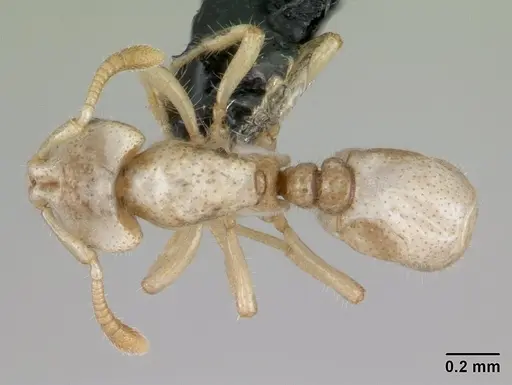
CASENT0189192
View on AntWeb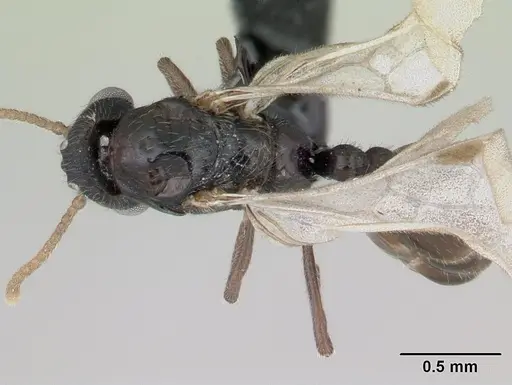
Literature
Loading...Loading products...