

Trachymyrmex pakawa
- Scientific Name
- Trachymyrmex pakawa
- Tribe
- Attini
- Subfamily
- Myrmicinae
- Author
- Sánchez-Peña <i>et al.</i>, 2017
- Distribution
- Found in 1 countries
Trachymyrmex pakawa Overview
Trachymyrmex pakawa is an ant species of the genus Trachymyrmex. It is primarily documented in 1 countries , including Mexico. Detailed taxonomic data and occurrence records can be further explored via authoritative databases such as AntWeb or the Global Biodiversity Information Facility (GBIF).
Trachymyrmex pakawa
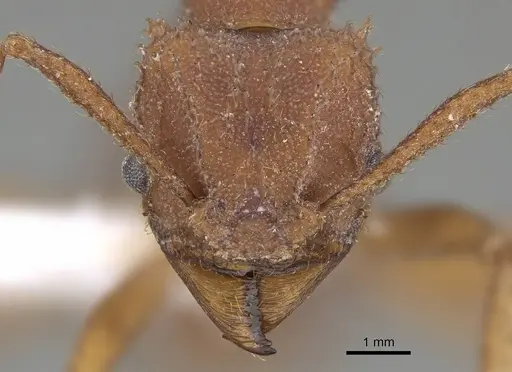
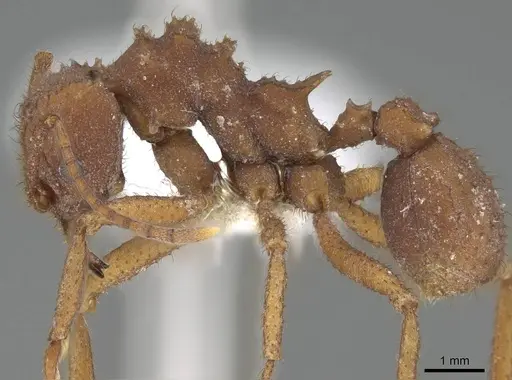
Trachymyrmex pakawa is a large fungus-growing ant species native to the Sierra Madre Oriental mountain range in northeastern Mexico. Workers measure 0.94-1.25mm with a distinctive dark reddish-brown color and notably long antennal scapes that extend well past the back of the head [1]. The head is trapezoidal and weakly cordate, with a rough, sandpaper-like body texture covered in small tubercles and spines [1]. This species is one of the largest North American Trachymyrmex and belongs to the septentrionalis species group, being the closest geographically to Neotropical species in the region [1].
What makes T. pakawa special is its cryptic lifestyle, it nests under and between large limestone boulders on steep rocky slopes, with nest entrances so inconspicuous that there is no mound, crater, or turret to mark the location [1]. Workers forage singly and are extremely shy, retreating into the nest or feigning death when disturbed. They avoid open spaces, instead traveling between vegetation and rocks [1]. As a fungus-growing ant, T. pakawa cultivates a fungal garden for food, a unique trait shared with all Attini tribe ants.
Quick Summary
- Difficulty: Medium
- Origin & Habitat: Sierra Madre Oriental mountain range in northeastern Mexico (Coahuila and Nuevo León states), specifically in the northern Gran Sierra Plegada range between Monterrey and Saltillo. They inhabit very rocky soils on moderate to steep slopes under large limestone boulders, in montane habitats including oak-pine forests, gallery forests, and xerophilous Chihuahuan scrub [1][2].
- Colony Type: Single-queen colonies (monogyne) with documented colony sizes of 200-300 workers in mature nests [1].
- Colony: Monogyne
- Founding: Claustral
- Size & Growth:
- Queen: 1.28mm head width [1]
- Worker: 0.94-1.25mm head width (mean 1.115mm) [1]
- Colony: 200-300 workers in mature colonies [1]
- Growth: Moderate, inferred from related Trachymyrmex species
- Development: Estimated 6-10 weeks based on typical Attini development patterns (Development times not specifically documented for this species, estimates based on genus-level data for fungus-growing ants)
- Antkeeping:
- Temperature: Keep at 22-26°C, they inhabit warm-temperate mountain habitats with annual precipitation of 300-600mm [1]. Provide a gentle temperature gradient.
- Humidity: Moderate humidity (50-70%). They nest in rocky areas where soil moisture varies, provide a moist but not waterlogged nest chamber, with some drier areas available.
- Diapause: Likely requires winter rest period. Based on their temperate mountain habitat in northeastern Mexico, expect a mild diapause during winter months.
- Nesting: Y-tong (AAC) nests or naturalistic setups with flat stones work well. They naturally nest under and between rocks, so provide tight chambers scaled to their medium size. Avoid open spaces, they prefer concealed nesting sites.
- Behavior: Shy and cryptic. Workers forage singly rather than in trails, and only about 4 ants are typically visible near the nest at any time [1]. When disturbed, they retreat inside or feign death. They are not aggressive and will avoid confrontation. Escape risk is moderate, use standard barrier methods. As fungus growers, they require fungal substrate rather than typical ant food.
- Common Issues: Fungus cultivation can fail if nest conditions are too dry or unstable, Shy foraging behavior means you may not see much activity, this is normal, not a problem, Very inconspicuous nests mean colonies can be easily overlooked or disturbed during maintenance, Not found in disturbed habitats, wild-caught colonies may struggle with captive conditions, Colony size remains modest (200-300) compared to many common ant species
Housing and Nest Setup
Trachymyrmex pakawa requires careful housing that mimics their natural rocky habitat. Y-tong (AAC) nests work well because they provide dark, concealed chambers that these shy ants prefer. The chambers should be appropriately sized for medium-sized ants (around 1mm workers). Naturalistic setups with flat stones placed over soil can also work, as they naturally nest under and between large boulders [1]. Avoid tall, open spaces, these ants feel exposed and may not thrive. Test tube setups can work for founding colonies but may need to be upgraded as the colony grows. Escape prevention is important but not as critical as with tiny ants, standard barriers like fluon on smooth surfaces are usually sufficient.
Fungus Cultivation and Feeding
This is the most critical aspect of keeping T. pakawa. As fungus-growing ants (Attini), they do not eat typical ant foods like sugar water or insects. Instead, they cultivate a fungal garden that serves as their primary food source. In captivity, you must provide suitable fungal substrate, typically a moist mixture that supports fungal growth. Some keepers use pre-made fungus substrate or cultivate the fungus from wild-caught colonies. The fungus needs consistent moisture and appropriate temperature to survive. Research suggests these ants are generalist fungus cultivators, but specific substrate requirements are not well documented. Never feed them honey, sugar water, or typical protein sources, they cannot digest these and it may harm the colony. Fresh plant material and detritus can be added to support fungal growth. [1]
Temperature and Climate Control
Keep nest temperatures in the 22-26°C range. T. pakawa comes from warm-temperate habitats in the Sierra Madre Oriental where temperatures vary with elevation (600-1900m) [1]. A heating cable on one side of the nest can create a gentle gradient, allowing ants to regulate their own temperature. Avoid overheating, the fungus they cultivate is sensitive to temperature extremes. Room temperature within this range is often suitable without additional heating. Monitor colony activity to gauge comfort, if ants cluster persistently in one area, adjust the temperature accordingly.
Humidity and Moisture
Maintain moderate humidity (50-70%) in the nest. These ants inhabit rocky areas where conditions are not perpetually wet, they experience seasonal variation with 300-600mm annual precipitation [1]. The nest substrate should feel damp but never waterlogged. Provide a water tube or moisture chamber that allows the ants to access water as needed. On the outworld, occasional misting can help maintain conditions, but avoid constant dampness that promotes mold. The fungus cultivation requires consistent (not excessive) moisture, too dry and the fungus dies, too wet and it drowns.
Behavior and Observation
T. pakawa is an exceptionally shy and cryptic species. Workers forage singly rather than in trails, and only about 4 ants are typically visible near the nest at any time [1]. This low activity level is normal, do not mistake it for a problem. Foragers avoid open flat spaces and clearings, instead traveling along vegetation and rocks [1]. When disturbed, they retreat inside the nest or feign death by dropping to the ground. This makes them difficult to observe in the field and can be challenging for keepers who want active, visible colonies. If you want to see more activity, ensure the outworld has plenty of cover and pathways that make them feel secure.
Colony Growth and Development
Mature colonies reach 200-300 workers, which is modest compared to many common ant species [1]. Growth is likely moderate, similar to other Trachymyrmex species. The founding queen seals herself in (claustral founding) and raises the first workers alone on her stored fat reserves. First workers (nanitics) are typically smaller than mature workers. As the colony grows, more workers will emerge and begin foraging. The key to successful growth is maintaining stable fungal substrate, without a healthy fungus garden, the colony cannot develop. Be patient during the founding phase, as fungus-growing ants often take longer to establish than species that accept varied foods.
Frequently Asked Questions
Can I keep Trachymyrmex pakawa in a test tube?
Yes, test tubes work for founding colonies. Use a standard test tube setup with a water reservoir. However, you will need to provide fungal substrate for the colony to survive, this is critical for fungus-growing ants. Monitor moisture levels carefully and upgrade to a larger nest as the colony grows beyond 50-100 workers.
What do Trachymyrmex pakawa eat?
They do not eat typical ant foods. As fungus-growing ants, they cultivate a fungal garden for nutrition. You must provide suitable substrate that supports fungal growth, they cannot survive on sugar water, honey, or insects alone. Fresh plant material and organic detritus can help support the fungus.
How long until first workers in Trachymyrmex pakawa?
Estimated 6-10 weeks from egg to first worker at optimal temperature (around 24°C). This is based on typical Attini development patterns, as specific timing has not been documented for this species. The claustral queen seals herself in and raises the first brood alone using stored fat reserves.
Are Trachymyrmex pakawa good for beginners?
No, this is a medium-difficulty species best suited for keepers with some experience. The critical challenge is maintaining a healthy fungal garden, which requires more specialized care than typical ants that eat sugar and protein. Their shy behavior and low activity can also make them seem inactive, leading to unnecessary concern.
How big do Trachymyrmex pakawa colonies get?
Mature colonies reach 200-300 workers [1]. This is relatively modest compared to many ant species. The colony grows moderately over time, with the queen producing workers continuously once established.
Do Trachymyrmex pakawa need hibernation?
Likely yes, they come from temperate mountain habitats in northeastern Mexico where seasonal temperature changes occur. Expect a mild winter rest period (diapause) during winter months, though the exact duration and temperature requirements are not documented. Reduce temperatures gradually in autumn.
Why is my Trachymyrmex pakawa colony not active?
This is normal behavior, T. pakawa is exceptionally shy and cryptic. Workers forage singly, and only about 4 ants are typically visible near the nest at any time [1]. They avoid open spaces and may remain hidden. Low activity is not necessarily a problem. However, ensure fungal substrate is healthy and conditions are appropriate.
Can I keep multiple queens together?
No, T. pakawa is monogyne, with single-queen colonies documented in the wild [1]. Multiple queens will fight. Only one queen per colony should be kept.
When to move Trachymyrmex pakawa to a formicarium?
Move to a larger nest when the test tube becomes crowded or the colony reaches 50-100 workers. Ensure the new setup can accommodate fungal substrate, Y-tong nests work well. Avoid disturbing the queen during the move.
References

This caresheet is licensed under CC BY-SA 4.0 .
CASENT0919984
View on AntWeb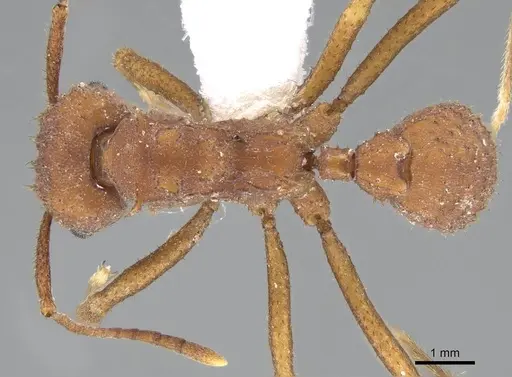
Literature
Loading...Loading products...