

Trachymyrmex nogalensis
- Scientific Name
- Trachymyrmex nogalensis
- Tribe
- Attini
- Subfamily
- Myrmicinae
- Author
- Byars, 1951
- Distribution
- Found in 1 countries
Trachymyrmex nogalensis Overview
Trachymyrmex nogalensis is an ant species of the genus Trachymyrmex. It is primarily documented in 1 countries , including United States of America. Detailed taxonomic data and occurrence records can be further explored via authoritative databases such as AntWeb or the Global Biodiversity Information Facility (GBIF).
Trachymyrmex nogalensis
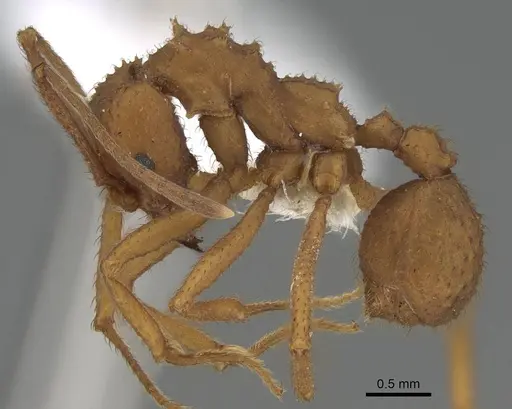
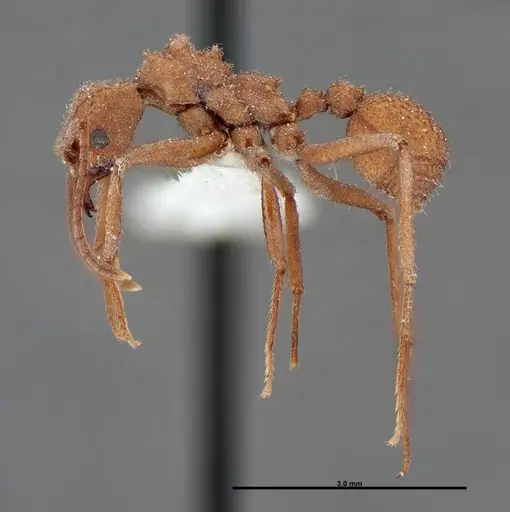
Trachymyrmex nogalensis is a rare fungus-farming ant species native only to southeastern Arizona. Workers are relatively large for the genus at 1.1-1.5mm, with a distinctive yellowish-brown coloration and unique physical features including short 'scrobes' (grooves on the head) and a conspicuous lobe on the antennal scapes [1]. This species is part of the Septentrionalis group and forms a clade with T. arizonensis [2]. What makes T. nogalensis particularly special is that it's the only North American Trachymyrmex species whose male caste remains undiscovered [3]. The species was first described from Nogales, Arizona in 1951,with workers collected from a colony nesting under a house [3].
Quick Summary
- Difficulty: Expert
- Origin & Habitat: Trachymyrmex nogalensis is known only from two locations in Arizona: the type locality in Nogales (Santa Cruz County) and the Chiricahua Mountains (Cochise County) in the southeastern corner of the state [1]. All collections have been made in mid-elevation habitats at 1200-1550 meters [1]. Found in creosote bush and mesquite-dominated desert habitats, as well as rocky limestone outcrops dominated by Ocotillo, Acacia, Agave, and Mimosa [1]. This is an arid-region species that occurs in the Sonoran Desert zone [4][5].
- Colony Type: Colony structure is unconfirmed, no data exists on whether this species is single-queen (monogyne) or multi-queen (polygyne). The extremely cryptic nature of this species and the rocky terrain where it nests have made detailed colony studies nearly impossible [1].
- Size & Growth:
- Queen: 1.36-1.45mm head length [1], this is directly from the species description
- Worker: 1.1-1.35mm head length [1], this is directly from the species description
- Colony: Unknown, no colony size data exists due to the difficulty of excavating nests in the extremely rocky habitat [1]
- Growth: Unknown, no development data exists for this species
- Development: Unknown, no direct development data exists for this species. Related Trachymyrmex species in the septentrionalis clade typically take 6-10 weeks from egg to worker at optimal temperatures, but this is an estimate for T. nogalensis. (Development timeline is unconfirmed. As a fungus-farming ant in the Attini tribe, development likely follows patterns similar to other Trachymyrmex species, but specific data does not exist.)
- Antkeeping:
- Temperature: Keep at room temperature or slightly above. This species occurs in mid-elevation Arizona deserts at 1200-1550m, suggesting it can tolerate temperature ranges from cool nights to warm days. Start around 22-26°C and observe colony activity. Provide a gentle temperature gradient if possible.
- Humidity: Low to moderate. This species inhabits arid desert regions of Arizona. Keep the nest substrate relatively dry with just slight moisture, think desert conditions, not tropical rainforest. Provide a small water source via test tube but avoid damp conditions.
- Diapause: Yes, Arizona desert ants experience seasonal temperature changes. Provide a cool period (around 10-15°C) during winter months, roughly November-February, mimicking their natural seasonal cycle. Reduce feeding during this period.
- Nesting: This species nests in rock-face cracks in extremely rocky terrain [1]. In captivity, a naturalistic setup with flat stones or a Y-tong (AAC) nest with narrow chambers works well. The key is providing a dry, stable environment with minimal vibration. Avoid moist substrates, these ants prefer drier conditions than most fungus-farming ants.
- Behavior: T. nogalensis is nocturnal, foraging primarily at night [1]. Workers are moderately active and will tend their fungal gardens. They are not particularly aggressive but will defend their nest. Escape risk is moderate, these are small ants but not as tiny as some Trachymyrmex species. Standard escape prevention (fluon on edges) is recommended. The species is cryptic and seldom encountered, suggesting they are shy and prefer dark, concealed spaces.
- Common Issues: no established captive husbandry, this is one of the least-studied Trachymyrmex species with no documented captive colonies, fungus garden maintenance is critical and challenging, these ants require their Leucoagaricus gongylophorus cultivar to survive, no male specimens means captive reproduction may be difficult or impossible to achieve, extremely rare in the wild, finding a colony for captive keeping is nearly impossible, no development or growth data makes proper care difficult to determine
Species Overview and Identification
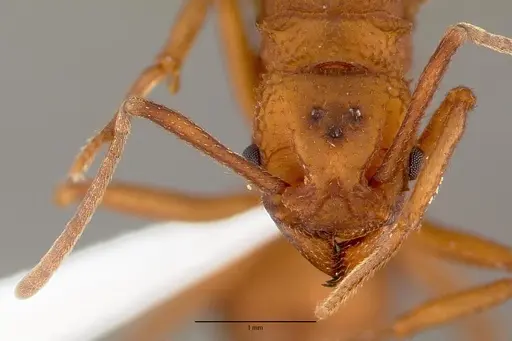
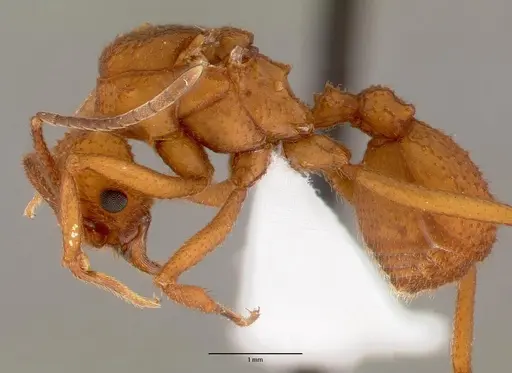
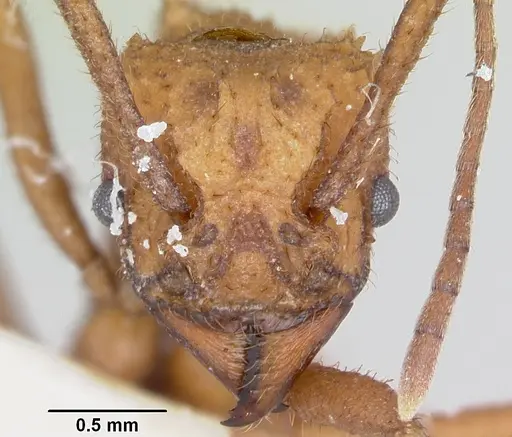
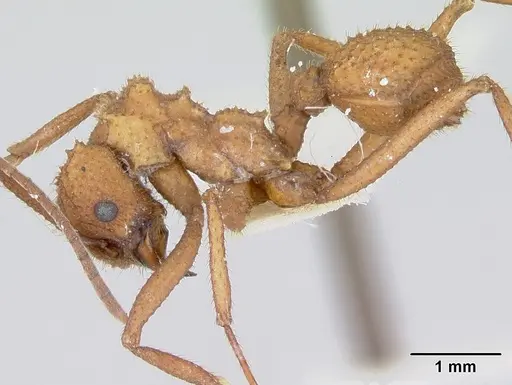
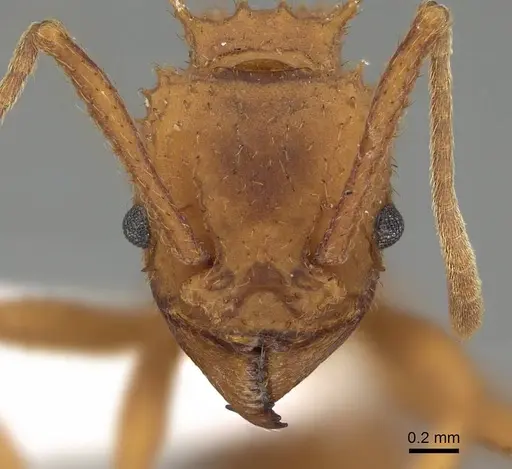
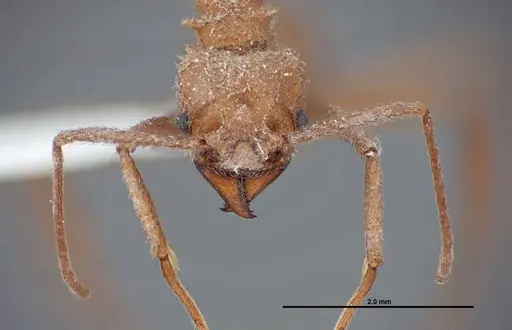
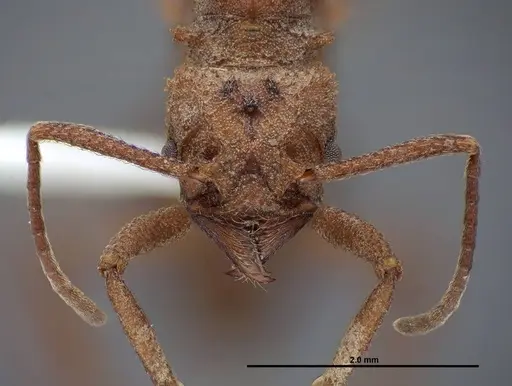
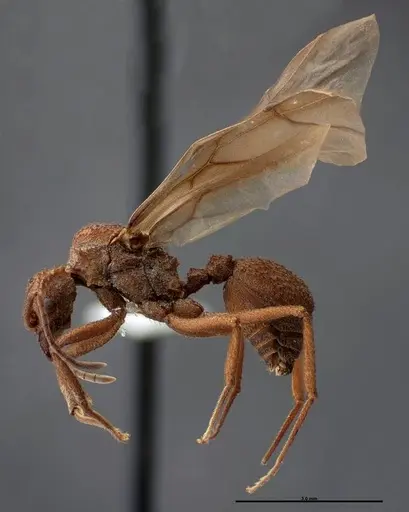
Trachymyrmex nogalensis is one of nine Trachymyrmex species occurring in North America north of Mexico [6]. It belongs to the Septentrionalis species group and forms a clade with T. arizonensis [2]. This is a large species for the genus, with workers measuring 1.1-1.35mm in head length and queens at 1.36-1.45mm [1]. The most distinctive identification features are the short 'scrobes' (grooves formed by frontal and preocular carinae) and the conspicuous basal lobe on the antennal scape [1]. Workers have spinelike anterolateral promesonotal teeth directed upward and forward, and toothlike propodeal spines [1]. The body is moderately tuberculate (bumpy) and colored yellowish brown [1]. Males remain unknown, making this the only US Trachymyrmex species where the male caste has not been discovered [3].
Natural History and Distribution
T. nogalensis has one of the most restricted distributions of any North American ant species, known only from two locations in Arizona: the type locality in Nogales (Santa Cruz County) and the Chiricahua Mountains (Cochise County) [1]. All collections have occurred in mid-elevation habitats between 1200-1550 meters elevation [1]. The species inhabits creosote bush and mesquite-dominated desert habitats, as well as rocky limestone outcrops with Ocotillo, Acacia, Agave, and Mimosa [1]. Nests are extremely cryptic, with entrances located in cracks on rock faces [1]. The extremely rocky ground in these areas makes nest excavation practically impossible, which explains why we know so little about this species [1]. The nocturnal foraging behavior combined with cryptic nest sites explains why this species is so rarely encountered [1]. This species is part of the 'generalized higher agriculture' group within the Attini, cultivating Leucoagaricus gongylophorus as their fungal cultivar [7][4][5].
Housing and Nest Setup
Housing T. nogalensis presents significant challenges since this species has never been documented in captive colonies. Based on its natural history, provide a dry, naturalistic setup with flat stones or a Y-tong (AAC) nest with narrow chambers scaled to their small size. The nest should be in a dark location with minimal vibration, these ants are shy and cryptic. Since they nest in rock-face cracks in the wild, a setup that mimics rocky terrain with multiple hiding spots works well. Keep the outworld dry with just a small water source. Temperature should be room temperature (22-26°C) with a gentle gradient if possible. Humidity should be low, these are desert ants, not tropical species. Provide a test tube water reservoir but ensure the nest area stays relatively dry. [1]
Feeding and Fungus Garden Care
As fungus-farming ants, T. nogalensis requires their fungal cultivar (Leucoagaricus gongylophorus) to survive, they cannot survive without it [4][5]. In captivity, you would need to maintain a healthy fungal garden by providing fresh plant material (leaves, flower petals, small pieces of fruit) for the ants to cultivate. The ants chew this material and use it to feed their fungus, which is their primary food source. This is far more complex than feeding typical ants. Do not attempt to keep this species unless you have experience with other fungus-farming ants. The fungus garden must be kept at appropriate humidity and provided with regular fresh substrate. Dead or discolored fungal sections must be removed carefully.
Challenges and Ethical Considerations
T. nogalensis presents extreme challenges for antkeepers. This species has never been documented in captive husbandry, meaning no established care protocols exist. The extremely restricted range (only two known locations in Arizona) and nocturnal, cryptic behavior make finding wild colonies nearly impossible. Additionally, since males remain unknown, captive reproduction may not be possible. This species should NOT be a target for antkeepers, it is best appreciated through observation in the wild or through published research. If by some chance a colony becomes available (which is extremely unlikely), only experienced fungus-farming ant keepers should attempt maintenance, and ethical considerations about collecting from such restricted populations should be carefully weighed. This is a species for observation, not captivity. [1][3]
Frequently Asked Questions
Can I keep Trachymyrmex nogalensis as a pet?
No. This species is not recommended for captive keeping. It has never been documented in captive husbandry, and the extremely restricted distribution (only two locations in Arizona) means wild colonies should not be disturbed. Additionally, males remain unknown, making captive reproduction potentially impossible.
What does Trachymyrmex nogalensis eat?
As a fungus-farming ant in the Attini tribe, T. nogalensis cultivates Leucoagaricus gongylophorus as their fungal food source [4][5]. They feed the fungus fresh plant material (leaves, flower petals, fruit) which the fungus breaks down. The ants then eat the fungal gongylidia (special nutrient-rich structures). This is far more complex than typical ant diets.
Where does Trachymyrmex nogalensis live?
Only in southeastern Arizona, USA. Known from two locations: Nogales (Santa Cruz County) and the Chiricahua Mountains (Cochise County) at elevations of 1200-1550 meters [1]. This is one of the most restricted ant species distributions in North America.
How big do Trachymyrmex nogalensis colonies get?
Unknown. No colony size data exists for this species. The extremely rocky terrain where they nest makes excavation practically impossible [1]. Related Trachymyrmex species typically reach several hundred workers.
What makes Trachymyrmex nogalensis special?
Several things make this species unique: it's the only North American Trachymyrmex whose male caste remains undiscovered [3], it has one of the most restricted distributions of any North American ant (only two known locations), and it has distinctive identification features including short 'scrobes' and a basal lobe on the antennal scape [1].
Is Trachymyrmex nogalensis a good beginner ant?
No. This species is rated Expert difficulty and is not recommended for antkeepers at any level. No captive husbandry protocols exist, the species is nearly impossible to find in the wild, and maintaining fungus gardens requires specialized expertise.
Does Trachymyrmex nogalensis need hibernation?
Yes, likely. As an Arizona desert species that experiences seasonal temperature changes, providing a cool winter period (around 10-15°C) during winter months is appropriate. This mimics their natural seasonal cycle in the Sonoran Desert region.
How do I identify Trachymyrmex nogalensis?
T. nogalensis can be identified by its short distinctive 'scrobes' (grooves on the head formed by frontal and preocular carinae) and the conspicuous basal lobe on the antennal scape [1]. In the field, it can be confused only with the occasionally sympatric T. arizonensis, but T. arizonensis lacks the basal lobe on the scape and has distinctive frontal lobes that T. nogalensis lacks [3].
Why is Trachymyrmex nogalensis so rarely seen?
Two reasons: nocturnal foraging behavior and extremely cryptic nest sites [1]. Workers forage at night and nest in rock-face cracks in extremely rocky terrain. The ground is too rocky to excavate nests, making this one of the least-studied ant species in North America.
References

This caresheet is licensed under CC BY-SA 4.0 .
CASENT0000364
View on AntWeb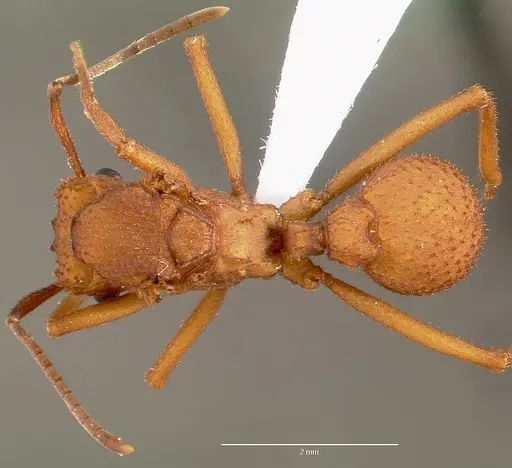
CASENT0103490
View on AntWeb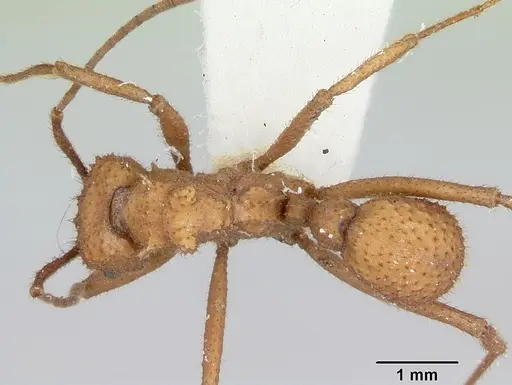
CASENT0919978
View on AntWeb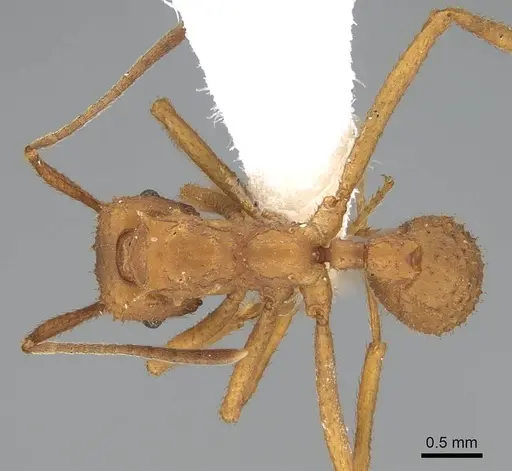
FMNHINS0000062757
View on AntWeb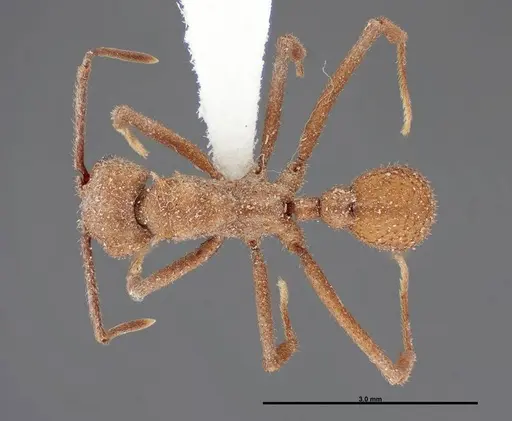
FMNHINS0000083038
View on AntWeb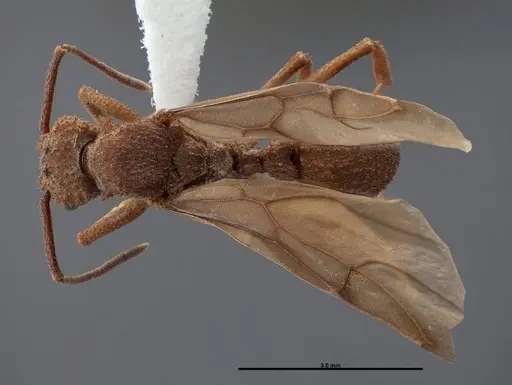
Literature
Loading...Loading products...