

Thaumatomyrmex mutilatus
- Scientific Name
- Thaumatomyrmex mutilatus
- Tribe
- Ponerini
- Subfamily
- Ponerinae
- Author
- Mayr, 1887
- Distribution
- Found in 1 countries
Thaumatomyrmex mutilatus Overview
Thaumatomyrmex mutilatus is an ant species of the genus Thaumatomyrmex. It is primarily documented in 1 countries , including Brazil. Detailed taxonomic data and occurrence records can be further explored via authoritative databases such as AntWeb or the Global Biodiversity Information Facility (GBIF).
Thaumatomyrmex mutilatus
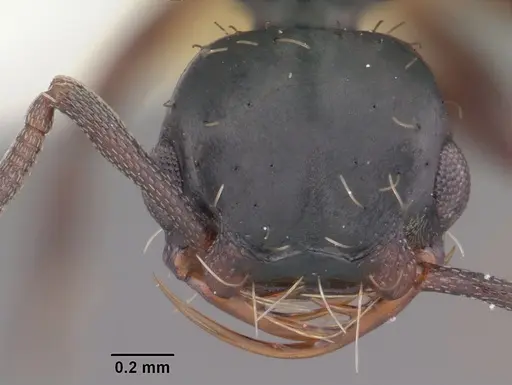
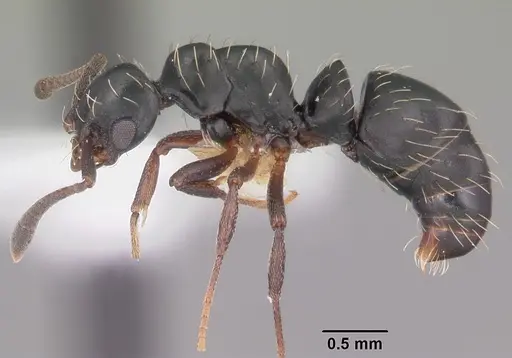
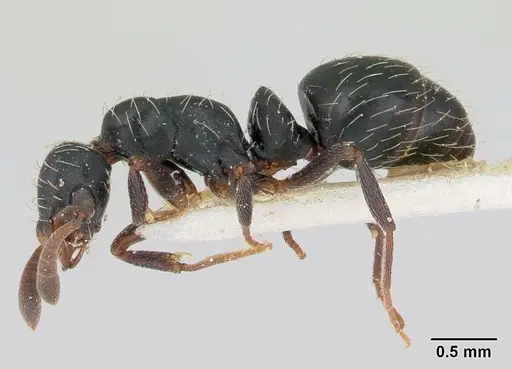
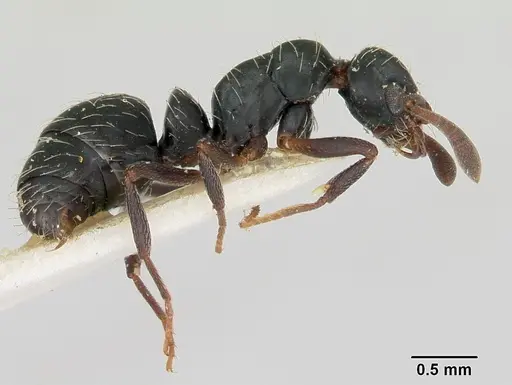
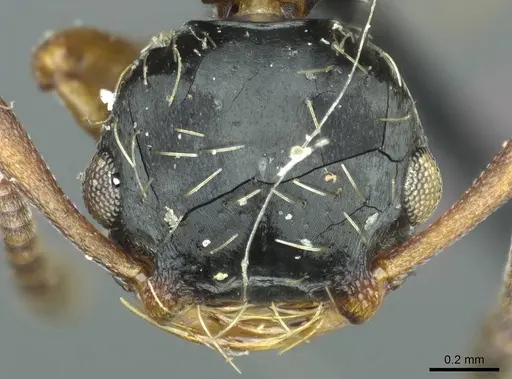
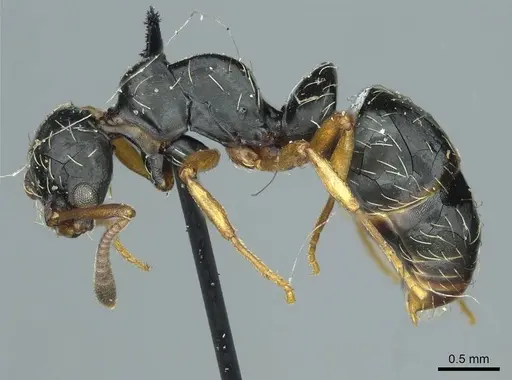
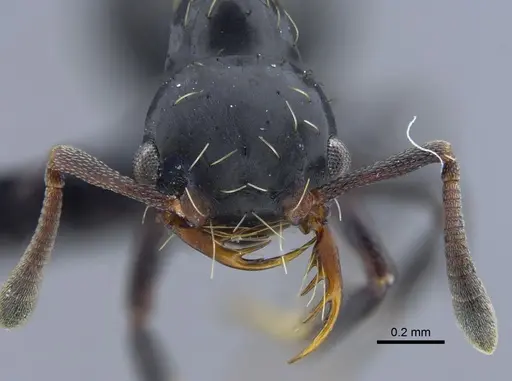
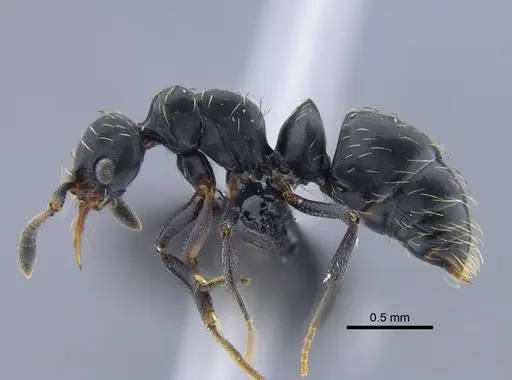
Thaumatomyrmex mutilatus is a small, cryptic ponerine ant native to southeastern Brazil, northern Argentina, and Paraguay. Workers measure 3.6-4.2mm and are entirely black with a distinctive silky sheen caused by microscopic striations covering their body surface [1]. Their most striking feature is their three-tined pitchfork-shaped mandibles, which are perfectly adapted for their specialized diet of millipedes [2]. These ants are extremely rare in collections and difficult to find in the wild due to their cryptic lifestyle and small colony sizes of typically fewer than five workers [3][1]. They inhabit leaf litter in both humid and dry forests, nesting in cavities under bark, inside fallen bromeliad leaves, old wasp nests, or snail shells [1].
Quick Summary
- Difficulty: Expert
- Origin & Habitat: Southeastern Brazil, northern Argentina, and Paraguay. Found in humid and xerophilous (dry) latifoliate forests, leaf litter in Atlantic Forest fragments, Caatinga, and Cerrado regions [1][2][4].
- Colony Type: Colony structure is unconfirmed. Colonies are extremely small with typically fewer than 5 workers, occasionally up to 12 [3][1][5].
- Size & Growth:
- Queen:{.size-link} Unconfirmed, queen measurements not available in primary literature
- Worker:{.size-link} 3.6-4.2mm,3.3-5.0mm across genus [3]
- Colony: Typically under 5 workers, occasionally up to 12 [3][1][5]
- Growth: Slow, extremely small colony sizes suggest slow development
- Development: Unconfirmed, no direct development data available (Based on typical Ponerine patterns, development likely takes several months but this is an estimate)
- Antkeeping:
- Temperature: Keep at 22-26°C. As a tropical/subtropical species from southeastern Brazil, they prefer warm conditions [6].
- Humidity: Moderate to high. They inhabit forest leaf litter, so keep substrate slightly moist but not waterlogged. Provide a humidity gradient.
- Diapause: Unlikely, as a tropical species, they probably do not require hibernation. Keep warm year-round [6].
- Nesting: Small cavities in leaf litter. In captivity, provide small test tube setups or tiny acrylic nests with minimal space. They nest under bark in nature, so flat stones or small chambers work well [1].
- Behavior: Extremely cryptic and rarely seen. They are specialized predators that hunt millipedes in leaf litter. Workers are not aggressive but will sting if threatened. As small litter ants, escape prevention should be moderate, they are not tiny but can squeeze through small gaps [2]. Ponerinae subfamily means they have functional stingers.
- Common Issues: extreme difficulty in obtaining their primary food, polyxenid millipedes are not commercially available, tiny colony sizes mean colonies are fragile and slow to recover from losses, rare in the wild and difficult to locate, wild colonies are rarely found, specialized diet makes them difficult to feed, they may refuse standard ant foods, sensitive to disturbance due to small worker numbers
Feeding and Diet
Thaumatomyrmex mutilatus is an extreme specialist predator that feeds almost exclusively on Polyxenidae millipedes (Diplopoda Penicillata) [2][7][8][5]. This is one of the most specialized diets known in ants, they are essentially obligate millipede predators. The unique three-tined mandibles are perfectly adapted for piercing the soft bodies of these small millipedes. In captivity, this presents an enormous challenge as polyxenid millipedes are not commercially available and are extremely difficult to culture. This species is NOT suitable for most antkeepers precisely because of its specialized diet. Attempting to feed standard ant foods (sugar water, insects, honey) would likely fail. If you obtain this species, you would need to culture your own source of tiny millipedes, which is highly impractical for most hobbyists [5].
Natural History and Unique Adaptations
This species has several remarkable adaptations that make it unique among ants. The body is covered in microscopic striations that give it a distinctive silky sheen, this texture is visible under magnification and is a key identification feature [1]. The pitchfork-shaped mandibles with three spiniform teeth are used to capture and hold millipede prey. Additionally, researchers have observed that when attacking millipedes, these ants may strip the millipedes of their defensive setae (hair-like defenses) before feeding them to larvae [5]. The species is considered a 'living fossil' as the sole representative of its tribe (Thaumatomyrmecini) in most of its range, with very few close relatives [9]. Colonies are found in various microhabitats including under bark of fallen trees, inside fallen bromeliad leaves, in old solitary wasp nests, and in empty snail shells [1].
Distribution and Habitat
Thaumatomyrmex mutilatus is found across southeastern Brazil, extending into northern Argentina (Misiones) and Paraguay [1][10][11]. The species occupies remarkably diverse habitats, from humid Atlantic Forest to dry Caatinga (thorn woodland) and Cerrado savanna [2][4]. In southern Bahia, they were found in primary forest, coastal restinga (littoral vegetation), and even xerophilous forests around Salvador [2]. One specimen was collected on a cocoa tree using chemical shock, suggesting they sometimes forage in the canopy [2]. They are considered a 'litter cryptic ant', living hidden in the leaf litter layer and rarely coming to the surface [2]. Their apparent rarity is partly due to inadequate sampling methods, Winkler sack extraction (sifting leaf litter) is the most effective way to find them [2][10].
Rarity and Collection Challenges
This is one of the rarest ants in the Neotropics. Studies consistently capture only single individuals, and colonies found in the wild typically contain just 3-12 workers [5]. The species has been collected only a handful of times since its description in 1887. Part of this rarity is ecological, they have extremely small colonies and are cryptic, but sampling methodology also plays a role. Standard pitfall traps rarely capture them, and they require leaf-litter sifting (Winkler extraction) to find [2][7][8]. If you were to find a colony, it would likely be by accident while sifting leaf litter in appropriate habitat in Brazil. This species is essentially never available in the antkeeping hobby, and even scientific collections have very few specimens. The difficulty of both finding and maintaining this species places it firmly in the 'expert only' category [5].
Taxonomy and Identification
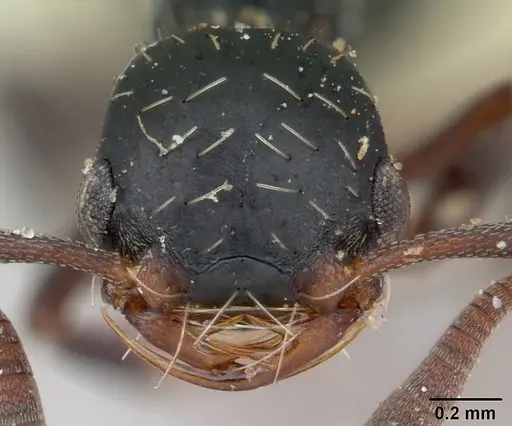
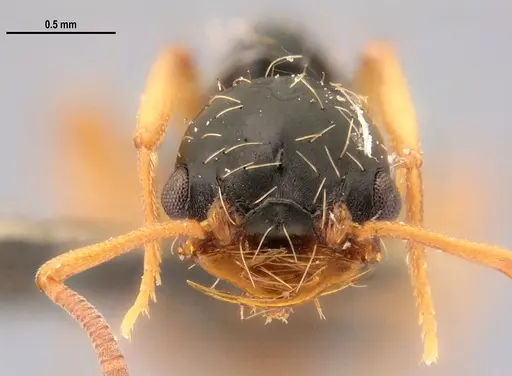
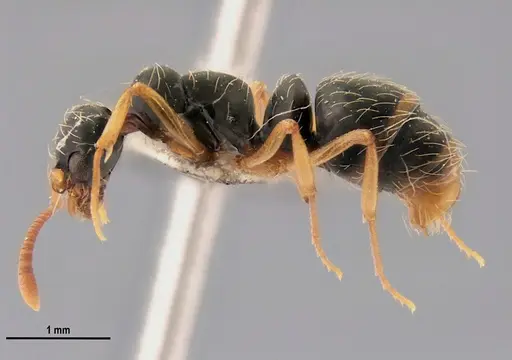
Thaumatomyrmex mutilatus is the type species of the genus Thaumatomyrmex, described by Mayr in 1887 [9][12]. It belongs to the subfamily Ponerinae (tribe Ponerini) and is part of the mutilatus species group [3][1]. Workers are identified by their pitchfork-shaped mandibles with three spiniform teeth, the two distinctive V-shaped hairs on the clypeus, three vertically aligned hairs on the propodeum, and the microscopic striations covering the entire body giving a silky sheen [1]. The species was redescribed in detail by Kempf in 1975,who noted it differs from other species in proportional measurements and the specific arrangement of body hairs. There are only about 8 known species in this genus, all restricted to the Neotropics [12].
Frequently Asked Questions
Can I keep Thaumatomyrmex mutilatus as a pet?
No. This species is not suitable for antkeeping. They are extreme dietary specialists that feed almost exclusively on polyxenid millipedes, which are not commercially available. Additionally, they are extremely rare in the wild and virtually never available in the antkeeping hobby. This is an expert-only species even for professional researchers [5][2].
What do Thaumatomyrmex mutilatus eat?
They are obligate predators of Polyxenidae millipedes (Diplopoda Penicillata). This is one of the most specialized diets known in ants. They do not eat standard ant foods like sugar water, honey, or typical feeder insects. The unique three-tined mandibles are specifically adapted for piercing millipede prey [2][7][5].
How big do Thaumatomyrmex mutilatus colonies get?
Extremely small. Colonies typically have fewer than 5 workers, with occasional colonies reaching up to 12 workers. This is one of the smallest colony sizes known in ants. The largest documented colony had only four workers, four larvae, six male pupae, and two males [1][2].
Where does Thaumatomyrmex mutilatus live?
They are found in southeastern Brazil, northern Argentina, and Paraguay. They inhabit leaf litter in various forest types including humid Atlantic Forest, dry Caatinga, and Cerrado. Nests are found in small cavities under bark, inside fallen bromeliad leaves, old wasp nests, or empty snail shells [1][2].
Do Thaumatomyrmex mutilatus ants sting?
Yes. As a member of the subfamily Ponerinae, they have functional stingers. However, given their tiny colony sizes and cryptic nature, they are unlikely to sting unless directly handled or threatened [6].
Why is Thaumatomyrmex mutilatus so rarely seen?
They are cryptically hidden in leaf litter, have extremely small colonies, and are not captured by standard sampling methods like pitfall traps. They require leaf-litter sifting (Winkler extraction) to be found. Additionally, they have a highly specialized habitat and diet that limits where they can live [2][7][8].
Can I find Thaumatomyrmex mutilatus in the wild?
Only if you are in southeastern Brazil, northern Argentina, or Paraguay and actively sifting leaf litter in appropriate habitat. Even then, finding them is extremely unlikely, they are one of the rarest ant species. Researchers have captured only single individuals in most studies. Do not expect to find this species [2][5].
What makes Thaumatomyrmex mutilatus unique among ants?
Their three-tined 'pitchfork' mandibles are unique in the ant world, specifically adapted for hunting millipedes. They also have microscopic striations covering their entire body giving a silky sheen, and two distinctive V-shaped hairs on their face. They represent an entire tribe (Thaumatomyrmecini) with only a handful of species, making them a relic group [1][9].
Do Thaumatomyrmex mutilatus need hibernation?
Unlikely. As a tropical/subtropical species from Brazil, they probably do not require a diapause period. Keep them warm year-round at 22-26°C [6].
Are Thaumatomyrmex mutilatus good for beginners?
Absolutely not. This species is completely unsuitable for beginners or even most experienced antkeepers. The challenges include: extreme difficulty obtaining their sole food source (polyxenid millipedes), extremely small and fragile colonies, rarity in the wild, and specialized habitat requirements. They are considered a specialist species for professional researchers only [5].
Report an Issue
The current care sheet is based fully on literature. See inconsistencies, or something that's incorrect? Please , it will be resolved after review from an admin. Contributing to the blogs tab also helps providing information, to make us be able to further improve the caresheets. Thank you for your support!
References

This caresheet is licensed under CC BY-SA 4.0 .
CASENT0102934
View on AntWeb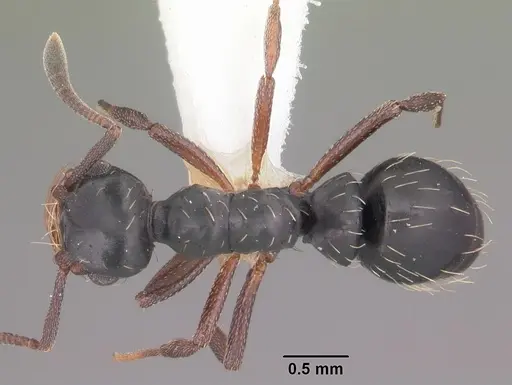
CASENT0173034
View on AntWeb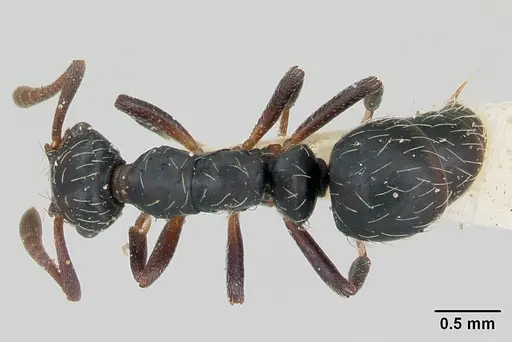
CASENT0915903
View on AntWeb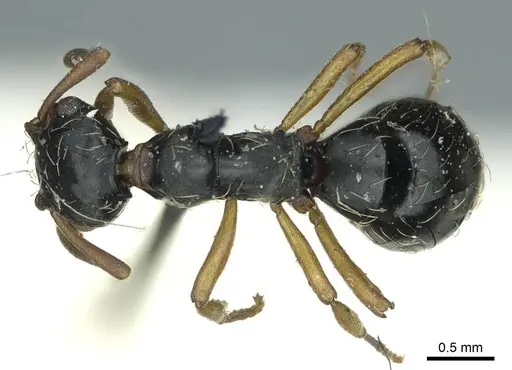
CBUMAGENT41752
View on AntWeb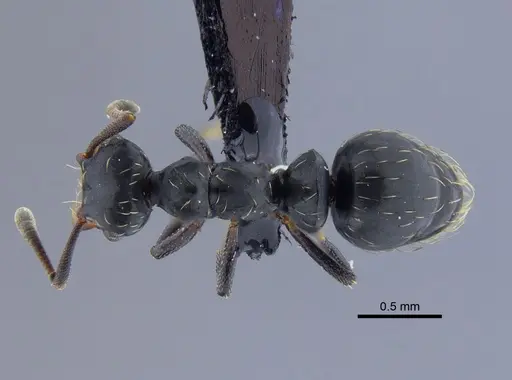
LABSEI
View on AntWeb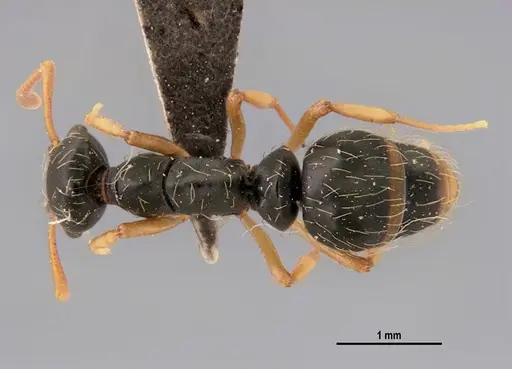
Literature
Loading...Loading products...