

Thaumatomyrmex contumax
- Scientific Name
- Thaumatomyrmex contumax
- Tribe
- Ponerini
- Subfamily
- Ponerinae
- Author
- Kempf, 1975
- Distribution
- Found in 1 countries
Thaumatomyrmex contumax Overview
Thaumatomyrmex contumax is an ant species of the genus Thaumatomyrmex. It is primarily documented in 1 countries , including Brazil. Detailed taxonomic data and occurrence records can be further explored via authoritative databases such as AntWeb or the Global Biodiversity Information Facility (GBIF).
Thaumatomyrmex contumax
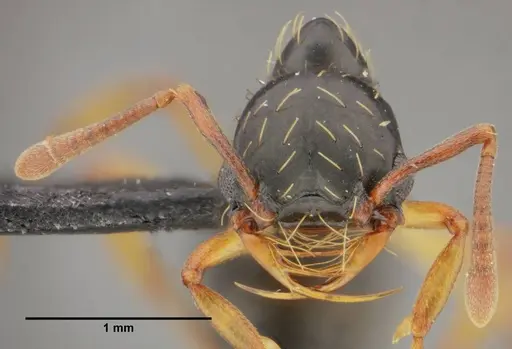
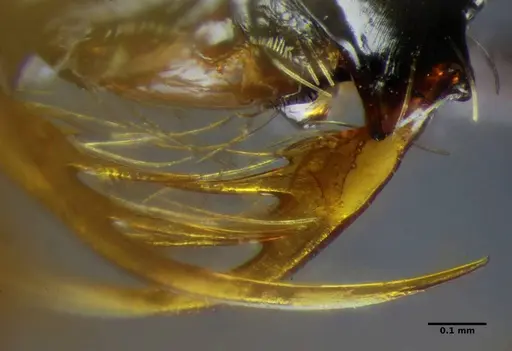
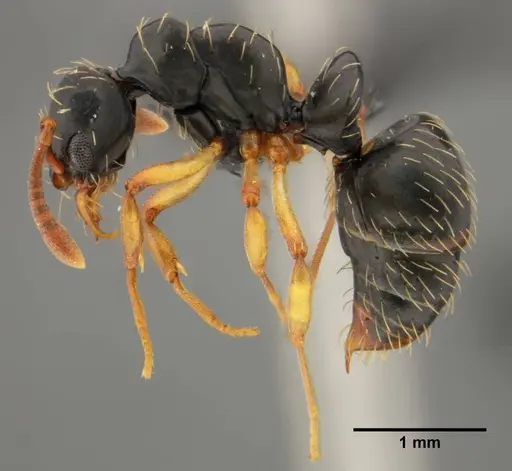
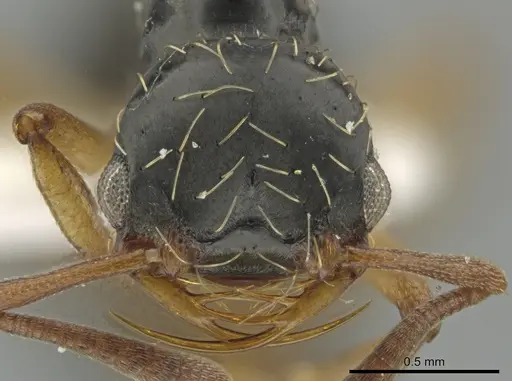
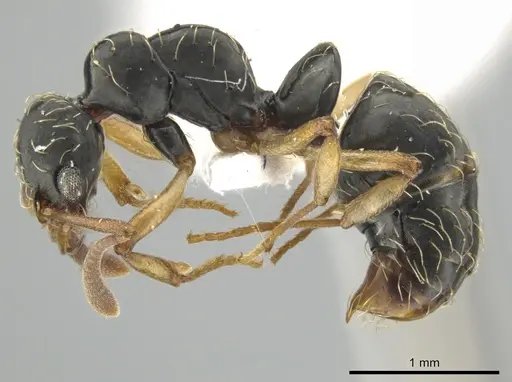
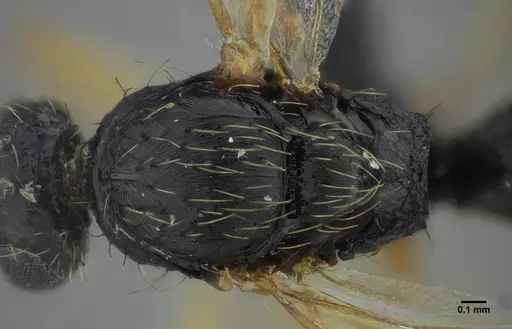
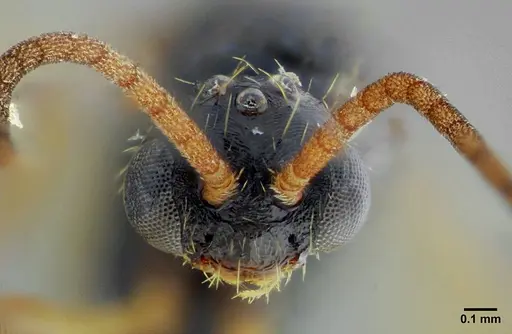
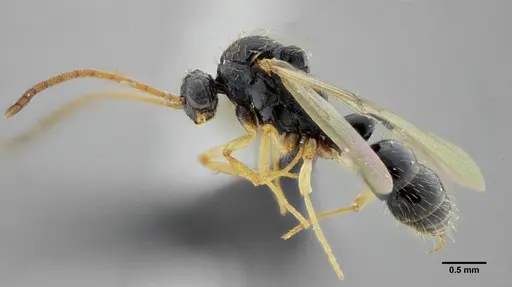
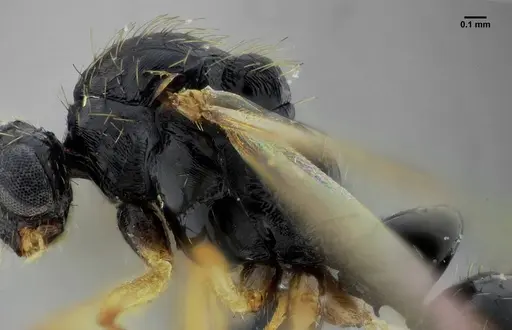
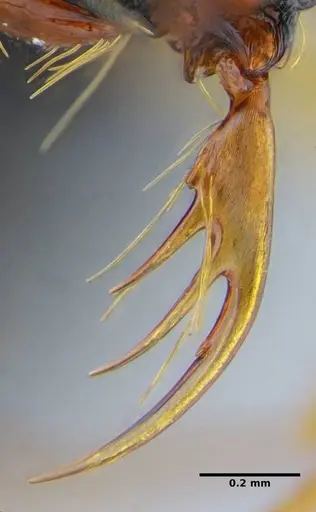
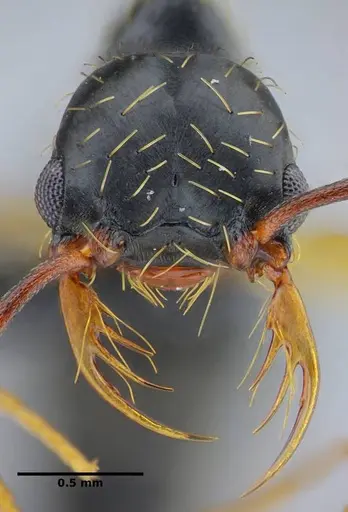
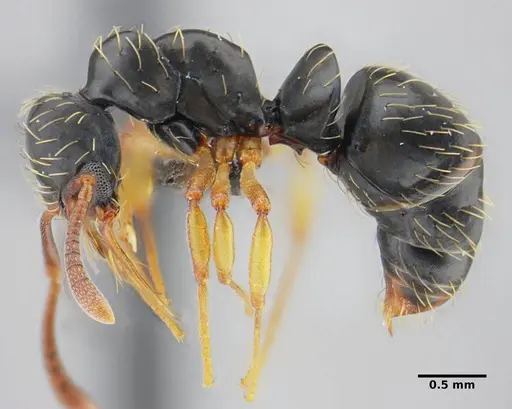
Thaumatomyrmex contumax is a tiny ponerine ant native to Brazil, measuring just 4.1mm in total length [1]. This species belongs to the subfamily Ponerinae, meaning workers have functional stingers. The genus gets its name from the Greek for 'wonderful mandible', and for good reason. Their mandibles are pitchfork-shaped with 3-4 long slender teeth, an extraordinary adaptation for their specialized hunting style [2]. Found primarily in the Atlantic rainforest regions of Bahia and Pernambuco states, these ants are cryptic leaf-litter dwellers that nest in pre-existing cavities like fallen bromeliad leaves, abandoned wasp nests, and empty snail shells [3]. What makes T. contumax truly remarkable is its extreme dietary specialization, it hunts exclusively and specifically polyxenid millipedes (Penicillata), a prey item so specialized that laboratory tests showed these ants refuse all other food including other arthropods, sugary substances, and even ant brood [4]. This is one of the most diet-restricted ants known to science.
Quick Summary
- Difficulty: Expert
- Origin & Habitat: Brazil (Pernambuco, Bahia states), Atlantic rainforest biome and cocoa plantations. Strictly dependent on leaf litter or forest-structured vegetation, absent from pastures and xerophilous habitats [2].
- Colony Type: Queenless colony with gamergates (mated workers that lay eggs). One of the smallest ant colonies known, typically containing fewer than 5 workers with a mean of 2.5 workers per colony [3][5][2].
- Special: Gamergates
- Size & Growth:
- Queen: Queenless species, no queen caste exists [5]. Workers are 4.1mm total length [1].
- Worker: 4.1mm total length,0.95mm head width [1].
- Colony: Extremely small, average 2.5 workers, range 1-9 workers per colony [3][5].
- Growth: Slow, small colony size and specialized reproduction limit growth potential [2].
- Development: Unknown, no documented development timeline. Based on related Ponerinae and tropical distribution, estimate 6-10 weeks at optimal temperature, but this is unconfirmed. (No direct studies on development time exist. Lab colonies showed workers emerging over several weeks, with males appearing alongside workers [2].)
- Antkeeping:
- Temperature: Tropical species from warm Brazilian rainforests. Keep at 24-28°C, mimicking their native warm and humid environment. Avoid temperatures below 22°C.
- Humidity: High humidity required, think damp rainforest floor. Keep substrate consistently moist but not waterlogged. These ants are found in wet forest leaf litter and cocoa plantations where humidity stays high [2].
- Diapause: No, tropical species does not require hibernation or winter rest. Maintain warm conditions year-round.
- Nesting: Tiny pre-existing cavities. In captivity, use very small test tube setups or small acrylic nests with minimal chambers. They naturally nest in fallen bromeliad leaves, empty snail shells, and abandoned wasp nests, scale accordingly [3].
- Behavior: Extremely cryptic and docile. When their nest is disturbed, workers exhibit a remarkable defensive behavior, they freeze completely immobile with legs folded against their thorax for several minutes, likely to confuse predators [3]. They are solitary foragers with no recruitment behavior, each worker hunts independently for millipedes [3]. Despite being Ponerinae with functional stingers, they are not aggressive and prefer to hide. Escape prevention is important given their tiny size, but their docile nature means they're not strong climbers. The biggest challenge is their extreme dietary specialization, they will ONLY eat polyxenid millipedes (Penicillata), and laboratory tests show they refuse all other prey and sugar sources [4][3].
- Common Issues: Feeding is extremely difficult, they only accept polyxenid millipedes, which are nearly impossible to obtain or culture in captivity, Colony size is tiny (1-9 workers) making them vulnerable to stress and loss, Queenless reproduction via gamergates is fragile, if the reproducing worker dies, colony may fail, Their extreme rarity and specialized biology means no established captive breeding protocols exist, Tropical humidity requirements can be challenging to maintain consistently
Housing and Nest Setup
Thaumatomyrmex contumax requires tiny, humid enclosures that mimic their natural leaf-litter microhabitat. In the wild, they nest in pre-existing cavities, under bark of fallen dead trees, in fallen dry bromeliad leaves, in abandoned solitary wasp nests, and in empty terrestrial snail shells [3]. For captivity, use small test tubes with cotton-stoppered water reservoirs, or very small acrylic nests with tight chambers scaled to their tiny 4mm size. The nesting chamber should be no larger than necessary, these ants thrive in cramped, humid conditions. Provide a small outworld area for foraging, but keep it minimal. Use fine mesh for escape prevention despite their docile nature, as they can squeeze through tiny gaps. Maintain high humidity by keeping the nest substrate moist and covering with plastic wrap or using a hydration system. A small water dish in the outworld helps maintain humidity.
Feeding - The Critical Challenge
This is the most difficult aspect of keeping Thaumatomyrmex contumax. They are obligate specialists that ONLY eat polyxenid millipedes (Diplopoda: Penicillata), laboratory feeding tests showed they refuse all other arthropods, sugary substances, and even the brood of other ant species [4][3]. This extreme specialization makes captive maintenance extraordinarily difficult. Polyxenid millipedes are tiny (only a few millimeters), soft-bodied millipedes with defensive trichomes (sounding hairs). In the wild, workers actively search for these millipedes, then use their specialized pitchfork mandibles to secure them, inject venom through their sting, and completely depilate (remove the irritating hairs) before consumption [3][6]. The depiled trichomes are even rejected at the nest entrance, forming a barrier [4]. Unless you can reliably obtain and culture polyxenid millipedes, this species should NOT be attempted in captivity.
Behavior and Defense Mechanisms
T. contumax exhibits fascinating defensive behaviors that set it apart from most ants. When their nest is disturbed or opened, workers remain completely immobile with legs folded against their thorax for several minutes, this tonic immobility likely confuses predators [3][4]. They are solitary foragers with no recruitment behavior, each worker hunts independently rather than alerting nestmates to food sources [3]. Despite being Ponerinae (a subfamily known for functional stingers), they are not aggressive and prefer to freeze or hide rather than attack. Their hunting sequence is highly specialized: they actively search for prey, inspect it with antennae, attack and secure it with their unique pitchfork mandibles, inject venom through the sting at an intersegmental membrane, then transport the paralyzed prey by grasping the base of its head and carrying it above their head like a trophy [3]. This species is not suitable for observation-focused antkeeping due to its cryptic nature and extreme inactivity.
Colony Structure and Reproduction
T. contumax is one of the few truly queenless ant species, there is no distinct queen caste. Instead, reproduction occurs through gamergates, which are mated workers that lay eggs [5][2]. This is a stable system where workers compete for reproductive status, and the dominant worker performs 'antennal boxing' toward younger workers, a ritualized agonistic interaction common in queenless ants [2]. Colony sizes are minute, averaging just 2.5 workers with a range of 1-9 workers per colony [3][5]. Males are produced regularly and leave the nest approximately three days after emergence, showing early sexual maturity [2]. Male dispersal flights are not seasonal but continuous and sporadic throughout the year [2]. This unusual social structure means colonies cannot grow large and are inherently fragile, losing a single gamergate can be colony-ending.
Temperature and Seasonal Care
As a tropical species from Brazilian rainforests, T. contumax requires warm, stable temperatures year-round. Keep the nest area at 24-28°C, avoiding any drops below 22°C. They are found in the warm Atlantic coastal regions of Bahia and are strictly absent from xerophilous (dry) habitats [2]. No hibernation or diapause is required or recommended, maintain tropical conditions continuously. Room temperature may suffice if your home stays in the low-to-mid 20s°C range, but a small heating cable or mat on one side of the nest can provide a gentle gradient if needed. Place heating on top of the nest to avoid drying out the humidity. The combination of warmth and high humidity is essential, one without the other will stress these sensitive ants.
Frequently Asked Questions
Can I keep Thaumatomyrmex contumax as a pet ant?
This species is NOT recommended for antkeepers except the most specialized experts. Their extreme dietary specialization (only eating polyxenid millipedes) makes captive maintenance nearly impossible. No successful long-term captive colonies have been established, and the required prey items cannot be reliably obtained or cultured.
What do Thaumatomyrmex contumax ants eat?
They eat ONLY polyxenid millipedes (Diplopoda: Penicillata). Laboratory tests showed they refuse all other arthropods, honey, sugar water, and even ant brood [4]. This is one of the most diet-restricted ants known, they are obligate millipede specialists.
How big do Thaumatomyrmex contumax colonies get?
Extremely small. The average colony contains just 2.5 workers, with a maximum of around 9 workers documented [3][5]. This is one of the smallest ant colonies ever recorded. They are queenless and reproduce through gamergates (mated workers).
Are Thaumatomyrmex contumax good for beginners?
No. This species is extremely difficult to keep due to its obligate diet of polyxenid millipedes that cannot be obtained in captivity. Even experienced antkeepers have not succeeded with this species. It should be considered an expert-only species for study purposes only.
Where does Thaumatomyrmex contumax live?
They are found only in Brazil, specifically in the Atlantic rainforest regions of Bahia and Pernambuco states. They live in leaf litter and nest in pre-existing cavities like fallen bromeliad leaves, under tree bark, and in abandoned wasp nests [3][2]. They are strictly dependent on forest-structured vegetation and absent from pastures.
Do Thaumatomyrmex contumax queens exist?
No. This is a queenless species, there is no distinct queen caste. Reproduction occurs through gamergates, which are mated workers that lay eggs [5][2]. This is one of the few ant species where the queen caste has been completely lost through evolution.
How do Thaumatomyrmex contumax ants hunt?
They are solitary hunters. Workers actively search for polyxenid millipedes, then use their pitchfork-shaped mandibles to secure the prey, inject venom through their sting, completely remove the defensive trichomes (hairs) using their front legs, and finally consume the paralyzed prey [3][6]. The depiled trichomes are rejected at the nest entrance.
What is unique about Thaumatomyrmex contumax behavior?
When disturbed, they exhibit tonic immobility, freezing completely still with legs folded against their thorax for several minutes to confuse predators [3]. They also have the most specialized diet of any ant species, eating only one specific group of millipedes. Their hunting and depilation behavior is unique in the ant world.
Can I breed Thaumatomyrmex contumax in captivity?
No successful breeding protocols exist. The extreme dietary specialization makes it nearly impossible to maintain a colony long-term. Additionally, their queenless gamergate system and tiny colony size make reproduction extremely fragile. This species should be appreciated in the wild rather than attempted in captivity.
References

This caresheet is licensed under CC BY-SA 4.0 .
UFV-LABECOL-000105
View on AntWeb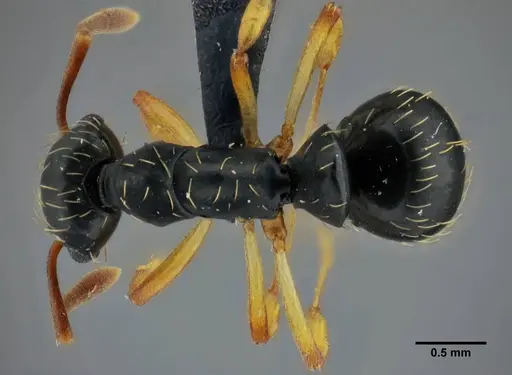
UFV-LABECOL-000392
View on AntWeb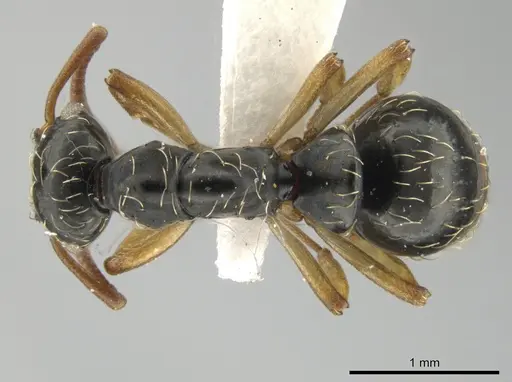
UFV-LABECOL-000394
View on AntWeb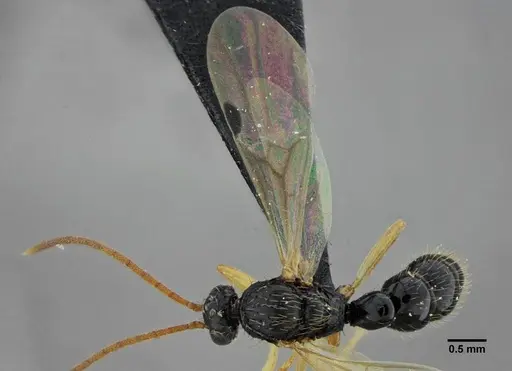
UFV-LABECOL-007486
View on AntWeb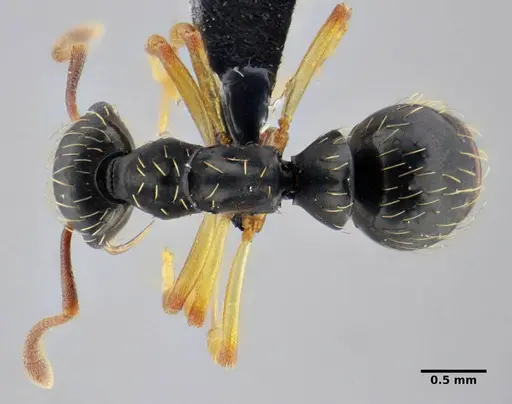
Literature
Loading...Loading products...