

Thaumatomyrmex cochlearis
- Scientific Name
- Thaumatomyrmex cochlearis
- Tribe
- Ponerini
- Subfamily
- Ponerinae
- Author
- Creighton, 1928
- Distribution
- Found in 1 countries
Thaumatomyrmex cochlearis Overview
Thaumatomyrmex cochlearis is an ant species of the genus Thaumatomyrmex. It is primarily documented in 1 countries , including Cuba. Detailed taxonomic data and occurrence records can be further explored via authoritative databases such as AntWeb or the Global Biodiversity Information Facility (GBIF).
Thaumatomyrmex cochlearis
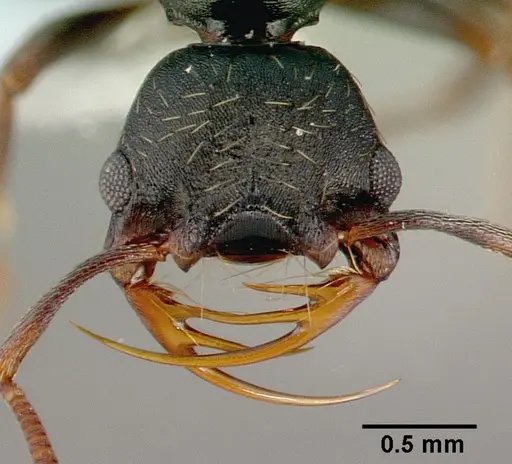
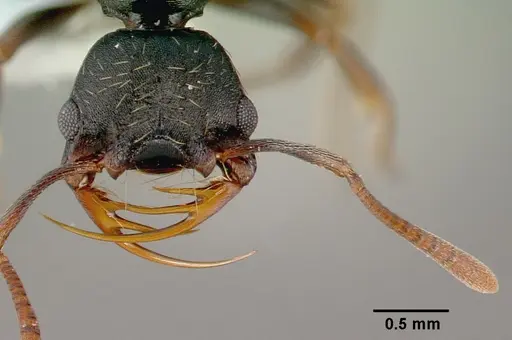
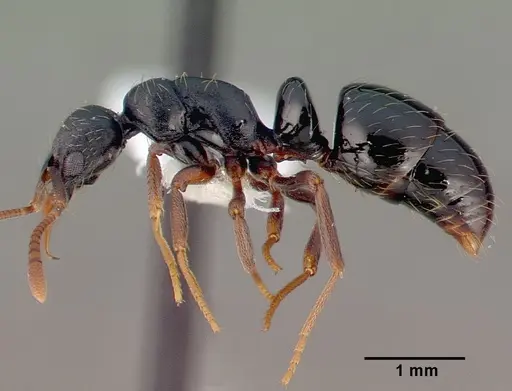
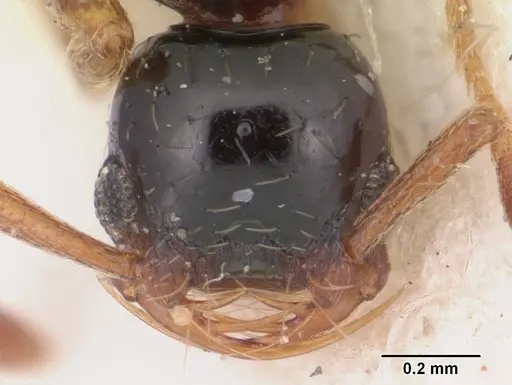
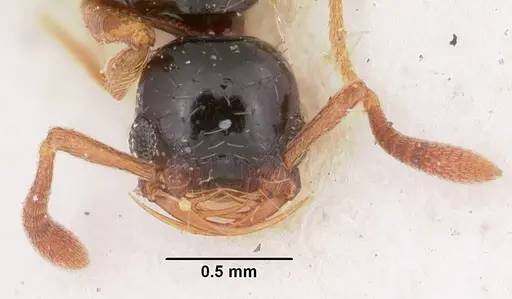
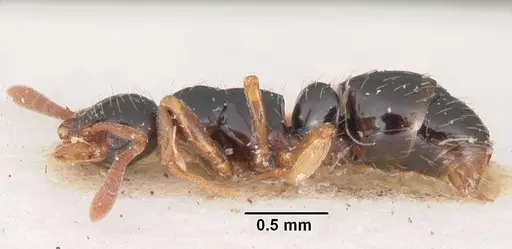
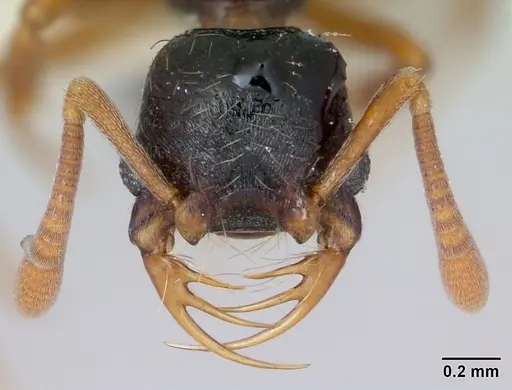
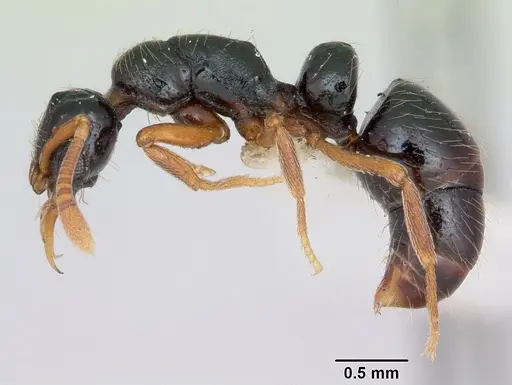
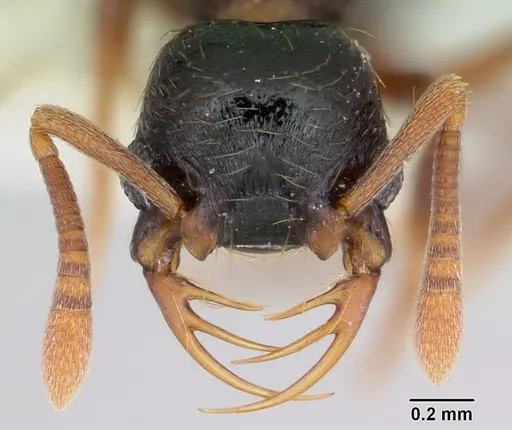
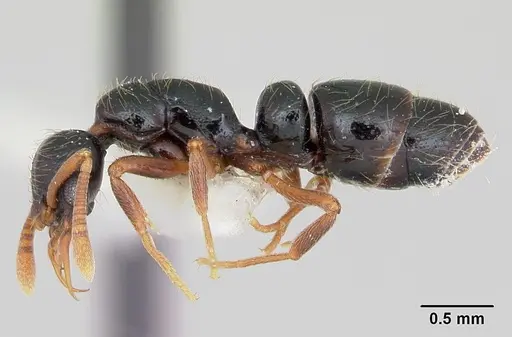
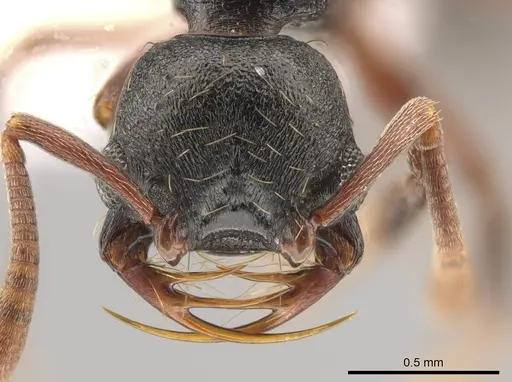
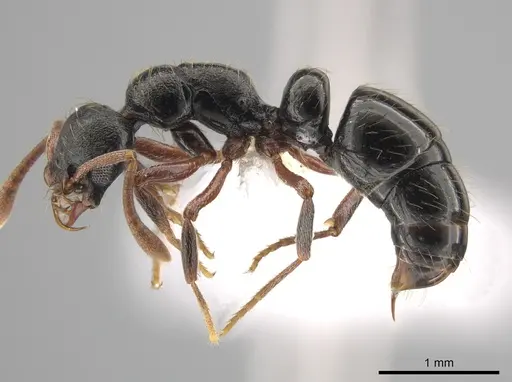
Thaumatomyrmex cochlearis is a rare and distinctive ponerine ant endemic to Cuba, one of only eight known species in its genus. Workers measure around 4mm and are almost entirely black, with strikingly orange-ferruginous mandibles, antennae, and legs that contrast sharply against their dark body. Their most remarkable feature is their unusual mandibles, long, slender structures with three spiniform teeth that project forward rather than the typical downward-curving mandibles seen in most ants. This unique morphology has fascinated researchers since the species was first described in 1928,as it resembles the mandibles of snail-eating beetles. The species belongs to the cochlearis group and is known for its abundant long hairs covering the head, mesosoma, and petiole, more so than any other Thaumatomyrmex species [1][2].
This ant remains one of the most poorly understood species in the ant-keeping hobby. Found only in Cuba's mountain forests (Sierra Maestra and Nipe-Sagua-Baracoa), it lives in humid rainforest environments and has never been collected as a colony, only as solitary workers in leaf litter samples [3]. The genus Thaumatomyrmex as a whole is specialized to prey on millipedes (Diplopoda), making this a highly specialized predator with unique dietary needs that likely cannot be met with standard ant feeds [4][2].
Quick Summary
- Difficulty: Expert
- Origin & Habitat: Endemic to Cuba, specifically found in the Sierra Maestra and Nipe-Sagua-Baracoa mountain ranges in eastern Cuba. It inhabits pluviforest (humid rainforest) environments in these mountains, and has also been collected from dry lowland deciduous forest leaf litter [3][5].
- Colony Type: Unknown, only solitary workers have ever been collected. No colony structure, queen reproduction, or founding behavior has ever been documented. The genus Thaumatomyrmex is known only from worker specimens, suggesting colonies may be very small or living in inaccessible locations.
- Size & Growth:
- Queen: Unknown, no queens have ever been described or collected
- Worker: 3.86-4.20mm [6][1]
- Colony: Unknown, no colonies have ever been observed
- Growth: Unknown
- Development: Unknown (No development data exists for this species. Related Thaumatomyrmex species likely have multi-month development cycles typical of Ponerinae, but specific timelines are unconfirmed.)
- Antkeeping:
- Temperature: Based on its Cuban rainforest habitat, keep in the warm range of 22-26°C. Avoid temperatures below 20°C or above 30°C. Provide a thermal gradient so ants can self-regulate.
- Humidity: High humidity is essential, this species is restricted to pluviforest in its native range. Keep the nest substrate consistently moist but not waterlogged. Aim for 70-85% humidity within the nest area.
- Diapause: Unknown, no seasonal data exists. As a tropical Cuban species, it likely does not require true hibernation, but may have reduced activity periods during drier seasons in its native habitat.
- Nesting: No specific nesting data exists. Based on collection methods (Berlese funnel from leaf litter), they likely nest in decaying wood, under stones, or within the forest floor litter layer. In captivity, a naturalistic setup with moist substrate, leaf litter, and small retreats would be most appropriate.
- Behavior: Nothing is known about this species' behavior in captivity. As a Ponerine ant, it likely has a functional stinger and may be defensive when threatened. The genus is specialized predatory, using its unique mandibles to capture millipedes. Workers are likely solitary foragers. Escape risk is moderate, at 4mm, they are not tiny but can still fit through small gaps.
- Common Issues: specialized diet makes feeding extremely difficult, they require live millipedes or similar prey which are nearly impossible to reliably source, no colony has ever been kept in captivity, so all care recommendations are speculative guesses based on genus-level data, extreme rarity means no captive-bred stock exists, any ants would be wild-caught which typically fails for this species, high humidity requirements create mold risk in captive setups, the species' entire natural history is poorly documented, making proper care nearly impossible to determine
Why This Species Is So Difficult
Thaumatomyrmex cochlearis represents one of the most challenging ants to keep in captivity for a simple reason: almost nothing is known about its biology. This species has only ever been collected as solitary workers, never as a complete colony with queen or brood. No researcher has ever observed a colony, witnessed queen mating flights, or documented how these ants reproduce and grow. The entire genus Thaumatomyrmex is known only from worker specimens, suggesting either very small colony sizes (perhaps fewer than 50 workers), subterranean nesting habits, or colonies located in areas rarely sampled by entomologists [4][2].
This means any antkeeper attempting to keep T. cochlearis would be essentially pioneering all aspects of husbandry with no prior guidance. There are no established protocols, no known successful captive colonies to reference, and no guarantee that standard ant-keeping approaches will work. For this reason, Thaumatomyrmex cochlearis is best considered an 'observation-only' species for advanced researchers rather than a practical species for hobbyist ant-keeping.
The Mystery of Their Unique Mandibles
The most striking feature of Thaumatomyrmex cochlearis is its unusual mandibles. Unlike typical ants with mandibles that close vertically like pincers, this species has long, slender mandibles that project forward with three distinct spiniform teeth. This morphology is unlike almost any other ant genus and has fascinated myrmecologists since the species was described. The original describer William Creighton noted the mandibles resembled those of snail-eating Carabid beetles, leading to the species name 'cochlearis' (meaning 'spoon-shaped' or relating to snails) [5].
Research on related species in the genus has since revealed these ants are specialized predators of millipedes (Diplopoda Penicillata, the pill millipedes that can roll into balls) [4][2]. The unique mandibular structure is an adaptation for gripping and handling these armored prey items, which other ants cannot effectively capture. This specialization is both fascinating and problematic for antkeepers, it means T. cochlearis likely cannot survive on standard ant foods like sugar water, insects, or commercial ant diets. They would require a constant supply of live millipedes or similar specialized prey.
Distribution and Habitat
Thaumatomyrmex cochlearis is endemic to Cuba, meaning it is found nowhere else on Earth. Its known distribution is restricted to the mountain ranges of eastern Cuba, specifically the Sierra Maestra and Nipe-Sagua-Baracoa regions. Within these areas, it appears to be associated with humid rainforest (pluviforest) environments at higher elevations [3].
The original type specimen was collected in 1927 from Mina Carlota, a pyrites mine in the Sierras south of Cumanyagua. This area is characterized by heavily wooded, excessively steep slopes with numerous limestone outcrops. The worker was found by accident among a pile of empty land snail shells that had been collected for sorting, hence the species name referring to snails [5]. A later specimen was collected from dry lowland deciduous forest using a Berlese funnel to process leaf litter, confirming the species can inhabit multiple forest types within Cuba.
Feeding and Diet - The Biggest Challenge
If you were to attempt keeping this species, feeding would be the overwhelming challenge. Research on the genus Thaumatomyrmex has confirmed they are specialist predators of millipedes (Diplopoda Penicillata) [4][2]. These are the small pill-millipedes that curl into balls when threatened, a defensive strategy that works against most predators but not against Thaumatomyrmex's specialized mandibles.
This specialized diet means T. cochlearis almost certainly cannot be kept successfully using standard ant-keeping approaches. They would not accept sugar water, honey, or typical feeder insects as primary food. Even if they accepted some prey items, their health and longevity would likely depend on a diet of live millipedes, which are extremely difficult to reliably source and maintain in captivity. This is not a species for hobbyists, it would require a dedicated researcher with access to millipede cultures and extensive knowledge of tropical ant biology.
Temperature and Humidity Requirements
Based on its Cuban distribution and association with pluviforest (rainforest) habitats, Thaumatomyrmex cochlearis requires warm, humid conditions. The Sierra Maestra and Nipe-Sagua-Baracoa mountains where it is found are tropical environments with year-round warmth and high rainfall. Keep the nest area at 22-26°C with a gentle gradient allowing the ants to self-regulate.
Humidity is particularly important, maintain 70-85% relative humidity within the nest, with consistently moist (but not waterlogged) substrate. This can be achieved using a naturalistic setup with a deep layer of moist substrate, leaf litter, and appropriate ventilation to prevent stagnation. The high humidity requirement reflects the species' origin from Cuba's humid mountain forests. Avoid any drying conditions or drafts. [3]
Legal and Ethical Considerations
Thaumatomyrmex cochlearis is endemic to Cuba and may be protected under Cuban law. Cuba has various conservation regulations protecting native species, and as an endemic species known only from a handful of specimens, T. cochlearis may have special protection status. Additionally, international trade may be regulated under CITES (Convention on International Trade in Endangered Species), though this would need to be verified.
Beyond legal considerations, there are strong ethical reasons not to attempt keeping this species. Only a handful of specimens have ever been collected, and no colony has ever been observed. Removing individuals from the wild for the ant-keeping hobby would be irresponsible given how little we know about this species and how unlikely captive success would be. This is a species that should be appreciated through scientific literature and photographs rather than sought after as a pet.
Frequently Asked Questions
Can I keep Thaumatomyrmex cochlearis as a pet ant?
No, this species is not suitable for the ant-keeping hobby. No colony has ever been kept in captivity, and almost nothing is known about their basic biology, diet, or care requirements. Additionally, they are endemic to Cuba and may be protected by conservation laws. This is a species for scientific study, not hobbyist keeping.
What do Thaumatomyrmex cochlearis ants eat?
Based on research into the genus, they are specialized predators of millipedes (Diplopoda Penicillata). Their unique mandibles are adapted specifically for capturing and handling these armored prey. They almost certainly cannot survive on standard ant foods like sugar water, honey, or typical feeder insects. Live millipedes would be required, which are nearly impossible to reliably source in captivity.
Where does Thaumatomyrmex cochlearis live?
This species is endemic to Cuba, found only in the mountain ranges of eastern Cuba (Sierra Maestra and Nipe-Sagua-Baracoa). It inhabits humid rainforest environments in these mountains, though it has also been collected from dry lowland deciduous forest.
How big do Thaumatomyrmex cochlearis colonies get?
Unknown, no colony has ever been observed or collected. Only solitary workers have ever been found, typically in leaf litter samples. The genus Thaumatomyrmex is known only from worker specimens, suggesting colonies may be very small or live in hard-to-reach locations.
Does Thaumatomyrmex cochlearis have a queen?
No one knows. Queens of this species have never been described or collected. The entire genus Thaumatomyrmex is known only from worker specimens, making it impossible to determine colony structure, queen morphology, or reproductive behavior.
Is Thaumatomyrmex cochlearis endangered?
While not officially listed as endangered, its extremely limited distribution (only known from a handful of specimens in Cuba's mountains) and specialized habitat requirements make it potentially vulnerable. As an endemic species with very few known records, it would likely qualify for protection if its status were formally assessed.
Can I find Thaumatomyrmex cochlearis in the wild?
Extremely unlikely. This is one of the rarest ant species in the world, known only from a handful of specimens collected over nearly a century. They are found only in remote Cuban mountain rainforests and have never been collected as colonies. Even professional entomologists rarely encounter them.
Why are their mandibles so unusual?
The long, forward-projecting mandibles with three spiniform teeth are an adaptation for specialized predation on millipedes. This unique morphology allows them to grip and handle millipedes that have rolled into their defensive ball shape, something other ants cannot effectively do. The original describer noted the resemblance to snail-eating beetles, though later research confirmed they actually eat millipedes.
How long do Thaumatomyrmex cochlearis workers live?
Unknown. No captive observations exist for this species, so lifespan data is unavailable. Ponerine ants typically live several years as workers, but without knowing anything about captive care, this is just an educated guess.
References

This caresheet is licensed under CC BY-SA 4.0 .
CASENT0010674
View on AntWeb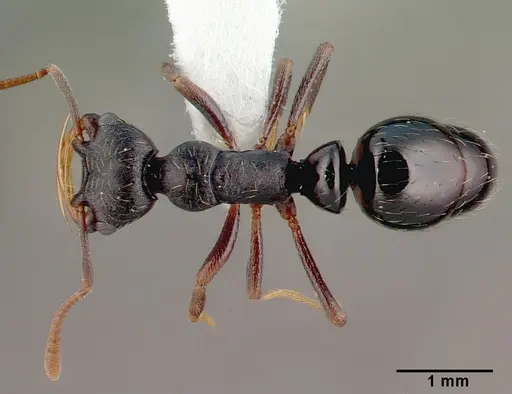
CASENT0102935
View on AntWeb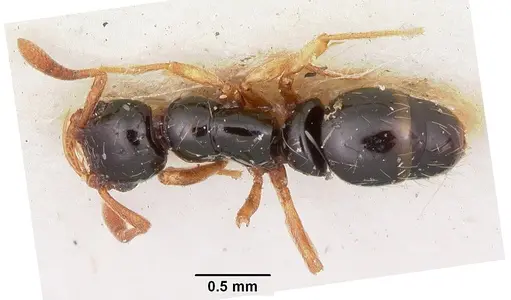
CASENT0173028
View on AntWeb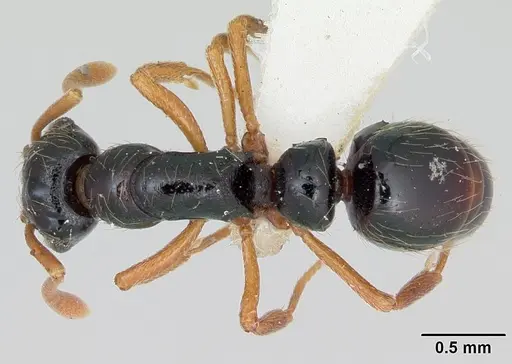
CASENT0173029
View on AntWeb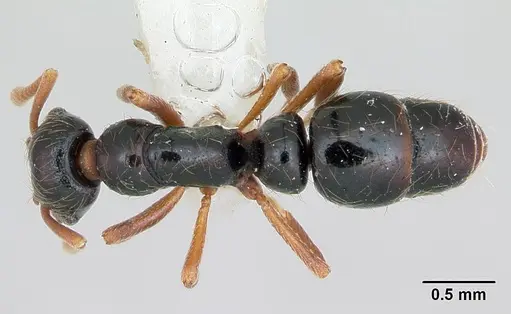
CASENT0651989
View on AntWeb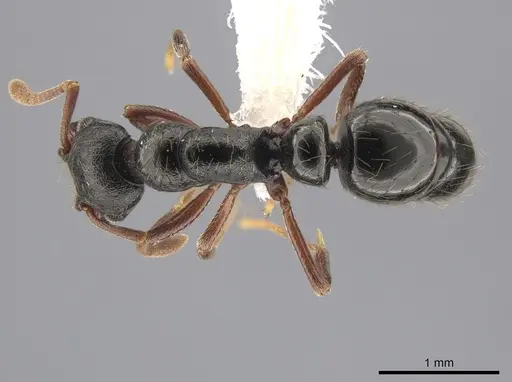
Literature
Loading...Loading products...