

Tetraponera concava
- Scientific Name
- Tetraponera concava
- Tribe
- Pseudomyrmecini
- Subfamily
- Pseudomyrmecinae
- Author
- Xu & Chai, 2004
- Distribution
- Found in 2 countries
Tetraponera concava Overview
Tetraponera concava is an ant species of the genus Tetraponera. It is primarily documented in 2 countries , including China, Thailand. Detailed taxonomic data and occurrence records can be further explored via authoritative databases such as AntWeb or the Global Biodiversity Information Facility (GBIF).
Tetraponera concava
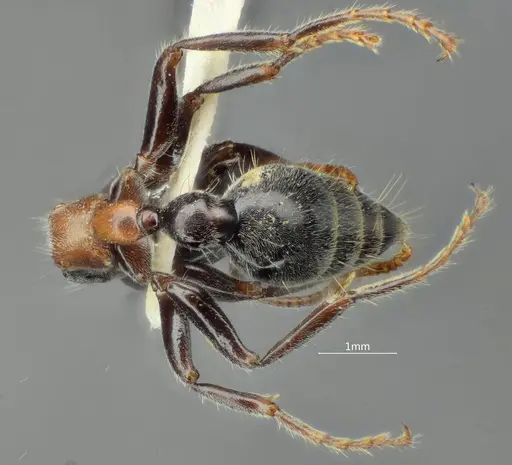
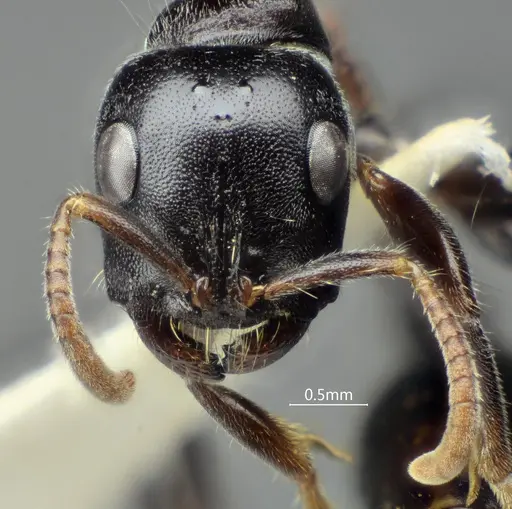
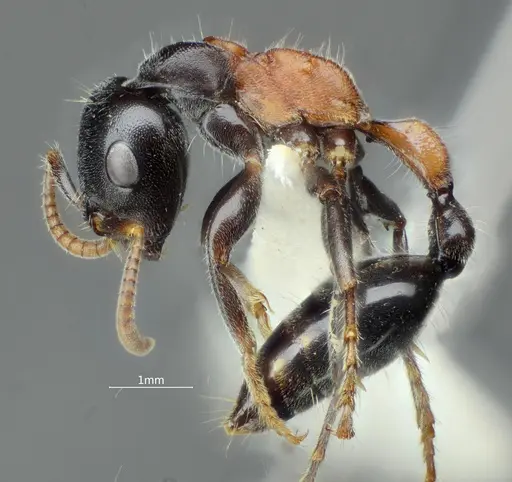
Tetraponera concava is a relatively large slender ant species belonging to the Pseudomyrmecinae subfamily. Workers measure 9.7-10.2mm with a distinctive color pattern: the pronotum is black while the rest of the alitrunk is orange, creating a striking two-tone appearance. The species was described in 2004 from Yunnan Province, China, where it was collected at higher elevations (1100-1600m) in mountain rain forest and deciduous broad-leaf forest habitats. This species belongs to the rufonigra species group, making it closely related to other Tetraponera species in the Indo-Australian region [1].
As a Pseudomyrmecine ant, T. concava likely exhibits typical genus behaviors including arboreal or hollow-stem nesting, aggressive defensive responses, and the ability to deliver a painful sting. The genus Tetraponera is known for their slender, wasp-like appearance and their ecological role as plant-ants in tropical ecosystems. This species represents one of the more northern members of the genus, collected from higher elevation forests in southwestern China.
Quick Summary
- Difficulty: Medium
- Origin & Habitat: Yunnan Province, China, higher elevation mountain rain forest and deciduous broad-leaf forest at 1100-1600m elevation
- Colony Type: Likely monogyne (single queen) based on typical Tetraponera colony structure, though specific colony structure for this species is unconfirmed
- Size & Growth:
- Queen: Undescribed, estimated 12-14mm based on worker size and genus patterns
- Worker: 9.7-10.2mm
- Colony: Unknown for this species, related Tetraponera species typically reach several hundred workers
- Growth: Moderate, inferred from genus patterns
- Development: Estimated 6-8 weeks at optimal temperature based on typical Pseudomyrmecinae development (Direct development data unavailable for this species, estimate based on genus-level patterns for tropical/subtropical Pseudomyrmecinae)
- Antkeeping:
- Temperature: Keep at 24-28°C, they come from warm subtropical forests at higher elevations. A gentle gradient allowing cooler areas is beneficial.
- Humidity: Moderate to high humidity (60-80%), forest-dwelling species requiring moisture but not saturation. Provide a water tube and keep nest substrate lightly moist.
- Diapause: Likely minimal or no true diapause, species from subtropical Yunnan experiences mild winters. However, a brief cool period (15-18°C for 2-3 months) may benefit colony health.
- Nesting: Likely arboreal or cavity-nesting in nature. In captivity, a Y-tong (AAC) nest or plaster nest with narrow chambers works well. Provide dead wood, cork, or bamboo sections as enrichment.
- Behavior: Tetraponera concava is likely aggressive and defensive, typical of the genus. Workers are active foragers and will defend the nest vigorously. They can deliver a painful sting, handle with caution. Escape prevention is important as they are active and may attempt to flee when disturbed. Likely primarily predatory or omnivorous, hunting small invertebrates and tending honeydew-producing insects.
- Common Issues: limited availability, this is a rarely kept species with few records in the antkeeping hobby, specific humidity requirements may be difficult to maintain without careful monitoring, aggressive behavior and sting potential require careful handling, lack of species-specific care information means keepers must rely on genus-level guidance, higher elevation origin may make them sensitive to temperature extremes
Housing and Nest Preferences
In the wild, Tetraponera concava was collected from forest environments at higher elevations, suggesting they nest in cavities such as hollow stems, rotting wood, or under bark. For captive care, a Y-tong (AAC) nest or plaster formicarium works well, these provide the dark, humid chambers these ants prefer. The chambers should be appropriately sized for their 10mm worker size. Adding enrichment such as small pieces of cork, dried wood, or bamboo sections can mimic their natural arboreal nesting sites. A test tube setup can work for founding colonies, but be prepared to move them to a more spacious formicarium as the colony grows. Ensure the nest has a water reservoir to maintain humidity without flooding. [1]
Feeding and Diet
Based on typical Pseudomyrmecinae feeding habits, Tetraponera concava is likely an omnivorous predator. In captivity, offer a varied diet including small live insects (fruit flies, small crickets, mealworms) as protein sources, and sugar water, honey, or diluted honeydew as carbohydrate sources. They will likely accept sweet liquids readily, this is common in the genus. Feed protein 2-3 times per week, and keep a constant sugar water source available. Remove uneaten prey after 24-48 hours to prevent mold. Fresh water should always be available.
Temperature and Seasonal Care
Keep Tetraponera concava at 24-28°C during the active season. The species was collected from higher elevation forests in Yunnan, which experience warm summers but mild winters, this suggests they can tolerate a moderate temperature range. A heating cable on one side of the nest can create a beneficial gradient. During winter, a slight reduction to 18-22°C for 2-3 months may simulate seasonal patterns, but avoid true cold diapause. Monitor colony activity, if workers become sluggish, slightly increase temperature. Avoid temperatures above 32°C or below 15°C. [1]
Behavior and Temperament
Tetraponera concava will likely exhibit aggressive defensive behavior typical of the genus. Workers are active foragers and will readily investigate and attack perceived threats. This species can deliver a painful sting, use caution when opening the nest or transferring colonies. They are not escape artists in the traditional sense but are active and alert, so ensure your formicarium has secure barriers. Colony activity levels will increase with temperature and food availability. When hunting or foraging, workers likely use visual navigation and chemical trails, typical of Pseudomyrmecine ants.
Colony Growth and Development
As a recently described species (2004), specific colony development data for T. concava is not available. Based on worker size and genus patterns, expect relatively fast initial growth once the first workers (nanitics) emerge. A founding queen likely lays 10-20 eggs initially, with development to worker taking an estimated 6-8 weeks under optimal conditions. Colony growth will be moderate, not as rapid as smaller Myrmicines but faster than some larger Camponotus species. Mature colonies may reach several hundred workers based on related species in the genus.
Frequently Asked Questions
How long does it take for Tetraponera concava to produce first workers?
Based on genus-level patterns, expect first workers (nanitics) to emerge in approximately 6-8 weeks after the queen lays eggs, assuming optimal temperature (24-28°C). This is an estimate as specific development data for this species is not available.
Do Tetraponera concava ants sting?
Yes, Tetraponera concava can sting. Pseudomyrmecine ants are known for their painful stings and aggressive defense of their nests. Handle with caution and avoid disturbing the colony unnecessarily.
What do Tetraponera concava eat?
They likely accept a varied diet including small live insects (protein) and sugar water, honey, or honeydew (carbohydrates). This follows typical Pseudomyrmecinae feeding patterns. Offer protein 2-3 times weekly with constant access to sugar sources.
Can I keep Tetraponera concava in a test tube?
A test tube can work for a founding colony, but plan to move them to a Y-tong or plaster nest as the colony grows. These ants prefer darker, more enclosed spaces than some arboreal species, so ensure the setup provides adequate humidity and security.
Are Tetraponera concava good for beginners?
This species is rated as medium difficulty. While not the most challenging ant to keep, the limited species-specific information and potential for aggressive behavior with a painful sting make it better suited for keepers with some experience.
What temperature do Tetraponera concava need?
Keep them at 24-28°C during the active season. They can tolerate a range from 18-30°C but perform best in the mid-to-upper 20s°C. A slight temperature drop in winter (18-22°C) may benefit colony health.
Do Tetraponera concava need hibernation?
A true hibernation is likely not required given their subtropical origin in Yunnan. However, a brief cool period (2-3 months at 15-18°C) may help simulate seasonal patterns and promote colony health.
How big do Tetraponera concava colonies get?
Based on related species, colonies likely reach several hundred workers at maturity. Specific maximum size for this species is unknown, but expect moderate colony growth over 1-2 years.
Why is my Tetraponera concava colony declining?
Common causes include: incorrect humidity (too dry or too wet), temperature stress (too cold or too hot), insufficient protein in diet, or stress from excessive disturbance. Check water availability, ensure proper feeding, and minimize nest disturbances.
When should I move Tetraponera concava to a formicarium?
Move to a larger setup when the colony reaches 30-50 workers or when the test tube's water reservoir runs low. A Y-tong or plaster nest with multiple chambers works well for growing colonies.
References

This caresheet is licensed under CC BY-SA 4.0 .
ANTWEB1060540
View on AntWeb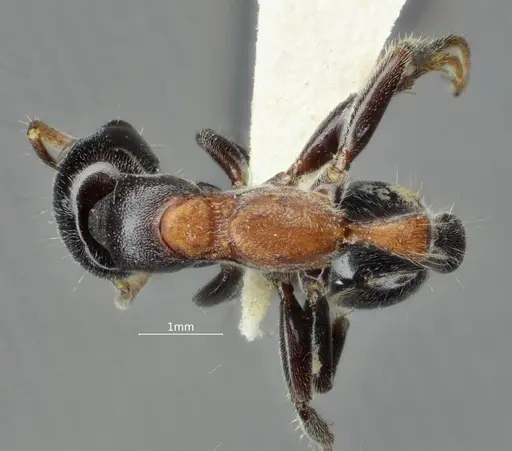
Literature
Loading...Loading products...