

Tetramorium susannae
- Scientific Name
- Tetramorium susannae
- Tribe
- Crematogastrini
- Subfamily
- Myrmicinae
- Author
- Hita Garcia <i>et al.</i>, 2010
- Distribution
- Found in 5 countries
Tetramorium susannae Overview
Tetramorium susannae is an ant species of the genus Tetramorium. It is primarily documented in 5 countries , including Central African Republic, Congo, Cameroon. Detailed taxonomic data and occurrence records can be further explored via authoritative databases such as AntWeb or the Global Biodiversity Information Facility (GBIF).
Tetramorium susannae
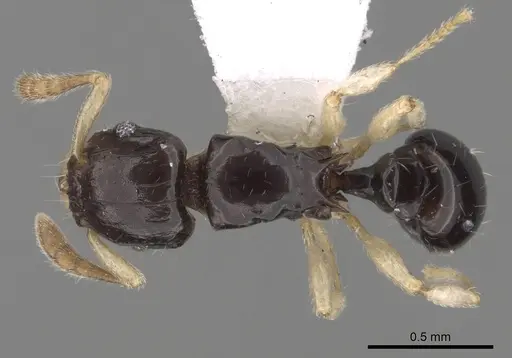
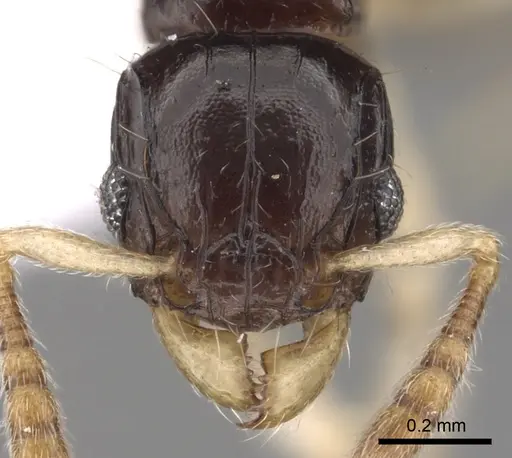
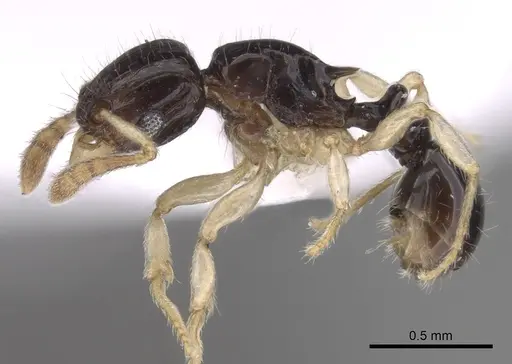
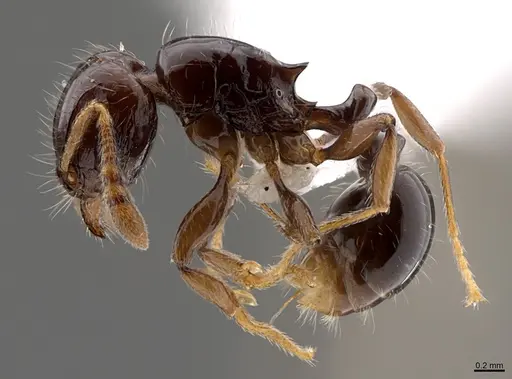
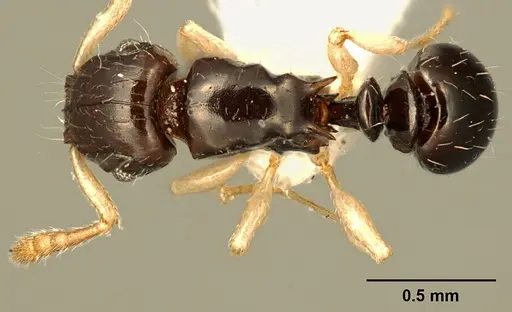
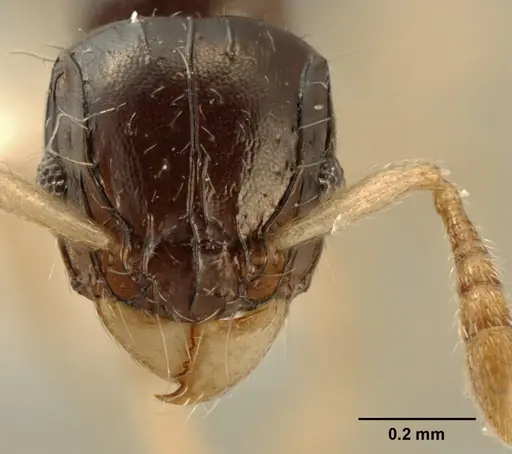
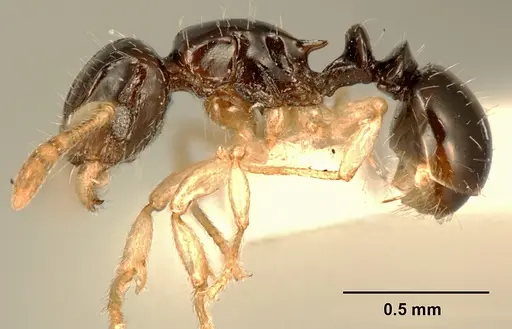
Tetramorium susannae is a small, dark ant native to the rainforests of Central and West Africa. Workers measure around 4.5-5.5mm and are nearly uniform black to very dark brown, though their leg color can vary from pale yellowish to bicolored depending on the population [1]. This species was only formally described in 2010 and belongs to the Tetramorium muralti species complex within the weitzeckeri group [1][2]. What makes T. susannae stand out is the distinctive hexagonal striation pattern on its head and mesosoma, a unique feature that helps separate it from related species [1]. The species is fairly abundant and common across its range in countries like Ghana, Cameroon, Gabon, and the Democratic Republic of Congo [1][3].
Quick Summary
- Difficulty: Medium
- Origin & Habitat: Central and West African rainforests, found in Angola, Cameroon, Central African Republic, Democratic Republic of Congo, Gabon, and Ghana [1][3]. This species lives in primary forest habitats, typically collected from leaf litter [1].
- Colony Type: Colony structure is unconfirmed, no specific data on queen number or colony founding behavior exists for this species. Based on typical Tetramorium patterns, expect single-queen colonies.
- Size & Growth:
- Queen:{.size-link} Unconfirmed, no queen measurements documented in original species description [1]
- Worker:{.size-link} 4.5-5.5mm (HL 0.489-0.556,HW 0.456-0.528) [1]
- Colony: Unknown, likely moderate colonies typical of Tetramorium species in the weitzeckeri group
- Growth: Moderate, estimated based on genus patterns
- Development: 6-10 weeks estimated based on typical Tetramorium development at warm temperatures (Development time is inferred from related Tetramorium species, specific data for T. susannae does not exist)
- Antkeeping:
- Temperature: Keep nest area around 24-28°C, these are tropical rainforest ants that need warm, stable conditions. A gentle heat gradient allows them to regulate their temperature.
- Humidity: High humidity preferred, think damp rainforest floor. Keep the nest substrate consistently moist but not waterlogged, with some drier areas available.
- Diapause: No, as a tropical species from Central/West Africa, they do not require hibernation. Maintain warm conditions year-round.
- Nesting: In the wild they nest in leaf litter and soil. In captivity, a naturalistic setup with moist substrate or a Y-tong/plaster nest works well. They prefer tight chambers scaled to their small size.
- Behavior: Temperament is typical of Tetramorium, moderately defensive but not overly aggressive. Workers are active foragers, likely hunting small prey in the leaf litter layer. Their small size means escape prevention is important, use fine mesh barriers. They are ground-nesting and likely form moderate-sized colonies.
- Common Issues: escape prevention is critical due to their small size, they can squeeze through tiny gaps, tropical warmth requirements mean colonies can suffer in cool rooms, wild-caught colonies may carry parasites that can devastate captive populations, slow founding means colonies need patience during the claustral period, high humidity needs can lead to mold problems if ventilation is poor
Housing and Nest Setup
For this small rainforest ant, you'll want a nest that holds moisture well while providing good ventilation. A Y-tong (AAC) nest or plaster formicarium works excellently, both hold humidity and give you control over the microclimate. The chambers should be relatively small and tight-fitting since these ants are only around 5mm. A naturalistic setup with a moist soil/gravel mix in a glass tank also works well and lets you create a more natural environment. Whatever nest type you choose, make sure it has a water reservoir or moisture source that doesn't flood the chambers. The outworld can be simple, a foraging area where you offer food. Use a barrier like fluon or a smooth surface with steep walls to prevent escapes, and cover any ventilation holes with fine mesh since these tiny ants can squeeze through surprisingly small gaps. [1]
Temperature and Humidity
These are tropical ants from Central and West African rainforests, so they need warmth and humidity to thrive. Keep the nest area at 24-28°C, use a heating cable or mat on one side of the nest to create a gentle gradient if your room temperature is below this range. Place the heating element on top of the nest rather than underneath to avoid drying out the substrate too quickly. For humidity, aim for consistently moist conditions, the substrate should feel damp but not soggy, with condensation visible on the nest walls occasionally. Poor ventilation combined with high humidity leads to mold, so ensure some airflow without creating drafts that dry the nest out. A small ventilation hole or mesh panel helps balance humidity and fresh air. [1]
Feeding and Diet
In the wild, Tetramorium susannae forages in the leaf litter layer, likely hunting small insects and other micro-arthropods. In captivity, offer a varied diet: small live prey like fruit flies, pinhead crickets, or mealworms work well as protein sources. They will also accept sugar water or honey as an energy source. Feed small amounts several times a week, remove any uneaten prey after 24 hours to prevent mold. Since this species hasn't been specifically studied for diet preferences, start with standard ant foods and observe what your colony accepts. Fresh water should always be available, either in a shallow dish or through moist substrate. [1]
Colony Founding and Growth
The founding behavior of T. susannae has not been directly documented, but based on typical Tetramorium patterns, the queen likely seals herself in a claustral chamber and raises her first workers alone using stored fat reserves. Expect a wait of several months before the first nanitic workers emerge. Once the colony is established, growth is moderate, expect the population to build gradually over the first year or two. The queen can lay eggs continuously in warm conditions, and larvae develop faster at higher temperatures within their preferred range. Be patient during founding, disturbing the queen or checking too often can cause her to abandon or eat her brood. [1]
Behavior and Temperament
Tetramorium susannae workers are active and alert, typical of their genus. They are moderately defensive, they will rush to defend the nest if threatened, but they are not particularly aggressive toward humans or larger prey. Workers forage individually rather than in raiding parties, searching for food throughout their territory. Their small size and active foraging mean they are entertaining to watch in the outworld. They do not have a functional stinger like some Myrmicinae, but they can bite if handled roughly. The main keeper concern is their small size making escape prevention essential, even tiny gaps in lids or barriers can allow them to slip through. [1]
Seasonal Care
As a tropical species from Central/West Africa, T. susannae does not require hibernation or winter cooling. Maintain warm, humid conditions year-round. Seasonal changes in the wild are minimal in the rainforest, so your colony should remain active throughout the year if kept at proper temperatures. If you need to reduce activity for any reason (such as travel), a brief cool period of a few weeks at around 20°C might slow them down, but this is not necessary and extended cool periods could harm them. Keep the humidity stable regardless of season, dry air is more of a concern than cold for this species. [1]
Frequently Asked Questions
How long does it take for Tetramorium susannae to raise their first workers?
Exact timing is unconfirmed for this species, but based on related Tetramorium species, expect 6-10 weeks from egg to first worker at optimal warm temperatures (around 26°C). The claustral founding period may take several months total before you see workers.
Can I keep Tetramorium susannae in a test tube setup?
Yes, test tubes work well for founding colonies. Use a small test tube with a water reservoir sealed with cotton, this maintains humidity without flooding. Cover the opening with cotton and then a secure lid, and apply a fluon barrier since these tiny ants can escape through small gaps.
Do Tetramorium susannae ants sting?
This species is in the Myrmicinae subfamily, which includes many species with stingers. However, Tetramorium ants are not known for painful stings like some other Myrmicinae. They may bite if handled, but their small size and mild venom make them unlikely to cause significant discomfort.
What temperature do Tetramorium susannae need?
Keep them warm at 24-28°C. These are tropical rainforest ants from Central and West Africa, so they need consistently warm conditions. A heating cable on one side of the nest creates a nice gradient they can regulate themselves.
Are Tetramorium susannae good for beginners?
This species is rated as medium difficulty. They have specific humidity and temperature needs typical of tropical ants, and their small size requires good escape prevention. If you have experience with other small Myrmicinae like Tetramorium or Solenopsis species, this is a manageable species.
How big do Tetramorium susannae colonies get?
Colony size is not specifically documented, but based on related species in the weitzeckeri group, colonies likely reach several hundred workers at maturity. Growth is moderate, expect gradual expansion over the first year or two.
What do Tetramorium susannae eat?
They are generalist predators that hunt small insects and arthropods in the wild. In captivity, offer small live prey like fruit flies, pinhead crickets, or small mealworms. They will also accept sugar water or honey for energy. Feed protein prey several times per week and keep sugar water available.
Do Tetramorium susannae need hibernation?
No, they do not require hibernation. As tropical ants from Central and West African rainforests, they need warm conditions year-round. Maintaining temperatures of 24-28°C is ideal for keeping them active and healthy.
When should I move Tetramorium susannae to a formicarium?
Wait until the colony has at least 20-30 workers and is actively foraging in the outworld. Test tube setups work well for founding colonies, move to a larger nest only when the tube becomes crowded or the water reservoir needs frequent refilling. This is typically after 6-12 months depending on growth rate.
Why are my Tetramorium susannae escaping?
Their small size means they can squeeze through tiny gaps. Check all lid seals, apply fluon to the inside of walls, and use fine mesh for any ventilation. Even gaps around cables or water tubes can be escape routes for these tiny ants.
Can I keep multiple Tetramorium susannae queens together?
Colony structure is unconfirmed for this species, but combining unrelated queens is not recommended. Most Tetramorium species form single-queen colonies. If you have multiple founding queens, keep them in separate setups until you determine which one establishes successfully.
Is Tetramorium susannae invasive anywhere?
This species is native to Central and West Africa and has not been documented as invasive in other regions. There is no record of it establishing outside its native range in Africa.
Report an Issue
The current care sheet is based fully on literature. See inconsistencies, or something that's incorrect? Please , it will be resolved after review from an admin. Contributing to the blogs tab also helps providing information, to make us be able to further improve the caresheets. Thank you for your support!
References

This caresheet is licensed under CC BY-SA 4.0 .
Literature
Loading...Loading products...