

Tetramorium spinosum
- Scientific Name
- Tetramorium spinosum
- Tribe
- Crematogastrini
- Subfamily
- Myrmicinae
- Author
- Pergande, 1896
- Distribution
- Found in 2 countries
Tetramorium spinosum Overview
Tetramorium spinosum is an ant species of the genus Tetramorium. It is primarily documented in 2 countries , including Mexico, United States of America. Detailed taxonomic data and occurrence records can be further explored via authoritative databases such as AntWeb or the Global Biodiversity Information Facility (GBIF).
Tetramorium spinosum
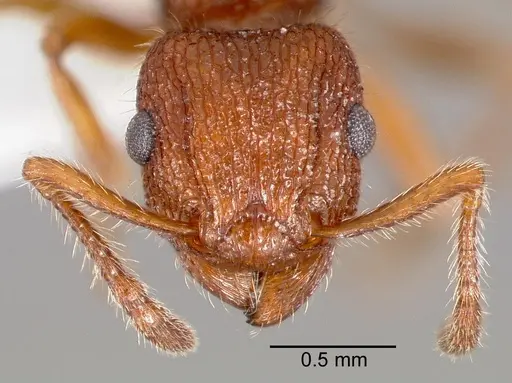
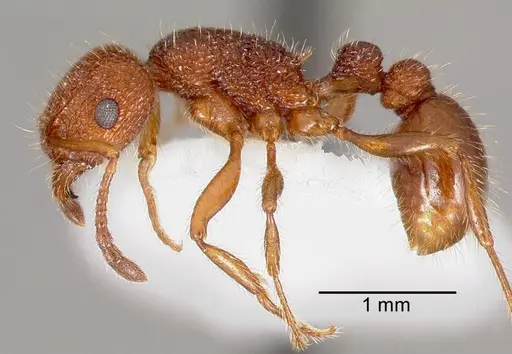
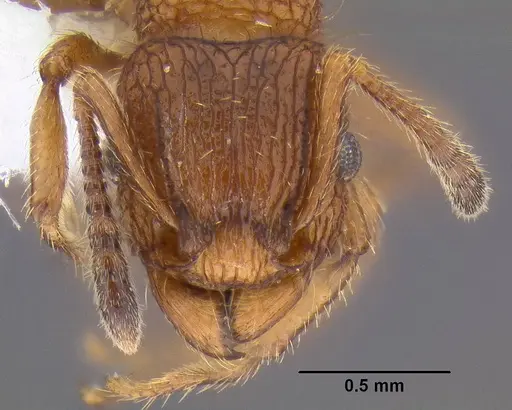
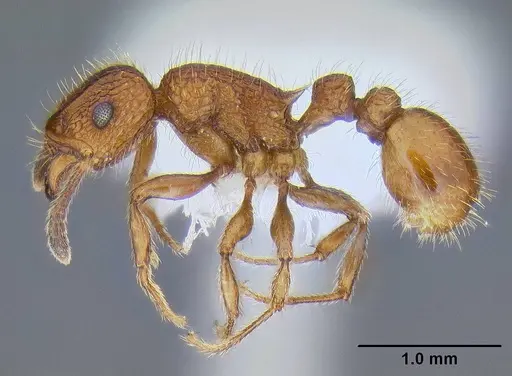
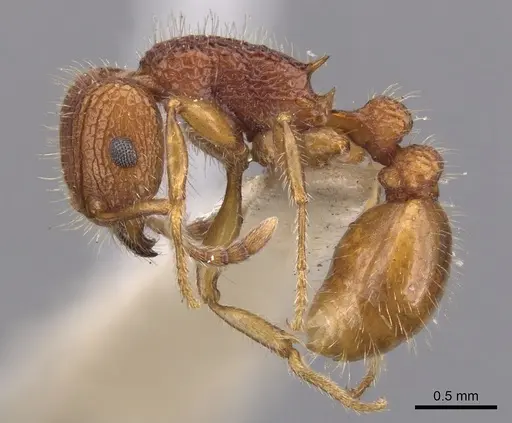
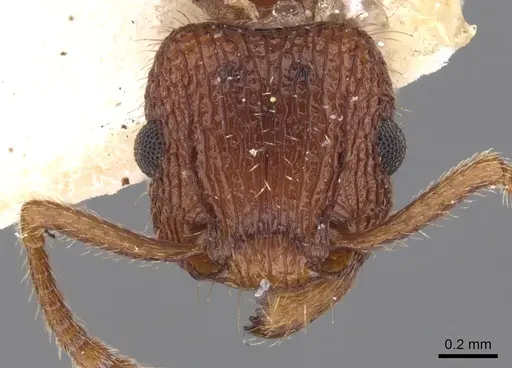
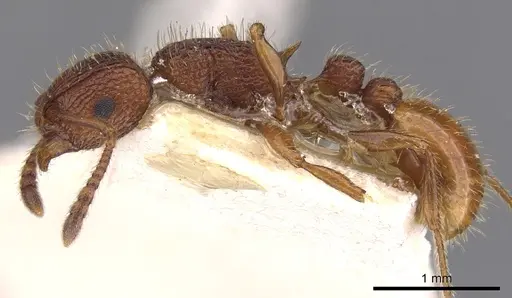
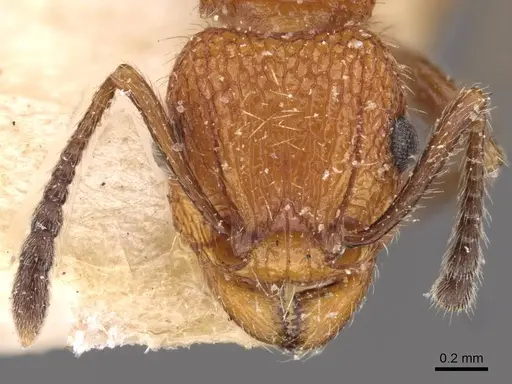
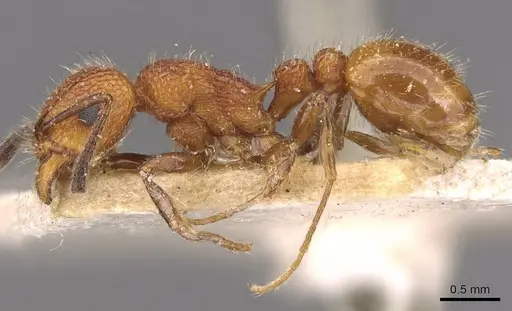
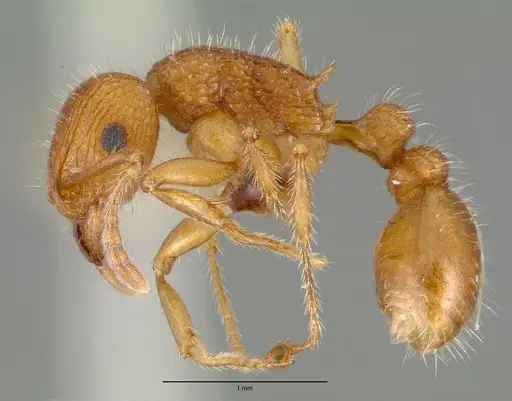
Tetramorium spinosum is a medium-sized ant native to the southwestern United States and Mexico. Workers measure 3-5mm with a robust, reddish-brown to dark brown body covered in fine longitudinal ridges on the upper surface [1]. This species belongs to the Tetramorium tortuosum species group, characterized by short, thick propodeal spines on the back of the thorax [1]. Queens are larger than workers, with head widths ranging from 0.77-1.0mm [2]. The species gets its common name from the small soil mounds it builds around nest entrances, often found under stones or in open arid areas [3].
These ants are generalist foragers, meaning they eat almost anything they find, seeds, dead insects, and sugary liquids [3][4]. They thrive in hot, dry desert and scrubland habitats like creosotebush scrub and arroyos, making them well-adapted to arid conditions [3]. In the ant world, they're considered opportunistic foragers, they quickly exploit whatever food sources become available rather than specializing in one particular diet [5]. This adaptability has helped them spread across a wide range from California and Arizona down through much of Mexico.
Quick Summary
- Difficulty: Easy
- Origin & Habitat: Native to the southwestern United States and Mexico, found in arid habitats like creosotebush scrub, arroyos, and desert grasslands [3]. Recorded across Baja California, California, Arizona, Sonora, Coahuila, Nuevo León, Tamaulipas, and many Mexican states [6][7].
- Colony Type: Single-queen (monogyne) colonies. Queens found nests independently and seal themselves inside to raise the first brood.
- Size & Growth:
- Queen:{.size-link} Larger than workers, head width 0.77-1.0mm [2]. Estimated 5-7mm total length.
- Worker:{.size-link} 3-5mm [1].
- Colony: Colonies can reach several thousand workers in optimal conditions. Estimates based on similar Tetramorium species.
- Growth: Moderate, similar Tetramorium species take 6-10 weeks from egg to first worker.
- Development: 6-10 weeks at warm temperatures (based on genus-level data for Tetramorium). (Development is faster in warmer conditions. First workers (nanitics) are smaller than mature workers.)
- Antkeeping:
- Temperature: Keep nest area at 24-30°C. These are desert ants that tolerate and prefer warm conditions. A heating cable on one side of the nest creates a temperature gradient they can choose from [5].
- Humidity: Low to moderate. These are desert-adapted ants, keep the nest substrate dry to slightly moist but never wet. Provide a small water tube but don't over-moisten the setup.
- Diapause: Yes, a winter rest period of 2-3 months at 10-15°C helps maintain natural cycles. Reduce feeding during this period.
- Nesting: Ground-nesting species. They do well in Y-tong (AAC) nests, plaster nests, or naturalistic setups with soil. Provide a deep chamber for the queen and brood. Accept test tube setups for founding colonies.
- Behavior: Generally peaceful but can become territorial when defending food sources. Workers are active foragers that search for seeds and insects. They are not aggressive toward humans and rarely sting, their sting is mild if anything. Escape risk is moderate since they're not tiny ants, but secure lids are still recommended. They adapt well to captivity and readily accept a variety of foods.
- Common Issues: overheating, desert species can overheat if temperatures exceed 35°C, excessive moisture, too much humidity causes mold and kills colonies, founder failures, claustral queens sometimes die if disturbed during founding, escape through small gaps, despite moderate size, they can squeeze through tiny openings
Housing and Nest Setup
Tetramorium spinosum is a ground-nesting ant that does well in several captive setups. For founding colonies, a standard test tube setup works perfectly, fill the tube one-third with water, plug with cotton, and place the queen in the humid chamber. The queen will seal herself in and remain there until her first workers emerge [3].
Once the colony reaches 20-30 workers, you can move them to a more permanent formicarium. Y-tong (AAC) nests are excellent for this species, the porous material holds humidity well while allowing good airflow. Plaster nests also work well, or you can create a naturalistic setup with a soil chamber. Whatever you choose, ensure the nest chambers are appropriately sized, too large and the ants may feel exposed, too small and they'll outgrow it quickly.
These ants do best with a simple outworld for foraging. A plastic container with smooth walls works as a foraging area. Add a small water test tube and place protein foods directly in the outworld. The colony will send workers out to collect food and bring it back to the nest.
Feeding and Diet
In the wild, Tetramorium spinosum feeds on seeds and dead insects, they're generalist foragers that take advantage of whatever food is available [3][4]. In captivity, you should offer a varied diet to keep them healthy and growing.
Protein is essential for brood development. Offer small insects like fruit flies, pinhead crickets, mealworms, or frozen bloodworms. Drop the prey in the outworld and watch the workers dismember it and carry pieces back to the nest. Remove any uneaten prey after 24 hours to prevent mold.
For carbohydrates, they readily accept sugar water (1:4 ratio with water), honey, or ripe fruit. Place a small dish of sugar water in the outworld and refresh it every few days. Some colonies also collect seeds, so you can occasionally offer tiny seeds like sesame or millet.
Feed protein every 2-3 days for growing colonies, and keep sugar sources available at all times. Adjust based on how quickly they consume the food, a hungry colony will swarm the food within hours.
Temperature and Seasonal Care
As desert and arid-land ants, Tetramorium spinosum thrives in warm conditions. Keep the nest area at 24-30°C for optimal brood development [5]. You can achieve this with a heating cable placed on one side of the nest, this creates a temperature gradient so ants can move to their preferred spot.
These ants are native to hot regions and can tolerate temperatures up to 35°C, but avoid prolonged exposure to extreme heat. Room temperature (around 22°C) is acceptable but will slow growth and activity. If your home is cool, a small heat mat or cable makes a big difference.
Like most temperate and subtropical ants, they benefit from a winter rest period. Reduce temperatures to 10-15°C for 2-3 months during winter. This mimics natural seasonal cycles and helps maintain colony health. During diapause, reduce feeding significantly, the colony will be mostly dormant and consume very little. Return to normal temperatures gradually in spring.
Colony Development and Growth
A newly mated Tetramorium spinosum queen will dig a small chamber in soil or find a sheltered spot, then seal herself inside, this is called claustral founding. She relies entirely on her stored fat reserves to survive and feed her first brood. During this time, she lays eggs and tends to them without leaving the nest [3].
The first eggs hatch into larvae, which then pupate before emerging as workers. This process takes approximately 6-10 weeks at warm temperatures (around 26-28°C). The first workers, called nanitics, are smaller than mature workers but immediately begin foraging to feed the colony [3].
After the nanitics emerge, the queen stops foraging and devotes herself entirely to egg-laying. The workers take over all nest maintenance, foraging, and brood care. Colony growth is moderate, you can expect the first major workers (larger than nanitics) within a few months. A healthy colony can reach several hundred workers within a year, and potentially thousands in optimal conditions.
Behavior and Temperament
Tetramorium spinosum workers are active foragers that spend time searching the outworld for food. They're not particularly aggressive toward humans and rarely attempt to sting. If threatened, they might bite, but the bite is mild and barely noticeable for most people.
These ants are generalists in their foraging, they'll collect seeds, scavenge dead insects, and drink sugary liquids. In the wild, they often nest under stones or in soil with small mound entrances [3]. Their opportunistic nature means they quickly discover and exploit food sources.
The colony establishes a clear territorial area around the nest. Workers communicate through chemical trails, when one finds a good food source, it leaves a pheromone trail for others to follow. This makes them excellent at locating and exploiting food quickly.
Escape prevention is important but not as critical as with tiny ants. They can still squeeze through small gaps, so use well-fitting lids and check for any cracks in your setup. They're moderate in size (3-5mm), so standard ant-keeping barriers usually work well.
Frequently Asked Questions
How long does it take for Tetramorium spinosum to have first workers?
Expect first workers (nanitics) to emerge 6-10 weeks after the queen lays eggs, assuming temperatures around 26-28°C. The first workers are smaller than mature workers but immediately begin foraging. Development is faster in warmer conditions and slower at room temperature.
Can I keep Tetramorium spinosum in a test tube?
Yes, test tubes work perfectly for founding colonies. Use a standard setup with a water reservoir (cotton-plugged) for humidity. Place the queen in the tube and leave her alone, she'll seal herself in and raise her first brood. Once the colony reaches 20-30 workers, consider moving to a formicarium.
What do Tetramorium spinosum ants eat?
They accept a varied diet including small insects (fruit flies, pinhead crickets, mealworms), sugar water, honey, and occasionally seeds. Offer protein every 2-3 days and keep sugar sources available at all times. Remove uneaten food after 24 hours to prevent mold.
Do Tetramorium spinosum ants sting?
They can sting but rarely do so. Their sting is mild and comparable to a minor mosquito bite. These ants are not aggressive toward humans and are considered safe to handle. If threatened, they may bite, but the experience is generally not painful.
What temperature do Tetramorium spinosum ants need?
Keep them at 24-30°C for optimal health and growth. A heating cable on one side of the nest creates a gradient they can choose from. They tolerate heat well but avoid temperatures above 35°C. Room temperature (22°C) is acceptable but will slow development.
Do Tetramorium spinosum ants need hibernation?
Yes, a winter rest period of 2-3 months at 10-15°C is recommended. This mimics their natural seasonal cycle in desert and arid habitats. Reduce feeding during this period as the colony will be mostly dormant. Return to normal temperatures gradually in spring.
Are Tetramorium spinosum ants good for beginners?
Yes, this is an excellent beginner species. They're hardy, tolerate a range of conditions, and accept a wide variety of foods. They're not aggressive and don't require special equipment. Their moderate size makes them easy to house and observe.
How big do Tetramorium spinosum colonies get?
Colonies can reach several thousand workers in optimal conditions. Growth is moderate, expect a few hundred workers within the first year. A mature colony is impressive with many active foragers.
When should I move Tetramorium spinosum to a formicarium?
Move them once the colony has 20-30 workers and the test tube is becoming crowded. Signs include workers spending more time in the outworld, the water reservoir running low frequently, or the queen being more exposed. Y-tong nests or plaster nests work well for this species.
Why is my Tetramorium spinosum colony dying?
Common causes include excessive humidity (causes mold), temperatures that are too cold (slows growth dramatically) or too hot, disturbance during claustral founding, or poor nutrition. Make sure the nest is dry but not desiccated, temperatures are in the 24-30°C range, and offer varied protein foods. Check for mold and ensure proper ventilation.
Report an Issue
The current care sheet is based fully on literature. See inconsistencies, or something that's incorrect? Please , it will be resolved after review from an admin. Contributing to the blogs tab also helps providing information, to make us be able to further improve the caresheets. Thank you for your support!
References

This caresheet is licensed under CC BY-SA 4.0 .
CASENT0005831
View on AntWeb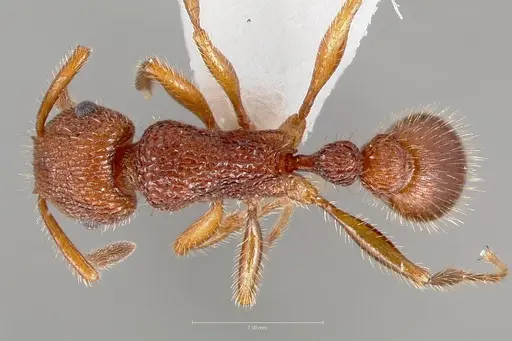
CASENT0106287
View on AntWeb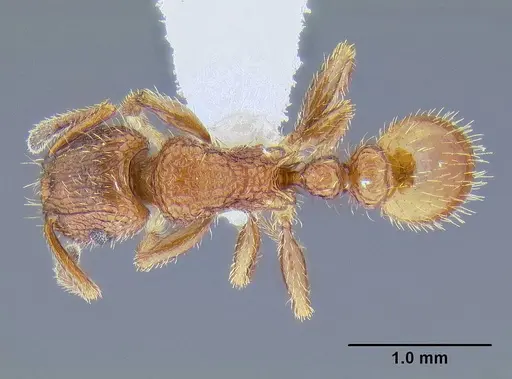
CASENT0901047
View on AntWeb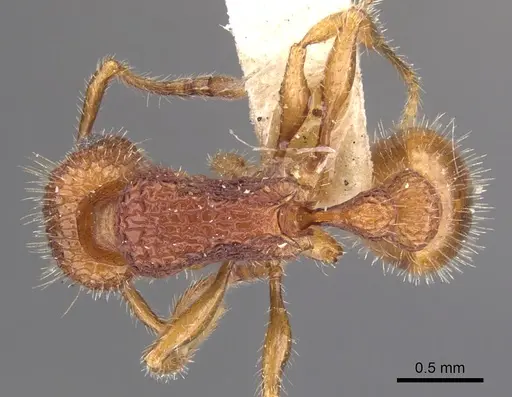
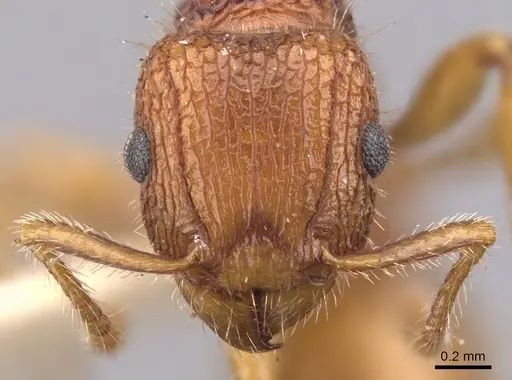
CASENT0901048
View on AntWeb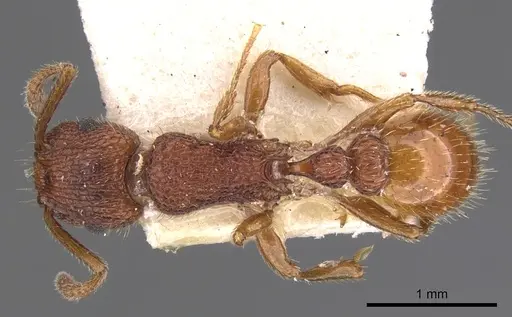
CASENT0909195
View on AntWeb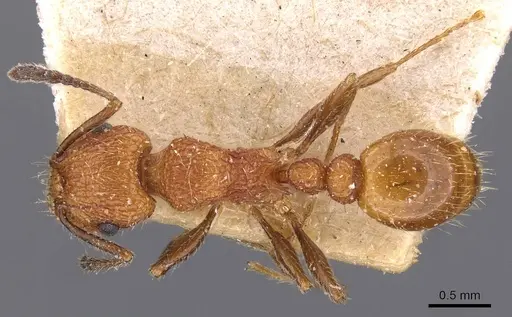
CASTYPE00654
View on AntWeb

Literature
Loading...Loading products...