

Tetramorium spininode
- Scientific Name
- Tetramorium spininode
- Tribe
- Crematogastrini
- Subfamily
- Myrmicinae
- Author
- Bolton, 1977
- Distribution
- Found in 1 countries
Tetramorium spininode Overview
Tetramorium spininode is an ant species of the genus Tetramorium. It is primarily documented in 1 countries , including Australia. Detailed taxonomic data and occurrence records can be further explored via authoritative databases such as AntWeb or the Global Biodiversity Information Facility (GBIF).
Tetramorium spininode
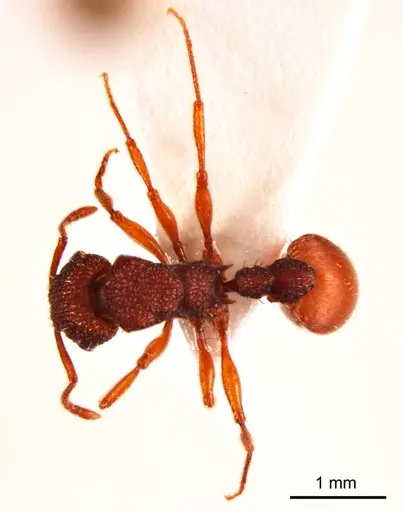
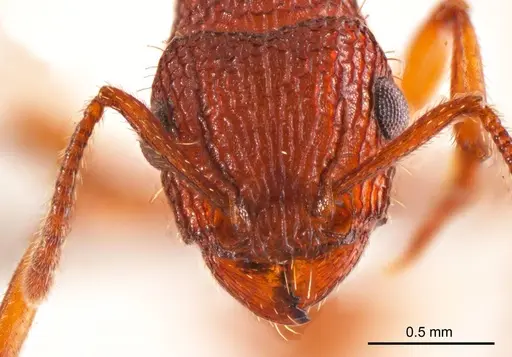
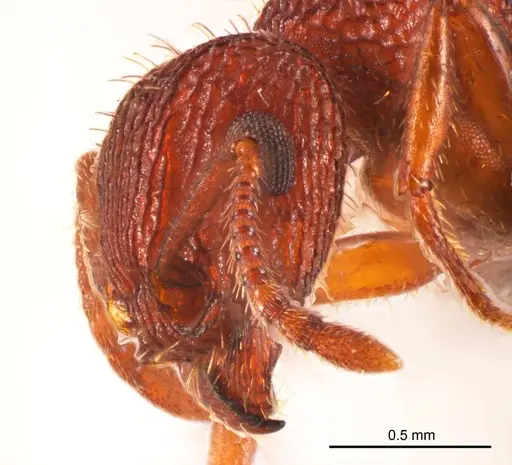
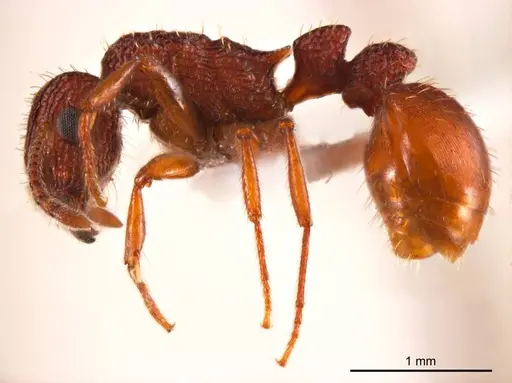
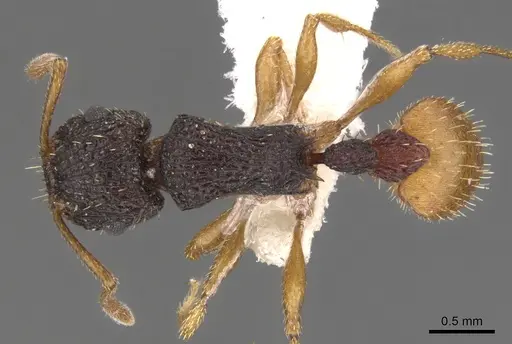
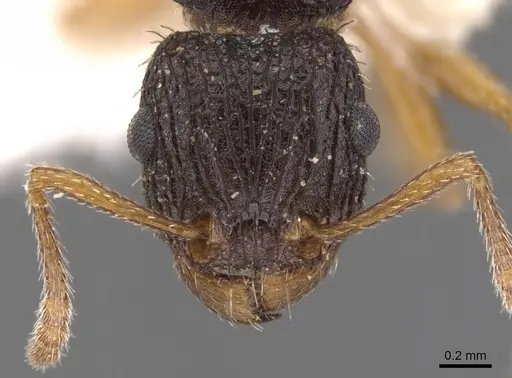
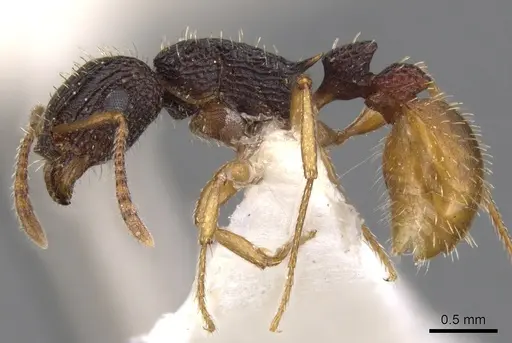
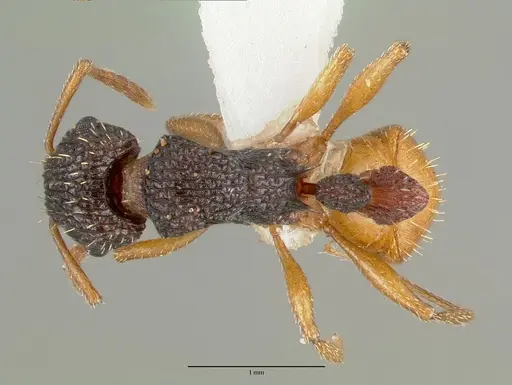
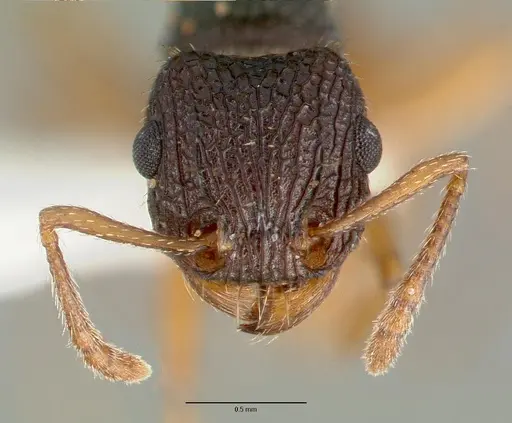
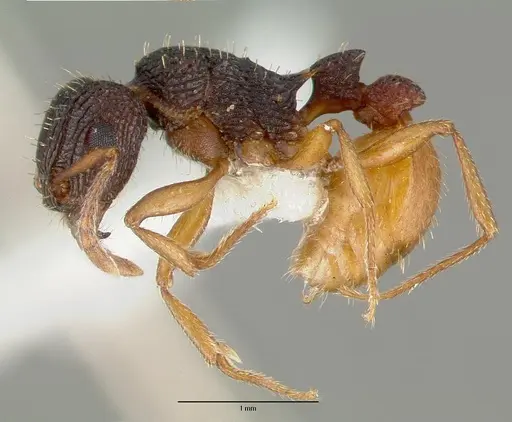
Tetramorium spininode is an Australian ant species that stands out as perhaps the most visually striking Tetramorium species in the world. Workers measure 4.2-4.5mm and feature an extraordinary petiole node, the segment between their waist segments is drawn out into a distinctive blunt, spine-like projection that overhangs the rear of their body. Their gaster (abdomen) has a unique crown-like flange running along each side, and they possess 11-segmented antennae with a functional stinger [1]. The workers display a striking color pattern: blackish-brown head and body, reddish-brown postpetiole, and bright yellow gaster and legs.
This species is endemic to Australia, particularly the monsoonal regions of Western Australia and the Northern Territory. Nothing is known about their biology in the wild, their founding behavior, colony structure, or exact nesting preferences have not been documented. However, they belong to the Myrmicinae subfamily and the genus Tetramorium, so their care likely follows typical patterns for this group.
Quick Summary
- Difficulty: Unknown, likely Medium
- Origin & Habitat: Australia, specifically the monsoonal regions of Western Australia and Northern Territory. Found in areas like Winjana Gorge (Western Australia) and Newcastle Waters (Northern Territory), with records from Barrow Island and the Pilbara region [2]. They appear in surveys of the endangered Monsoon Vine Thickets of the Dampier Peninsula.
- Colony Type: Unknown, colony structure has not been documented. Based on typical Tetramorium patterns, likely single-queen (monogyne) colonies.
- Size & Growth:
- Queen: Undescribed in detail, Bolton 1977 describes queen but measurements not specified in available data [2]
- Worker: 4.2-4.5mm [2]
- Colony: Unknown, no colony size data available
- Growth: Unknown
- Development: Unknown, estimated 6-10 weeks based on typical Tetramorium development at warm temperatures (No direct development data exists for this species. Estimates based on genus-level patterns for Tetramorium species in similar Australian habitats.)
- Antkeeping:
- Temperature: Based on Australian monsoonal habitat: aim for 24-28°C with a slight gradient. They likely tolerate warmer conditions given their origin in tropical Australia.
- Humidity: Moderate to high humidity preferred, think semi-arid to tropical Australian conditions. Provide a moisture gradient with a damp section and drier areas.
- Diapause: Unknown, Australian tropical species may not require true hibernation but may have reduced activity during dry season.
- Nesting: No specific nesting data exists. Based on related species, they likely nest in soil or under stones. A Y-tong (AAC) nest or naturalistic setup with soil substrate would be appropriate starting points.
- Behavior: No documented behavior available. Based on genus typical behavior, they are likely ground-nesting ants with moderate foraging activity. They possess a functional stinger as Myrmicinae, so they can defend themselves if threatened. Their small size (under 5mm) means escape prevention is important, use fine mesh barriers. They are not likely to be aggressive toward keepers but will sting if handled roughly or their nest is disturbed.
- Common Issues: no biological data means all care is estimated from genus patterns, expect to adjust based on colony observations, escape prevention is critical due to small worker size, use tight-fitting lids and fine mesh, no information on founding behavior makes claustral vs semi-claustral uncertain, queen may need feeding if she leaves the chamber, lack of colony size data makes it hard to predict maximum colony development, no documented diet preferences, start with typical ant foods and observe what they accept
Appearance and Identification
Tetramorium spininode is one of the most distinctive ants you could keep. Workers reach 4.2-4.5mm, making them a small but visible species. The most striking feature is their petiole node, when viewed from the side, this waist segment has a distinctive blunt spine-like projection pointing backward that overhangs the rear face. Their gaster (abdomen) has narrow flanges running along each side, giving them a crown-like appearance. They have 11-segmented antennae, which is unusual in the genus. The color pattern is memorable: dark brown to black head and alitrunk, reddish postpetiole, and bright yellow gaster and legs [2]. Queens are similar but larger and bulkier, developed with wings for dispersal.
Distribution and Habitat
This species is endemic to Australia, specifically the monsoonal tropics of northern Western Australia and the Northern Territory. Type specimens came from Winjana Gorge in Western Australia at 100m elevation, collected in October 1962. Additional specimens have been found at Newcastle Waters in the Northern Territory and various surveys have recorded them on Barrow Island and in the Pilbara region. They appear in surveys of the Monsoon Vine Thickets, an endangered ecosystem in the Dampier Peninsula. This suggests they prefer tropical or semi-arid Australian conditions with distinct wet and dry seasons [2].
Temperature and Care
Since nothing is known about this species' biology, we must estimate care requirements from related species and their Australian habitat. Keep them at 24-28°C, warm but not extreme, matching their monsoonal origin. A heating cable on one side of the nest can create a temperature gradient. Room temperature in most homes may be slightly cool, so consider gentle bottom heat. Monitor colony activity: if workers are sluggish, increase temperature slightly, if they avoid the heated area, reduce it. Provide a temperature gradient so they can self-regulate. Humidity should be moderate, aim for a damp section of the nest but allow some drying between waterings. A moisture gradient lets them choose their preferred conditions.
Feeding and Diet
No specific dietary information exists for this species. As a Myrmicinae ant, they likely have an omnivorous diet typical of Tetramorium, accepting protein sources like small insects and sugary foods like honey or sugar water. Start with standard ant foods: offer small insects (fruit flies, small mealworms, crickets) as protein and honey/sugar water as carbohydrates. Observe what they accept and adjust accordingly. Feed small amounts initially to avoid waste and mold. Remove uneaten prey after 24-48 hours. Since their natural diet is unknown, be prepared to experiment with different food types.
Nesting Requirements
No documented nesting preferences exist for this species. Based on typical Tetramorium behavior and their Australian distribution, they likely nest in soil or under stones in natural conditions. For captivity, a Y-tong (AAC) nest works well for small Myrmicinae, or a naturalistic setup with a soil-filled container. The chambers should be appropriately sized for 4-5mm workers, not too large, not too tight. Provide a water tube for humidity and ensure the nest can retain some moisture without becoming waterlogged. A test tube setup works for founding colonies.
Colony Founding
The founding behavior of Tetramorium spininode has not been documented. Most Tetramorium species are claustral, the queen seals herself in a chamber and raises her first workers on stored body fat without foraging. However, without confirmed data for this species, we cannot be certain. If your queen seals herself in, leave her alone until workers emerge. If she leaves the chamber and appears active, she may be semi-claustral and need small prey offered nearby. The safe approach is to provide a small piece of protein (like a crushed insect) near the founding chamber and observe. Do not disturb the founding chamber excessively.
Behavior and Temperament
No behavioral observations have been documented for this species in scientific literature. Based on genus-typical behavior, they are likely ground-dwelling ants with standard Myrmicinae defensive behavior, they possess a functional stinger and will use it if threatened. They are not typically aggressive toward humans but will defend their nest. Their small size (under 5mm) makes them good escape artists, use fine mesh on any ventilation holes and ensure all connections are tight. They likely forage individually or in small groups rather than forming large raiding columns. Activity level is unknown but likely moderate, matching typical Tetramorium patterns.
Frequently Asked Questions
How long does it take for Tetramorium spininode to raise first workers?
The development timeline is unconfirmed for this species. Based on typical Tetramorium development in warm conditions (around 25°C), expect 6-10 weeks from egg to first worker. This is an estimate since no specific data exists for T. spininode. Be patient, founding colonies can take longer than established ones.
What do Tetramorium spininode ants eat?
Their exact diet is unknown since no biological studies exist for this species. Based on related Tetramorium species, they likely accept small insects (fruit flies, small mealworms, pinhead crickets) as protein and sugary liquids (honey water, sugar water) as carbohydrates. Start with these standard foods and adjust based on what your colony accepts.
Do Tetramorium spininode ants sting?
Yes, they can sting. As members of the Myrmicinae subfamily, they possess a functional stinger. However, at 4-5mm, their sting is mild compared to larger ants. They will only sting if threatened or handled roughly. For most keepers, they are not a significant sting concern.
Are Tetramorium spininode ants good for beginners?
This species is not recommended for beginners due to the complete lack of biological data. Every aspect of their care must be estimated from genus patterns. If you're experienced with Myrmicinae species and comfortable experimenting with care parameters, this could be an interesting species to keep. However, expect to adjust your setup based on colony observations.
What temperature should I keep Tetramorium spininode at?
Based on their Australian monsoonal habitat, aim for 24-28°C. This is warmer than room temperature in many homes, so you may need a heating cable or heat mat on one side of the nest. Provide a temperature gradient so the ants can move between warmer and cooler areas. Monitor their activity to find the ideal temperature for your colony.
How big do Tetramorium spininode colonies get?
Colony size is unknown, no scientific data exists on maximum colony size for this species. Based on typical Tetramorium patterns, expect several hundred workers at maturity. The lack of data means you'll be documenting new information with your colony. Plan for a moderately sized colony but be prepared for whatever they achieve.
Can I keep multiple Tetramorium spininode queens together?
Colony structure is unconfirmed for this species. No data exists on whether they are monogyne (single queen) or polygyne (multiple queens). Without this information, combining unrelated queens is not recommended, the outcome is unpredictable. If you obtain multiple founding queens, house them separately until you learn more about their social structure.
Do Tetramorium spininode ants need hibernation?
Diapause requirements are unknown. As a species from Australia's tropical north, they likely experience a dry season slowdown rather than true winter hibernation. If kept in a temperature-controlled environment, they may remain active year-round. Observe your colony's seasonal activity patterns and adjust care accordingly.
What type of nest is best for Tetramorium spininode?
No specific nesting data exists. Based on related species, a Y-tong (AAC) nest or naturalistic setup with soil substrate would be appropriate. The chambers should be sized for 4-5mm workers, not overly large. A test tube works well for founding colonies. Ensure good humidity control and provide a water source.
Is Tetramorium spininode invasive anywhere?
This species is endemic to Australia and has not been documented as invasive anywhere. It is found only in Australia (Western Australia and Northern Territory). There is no data on accidental introductions to other countries.
Where can I get Tetramorium spininode ants?
This is an Australian endemic species. It is unlikely to be available in the international antkeeping hobby. If available at all, it would only be from Australian antkeepers or breeders. Check with Australian ant communities. Always ensure any ant acquisition follows local wildlife regulations.
References

This caresheet is licensed under CC BY-SA 4.0 .
Literature
Loading...Loading products...