

Tetramorium schneideri
- Scientific Name
- Tetramorium schneideri
- Tribe
- Crematogastrini
- Subfamily
- Myrmicinae
- Author
- Emery, 1898
- Distribution
- Found in 2 countries
Tetramorium schneideri Overview
Tetramorium schneideri is an ant species of the genus Tetramorium. It is primarily documented in 2 countries , including Switzerland, Uzbekistan. Detailed taxonomic data and occurrence records can be further explored via authoritative databases such as AntWeb or the Global Biodiversity Information Facility (GBIF).
Tetramorium schneideri
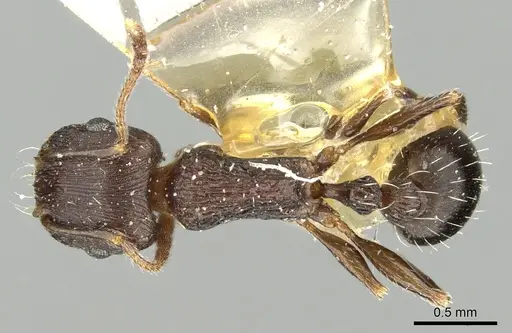
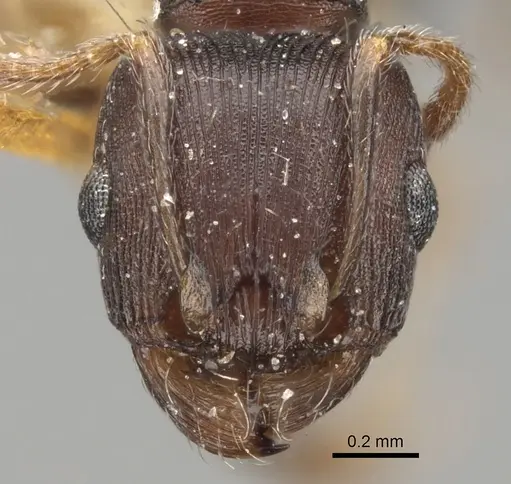
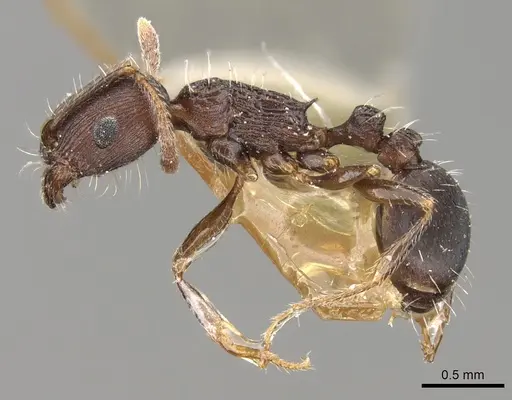
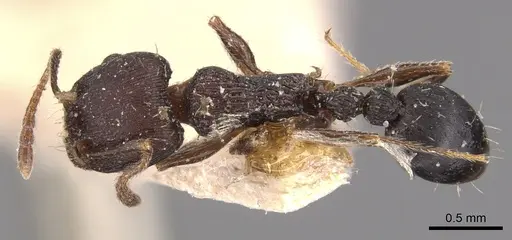
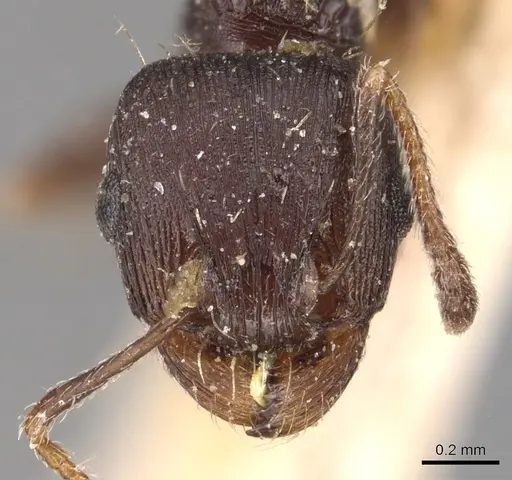
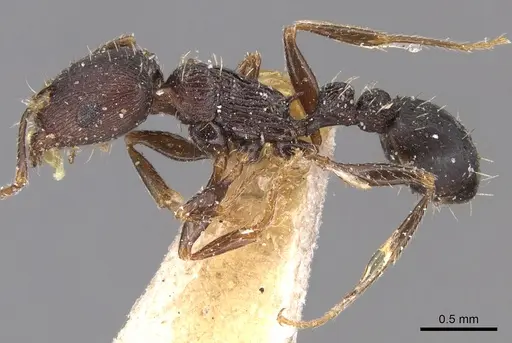
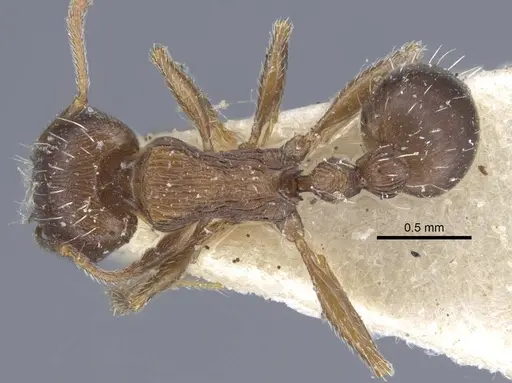
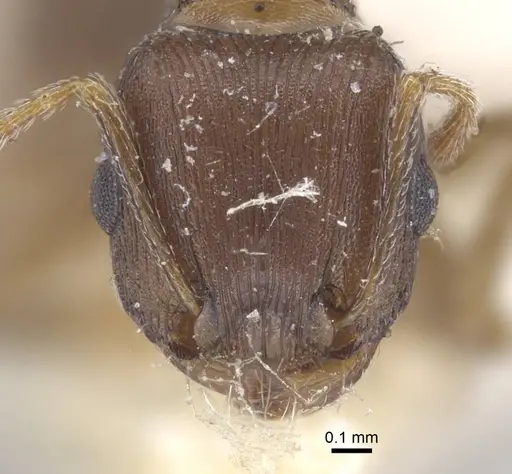
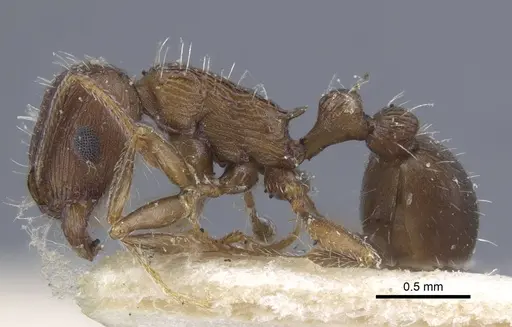
Tetramorium schneideri is a small, dark reddish-brown ant species native to Central Asia and the Middle East. Workers measure 0.66-0.90mm in head length, making them typical small Myrmicinae ants [1]. This species belongs to the striativentre species group and can be identified by its relatively fine longitudinal rugae on the head (17-33 rugae, mean 23) and longer propodeal spines compared to its close relative T. striativentre [1]. The species prefers desert and semi-desert habitats, nesting in soil and sometimes under stones on plains and foothills [1]. It is one of the commonest ant species across much of its range in Kazakhstan, Turkmenistan, Uzbekistan, Kyrgyzstan, Tajikistan, Afghanistan, and Iran [1]. This species is primarily granivorous, collecting plant seeds, but also supplements its diet with small living and dead invertebrates [1]. Nuptial flights occur in May to early June [1].
Quick Summary
- Difficulty: Easy
- Origin & Habitat: Central Asia, Kazakhstan, Turkmenistan, Uzbekistan, Kyrgyzstan, Tajikistan, Afghanistan, and Iran. Prefers desert and semi-desert biotopes on plains and foothills [1].
- Colony Type: Monogyne, single queen colonies. Colony structure is typical for Tetramorium species.
- Colony: Monogyne
- Founding: Claustral
- Size & Growth:
- Queen: HL 0.91mm, HW 0.96mm [1], estimated 5-6mm total length
- Worker: 0.66-0.90mm head length, approximately 3-4mm total length [1]
- Colony: Unknown for this specific species, related Tetramorium species typically reach several hundred to a few thousand workers
- Growth: Moderate, inferred from typical Tetramorium development patterns
- Development: 6-10 weeks at optimal temperature, estimated based on genus-level Tetramorium patterns [1] (Development time inferred from related species, specific data for T. schneideri not available)
- Antkeeping:
- Temperature: Keep at 20-26°C, they naturally occur in warm desert and semi-desert regions. Room temperature is likely suitable for most keepers [1].
- Humidity: Low to moderate, desert species prefers drier conditions. Keep nest substrate moderately dry, with a small water tube for humidity. Avoid damp conditions [1].
- Diapause: Likely, as a Central Asian species, they probably require a winter rest period of 2-3 months at 10-15°C. This is inferred from the seasonal climate of their native habitat [1].
- Nesting: Soil-nesting species. In captivity, a Y-tong (AAC) nest or plaster nest works well. They prefer compact chambers over large open spaces. A test tube setup with dirt fill can also work for founding colonies [1].
- Behavior: Generally peaceful and non-aggressive. Workers are small and active foragers, primarily granivorous but will accept small insects. They are not known for stinging, Myrmicinae have functional stingers but Tetramorium species are not particularly aggressive. Escape risk is moderate due to small size, standard barrier methods work well. They are active foragers that will readily collect seeds and small prey.
- Common Issues: colonies may decline if kept too damp, they prefer dry conditions, slow founding phase, claustral queens seal themselves in and may take months before first workers appear, small workers can escape through standard barriers if gaps exist, use fine mesh, wild-caught colonies may carry parasites that can cause colony failure, seed-storing behavior means they may hoard food, ensure adequate but not excessive feeding
Housing and Nest Setup
Tetramorium schneideri is a soil-nesting species that does well in standard ant-keeping setups. For founding colonies, a test tube setup works perfectly, the queen will seal herself into a small chamber and remain there until her first workers emerge. Once the colony reaches 20-30 workers, you can transition them to a Y-tong (AAC) nest or a plaster formicarium. These ants prefer compact chambers scaled to their small size, avoid large, open spaces. A naturalistic setup with dirt fill also works well, mimicking their natural soil-nesting behavior. Because they come from dry desert and semi-desert habitats, keep the nest relatively dry with only a small water source for humidity control [1].
Feeding and Diet
In the wild, T. schneideri is primarily granivorous, it collects and stores plant seeds as its main food source. Studies show they create significant food reserves in their nests, averaging 196mg of stored food per colony [2]. They also collect small living and dead invertebrates for protein [1]. In captivity, offer a mix of seeds (grass seeds, millet, small bird seed) as a staple, supplemented with small insects like fruit flies, pinhead crickets, or mealworms. Sugar water or honey can be offered occasionally, though they are less dependent on sugar than some ant species. Feed seeds constantly and protein 1-2 times per week. Remove any uneaten seeds that show mold [1][2].
Temperature and Seasonal Care
As a species from Central Asia's warm desert and semi-desert regions, T. schneideri prefers temperatures in the 20-26°C range. Room temperature (around 20-22°C) is typically suitable for this species. They can tolerate higher temperatures but should be protected from direct heat sources that could dry out their nest too quickly. For winter, provide a diapause period of 2-3 months at 10-15°C, mimicking their natural seasonal cycle. This rest period is important for colony health and may trigger reproductive behavior the following spring. Reduce feeding during diapause and keep the nest slightly cooler but not cold [1].
Colony Development
Tetramorium schneideri follows typical claustral founding, the queen seals herself into a chamber and does not leave to forage during the founding phase. She relies entirely on her stored fat reserves to survive and raise the first brood. Development from egg to worker likely takes 6-10 weeks at optimal temperature, based on patterns seen in related Tetramorium species [1]. The first workers (nanitics) will be smaller than mature workers but will immediately begin helping the queen with colony tasks. Growth rate is moderate, expect the colony to reach 50-100 workers within the first year under good conditions. Colonies can eventually grow to several hundred or thousand workers, though exact maximum size for this species is unknown [1].
Behavior and Temperament
These ants are generally peaceful and not particularly aggressive toward keepers. Workers are active foragers that will readily search for seeds and small prey. They are not known for stinging, though they do possess a stinger as typical for Myrmicinae, they simply rarely use it defensively. Their small size means they can squeeze through small gaps, so use standard barrier methods like fluon on test tube rims. They are not escape artists at the level of tiny species like Temnothorax, but vigilance is still recommended. Workers exhibit typical ant behaviors: foraging, seed collection, brood care, and colony maintenance. They are diurnal and most active during warmer parts of the day [1].
Frequently Asked Questions
How long does it take for Tetramorium schneideri to have first workers?
First workers typically appear 6-10 weeks after the queen lays eggs, at optimal temperature (around 22-26°C). This is based on typical Tetramorium development patterns. The claustral queen seals herself in and raises the first brood alone, so be patient during the founding phase, it can take several months [1].
What do Tetramorium schneideri ants eat?
They are primarily granivorous, collecting and storing plant seeds. In captivity, offer seeds like grass seeds, millet, or small bird seed as a staple. Supplement with small insects (fruit flies, pinhead crickets, small mealworms) for protein. They will also occasionally accept sugar water or honey [1][2].
Do Tetramorium schneideri ants need hibernation?
Yes, as a Central Asian species from desert and semi-desert regions, they likely require a winter diapause. Provide 2-3 months at 10-15°C during winter. Reduce feeding during this period and keep the nest slightly cooler. This mimics their natural seasonal cycle and supports colony health [1].
Can I keep multiple Tetramorium schneideri queens together?
This species is monogyne, single queen colonies. Multiple unrelated queens will likely fight. Only keep one queen per colony. If you have multiple foundresses from the same nuptial flight, only pair them if you want to attempt pleometrosis (founding together), but this carries risk of queen fighting later [1].
What size colony do Tetramorium schneideri reach?
Exact colony size is unknown for this specific species, but related Tetramorium species typically reach several hundred to a few thousand workers. Expect moderate growth, the colony may reach 100-200 workers in the first year under good conditions, with larger sizes over several years [1].
Are Tetramorium schneideri good for beginners?
Yes, this species is considered easy to keep. They are forgiving of minor temperature fluctuations, do not require high humidity, and are not aggressive. Their primary food (seeds) is inexpensive and easy to obtain. The main challenges are the slow founding phase and ensuring they are not kept too damp [1].
What temperature do Tetramorium schneideri need?
Keep them at 20-26°C. Room temperature (20-22°C) is typically suitable. They come from warm desert regions and can tolerate higher temperatures, but avoid direct heat sources that could dry out the nest. A simple heating cable on one side of the nest can create a temperature gradient if needed [1].
Do Tetramorium schneideri ants sting?
They possess a stinger as typical for Myrmicinae, but they are not aggressive and rarely sting. They are considered harmless to keepers. Standard handling precautions are sufficient, wash hands before handling and avoid provoking the colony [1].
When do Tetramorium schneideri have nuptial flights?
In the wild, nuptial flights occur in May to early June [1]. In captivity, if your colony produces reproductives, they will typically emerge in spring or early summer, coinciding with the natural breeding season.
Why is my Tetramorium schneideri colony dying?
Common causes include: too much moisture (they prefer dry conditions), poor nutrition, parasites from wild-caught colonies, or stress during the founding phase. Ensure the nest is not too damp, provide varied diet, and if the colony was wild-caught, watch for signs of parasite infection. Also ensure they have a proper winter diapause if approaching the seasonal cycle [1].
References

This caresheet is licensed under CC BY-SA 4.0 .
Literature
Loading...Loading products...